Why Aramco's 2026 Capex Bet on Offshore Projects Signals a Strategic Pivot
Saudi Aramco's reported plan to allocate the largest share of its 2026 capital expenditure to offshore oil and gas projects is more than a simple budget item. This analysis decodes the strategic intent behind this move, positioning it as a long-term hedge against geopolitical volatility and a commitment to securing low-cost, high-volume reserves. We explore the implications for global energy security, the underlying supply chain dynamics, and how this capital allocation reflects a calculated response to energy transition pressures, ensuring Aramco's dominance in the coming decades. The insight is grounded in analysis of industry trends and the cited MEED report.
Omar Hassan
Editorial Analyst
Why Aramco's 2026 Capex Bet on Offshore Projects Signals a Strategic Pivot
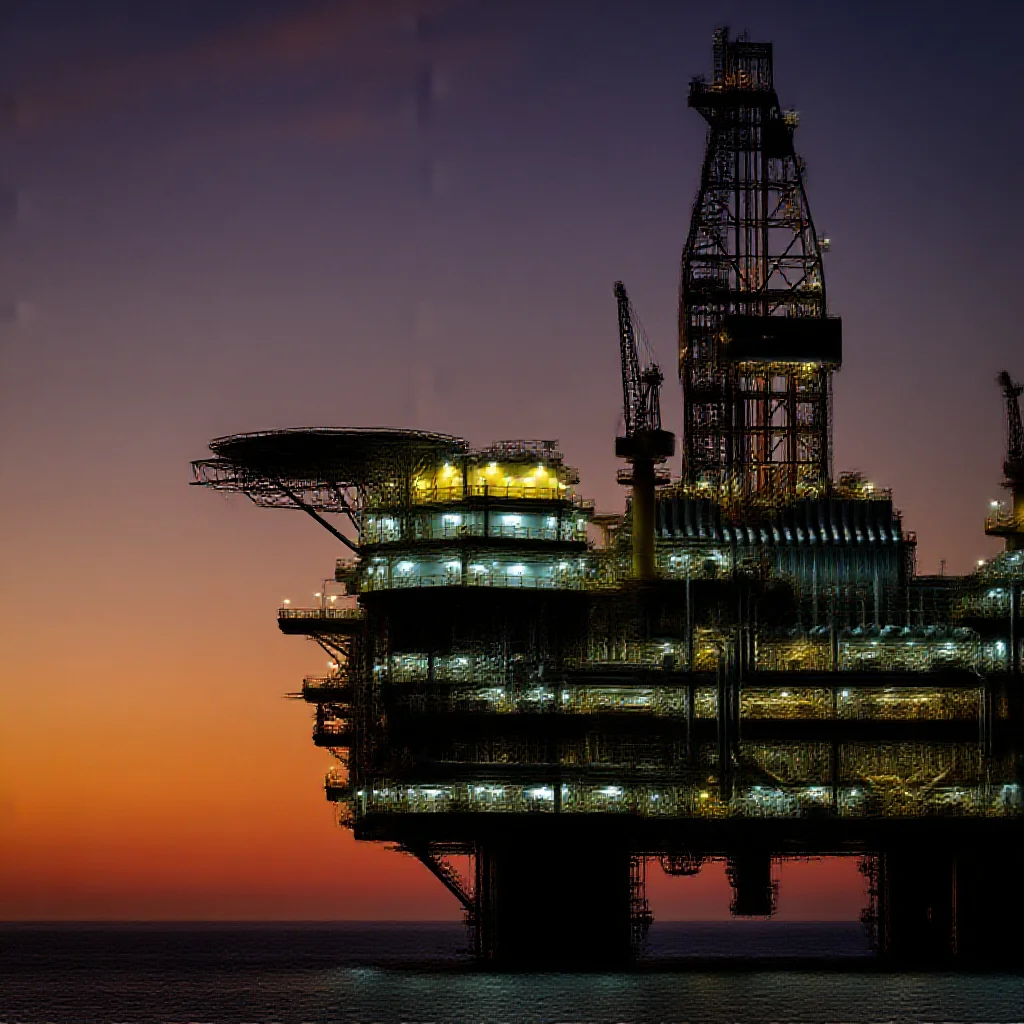
A report from regional business intelligence provider MEED projects that offshore oil and gas projects will constitute the largest segment of Saudi Aramco’s capital expenditure in 2026 (Source: MEED Report). This single budgetary data point, while forward-looking, functions as a strategic indicator. Analysis of industry fundamentals suggests this allocation is a calculated maneuver to secure long-term production stability, hedge against geopolitical volatility, and reinforce the company’s position as a supplier of low-cost, low-carbon intensity crude amid a complex energy transition.
Decoding the Signal: Offshore Capex as Aramco's Strategic Anchor
The capital allocation is a statement of long-term confidence in sustained hydrocarbon demand. The decision prioritizes economic logic over short-term financial metrics. Offshore projects, typified by massive reservoirs like the Safaniya field, represent large-scale, long-life assets. Their development lowers the long-term average cost of production and secures a vast reserve base for decades.
This strategy contrasts with investment in onshore shale or marginal fields. While offshore projects require higher upfront capital expenditure and longer lead times, they offer strategic stability and volumetric scale. This aligns precisely with Saudi Arabia’s historical role as a swing producer, requiring the capacity to adjust output significantly from reservoirs capable of sustaining high production plateaus for extended periods. The offshore bet is a commitment to maintaining that pivotal role.
The Deep Audit: Geopolitical and Transitional Pressures Shaping Investment
The investment direction serves as a multi-layered hedge. First, it mitigates certain land-based geopolitical risks. Offshore infrastructure in the Arabian Gulf can be perceived as less vulnerable to regional instability compared to some onshore assets. Second, it addresses energy transition pressures. Aramco consistently markets its crude as among the world’s least carbon-intensive to produce. Offshore reservoirs, often larger and more efficiently managed from a single platform, support this low-carbon operational narrative.
This capital expenditure will have significant supply chain implications. It commits billions of dollars to a multi-year cycle of demand for specialized offshore engineering, drilling rig contractors, and advanced subsea technology providers. This creates a predictable revenue stream for a select segment of the global energy services industry and may drive innovation in offshore extraction efficiency.
Source Verification and Market Context
The projection originates from MEED (Middle East Economic Digest), a established provider of regional project and business intelligence. This forward-looking claim must be contextualized within Aramco’s broader financial framework. The company has outlined plans to increase its capital spending to approximately $48-58 billion in 2024, with further growth expected through the middle of the decade, partly to meet its stated oil production capacity target of 13 million barrels per day by 2027.
This analysis is not based on breaking news but on a strategic indicator. Its value lies in interpreting the signal within the context of long-term industry trends, corporate strategy, and global energy market fundamentals, rather than immediate verification of a current event.
The Unseen Ripple Effect: Competitors, Climate Goals, and Future Scenarios
Aramco’s move will influence competitive dynamics. It may pressure other national oil companies (NOCs) and international majors to reaffirm or recalibrate their own offshore investment portfolios to maintain reserve longevity and cost competitiveness.
Concurrently, it intensifies the tension with global climate policy goals. Significant new offshore investments in the late 2020s will attract scrutiny from investors and activists focused on stranded asset risks. The strategic calculation assumes a long, plateaued demand tail for oil, particularly for the least carbon-intensive barrels. Should global oil demand peak and decline sooner than Aramco forecasts, these long-life offshore assets could face economic challenges.
The ultimate outcome hinges on the accuracy of global demand forecasts. Aramco’s 2026 capex plan is a definitive wager on a specific energy future—one where large-scale, efficient hydrocarbon production remains central to global energy security for decades to come.
Keywords

Omar Hassan
Energy Correspondent tracking OPEC+ policies and renewable energy transitions.