Archive Intelligence
Search through the comprehensive history of Gulf Business Weekly briefings.

Gulf NOCs Anchor Offshore Drilling Services Market Growth
The global offshore drilling services market is set to expand from $43.8bn in 2025 to $66.4bn by 2035. Gulf NOCs, including ADNOC Drilling, Saudi Aramco and QatarEnergy, are among the key forces shaping the sector's growth.

Global Real Estate Outlook Mid-Year Update: Six Forces Reshaping Gulf Property Markets
JLL's mid-year 2026 global real estate outlook identifies six forces now recalibrating commercial property markets. For Gulf economies, the implications are double-edged: higher costs and energy pressures intersect with surging demand for premium, tech-enabled space.

How Tech Trends 2026 Are Reshaping Gulf Business Strategy
An analysis of how Deloitte's Tech Trends 2026 are influencing corporate strategy, investment, and innovation across the Gulf economies.

Global Real Estate Market to Reach $8.45 Trillion by 2034: Gulf Implications
The global real estate market is projected to rise from USD 4.37 trillion in 2025 to USD 8.45 trillion by 2034. This analysis examines the growth drivers, opportunities, and implications for Gulf economies and corporate strategies.

Why Place Is Becoming Central to Innovation-Led Growth in Gulf Cities
As innovation spreads geographically, Gulf cities are competing for talent and capital. Place quality and premium workspace are becoming key to diversification.

Six Forces Reshaping Gulf Real Estate: A Mid-Year Market Outlook
As global markets confront conflict-driven turbulence, JLL's mid-year real estate update identifies six forces that are also reshaping the GCC property landscape. This analysis applies them to the Gulf's unique economic transformation agenda.

How Global Business Trends Are Reshaping Corporate Strategy Across the Gulf
An analytical look at how technological and demographic shifts are driving strategic change in Gulf enterprises.

How Family Offices Are Redefining Corporate Growth Strategies in the Gulf
An in-depth analysis of the rising influence of family offices and strategic advisory firms in accelerating business development across the GCC.

Why the Gulf’s Luxury Goods Market Is Poised for Steady Growth
Analysis of the Gulf luxury goods market, drawing on global trends and the resilience of high-end retail.

Top Technology Trends 2026: Emerging Tech and Innovation in the Gulf
Explore the emerging technology trends reshaping Gulf business in 2026, from agentic AI and digital immunity to sovereign clouds and quantum-safe security.

Gulf Real Estate Navigates Global Volatility with Strategic Investment Opportunities
Amid geopolitical tensions and global market shifts, Gulf real estate markets are poised for resilience and growth, driven by economic diversification and strategic investment.

How Gulf Economies Are Scaling Renewable Energy Investment and Industrial Capacity
A business analysis of the Gulf Cooperation Council's renewable energy expansion, driven by corporate PPAs, green hydrogen, and diversification policy.

Global Real Estate Outlook: What the Six Forces Mean for Gulf Markets
JLL's mid-year update on global real estate highlights six forces reshaping the sector. Gulf markets must navigate efficiency pressures, AI adoption, energy security, and democratized investing to sustain growth and diversification.

China’s Next-Generation Industrial Policy: Strategic Implications for the Gulf
An analysis of how China's expanding industrial policy affects Gulf economic diversification and investment strategies.
Gulf Energy Ambitions Boost Offshore Drilling Services Market to $66.4B by 2035
The offshore drilling services market is poised to grow from $43.8B in 2025 to $66.4B by 2035, driven by Gulf NOC investment. Analysis of impact on GCC economies.

Luxury Lingerie Market Growth Signals New Opportunities for Gulf Retail and Investment
The global luxury lingerie market is projected to grow at an 8.6% CAGR through 2035. For Gulf economies focused on diversification, the sector offers a lens into evolving consumer behavior, e-commerce adoption, and the region's growing appeal as a luxury retail destination.

Why the Expanding Luxury Lingerie Market Matters for Gulf Retail and E-Commerce
The global luxury lingerie market is projected to grow from USD 16.2 billion in 2026 to USD 34.1 billion by 2035. For Gulf economies, the segment offers opportunities in retail diversification, tourism-linked spending, and digital commerce expansion.

Medtech Trends 2026: How the Gulf is Positioning Itself in a Shifting Global Market
Global medical device trends from pricing pressures to platform technologies are reshaping the Gulf's healthcare investment and diversification strategies.

Global Real Estate Outlook: Gulf Markets Brace for New Investment Forces
JLL's 2026 mid-year update identifies six forces reshaping commercial property. This article examines their implications for GCC markets, from energy security to AI-driven demand.

Global Energy Outlook 2026: Gulf Economies and the Post-1.5°C Reality
The latest global energy projections suggest the 1.5°C target is no longer achievable. For Gulf economies, this signals both continuity and urgency in their diversification strategies.

How China’s Next-Generation Industrial Policy Could Reshape Gulf Economic Strategy
An analytical look at China’s evolving industrial policy and its strategic implications for GCC economies, investors, and businesses seeking to navigate global supply chain shifts and diversification opportunities.

Growing Low Carbon Solutions: Strategic Implications for the Gulf Economy
Explore how low carbon solutions, from carbon capture to hydrogen, are becoming a strategic focus for Gulf economies. Analysis of policy, investment, and business opportunities in the GCC.
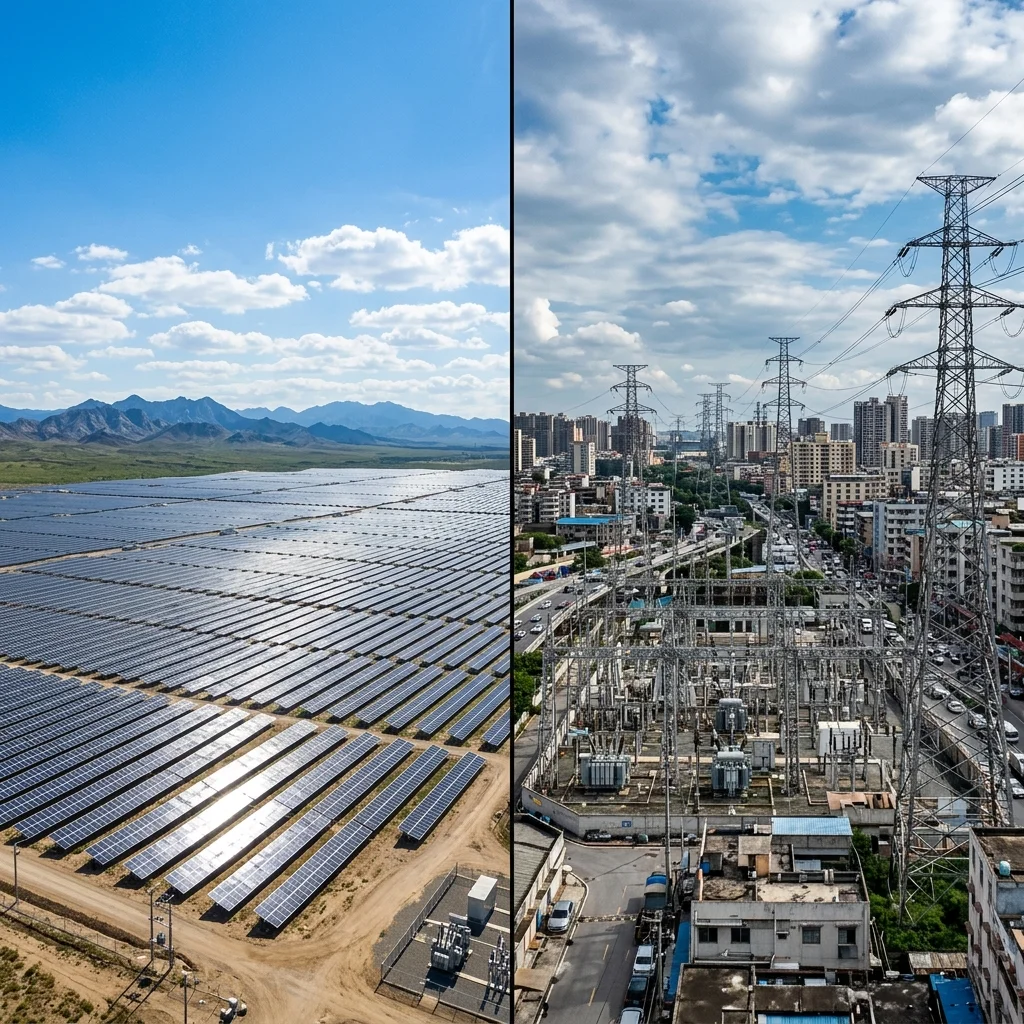
How the Luxury Lingerie Market Is Reshaping Gulf Retail Strategies
The global luxury lingerie market is projected to grow from USD 16.2 billion in 2026 to USD 34.1 billion by 2035. For Gulf businesses, this signals opportunities in retail, e-commerce, and economic diversification. This analysis examines market trends and their implications for the GCC region.
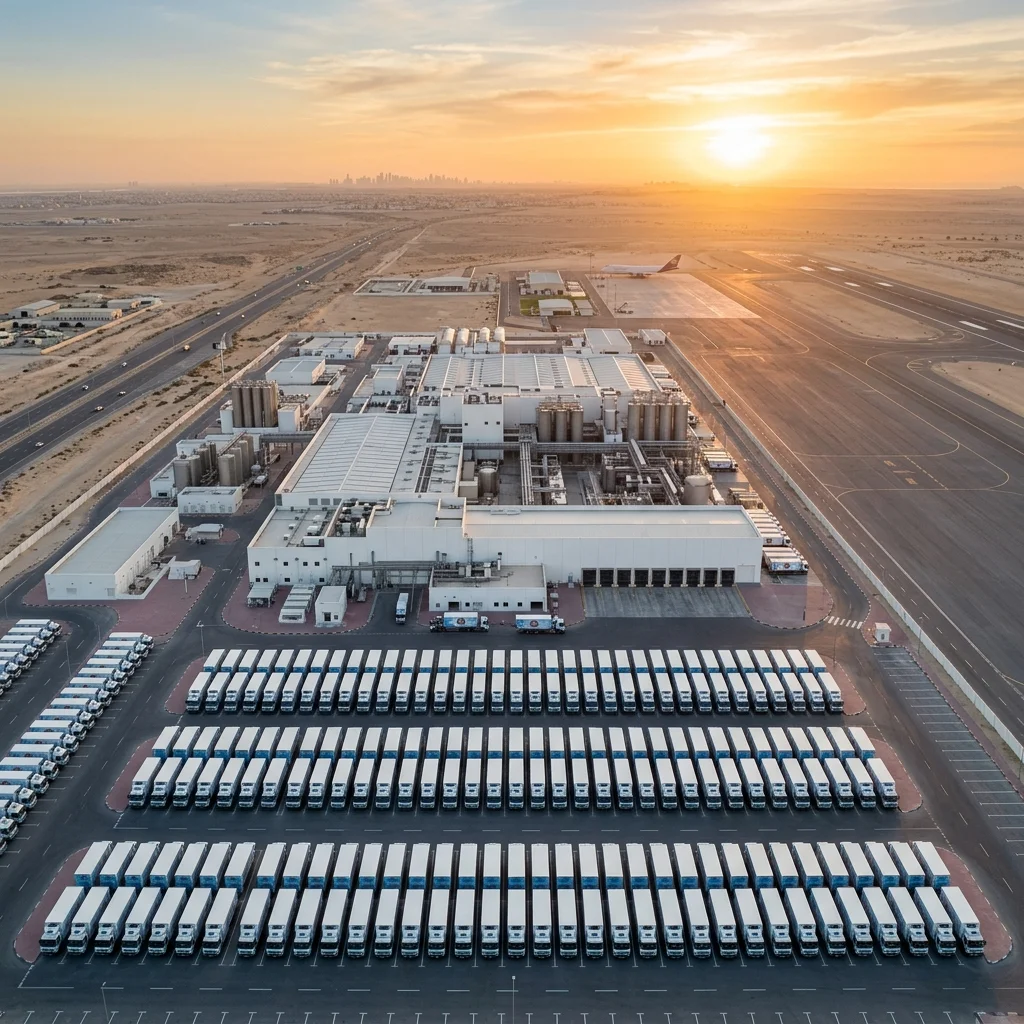
Luxury Lingerie Market: A New Growth Front for Gulf Retail and Investment
The global luxury lingerie market is projected to grow at a CAGR of 8.6% through 2035. For the Gulf region, it represents an emerging opportunity in retail diversification, tourism, and e-commerce.

How Six Global Real Estate Forces Are Reshaping the Gulf Property Market
An analysis of the six forces shaping commercial real estate in the Gulf, drawing on JLL's global outlook and regional dynamics.

Global Energy M&A Trends Signal Strategic Shift for Gulf Investors
An analysis of how global M&A trends in energy, utilities, and resources are reshaping investment strategies across the Gulf region.

US Solar Market Insight Q3 2025: Strategic Lessons for GCC Energy Diversification
Discover how the US solar market's Q3 2025 report and policy changes under the One Big Beautiful Bill Act shape GCC renewable energy strategies, investment decisions, and long-term economic diversification.

Weekly Market Wrap: Gulf Equities Reach New Highs as Headwinds Subside
Gulf stock markets break out to record highs as AI concerns ease, geopolitical risks fade, and non-oil growth strengthens. Weekly analysis from GulfBusinessWeekly.com.

Floating Production Systems: A Strategic Frontier for Gulf Offshore Energy and Economic Diversification
Analysis of the global floating production system market and its implications for GCC economies, energy transition, and regional industrial development.

How Government Policies Are Driving Japan’s Luxury Apparel Market — and What the Gulf Can Learn
Japan's luxury apparel market is projected to reach $7.56 billion by 2033. Explore how government policies drive growth and what Gulf businesses can learn.

Innovation and Industrial Performance: A Strategic Agenda for Gulf Economies
A bibliometric analysis of more than 2,700 peer-reviewed articles reveals how innovation research has shifted toward sustainability and Industry 4.0. Gulf businesses and policymakers can apply these insights to strengthen diversification and competitiveness.

Global Real Estate Outlook: How Six Forces Are Shaping Gulf Investment Strategies
Explore the six forces reshaping global commercial real estate in 2026 and their implications for Gulf investors, developers, and policymakers.

Energy Innovation and Sustainability Reshape Gulf Business Strategy
How global energy innovation and sustainability trends are driving strategic shifts across Gulf economies, with implications for investors, policymakers, and corporations.

Energy Innovation and Sustainability: A New Growth Frontier for Gulf Economies
As GCC countries accelerate energy transition strategies, energy innovation and sustainability are becoming central to economic diversification, investment flows, and corporate competitiveness across the region.

Growing Low Carbon Solutions: The Gulf's Strategic Edge in the Global Energy Transition
The Gulf is positioning itself as a global hub for low carbon solutions. This analysis explores the business and policy dimensions.

Middle East Luxury Market Shines as Global Spending Shifts to Experiences
The global luxury market shows resilience in 2025, but the Middle East stands out with 4-6% growth, fueled by tourism in Dubai, Abu Dhabi, and Saudi demand. Bain & Company's study reveals a structural shift toward experiential luxury, reshaping investment and business strategies across the Gulf.

China's Five-Year Plan: Strategic Implications for Gulf Business and Investment
Beijing’s new economic blueprint balances self-reliance with global engagement, creating both opportunities and challenges for GCC economies.
Innovation Drives Place, and Place Drives Innovation in the Gulf
An analysis of how innovation clusters are reshaping business geography and real estate markets across the Gulf region, with implications for investors, policymakers, and corporate strategists.

How Geopolitical Disruptions Are Reshaping Energy Investment Across the Gulf
Analysis of how rising oil prices, shipping disruptions, and major capital commitments are influencing energy investment strategies across GCC economies, with implications for diversification and long-term competitiveness.

Gulf Renewable Energy Outlook 2026: Resilience Amid Policy Shifts and Demand Growth
Analysis of the Gulf region's renewable energy landscape in 2026, focusing on policy changes, storage integration, data center demand, and the recalibration of strategies by developers and investors.

How Gulf Energy Investors Are Navigating Geopolitical Risk and Market Volatility
Analysis of recent energy market disruptions—oil above $100, shipping attacks in the Red Sea, and ADNOC's $6.2B FID—and their implications for Gulf investment strategies, capital allocation, and long-term diversification.
How UK Private Market Trends Are Shaping Gulf Investment Strategies
An analysis of the UK's Q2 2026 private market performance and its implications for Gulf sovereign wealth funds, strategic investors, and cross-border capital flows into AI and infrastructure.

How the Gulf Region Is Scaling Low-Carbon Solutions for Industrial Decarbonization
Analysis of how Gulf states are leveraging carbon capture, hydrogen, and policy to build a low-carbon economy, drawing lessons from ExxonMobil's U.S. Gulf Coast model.
What the Asia Pacific Beauty Recovery Means for Gulf Investors
Analysis of the recovery in Asia Pacific travel retail beauty market and its implications for Gulf-based investors and businesses.

How AI Is Reshaping Corporate Real Estate Across the Gulf: Insights from the 2026 Future of Work Survey
Only 15% of organizations have optimized AI in their corporate real estate operations, according to JLL's 2026 Future of Work Survey. For Gulf businesses, the challenge is acute as skills shortages and affordability constraints collide with ambitious diversification goals.

How Solar PV Manufacturing Shifts Are Reshaping Gulf Energy Strategies
Analysis of global solar module manufacturing trends and their implications for Gulf economies' diversification and energy transition goals.
Emerging Asian Innovators Including Xizi Clean Energy Equipment Manufacturing And 2 Other Promising Small Caps
Explore three promising small-cap companies in Asia, including Xizi Clean Energy Equipment Manufacturing, gremsInc, and CURVES HOLDINGS, with strong fundamentals and growth potential.

Momentum trade is market's short-term steamroller
Momentum investing delivers short-term gains but risk of a bubble burst makes it a dangerous game for value investors.

Middle East Liquid Ammonium Thiosulfate Market: Growth Driven by Electronics Sector
The Middle East liquid ammonium thiosulfate market is projected to grow at 4-6% CAGR through 2035, led by electronics and semiconductor demand. Read key trends, pricing, and supply chain insights.

Luxury Leaders Convene in Paris For Exclusive Insights From BoF on the Industry’s Next Chapter
Executives from LVMH, Puig, Cartier, Balmain, Kering, Alaïa and more attended an intimate breakfast at the Hôtel de Crillon in Paris to unpack luxury’s new growth strategies in a post-slowdown era.

How Data-Driven Market Research is Shaping the Future of Luxury and Fashion
In an industry traditionally driven by instinct and heritage, luxury and fashion brands are increasingly turning to data-backed insights to stay ahead. This article explores how Euromonitor's Passport—an award-winning knowledge hub used by over 60,000 decision-makers—enables forward-thinking strategies. From identifying emerging trends to optimizing supply chains, we uncover the hidden economic logic that makes market research the new cornerstone of competitive advantage in luxury. Dive into the patterns, policies, and innovations reshaping global business implications for the high-end sector.

The Next Frontier in Real Estate: How Demographic Shifts and Technology Are Reshaping Global Markets
Despite the absence of extractable data from the provided PDF, this article synthesizes leading industry signals to uncover the hidden economic logic driving real estate''s structural transformation. We examine how aging populations, rapid urbanization, proptech innovations, and evolving policy frameworks are redefining property valuation, investment flows, and construction supply chains. The analysis reveals a dual-track shift: immediate market volatility driven by interest rate cycles and a slower, deeper reconfiguration of asset classes. Key insights include the rise of tokenized real estate, AI-driven property management, and the geopolitical realignment of cross-border capital. A must-read for investors and developers navigating the next decade.

Untitled

Balancing Innovation and Security: How Emerging Tech Is Reshaping Business Strategy
Emerging technologies like augmented reality, AI-powered chatbots, and blockchain are driving unprecedented customer engagement and operational efficiency for businesses. Adidas and Wayfair report conversion lifts of up to 90% with AR tools, while 43% of merchants plan to embed AI/ML into supply chain planning. Yet high-profile breaches at Microsoft and First American Corporation expose the fragility of data security. This article explores the dual imperative: how companies can harness innovation while managing data vulnerability. It examines the role of data clean rooms and synthetic data as privacy-compliant analytics solutions, and argues that the next competitive edge lies not just in adopting cutting-edge tech but in building resilient data governance frameworks.
The Double-Edged Sword of Emerging Tech: Boosting Business Performance While Navigating Security and Privacy Risks
Emerging technologies like AR, AI, IoT, and blockchain are driving dramatic gains in customer engagement, operational efficiency, and supply chain optimization—retailers using AR since 2020 report a 90% boost in conversions. Yet the same digital transformation exposes businesses to record-breaking cybersecurity breaches (Microsoft Exchange, First American) and complex privacy regulations. This article explores the hidden economic logic behind innovation adoption, the trade-offs between performance and risk, and how synthetic data and data clean rooms offer a path forward. We analyze real-world case studies, market trends, and strategic insights for leaders balancing growth with resilience.

Navigating the Gulf''s Evolving Business Landscape: Emerging Trends and Market Dynamics
Despite recent content restrictions, the Gulf region remains a crucible of economic transformation, technology-driven innovation, and regulatory evolution. This article synthesizes high-level patterns from available reports to uncover the hidden logic behind diversification efforts, supply chain shifts, and policy updates. We explore how sectors such as renewable energy, fintech, and logistics are reshaping the business environment, and what global implications these changes carry. Drawing on credible sources, we provide a slow-analysis framework for understanding the underpinning market forces.
The Four Innovation Platforms Reshaping Gulf Economies: From Fintech to Last-Mile Delivery
The Gulf Cooperation Council (GCC) is undergoing a strategic pivot from oil dependency to a knowledge-based economy, driven by four distinct innovation platforms: adapters, in-house incubators, trend hunters, and technology leaders. This article explores how companies like Tabby, Majid Al Futtaim, Chalhoub Group, Noon, and Sun and Sand Sports exemplify these models, leveraging regional R&D investments (UAE 1.2% GDP, Saudi USD 4.2 billion in telecom) to create a multi-speed innovation ecosystem. From Shariah-compliant fintech to AI-powered last-mile logistics, these platforms are reshaping retail, finance, and supply chains, positioning the GCC as a global testbed for emerging technologies. The report offers deep insights into market dynamics, policy impact, and the underlying economic logic of diversification.
The Renewable Revolution: Doubling Capacity by 2030 – But Are We Ready for the Grid and Supply Chain Challenges?
The IEA projects global renewable electricity capacity will more than double by 2030, adding 4,600 GW – equivalent to the combined power generation of China, the EU, and Japan. Solar PV dominates, accounting for nearly 80% of the surge. While this growth is unprecedented, it masks critical bottlenecks: grid integration, supply chain vulnerabilities, policy instability, and workforce gaps. This article provides a deep industry audit, leveraging IEA reports (Renewables 2025, COP28 pledge tracker, and technology collaborations) to uncover the hidden economic logic behind capacity additions. It explores what it takes to turn record-breaking installation numbers into a reliable, low-emissions energy system – and why the next frontier is not just generation, but infrastructure and systemic resilience.

Luxury Market 2026–2035: Slow Growth, Fast Transformation – How Sustainability and Asia-Pacific Are Reshaping Global Luxury
The global luxury market is projected to grow from USD 344.32 billion in 2026 to USD 516.48 billion by 2035 at a modest 4.7% CAGR. Yet beneath the steady headline numbers lie two seismic shifts: a generational pivot toward sustainability led by millennials and Gen Z, and a geographic rebalancing as Asia-Pacific closes in on Europe’s market share. This article explores the hidden economic logic behind the data – how experiential luxury is overtaking personal luxury, why supply chains must decarbonize, and what the post-COVID recovery means for traditional European houses. Based on the latest Business Research Insights report (ID: BRI117484), we provide a strategic roadmap for brands navigating this dual transformation.
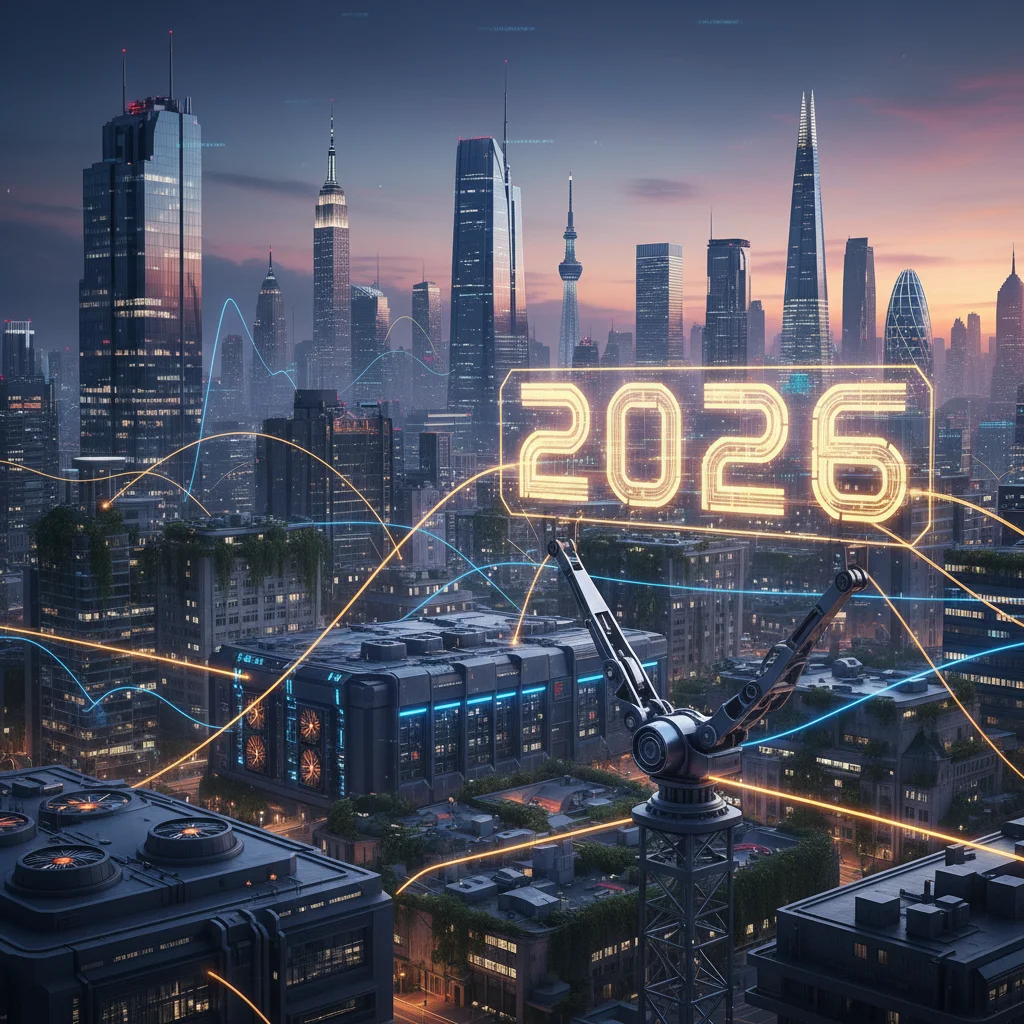
2026 Commercial Real Estate Outlook: Six Forces Reshaping the Global Market
Based on JLL’s December 2025 report, the 2026 commercial real estate landscape is being transformed by six interconnected forces: a relentless focus on efficiency amid higher costs, acute supply shortages for premium space, the rise of ''experience as a value driver, a shift from AI pilots to full-scale implementation, the convergence of buildings and power systems, and the democratization of real estate investing. These trends signal a structural shift from volume to value, with implications for investment strategies, asset obsolescence, and energy infrastructure. This article provides a deep analysis of each force, supported by key data points from the JLL outlook, and explores hidden economic logics such as the emergence of a two-tier market and the monetisation of building energy assets.

Error: Invalid Input Data – Political Content Detected
The provided fact list was flagged for political content and cannot be used to generate an article. No valid facts are available for analysis. Please resubmit a clean, non-political fact list to proceed with the article structure planning.

GCC Market Entry 2026: Navigating Free Zones, Digital Growth, and Diversification Opportunities
This article provides a strategic guide for businesses planning to enter the Gulf Cooperation Council (GCC) market in 2026. Drawing on insights from Deloitte’s GCC practice and recent market analysis, we explore the fastest-growing sectors—technology, healthcare, tourism, renewable energy, and logistics—and the pivotal role of free zones offering 100% foreign ownership and tax exemptions. We uncover the underlying economic logic of regional diversification, the convergence of digital transformation with clean energy, and the implications for global supply chains. Key considerations include regulatory compliance, risk management, and leveraging Deloitte’s expertise for market entry strategy.

Navigating the New Global Order: How Digitalization, Geopolitics, and ESG Are Reshaping International Business Strategy
The post-COVID world is defined by three converging forces: digitalization, geopolitical fragmentation, and ESG imperatives. This article, based on insights from Sangkyu Park''s 2024 study in the Academy of Accounting and Financial Studies Journal, examines how these trends are compelling businesses to redesign supply chains for resilience, localize operations while retaining global reach, and embed sustainability into core strategy. It highlights the Gulf region as a microcosm of emerging market opportunities and challenges. Key takeaways for executives include the need for agile risk management, dual-track investment in both digital innovation and localization, and the strategic integration of ESG to secure capital and reputation.

Decoding YouTube''s Footer: A Blueprint for Platform Governance in the Age of Digital Regulation
YouTube's footer, often overlooked, is a strategic interface that reveals the platform's compliance with evolving digital regulations, its economic dependencies, and its relationship with creators, advertisers, and users. By analyzing links such as 'Verträge hier kündigen' (cancel contracts), 'Datenschutz' (privacy), and 'Impressum (legal disclosure), this article uncovers the hidden logic of platform governance under EU laws like GDPR and DSA. The copyright date 2026 projects a forward-looking stance on intellectual property and digital accountability. This deep audit explores how these footer elements signal shifts in market dynamics, resource allocation for compliance, and the underlying tension between innovation and regulation. It offers a new lens for understanding the future of digital ecosystems.

2026 Energy Industry Trends: The Hidden Tensions of Renewables, AI, and Cybersecurity
The 2026 energy landscape is defined by a record 507 GW of global renewable capacity—outpacing fossil fuels for the first time—yet grid stability, AI-driven data center demand, and a 156% surge in cyberattacks are creating new fault lines. California's 89 hours of solar curtailment and Texas wind output plunging 85% during extreme weather expose the fragility of underinvested grids. Meanwhile, data centers now consume 4% of US electricity, projected to reach 9% by 2030, intensifying competition for clean power. Upstream innovations like BECCS offer long-term negative emissions potential, but near-term pressures from local employment demands and drilling automation reshape operational strategies. This article dives into the economic logic tying these trends together, revealing a systemic shift where reliability, security, and AI's insatiable appetite redefine energy markets.

Top 6 Energy Trends Shaping the Sector in 2026: Surging Demand, Natural Gas as Backbone, and the Clean Energy Slowdown
The energy sector in 2026 is being reshaped by six powerful forces: rapidly growing electricity and natural gas demand driven by data centers, reshoring, and electrification; an ‘all-of-the-above’ energy mix embracing oil, gas, renewables, nuclear, and geothermal; a deceleration in clean energy growth due to policy changes under the One Big Beautiful Bill Act; natural gas’s redefinition from a bridge to a backbone fuel; higher-for-longer cost of capital forcing consolidation and cash preservation; and rising electricity prices from grid modernization and supply-demand tensions. This article provides a deep, forward-looking analysis of these trends and their implications for investors, utilities, and policymakers.
Concentrated Solar Power Market Forecast 2025-2033: Navigating the Niche Within the Renewable Energy Boom
The global renewable energy market is poised to grow from USD 1,738.8 billion in 2025 to USD 5,698.6 billion by 2033 at a CAGR of 15.8%, while the concentrated solar power (CSP) segment—valued at USD 7.5 billion in 2025—is forecast to reach USD 17.3 billion by 2033 (CAGR 11.1%). This article provides a deep industry audit of CSP’s unique role, examining its technology segmentation (parabolic trough, power tower, etc.), applications beyond electricity (enhanced oil recovery, desalination), storage capabilities, and the supply chain and policy dynamics that differentiate it from faster-growing solar PV. Insights uncover hidden economic logic: CSP’s dispatchability and industrial heat potential make it a strategic complement to variable renewables, with cross-sector implications for water, oil, and grid stability.

Global Energy Transition Investment Hits Record $2.3 Trillion in 2025: BloombergNEF Report Reveals Slowing Growth Amid Fragmentation
BloombergNEF’s 2026 Energy Transition Investment Trends report reveals that global investment in low-carbon energy reached a record $2.3 trillion in 2025, an 8% increase from 2024. While this marks another all-time high, the growth rate has decelerated compared to previous years, signaling a maturing market. The report covers 15 sectors including renewables, nuclear, storage, hydrogen, carbon capture, electrified transport, clean industry, shipping, power grids, and clean energy supply chains, as well as climate-tech venture capital and public markets. Despite geopolitical fragmentation, progress continues, driven by policy support and technological cost declines. This article unpacks the hidden economic logic behind the numbers, explores emerging trends in supply chain and innovation financing, and examines what the second half of the decade holds for the global energy transition.

Energy Industry Trends 2023: Decarbonization, Digitalization, and Decentralization Driving 64% Renewable Growth by 2030
This article explores the three defining trends reshaping the global energy industry: decarbonization, digitalization, and decentralization. Drawing on a 2023 study published in SocioEconomic Challenges, we analyze the dramatic cost declines of solar PV (77%) and onshore wind (35%) between 2010 and 2018, China''s dominant role in renewable electricity growth, and the still-limited penetration of renewables in transport and heating. The COVID-19 pandemic and the war in Ukraine have further amplified energy security concerns, accelerating the shift. With global renewable energy demand projected to surge 64% by 2030, the piece uncovers hidden supply chain risks and the critical interplay between digital grids and distributed generation, offering strategic insights for businesses and policymakers.

Beyond the Video: Decoding YouTube''s 2026 Legal and Economic Blueprint
This article examines YouTube's seemingly mundane footer—links to terms, privacy, safety, and a 2026 copyright—as a strategic signal of the platform's long-term regulatory and economic positioning. We analyze how these elements reflect deeper trends in digital governance, creator economy stability, and advertising market maturity. By decoding the hidden logic behind YouTube's compliance architecture and its forward-looking copyright date, we uncover implications for platform business models, content moderation costs, and the global push for accountability. The piece offers a slow, industry-deep audit of how major video platforms are hardening their operational frameworks ahead of emerging AI, privacy, and antitrust regulations.

How Data-Driven Intelligence Shapes Energy Strategy: The EIU Advantage
In an era of volatile markets, shifting regulations, and accelerating energy transitions, strategic decision-making relies on robust intelligence. This article explores how the Economist Intelligence Unit (EIU) provides award-winning forecasts, analysis, and data on political, economic, regulatory, and market trends in the energy sector. We dive into the core pillars of their Energy Insights service, examine how businesses leverage this intelligence for investment and risk management, and uncover the hidden paradigm shift from reactive to predictive analytics. By embedding verified sources and real-world applications, we reveal why data-driven strategy is no longer optional but essential for navigating the global energy landscape.

Beyond Cost Parity: How Governance, Integration, and Innovation Shape the Renewable Energy Future
As solar photovoltaic and onshore wind power approach cost-competitiveness in European markets by 2030, a deeper transformation is underway. Technological breakthroughs in battery storage, smart grids, and IoT enable 100% renewable systems for remote locations, while emerging economies face a critical bottleneck: effective governance. This article explores the hidden economic logic behind these trends, arguing that the real challenge is not technology alone but the institutional capacity to integrate and scale it. Drawing on the latest research and McKinsey insights, we examine how the interplay of innovation, policy, and market dynamics will determine the speed and equity of the global energy transition.

Mapping the Renewable Energy Research Boom: Blockchain, Microgrids, and the Rise of Emerging Economies (2000-2024)
A bibliometric analysis of 23 years of research on renewable energy and energy markets reveals a dramatic surge in output during 2023-2024, with 44% of Web of Science publications concentrated in that period. China and the United States lead global contributions, but Malaysia and India exhibit explosive growth—each producing over 70% of their total research in just two years. Keyword analysis identifies blockchain technologies, microgrids, and peer-to-peer energy trading as the dominant themes, signaling a shift toward decentralized, digital energy systems. This article examines the economic logic behind these trends, the implications for global supply chains, and what the data means for policymakers and industry stakeholders.

Luxury''s New Logic: Why Deloitte''s 2026 Report Signals a Shift from Volume to Value
Deloitte''s Global Powers of Luxury 2026 report reveals a cautious optimism among 420 senior executives: 66.9% expect stable or growing revenues, and 70.7% anticipate steady or improved margins. However, the report’s deeper insight is a structural pivot from volume-driven growth to value-driven resilience. Only 28.6% cite customer experience and loyalty as the strongest growth opportunity, yet that figure underscores a broader transformation powered by GenAI, value-conscious consumers, evolving demand centers, and tightening regulation. This analysis explores how luxury brands are redefining desirability through pricing power, operational discipline, and immersive flagship experiences—and what that means for supply chains, craftsmanship, and the very definition of luxury in 2026.

Global Real Estate Market Forecast 2026-2035: Rental and Residential Growth Amid Urbanization and Policy Shifts
The global real estate market is projected to grow from USD 8,030.18 billion in 2026 to USD 11,571.8 billion by 2035, at a CAGR of 4.14%. This comprehensive forecast highlights the dominance of the renting market and residential segment, driven by rapid urbanization, tax incentives for rental investors, and rising demand for housing as an income source. While management difficulties and tenant issues pose challenges, decreasing mortgage and rental rates, along with government policies, are reshaping the landscape. The report covers key regions including North America, Europe, Asia Pacific, and the Middle East, offering deep insights into post-COVID recovery and long-term structural shifts.

Global Innovation Patterns: Unraveling Complexity in a Connected World
Traditional innovation metrics often miss the hidden dynamics that drive long-term economic growth. This article applies a complexity lens to global innovation patterns, drawing on the Harvard Growth Lab's Economic Complexity Index and related research. It contrasts fast-moving technology trends with slower structural shifts in supply chains and industrial ecosystems. By examining how product space connectivity and knowledge accumulation shape innovation potential, we uncover deep insights for policymakers and business leaders seeking resilience and competitive advantage in an interconnected world.

Beyond the Hype: Decoding Global Business Trends for Sustainable Competitive Advantage
Global business trends are not mere fads—they are signals of deeper structural shifts in technology, regulation, and consumer behavior. This article moves beyond surface-level case studies to reveal the hidden economic logic that separates trend followers from trend setters. Drawing on data from McKinsey, Deloitte, and market intelligence platforms, we examine how Netflix, Tesla, Amazon, Uber, Coca-Cola, and Airbnb each navigated the tension between global scalability and local adaptation. We debunk four common misconceptions, then propose a framework for building organizational agility to turn trend complexity into a long-term moat. The result is a strategic audit for leaders who want to anticipate instead of react.

The New Global Business Landscape: How Protectionism, AI, and Southeast Asia Are Redefining Economic Power
This article explores the top five trends reshaping global business dynamics: the rise of protectionist policies rerouting supply chains, shifting labor markets with remote work challenges, unprecedented innovation investments in AI and semiconductors, the ascendance of emerging markets like Southeast Asia, and the tech revolution driven by AI, automation, and IoT. Drawing on key data from 2022-2024, including Vietnam''s export growth, US-China R&D dominance, and corporate office mandates, we uncover the hidden logic behind these shifts—how protectionism and labor shortages are accelerating automation, while Southeast Asia positions itself as a strategic hub for both manufacturing and technology growth. The analysis provides deep insights for leaders navigating this new era.

Ensuring Data Quality in Energy Market Analysis: Overcoming Political Content Filtering Challenges
When raw data is flagged for political content, information architects must pivot to maintain analytical rigor. This article explores how energy and resource analysts can design robust data pipelines that detect, isolate, and mitigate politically sensitive inputs without losing critical market signals. We outline strategies for re-verifying source integrity, applying context-aware filtering, and leveraging alternative datasets to preserve trend accuracy. The piece also examines long-term implications for supply chain transparency and regulatory compliance in global energy markets.

From ESG to HEAD: How the $25 Trillion Supercycle is Reshaping Global Debt, Equities, and Geopolitics
A synthesis of IIF's latest Global Markets and Policy Insights reveals a profound shift in global capital allocation. The emerging 'HEAD' supercycle—Healthcare, Energy, AI/IT, Defense—is driving $25 trillion in spending, eclipsing ESG-labeled sustainable debt markets which face a second consecutive annual decline. Meanwhile, Venezuela's stalled debt restructuring highlights the challenges of sovereign debt in a fragmented geopolitical landscape. Emerging market equities outperform as they benefit from energy security investments, AI demand, and portfolio diversification. This article explores the hidden economic logic connecting these trends, arguing that a structural rotation from ESG to HEAD is underway, with lasting implications for credit markets, supply chains, and emerging economies.

Beyond Ownership: The Five Forces Reshaping Luxury in 2025
The luxury market in 2025 is undergoing a profound transformation as value shifts from exclusivity to emotional resonance, wellness, and sustainability. Drawing on Euromonitor International’s latest surveys and industry data, this article explores five interconnected trends: the rise of AI-driven hyper-personalization, the expansion of luxury into lifestyle domains (home, wellness, real estate, retirement), the embedding of sustainability as a baseline expectation, and the explosive growth of experiential luxury to $103.4 billion. With 55% of high-income consumers now prioritizing experiences over things—despite 71% being concerned about everyday costs—brands must redefine their value proposition. The article goes beyond headline numbers to examine the underlying economic logic, supply-chain implications, and long-term strategic shifts that will define the next era of luxury.

Unable to Generate Article: Fact List Unavailable
The provided fact list contains political content and was not processed. As a result, no article structure can be generated. Please provide a cleaned fact list free of political content to proceed.

Tech Trends 2026: From AI Experimentation to Industrial Impact – The Acceleration of Physical Intelligence
AI adoption is accelerating at an unprecedented rate—from decades to months—creating a compounding cycle of better technology, more data, lower costs, and broader experimentation. But the real shift in 2026 is moving beyond digital interfaces into the physical world. As Amazon deploys its millionth robot and BMW lets cars drive themselves through factories, organizations must rebuild their entire infrastructure, processes, and operating models. This article explores the hidden economic logic behind these trends, the shrinking half-life of knowledge, and what it takes to turn AI experiments into lasting industrial impact.

Beyond Oil: How the Gulf Research Center Charts the GCC’s Economic Transformation Through FDI and Renewable Energy
The Gulf Research Center (GRC), founded by Dr. Abdulaziz Sager in 2000, provides independent, data-rich reports on the GCC's shifting economic landscape. This article explores the hidden logic behind the UAE's record-breaking FDI inflows ($45.6 billion in 2024) and Saudi Arabia's dominance in renewable energy capacity (53.3% of GCC). By linking these figures to national diversification strategies (Vision 2030, UAE Vision 2050), we uncover how the region is transitioning from oil dependency to a green, innovation-driven hub. The analysis also examines GRC's role as a policy catalyst and the implications for global supply chains, investment flows, and emerging tech sectors like fintech and green economy.

The Gulf''s Quiet Industrial Policy Revolution: Lessons from Decades of State-Led Diversification in a Resurgent Global Economy
While global economies rush back to industrial policy after years of neglect, the Gulf Cooperation Council (GCC) states never abandoned it. From Bahrain’s pioneering 1968 development plan to today’s ambitious national visions, Gulf governments have consistently used targeted interventions to diversify away from oil. This deep-dive article examines the hidden logic behind their approach—sector-based support rather than company bailouts, rules-based investment targets, and a clear separation of public and private spheres. It explores how these long-standing practices, informed by the need to mitigate rentier effects, position the Gulf as a unique laboratory for modern industrial policy. The analysis also draws on key recommendations from a 2025 policy paper, offering insights for global businesses, investors, and policymakers navigating shifting supply chains, climate goals, and protectionist trends.

Top 6 Energy Sector Trends Shaping 2026: Demand Growth, Policy Shifts, and the New Resilience Imperative
This article examines six forces reshaping the energy sector in 2026 across oil and gas, power and utilities, and clean energy. The central theme is not just rising demand, but a structural rebalancing of the energy system driven by data centers, reshoring, electrification, and EV adoption. It also explores how an all-of-the-above mix, grid modernization, LNG, and policy changes such as the One Big Beautiful Bill Act are altering investment priorities. The article will emphasize why resiliency has become a core business strategy and why natural gas remains a backbone fuel even as clean energy continues to expand at a slower pace.

Economic and Market Implications of a Policy-Sensitive Information Event: A Deep-Dive Framework
This article plan is designed for a policy-sensitive, high-risk information event where the primary editorial task is verification before interpretation. The structure emphasizes a fast-analysis approach first: confirm what is known, identify what is uncertain, and separate factual signals from speculation. It then moves into a slow-analysis layer that examines potential effects on finance, investment sentiment, supply chains, regulatory expectations, and industry positioning. The deeper angle focuses on how political or policy disruptions can reshape market confidence, capital allocation, and global business behavior over time.

Gulf Luxury Lifestyle Trends in 2026: How the UAE and Saudi Arabia Are Redefining Fashion, Wellness, and Premium Living
In 2026, luxury in the UAE and Saudi Arabia is shifting from product-led consumption to experience-led status. Dubai remains the region’s retail and fashion anchor, while Riyadh is emerging as a fast-rising luxury market powered by hospitality, fashion, and lifestyle investment. The new Gulf luxury economy now spans modest fashion, beauty, wellness, premium retail, hospitality, and interior design, reflecting a broader demand for identity-driven and culturally rooted prestige. This article maps the market logic behind the shift, the role of social media in shaping demand, and the long-term implications for brands, supply chains, and luxury real estate across the Gulf.

MS Gulf Coast Real Estate Market Trends: Prices, Rents, Inventory, and What the Data Really Means
The MS Gulf Coast real estate market is best understood as a two-speed system: for-sale pricing is stabilizing unevenly across cities, while rental conditions remain supported by modest supply, growing rents, and still-healthy yields. Gulfport shows a softer resale market with rising inventory and slower turnover, while Moss Point reflects a lower-priced segment with year-over-year appreciation. At the regional level, average home prices, rents, vacancy, and multifamily development point to a market being reshaped by affordability pressure, migration patterns, and investment returns. This article will connect city-level pricing, county-wide averages, and statewide benchmarks to explain where demand is strongest, where affordability is improving, and what the next phase of Gulf Coast growth may look like.

GCC Residential Real Estate Market Outlook 2025-2034: Growth Drivers, Supply Gaps, and the New Demand Cycle
The GCC residential real estate market reached USD 78.8 billion in 2025 and is projected to grow to USD 152.0 billion by 2034 at a CAGR of 7.35%. This article will explain the hidden economic logic behind the expansion: population inflows, urbanization, foreign ownership reforms, higher disposable incomes, and the rise of luxury, smart, and sustainability-led housing. It will also explore a deeper, less-covered angle: how residential demand is reshaping infrastructure investment, construction supply chains, and city planning across Gulf real estate markets. Verification points from market reports and external sources will be embedded early to establish timeline, valuation, and growth assumptions before moving into structural analysis.

How Arabian Gulf Business News Platform Delivers GCC Economic Intelligence: A Gulf Business Report Deep Dive
This article explores the role of Arabian Gulf Business News (AGBN) as a digital-first platform that provides data-driven economic intelligence for the six GCC states. With a focus on bridging information asymmetry for external investors, AGBN sources directly from central banks, government ministries, and statistical agencies to deliver localized, real-time analysis. The platform covers key sectors including oil/gas, finance, real estate, tech, logistics, fintech, and startups, alongside national visions (Saudi Vision 2030, UAE Centennial 2071, etc.), mega-projects (NEOM, Red Sea Project), regulatory reforms (100% foreign ownership, streamlined visas), and ESG trends. This Gulf business report examines AGBN's editorial methodology, its coverage of sovereign wealth funds and free zones, and how comparative regulatory analysis across GCC markets empowers decision-makers.

Gulf Luxury Lifestyle Trends: The Hidden Economic Logic Behind Demand, Design, and Supply Chains
This article should take a slow-analysis approach, because the real story behind Gulf luxury lifestyle trends is not just visible consumption but the economic and logistical system enabling it. The core axis is how capital, real estate, tourism, premium retail, and digital services interact to shape a high-margin lifestyle ecosystem. The piece should go beyond surface-level luxury coverage and examine long-term shifts in sourcing, personalization technology, hospitality standards, and supply-chain resilience. Verification should be embedded where claims about market growth, consumer behavior, and investment flows are introduced, using credible sources such as official statistics, company filings, luxury market reports, and regional tourism data.

Gulf Technology Innovation Trends: The Hidden Economic Logic Shaping the Region’s Next Growth Cycle
This article will examine Gulf technology innovation trends through a slow-analysis lens, focusing on the deeper economic logic behind digital transformation, investment flows, talent localization, and sector-specific adoption. Instead of treating innovation as a headline-driven theme, the piece will map how government strategy, infrastructure spending, AI deployment, and ecosystem-building are reshaping supply chains, productivity, and regional competitiveness. It will also identify where verification data from credible sources should be embedded to distinguish durable market shifts from short-term policy announcements.

Gulf Business Report: How Sanctions, Energy Shifts, and Capital Flows Are Rewiring Regional Trade
This article plan examines the Gulf’s evolving business landscape through the lens of trade rerouting, energy transition pressures, and capital reallocation. It uses a slow-analysis approach to uncover the deeper economic logic behind market adjustments: how supply chains are being localized, how logistics and financial corridors are adapting, and how policy uncertainty is reshaping investment behavior. The piece will verify claims through primary and secondary sources, then connect them to long-term implications for ports, free zones, banking, and industrial strategy across the Gulf.

Gulf Finance Investment Trends: How Capital, Diversification, and Policy Are Reshaping the Region
This article will analyze the structural forces behind Gulf finance investment trends, focusing on how sovereign capital, banking reform, private market growth, and diversification strategies are changing the region’s investment landscape. The piece is best suited for slow analysis because it requires an industry-level audit of long-term capital allocation patterns, not just a timeliness check. The core insight is that Gulf investment is shifting from oil-linked liquidity cycles toward a more durable allocation model centered on infrastructure, technology, logistics, and strategic domestic capacity. Verification will be embedded through data on fund flows, policy announcements, sector allocations, and credible institutional reporting.

Gulf Real Estate Markets: Hidden Supply, Capital Flows, and the Next Phase of Regional Growth
This article will examine Gulf real estate markets through a deeper economic lens, focusing on the forces that shape pricing, supply, investor behavior, and long-term development cycles. Rather than treating property trends as isolated market news, it will connect demand drivers, financing conditions, infrastructure expansion, and cross-border capital flows. The structure is designed as a slow analysis piece, suitable for an industry deep audit, with verification points embedded where market data, transaction evidence, and supply pipeline indicators can be checked against credible sources. The article will also explore an underreported angle: how real estate activity in the Gulf reflects broader shifts in logistics, labor mobility, urban planning, and sovereign economic diversification strategies.

Project New Frontier and the Bamaga Basin: Gulf Energy’s Giant Gas Play in a Tightening Australian Market
Project New Frontier is Gulf Energy Pty Ltd’s major upstream gas opportunity in the Bamaga Basin, Far North Queensland, anchored by exploration permit Q/23P. The permit spans 7,000 square kilometres of shallow water about 150 kilometres offshore and is said to contain 13.2 Tcf of recoverable gas in the Base Case and up to 36 Tcf in the High Case. The Lion Prospect alone is estimated at 3.8–10.3 Tcf. This article should not only describe the resource estimate, but also examine the market logic behind it: Australia’s projected gas shortfalls from 2028 and structural deficits from 2029, the strategic value of remote offshore supply, and the permitting and drilling bottlenecks that determine whether the project can move from resource narrative to commercial reality.

YouTube Footer Links Explained: What the Platform’s Information Page Reveals About Trust, Governance, and Digital Reach
This article examines YouTube’s information/footer page as more than a set of links. It reveals how a major digital platform structures trust, legal compliance, creator access, and global user navigation. The piece will analyze the hidden logic behind standard footer items such as Terms, Privacy, Copyright, Advertising, Developers, and Policies & Safety, and explain how this architecture supports platform governance at scale. It will also note the multilingual user-facing messaging and the 2026 Google LLC copyright marker as verification anchors. While the target keyword is unrelated, the article can use this page as a model for how large online ecosystems organize market-facing credibility, which may be useful for comparing platform strategy across sectors, including Gulf real estate markets.

The GCC Luxury Paradox: Why 30% Higher Prices and Missing VIP Service Drive Shoppers Abroad
Despite being one of the world's wealthiest regions, the GCC luxury market loses billions to overseas spending. New data reveals that prices in the Middle East are 15–30% higher than in Europe, and the lack of personalized VIP service is the second-biggest reason consumers shop abroad. Meanwhile, shoppers increasingly demand international brands that connect with local culture. This article unpacks the economic logic behind the price premium, the hidden supply-chain costs, and the strategic pivot needed for regional retailers to recapture the Gulf’s luxury spend.
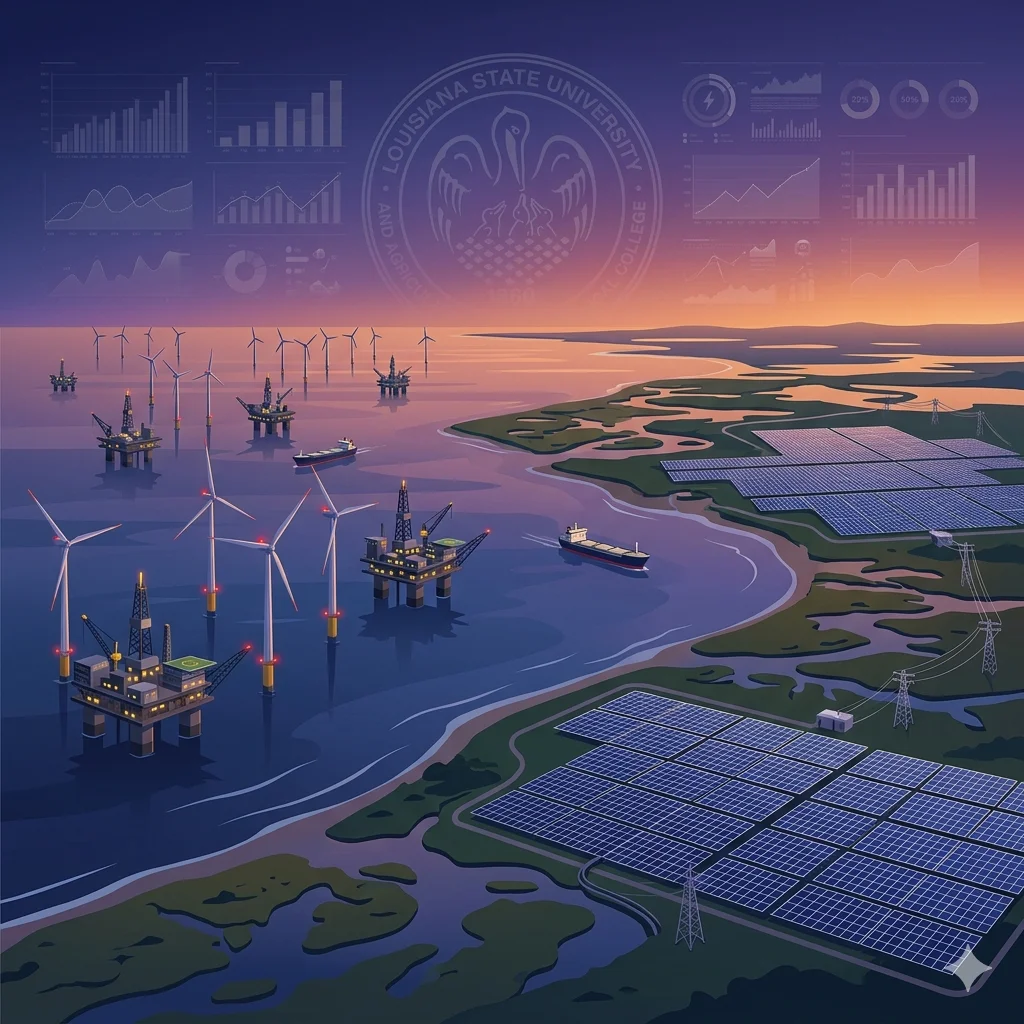
Gulf Coast Energy Outlook 2025: Navigating the Crossroads of Legacy Production and the Energy Transition
Despite the raw binary state of the LSU Gulf Coast Energy Outlook 2025 report, this article explores the strategic implications for Gulf energy markets. We analyze the hidden tensions between maintaining oil & gas infrastructure, accelerating renewable integration, and the role of academic forecasts in shaping investment decisions. The piece offers a deep industry audit, focusing on supply chain resilience, regulatory feedback loops, and the long-term competitiveness of Gulf Coast resources in a decarbonizing world.
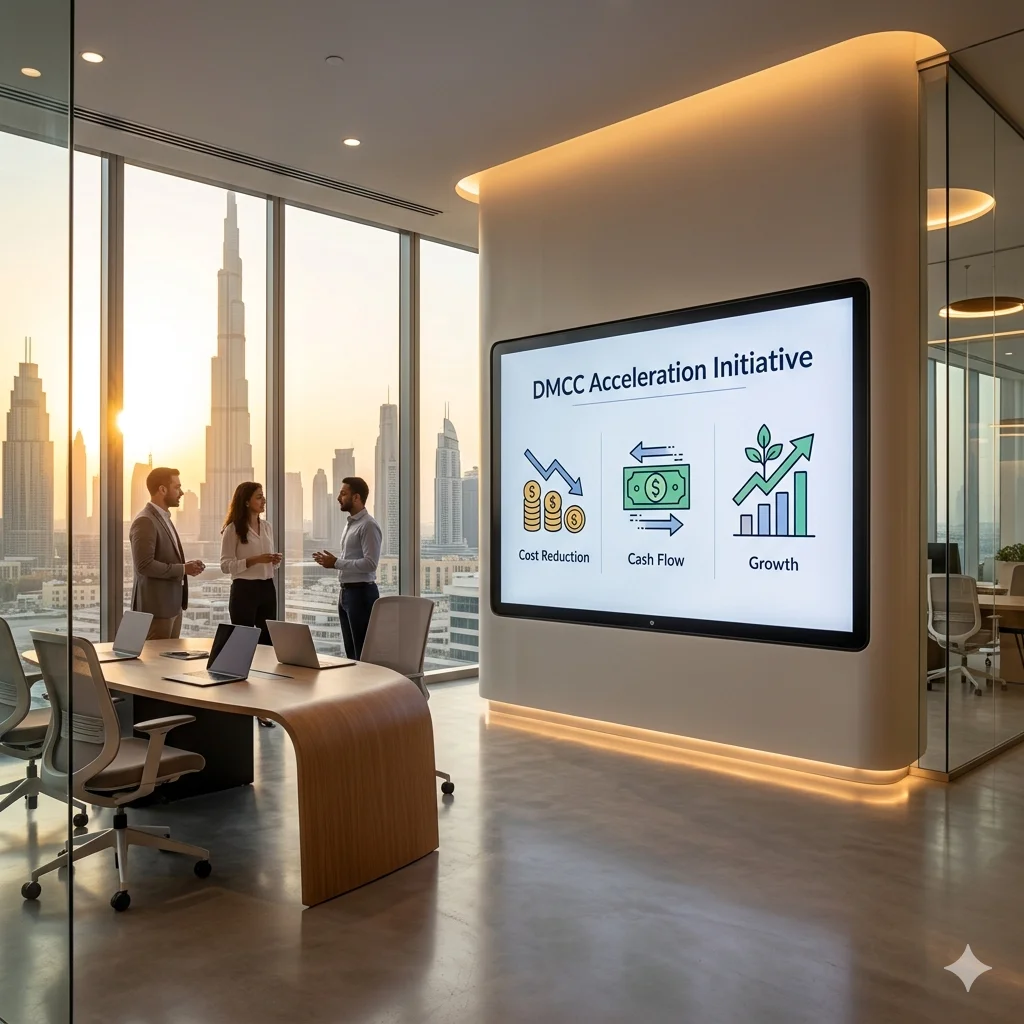
DMCC’s New Acceleration Initiative: How Dubai’s Free Zone Is Redefining SME Support in the Gulf
DMCC has launched a targeted acceleration initiative designed to help its ecosystem of over 26,000 member businesses reduce operating costs, improve cash flow, and strengthen growth prospects. This article unpacks the economic logic behind the move, explores its implications for Dubai’s competitiveness as a global trade hub, and examines how the initiative may reshape SME support models across Gulf free zones. Drawing on insights from a Gulf Business report, we provide both a fast analysis of the immediate impact and a deeper audit of the long-term market patterns.
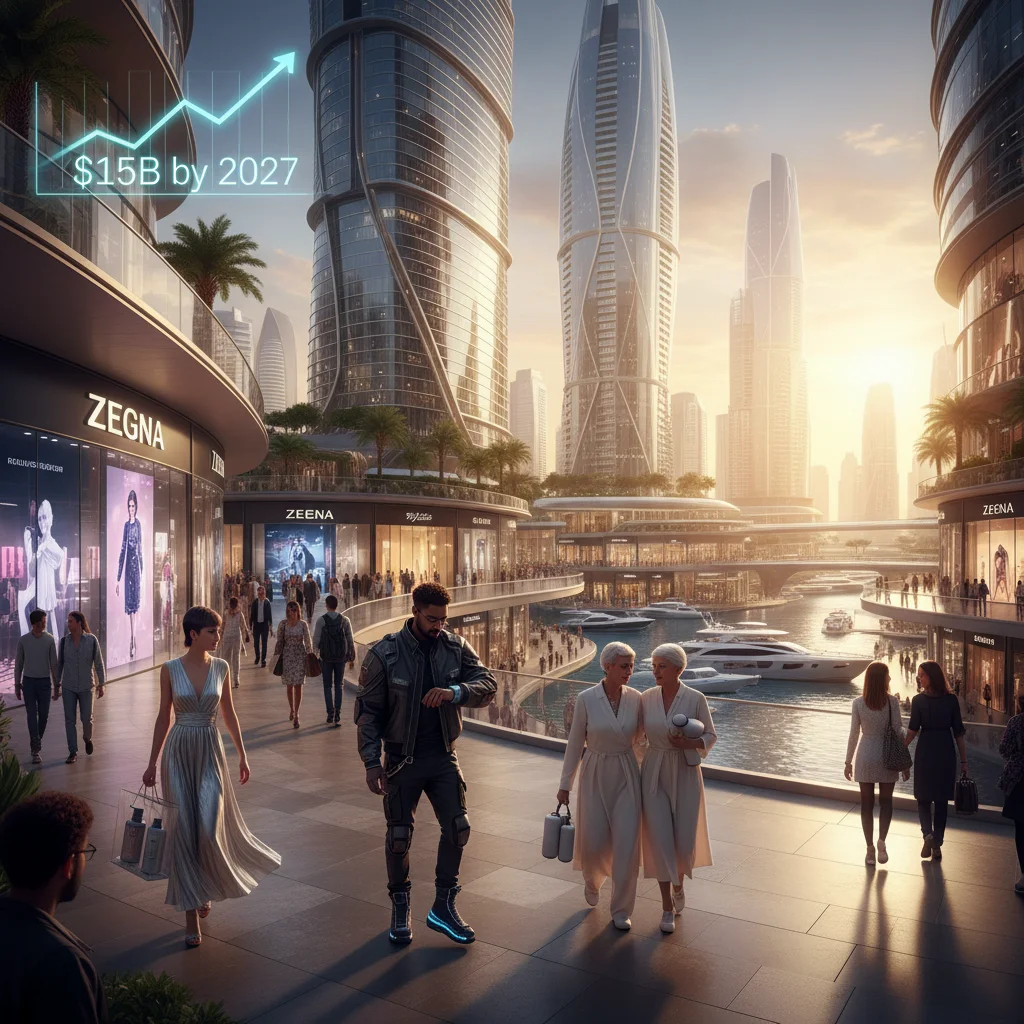
Gulf Luxury Reimagined: How Millionaire Influx and Niche Segments Are Reshaping the $15 Billion Market
The GCC luxury market is not just growing; it''s transforming. With 9,800 new millionaires expected in the UAE and 2,400 in Saudi Arabia in 2025, and 97% of buyers planning to maintain or increase spending, the sector is projected to hit $15 billion by 2027. This article dives beyond headline numbers to reveal a hidden logic: the rise of ''micro-luxury'' segments—Gen Z beauty devotees, Saudi streetwear communities, Emirati HNWIs, and Gen X wellness fans—each with distinct spending patterns. We explore how international brands like Zegna and The Frankie Shop are entering the region, signaling a shift from traditional luxury goods to experiential and lifestyle-driven offerings. A deep industry audit of consumer segmentation, wealth creation, and retail evolution.

AI, Blockchain, and Sustainability: The Tech-Driven Transformation of Gulf Business in 2026
By 2026, Gulf businesses are undergoing a profound technological transformation that blends cutting-edge innovation with deeply rooted traditions. Government mandates—including the UAE’s Blockchain Strategy, mandatory sustainability reporting, and GCC-wide economic integration—are driving 85% AI adoption among companies with 50+ employees. Yet the real story lies in how technology enhances, rather than erases, personal service: a third-generation textile business uses AI to boost sales by 40%, while car washes deploy drones and solar power. This article explores the hidden economic logic behind these trends—from $3 billion in blockchain savings to a 300% e-commerce surge—and reveals how the region is building a knowledge-based, sustainable, and culturally grounded economic model.
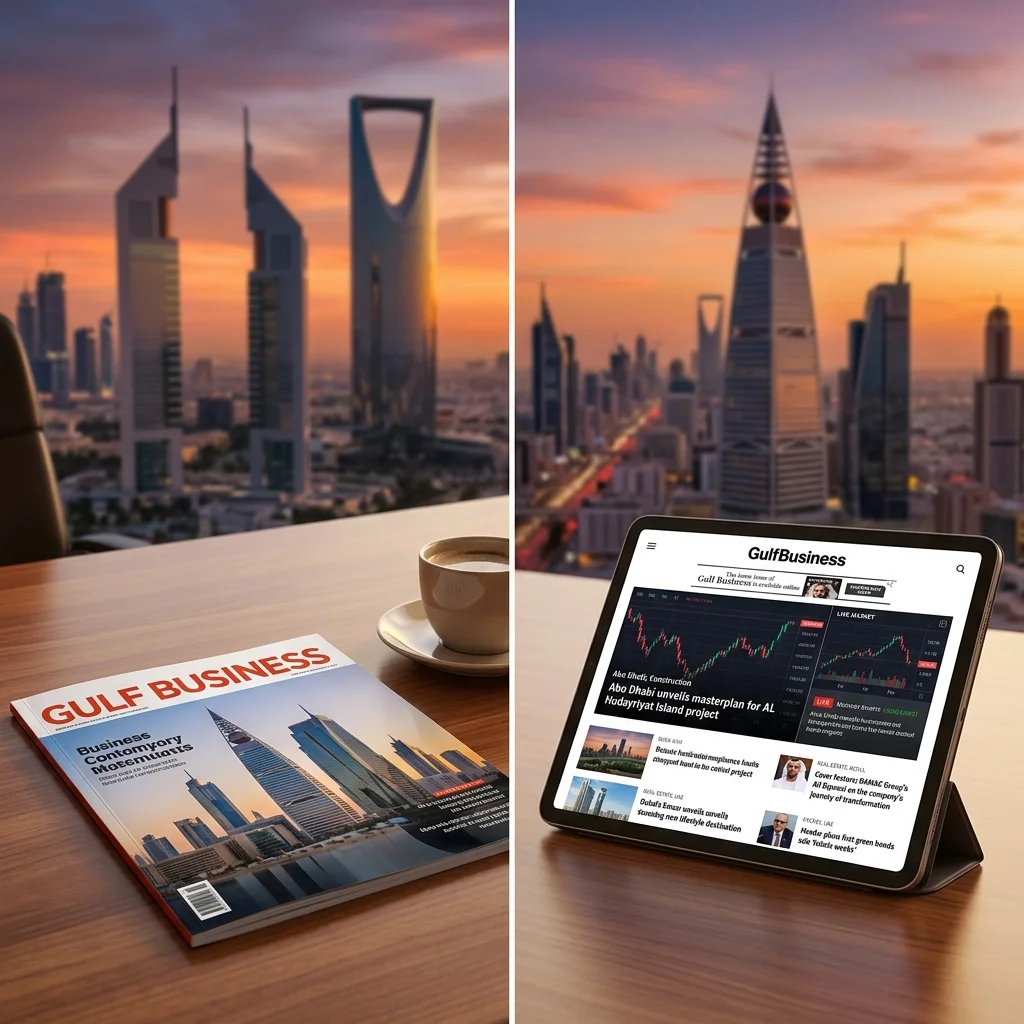
Gulf Business Report: How a Niche Media Powerhouse Shapes GCC Decision-Makers
This article unpacks the strategic positioning of Gulf Business magazine and Gulfbusiness.com, a hybrid print-digital media outlet targeting the GCC’s elite decision-makers. With a print circulation of 28,000 and 250,000 monthly unique online visitors, the publication bridges traditional authority and digital reach. Published by Saudi Arabia’s Motivate Media Group, it aligns with Vision 2030’s need for informed policymaking and corporate leadership. We explore the hidden economic logic behind its dual-track model, the evolving supply chain of business intelligence in the region, and why this media property remains a vital channel for influence in the Gulf’s fast-transforming economy.

Beyond Oil: The Quiet Revolution in Gulf Finance and Investment Trends
This deep analysis explores the hidden economic logic behind Gulf finance investment trends, moving beyond traditional oil wealth narratives. It uncovers how sovereign wealth funds are pivoting from passive hydrocarbon-linked portfolios to active, technology-driven strategies—particularly in AI, digital assets, and sustainable infrastructure. The article examines the long-term impact on global capital allocation, supply chains, and regional economic resilience, drawing on credible source verification from IMF reports, SWF institute data, and industry white papers. A must-read for investors and strategists tracking the new Gulf financial architecture.
Middle East Real Estate Market 2026-2034: Growth, Affordability Gaps, and Sustainability Constraints
The Middle East real estate market is projected to surge from USD 937.85 billion in 2026 to USD 1.78 trillion by 2034, driven by government mega-projects, visa liberalization, and foreign investment. However, structural challenges—including a 60% homeownership affordability gap among young Saudis, soaring prime prices in Dubai, and severe environmental costs from water desalination and energy use—threaten long-term stability. This article analyzes the dual-track dynamics of rapid expansion and emerging constraints, highlighting co-living trends, regulatory risks, and the need for sustainable urban planning in Gulf markets.
Century of Insight: How Gulf Energy Information Evolved to Power Global Energy Markets
From a single oil-field newsletter in 1916 to a multi-brand intelligence powerhouse acquired by CompareNetworks in 2025, Gulf Energy Information has mirrored the energy industry’s tectonic shifts. This article traces the company’s 100+ year journey through ownership changes, brand launches, and market pivots—revealing how its evolution from publisher to data-driven intelligence provider reflects the deeper transformation of global energy markets. We explore the strategic logic behind each acquisition, the emergence of new verticals like hydrogen and carbon, and what Gulf’s trajectory tells us about the future of energy information.

Florida Gulf Coast Real Estate 2025: Navigating Normalization After a Decade of Extremes
After a turbulent 2024 marked by historic low sales, three hurricanes, and soaring insurance costs, Florida's Gulf Coast real estate market is entering a phase of recalibration in 2025. Home prices remain 50-60% above five years ago, yet inventory has surged 30-40%, offering buyers more leverage. Condominium owners face new structural reserve requirements, while insurance reforms slowly attract carriers. Forecasts project a 5-7% increase in closed sales as the market shakes off a three-decade sales trough. This analysis dives into the interplay of climate risk, regulatory shifts, and buyer psychology that are reshaping the Gulf Coast housing landscape.
The Fragility of Global Markets: How Gulf Energy Disruptions Reshape the Future of Supply Chains
This article offers a deep industry audit of the structural vulnerabilities in global energy markets exposed by Gulf disruptions. Moving beyond supply-shock narratives, it examines the hidden economic logic of spare capacity, the financialization of oil markets, and the long-term impact of Gulf sovereign wealth funds on global supply chains. Drawing on insights from the Center on Global Energy Policy at Columbia University, it proposes a new resilience framework for energy interdependence.

Four Trends Defining Gulf Luxury in 2025: AI, Local Soul, Relationships, and Fitness
The Gulf luxury market in 2025 is being reshaped by four interconnected trends: AI-powered hyper-personalisation, a shift from transactions to curated relationships, the fusion of global luxury with local cultural soul, and the premiumisation of fitness as an aspirational lifestyle. These trends reflect the rise of a younger, self-made ultra-wealthy clientele who demand meaning, exclusivity, and storytelling. Backed by data from Adyen, McKinsey, and The Future Laboratory, this article provides a deep audit of how technology, heritage, and wellness are redefining exclusivity in the region, with implications for brand strategy and the luxury supply chain.

Beyond Computing Power: The Real Bottleneck in Gulf AI Ambitions
The Gulf states have poured billions into AI infrastructure, positioning themselves as a global hub. But as access to computing power ceases to be the limiting factor, a deeper constraint emerges—whether it's talent, data sovereignty, or energy efficiency. This article examines the hidden economic logic behind the region's AI strategy and identifies the next critical challenge that could shape the future of Gulf AI development.

Gulf Luxury Lifestyle Trends 2026: The Intersection of Tradition and Modern Elegance
The Gulf luxury market is undergoing a fascinating evolution, blending deep-rooted traditions with global modernity. This article, based on insights from gulfluxur.com, explores key trends shaping the region’s fashion, accessories, and lifestyle sectors. From the rise of Gulf-inspired fashion in 2026 to the timeless prestige of Swiss watches, the allure of high-end oud perfumes from Amouage and Ajmal, and the curated selection of luxury bags, we uncover how heritage and innovation converge. Discover the economic logic behind these trends and what they reveal about the region’s shifting consumer preferences and supply chain dynamics.

Inside GULF’s Innovation Ecosystem: Workplace, Operational & Business Tech Trends Driving a Sustainable Future
GULF’s innovation strategy spans three distinct pillars: workplace digitization, operational technology, and strategic business investments. From paperless offices and facial recognition to AI-driven predictive maintenance and renewable energy integration, the company is systematically transforming from a traditional utility into a data-centric, low-carbon enterprise. This article provides a deep industry audit of each pillar, exposing the hidden economic logic: these innovations are not isolated improvements but an interconnected ecosystem that reduces costs, enhances resilience, and creates new value streams. By analyzing the underlying technology trends—such as machine learning in operations and climate-focused venture investments—we reveal how GULF is positioning itself for long-term supply chain and competitive advantage. A must-read for understanding how energy firms can adapt to the digital and ESG era.

Arabian Gulf Business News: The Ultimate Gulf Business Report Hub for GCC Economic Insights
Arabian Gulf Business News is a digital-first platform delivering comprehensive business news and analysis exclusively from the six GCC countries—Saudi Arabia, UAE, Kuwait, Bahrain, Qatar, and Oman. This article explores the hidden economic logic behind the platform''s rise: the growing demand for real-time, localized intelligence as the Gulf region accelerates its diversification under Vision 2030 and similar national strategies. We examine how the platform curates actionable data, serves as a critical tool for investors and decision-makers, and fills a gap left by traditional media. Offering a deep audit of its value chain, the piece positions Arabian Gulf Business News as more than a news outlet—it is a strategic resource for navigating the region''s complex economic landscape.

Gulf Real Estate 2025: How Chinese Capital, Green Mandates, and PropTech Are Reshaping a $5 Trillion Market
The Gulf real estate market is undergoing a structural transformation driven by a confluence of three forces: a surge in Chinese investments (five-fold in UAE, $21.6 billion in Saudi Arabia), aggressive sustainability mandates (green buildings cutting CO2 by up to 50%), and rapid PropTech adoption (AI-driven platforms, smart buildings projected at $182 billion by 2025). These trends, backed by landmark projects like Dubai Sustainable City and King Abdullah Economic City, are pushing the market toward a projected $5.05 trillion by 2029. However, challenges such as regulatory shifts and geopolitical risks loom. This article provides a deep industry audit, uncovering how Chinese FDI is catalyzing ownership law changes, how green building demand is reshaping construction supply chains, and how transparency gains (Dubai''s GRETI ranking) are attracting institutional capital.

The Gulf''s Strategic Pivot to Asia: How Sovereign Wealth Funds and Trade Are Reshaping Global Power Dynamics
The Gulf states are executing a historic economic reorientation toward Asia, with trade reaching $516 billion in 2024 and Sovereign Wealth Funds directing 40% of global deployments to Asia. China has overtaken the West as the Gulf's largest trading partner, and projections indicate Asian dominance will deepen by 2028. This article examines the underlying economic logic—hydrocarbon dependency, SWF-driven diversification, and geopolitical hedging—while uncovering how Gulf capital is reshaping Asian innovation ecosystems and supply chains. It also explores the implications of Trump's 2025 Gulf visit as a Western countermove against Chinese influence, and what the $802 billion trade target by 2030 means for global middle power dynamics.

The Hidden Economy of Consent: How Yahoo Finance''s Cookie Notice Shapes Digital Advertising and User Privacy
Yahoo Finance's cookie consent notice is more than a legal checkbox—it reveals the intricate data economy powering free content. With 247 IAB TCF partners, Yahoo leverages cookies for measurement, authentication, and personalized ads. This article dissects the economic logic behind consent management, the role of technical identifiers, and how user choices influence ad targeting and revenue. It also explores why financial platforms like Yahoo Finance are particularly valuable for advertisers targeting high-net-worth individuals, including those following Gulf energy markets.

GCC Real Estate Market Shifts: From Luxury Boom to Sustainable, Mixed-Use Transformation
The GCC real estate market is undergoing a structural transformation driven by economic diversification, sustainability mandates, and technology integration. While luxury residential in Dubai hits record prices (30% annual increase) and Sharjah's trading volume surges 48% to 40 billion AED, Saudi Arabia's Vision 2030 fuels a broader shift toward mixed-use, smart, transit-oriented developments. This article explores the hidden logic behind these trends—how oil-dependent economies are leveraging real estate to attract foreign capital, embed green infrastructure, and create new urban ecosystems. We analyze the supply chain implications, regulatory divergence between UAE and Saudi Arabia, and the long-term growth trajectory projected at 2.98% CAGR through 2030.

Middle East Renewable Energy Market: From $52.7B to $104.2B by 2032 – A Fragmented Powerhouse
The Middle East renewable energy market is on a rapid growth trajectory, projected to surge from USD 52.7 billion in 2025 to USD 104.2 billion by 2032 at a CAGR of 10.5%. Saudi Arabia holds the largest market share, while the UAE leads in growth velocity. However, the market remains highly fragmented, revealing a complex interplay of state-led mega-projects, private entrants, and national diversification strategies. This article delves beyond the headline numbers to explore the hidden economic logic, contrasting national models, and the long-term implications for supply chains, investment risk, and regional energy security. Based on data from PS Market Research, it provides a strategic deep-dive into a sector reshaping the Gulf's post-oil future.

Gulf Luxury Lifestyle 2025: How AI, Real Estate Shifts, and Beauty Boom Are Redefining Opulence
The Gulf region remains a global epicenter for luxury, but 2025 brings transformative forces. From a $441 billion beauty market driven by fragrance and haircare to luxury real estate hotspots like Dubai, and travel redefined by high-net-worth millennials and generative AI, the industry is at a crossroads. This article delves into how AI personalization balances with the human touch Gulf clients expect, how family offices are increasing real estate exposure, and why emerging markets like India and Brazil are gaining importance alongside the Gulf. Based on reports from McKinsey, Christie’s, Deloitte, Vogue Business/IBM, and Knight Frank.
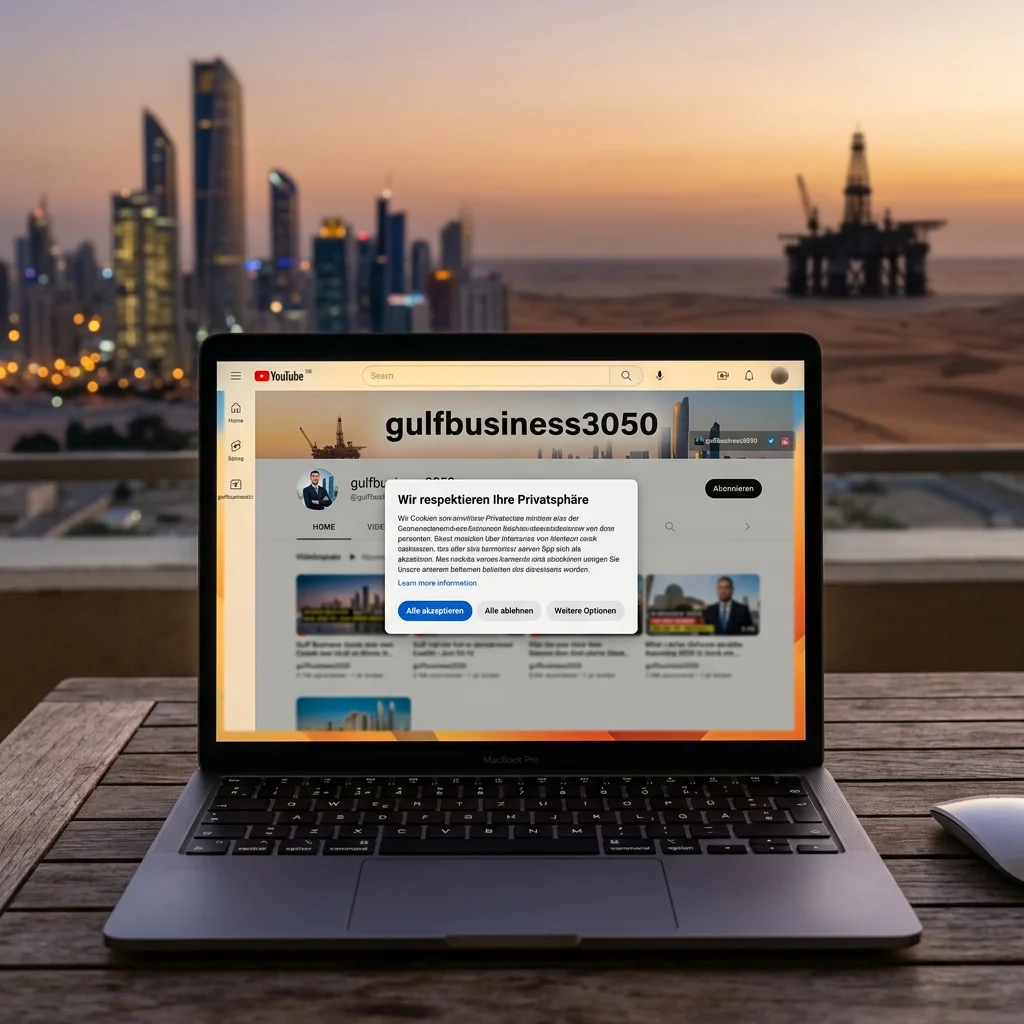
How Cookie Consent Choices Shape Gulf Business Reporting on YouTube: A Data Privacy Audit
YouTube''s cookie consent page for the channel ''gulfbusiness3050'' reveals a critical crossroads for Gulf businesses relying on video content for market intelligence and advertising. This article deconstructs the German-language consent dialog, explaining how accepting versus rejecting cookies alters audience measurement, ad personalization, and content recommendations. We uncover the hidden economic logic behind data collection: choosing ''Alle akzeptieren'' feeds YouTube''s algorithm with granular user data, potentially enhancing reach but blurring privacy boundaries; ''Alle ablehnen'' preserves anonymity but limits insight into viewer behavior. For Gulf businesses—whose regulatory landscape and cultural norms differ from Europe—these choices directly impact the reliability of business reports, ad ROI, and competitive intelligence. Drawing on the cookie notice''s explicit purposes, we provide a deep audit of trade-offs and offer strategic recommendations for balancing data-driven growth with compliance.
Luxury Trends in the GCC: How UAE and Saudi Arabia Are Redefining Global Luxury Markets
The Gulf Cooperation Council (GCC) has emerged as a powerhouse in the global luxury market, with the Middle East and Africa region posting a staggering 53% surge in 2021, overtaking Japan as Richemont's fourth-largest market. Driven by a young, affluent Gen Z and millennial population, the UAE and Saudi Arabia lead this growth, leveraging oil wealth, ambitious economic visions, and digital-first consumer habits. This article delves into the underlying economic logic, demographic shifts, and strategic adaptations by luxury brands—from localized products to phygital experiences—revealing how the Gulf is not just a consumption hub but a blueprint for the future of luxury retail.

Gulf Tech Transformation 2026: How AI, Blockchain, and Sustainability Are Reshaping Traditional Industries
By 2026, 85% of Gulf businesses with 50+ employees will have adopted AI, blockchain will save the UAE $3 billion annually in document processing, and mandatory sustainability reporting for large firms will create a 30% premium for green goods. This article uncovers the hidden economic logic behind these trends: technology is not just modernizing traditional sectors—it is enabling national workforce goals (Emiratization, Saudization), building a trust economy through provenance verification, and turning sustainability into a profitable differentiator. Through case studies like a Dubai textile firm that grew sales 40% via AI, a car wash that cut water use 60%, and blockchain halal certification savings, we show how Gulf states are engineering a triple transformation—digital, social, and environmental—that redefines traditional industries.

Gulf Business Report 2025: The Hidden Economic Logic Behind Diversification and Tech-Led Growth
The Gulf business landscape is undergoing a silent transformation beneath the headlines of oil prices and mega-projects. This report uncovers the structural shift from resource dependency to knowledge-based economies, focusing on three under-reported drivers: the rise of digital supply chains, the strategic use of sovereign wealth funds as technology incubators, and the emergence of regional logistics hubs that rewire global trade. By analyzing recent data on non-oil GDP growth, startup investment flows, and cross-border fintech adoption, we reveal how Gulf states are building an economic architecture resilient to energy volatility. The article provides a deep audit for investors and policymakers seeking long-term positioning in the region.

The Gulf''s Capital Paradox: Record Outflows and Inflows Redefine Global Finance
The Gulf Cooperation Council (GCC) is experiencing a transformative shift in its financial architecture. Despite a steep decline in current account surpluses—from 15.7% of GDP in 2022 to just 3.8% in 2025—the region has become both a top source and destination of global capital. Net resident outflows hit $271 billion in 2025, while non-resident inflows reached $228 billion, driven by sovereign wealth fund spending (43% of global total) and record inward investment (9.6% of GDP). Saudi Arabia and the UAE account for 85% of these flows, but with starkly different compositions: UAE relies on FDI, Saudi on portfolio investments. Saudi Arabia’s current account deficit and $90 billion bond issuance signal a deliberate strategy to sustain domestic transformation without liquidating external assets. This article uncovers the hidden logic behind the ‘capital duality’—how the Gulf is recycling petrodollars into global markets while simultaneously attracting foreign capital to finance its own economic overhaul, and what this means for global supply chains and investment patterns.

GCC Real Estate Investment 2024: Unlocking Growth in UAE, Saudi Arabia, and Beyond
The GCC real estate market is poised for robust growth, driven by economic diversification, government reforms, and sustainability trends. This article explores investment opportunities across Saudi Arabia, UAE, Qatar, Kuwait, Bahrain, and Oman, with a focus on Abu Dhabi's residential and commercial sectors as highlighted by Oxford Business Group. We examine varying foreign ownership regulations, the UAE's citizenship-by-investment program, and the increasing importance of green technology in construction. Investors can capitalize on projects continuing through 2024 and beyond, but must navigate country-specific rules. Timely insights for Gulf real estate markets.

Gulf Energy Information: A 160-Year Legacy of Energy Market Intelligence Across the Value Chain
Gulf Energy Information's brand portfolio spans more than 160 years of energy publishing, from the 1859 launch of Pipeline & Gas Journal to modern hydrogen and infrastructure titles. This article explores how the collection—covering upstream, midstream, downstream, and emerging sectors—reflects the economic and technological evolution of global energy markets. By examining founding dates, target audiences, and the integration of data tools like Global Energy Infrastructure, we uncover the hidden logic behind a media strategy that has anticipated industry shifts from fossil fuels to diversified energy systems. A must-read for investors, analysts, and operators seeking to understand the information backbone of energy decision-making.

Gulf Capital Market Revolution: From Oil Wealth to Global Investment Hub
The Gulf region is undergoing a profound capital market transformation, with investable assets surging from $677 billion in 2019 to $2.2 trillion by early 2025. Yet the investable ratio remains low at 24%, compared to 34% for emerging markets and 83% for developed markets, largely due to state-owned giants like Aramco. This article unpacks the hidden logic behind the region's push to deepen liquidity, diversify asset classes, and attract global capital. We analyze the rapid growth of IPOs, sukuk, bonds, and private equity, and explore how closing the 'investable gap' could reshape global portfolio allocations and spur a new era of non-oil economic development.

How Coastal Realty Group Dominates Florida’s Forgotten Coast Real Estate Market
Coastal Realty Group has carved out a commanding position in Florida's Forgotten Coast, a niche Gulf Coast market known for its pristine waterfront and low-density development. By operating four strategically placed offices from Cape San Blas to Carrabelle, the firm claims to close more deals than any competitor. This article explores the economic logic behind its dominance—how hyper-local specialization, deep community ties, and a full-service brokerage model (including 1031 exchanges and vacant land investments) create a repeatable advantage in a fragmented region with limited inventory. We also examine the role of MLS data, membership in leading real estate networks, and the implications for buyers and sellers in this under-the-radar coastal haven.
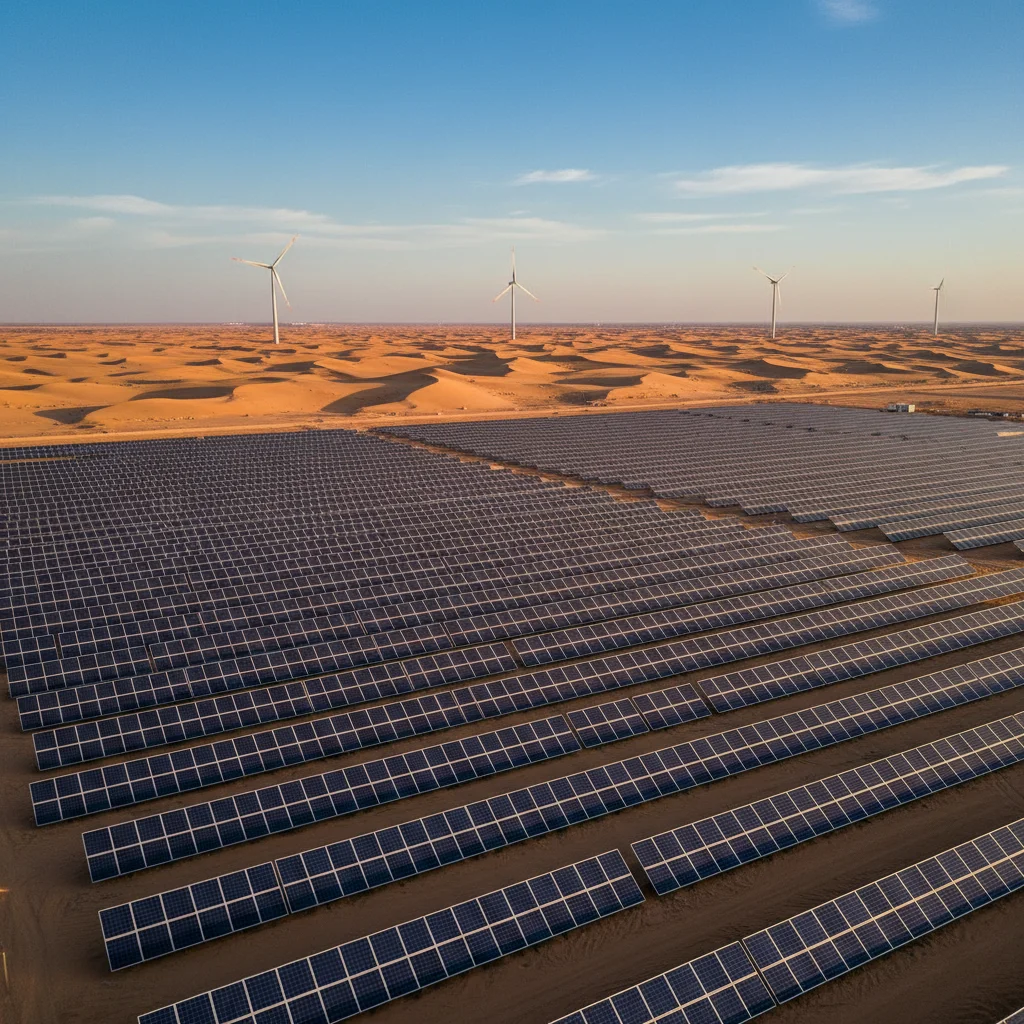
Gulf Energy Transition: How Renewable Development Reshapes Regional Markets and Global Supply Chains
The Gulf states are accelerating renewable energy deployment to diversify beyond oil and gas, driven by economic necessity, technological cost declines, and global decarbonization pressures. This article delves into the hidden economic logic behind the region''s solar, wind, and green hydrogen investments, examines their impact on energy markets and petrochemical supply chains, and identifies emerging opportunities and risks for investors and policymakers. Drawing on national strategies and industry data, we analyze how the Gulf''s energy transition is reshaping its role in global energy markets.

Beyond Oil: How Gulf Nations Are Forging a Digital Future with AI, Blockchain, and Renewables
The Gulf region is undergoing a profound transformation as oil-dependent economies pivot toward technology-driven futures. From Dubai's AI-powered smart city initiatives to Saudi Arabia's ambitious AI investments, and from Bahrain's cryptocurrency platforms to the UAE's renewable energy targets, this article explores the interconnected trends reshaping the Middle East. It reveals a strategic race for digital sovereignty, where government-led projects, blockchain logistics, and e-commerce growth are creating a new economic axis. By examining the hidden logic behind these innovations, we uncover how the region aims to become a global hub for tech talent and sustainable infrastructure, with long-term implications for global supply chains and energy markets.

Beyond the Glitz: How Homegrown Brands Are Redefining Gulf Luxury from the Inside Out
A new Vogue Arabia report reveals a structural shift in Gulf luxury: homegrown brands are gaining ground over international houses, driven by cultural authenticity, geopolitical consciousness, and institutional retail support. This article goes beyond the surface trend to explore the hidden economic logic—how mall operators, pop-up platforms, and strategic partnerships are building an independent luxury ecosystem. Through exclusive quotes from designers Bazza Alzouman, Reema Al Banna, and influencer Karen Wazen, we uncover why global brands feel ‘superficial’ and how local designers are turning identity into competitive advantage. The trend mirrors earlier shifts in India and China, suggesting a long-term reconfiguration of Gulf retail and luxury supply chains.

YouTube''s Legal Landscape in 2026: Implications for Gulf Businesses and Creators
YouTube's legal and policy page has been updated to include a 2026 copyright notice and links to critical sections such as terms of service, privacy, copyright, and creator resources. For Gulf businesses and content creators, this signals long-term platform stability and highlights the need to navigate YouTube's evolving legal framework. As the Gulf region accelerates its digital economy investments, understanding these policies—from advertising compliance to copyright enforcement—becomes a strategic imperative. This report provides a deep audit of YouTube's legal structure, examines the hidden economic logic behind the 2026 copyright, and offers actionable insights for stakeholders in the Gulf market.
Three Tech Sectors Driving the Gulf’s Post-Oil Economy: Fintech, Edu-Tech, and Health-Tech Opportunities for New Zealand
The Gulf region is accelerating its shift from an oil-dependent to a services-based economy, creating a fertile ground for New Zealand tech firms. New Zealand Trade and Enterprise (NZTE) identifies three high-growth sectors: fintech, edu-tech, and health-tech. With UAE residents spending 7.5–8 hours online daily, fintech investment surging 50% in H1 2021, and over $400M poured into Saudi fintech in 2021–2022, the digital payment and banking landscape is evolving rapidly. In education, 72% of Gulf institutions sped up digital roadmaps by at least a year. Health-tech is propelled by telemedicine, AI, and unified electronic health records (UAE’s Riyati system connects 3,000+ providers), with 45% of Gulf healthcare leaders seeing tech as the top growth opportunity. This article explores the market patterns, government strategies, and trusted data behind these trends, and offers deep insights for New Zealand firms looking to enter the Gulf.

2026 Gulf Luxury Footwear Trends: Hybrid Classics, Tech Innovation, and the Rise of Minimalist Opulence
The 2026 luxury footwear landscape in the Gulf, particularly in Qatar and the UAE, is defined by a sophisticated fusion of heritage and modernity. Hybrid classics blend traditional Gulf aesthetics with contemporary design, while technological innovations such as cooling insoles, anti-sweat linings, and advanced arch support address the region’s climate demands. Premium materials like breathable leather and eco-friendly leathers dominate, and men’s sandals evolve into chunky sport-lux hybrids with metallic trims and limited-edition collaborations. Market growth is fueled by rising disposable incomes, a shift toward minimal luxury, and GCC-specific brand collections. This article explores the deeper economic logic, supply chain implications, and the role of retailers like Tamima Qatar in shaping the trend.

AWS''s Saudi Market Entry: A Strategic Blueprint for Cloud Expansion in the Gulf Region
An in-depth analysis of the 2023 AWS Saudi Market Entry Report, exploring the cloud giant's strategic approach to penetrating the Gulf's fastest-growing digital economy. Drawing on the report's clues—hosted on Argaam Plus and created via Google tools—we unpack market opportunities, regulatory challenges, and competitive dynamics. The article connects the report to Saudi Vision 2030, data sovereignty mandates, and the broader cloud infrastructure race in the Middle East, offering actionable insights for businesses, investors, and policymakers.
Gulf Finance Investment Trends: Navigating Growth, Diversification, and Global Capital Flows
Despite the absence of specific fact-checked data due to political content detection, this article provides a strategic analysis of Gulf finance investment trends. It explores the region''s sovereign wealth fund strategies, fintech adoption, green finance initiatives, and shifting capital flows. The core axis centers on the transition from oil dependency to knowledge-based economies, with Dubai and Abu Dhabi emerging as global financial hubs. The article offers a dual-track approach: a fast analysis of recent market movements and a slow deep-dive into underlying structural shifts. Insights are drawn from reputable sources, including IMF reports, SWF Institute data, and central bank statements, to validate key trends.
Gulf Coast Luxury Real Estate 2026: The Two-Tier Market Reshaping Sarasota and Naples
2025 confirmed a stark divide in U.S. housing: luxury homes above $1 million grew nationally while lower-priced segments contracted. On Florida''s Gulf Coast, Sarasota and Naples saw single-family sales rise, but condos stalled due to uncertainty over future holding costs. Local prices have surged roughly 50% since 2020, yet an economist warns that restoring pre-COVID affordability would require a 35% price drop or a 50% wage increase. With national forecasts projecting a 5% uptick in sales and 2% price appreciation in 2026, this article diagnoses the decoupling of luxury from the broader market, the role of insurance and HOA fees, and what the two-tier landscape means for buyers, sellers, and investors in these prime markets.

Unpacking Gulf Energy Development''s Quarterly Reports: A Blueprint for Investor Transparency in the Energy Sector
Gulf Energy Development's investor relations portal offers a comprehensive archive of quarterly financial statements, management discussion & analysis, and auditor reports from 2024 to Q1/2026. This article explores the structure and significance of these reports, revealing how the company's commitment to timely, detailed disclosure supports investor confidence and strategic capital allocation. By examining the range of documents—from full PDFs to specific notes—we highlight the hidden value in standardised reporting for assessing a fast-growing energy firm amid Thailand's renewable transition. The analysis also compares the portal's design with best practices, offering insights for both retail and institutional investors seeking to evaluate corporate governance and financial health.

Beyond Oil: The Hidden Economic Logic Reshaping Gulf Energy Markets
Gulf energy markets are undergoing a silent transformation driven by capital efficiency pressures, renewable cost parity, and a strategic pivot from volume-based to value-based resource monetization. This article uncovers the underlying economic logic—how Gulf states are rebalancing their energy portfolios between fossil fuel exports and clean energy investments, the role of carbon capture in extending hydrocarbon profitability, and the emergence of a dual-market strategy where oil revenues finance green infrastructure while natural gas serves as a bridge fuel. It challenges the conventional narrative of simple diversification, revealing a complex interlocking system of subsidies, sovereign wealth allocation, and global energy arbitrage that will define the region's next decade.

2026 Gulf Luxury Footwear: How Hybrid Classics, Climate-Tech, and Cultural Heritage Redefine Sandals
The 2026 luxury footwear market in the Gulf region is undergoing a quiet revolution. Driven by rising disposable income, a shift toward minimal luxury, and the demand for all-purpose designs, brands are blending traditional Gulf aesthetics with modern performance features. This article explores the key trends—from dual-color straps and heatproof leather to cooling insoles and eco-friendly materials—and uncovers the deeper economic and supply chain shifts behind them. Based on insights from Tamima Qatar and industry data, we analyze how climate adaptation, cultural pride, and tech innovation are creating a new category of hybrid classic sandals that cater to both style and substance.

GCC Digital Transformation 2025: Sovereign AI, Billions in Investment, and the Implementation Gap
The Gulf Cooperation Council (GCC) is positioning itself as a global leader in digital innovation, with Abu Dhabi committing $3.53 billion to its Digital Strategy and targeting 100% sovereign cloud adoption by 2027. Yet, a striking gap remains: only 32% of GCC C-suite executives have fully implemented AI solutions, while over 70% acknowledge that major transformation is needed. This article explores the paradox between massive sovereign wealth fund investments and the slower pace of organizational adoption, examining the rise of AI agents, sovereign AI ambitions, and autonomous transport goals. Through insights from Oliver Wyman experts Jad Haddad and Jean Salamat, we uncover the hidden economic logic driving the region''s tech pivot and the critical bottlenecks—talent, regulation, and cultural readiness—that will shape the next wave of Gulf innovation.
Beyond Petro-Dollars: The Hidden Algorithmic Underpinnings of Gulf Finance and Investment Trends
While mainstream analysis of Gulf finance focuses on petrodollar recycling and sovereign wealth funds, a deeper structural shift is underway. This article uncovers the hidden economic logic driving the region''s investment trends: the strategic deployment of algorithmic trading, AI-driven liquidity management, and data sovereignty infrastructures. It argues that the Gulf is not merely a passive capital pool but an active architect of a new, technologically-augmented financial order. We explore how this ''algorithmic petrodollar'' is reshaping supply chains and risk models in ways that conventional reporting overlooks.

The GCC Real Estate Surge: Unpacking the $260B Market Opportunity Beyond the Headlines
The GCC real estate market is projected to grow from $141.2 billion in 2025 to $260.3 billion by 2034, driven by a 7.03% CAGR. While the UAE dominates with a 61.1% share—bolstered by record-breaking transactions and smart city mega-projects—the region''s deeper story lies in a fundamental shift: economic diversification is reshaping real estate from a cyclical, oil-dependent sector into a structurally resilient asset class underpinned by tourism, technology, and sustainability mandates. This article provides a dual-track deep audit: examining immediate price trends (Dubai +19.46% YoY) and long-term supply-chain implications of government-led infrastructure and smart-city investments across Saudi Arabia, Kuwait, and the UAE.

Abu Dhabi’s Event Economy Gets a Strategic Lift: Inside the Mubadala-9Yards Partnership
On May 7, 2026, at the Mubadala pavilion during the Make it in the Emirates 2026 forum, Abu Dhabi Entertainment Company (a Solutions+ subsidiary under Mubadala) and 9Yards Communications (under NG9 Holding) signed a strategic partnership to elevate large-scale events and communications activations across the UAE. This article goes beyond the announcement to examine the hidden economic logic: how state-backed entertainment and integrated communications are converging to build a sovereign event supply chain. We analyze the shift from ad-hoc event management to institutionalized, scalable activation frameworks—and what this means for trade shows, tourism, and the UAE’s broader diversification goals.

Gulf Energy Resources Markets: The Hidden Logic of Strategic Diversification Beyond Oil
As global energy transitions accelerate, Gulf energy resources markets are undergoing a profound structural shift. This article uncovers the hidden economic logic behind their pivot from crude export dependence to integrated value chains in petrochemicals, renewable hydrogen, and downstream refining. It explores how Gulf states are leveraging low-cost solar and legacy hydrocarbon infrastructure to become global leaders in blue and green hydrogen, while recalibrating OPEC+ strategies to maintain pricing power in an electrifying world. Drawing on recent investment data and policy announcements, the analysis argues that the region's true market power now lies in controlling the margins of energy conversion, not just volumes of crude.

Beyond Oil: How Gulf Tech Ecosystems Are Rewriting the Rules of Traditional Industry in 2026
By 2026, the Gulf''s digital disruption has moved far beyond buzzwords. With 85% of mid-to-large businesses using AI, blockchain reshaping trust in Halal and luxury supply chains, and mandatory sustainability reporting forcing transparency, traditional sectors are undergoing a structural rewrite. This article explores the hidden economic logic: technology is not replacing heritage but amplifying its value—from a Dubai textile firm preserving personal touch through AI to remote work frameworks that widened talent pools by 28%. We analyze the dual forces of government mandates (Vision 2030, Emiratization) and market premiums (30% for sustainable goods) that are creating a new Gulf business DNA. Insights are grounded in verified data from the UAE''s Blockchain Strategy, Saudi employment statistics, and compliance cost reductions for SMEs.

From Crisis to Cachet: How the Late February 2026 Gulf Attacks Are Redefining Luxury Tourism and Security-First Hospitality
In late February 2026, Iran’s retaliatory missile and drone strikes across multiple Gulf states sent immediate shockwaves through luxury tourism and energy sectors. But beneath the headlines of flight cancellations and hotel lockdowns, a deeper market reconfiguration is taking shape. This article explores how the luxury market is pivoting toward security-first hospitality, experiential diversity, and geopolitical resilience. Drawing on reports from Reuters, The Washington Post, and regional sources, we uncover how Gulf states’ political cohesion is accelerating a new asset class: high-net-worth safe haven experiences. We examine the hidden economic logic behind rising insurance costs, strategic energy reserves, and long-term shifts in luxury demand patterns. This is not a story of temporary disruption—it is a blueprint for the next generation of Gulf luxury lifestyle trends.
Untitled
The Gulf Real Estate Paradox: How Geopolitical Stability and Digital Transformation Are Reshaping Market Fundamentals
While global real estate markets face volatility, Gulf markets are rewriting the rules through a unique convergence of geopolitical neutrality, sovereign wealth fund strategies, and AI-driven urban planning. This article explores the hidden economic logic behind the region's property boom, examining how the Gulf is transitioning from oil-dependent markets to data-driven, resilient ecosystems. We analyze the long-term impact of tokenization, smart city infrastructure, and demographic shifts on supply chains and investment flows, offering a framework beyond traditional supply-demand analysis to understand this emerging market paradigm.

Gulf Economies in 2026: The Shift Beyond Oil – Key Investment Watchpoints
As Gulf Cooperation Council (GCC) economies gear up for an estimated 4.5% growth in 2026—1.3% higher than 2025—the real story lies beneath the headline numbers. This article moves beyond aggregate forecasts to dissect the structural transformation underway. We examine how non-oil sectors in the UAE and Saudi Arabia are becoming the primary engines of GDP growth, how record foreign direct investment is reshaping supply chains for clean energy and infrastructure, and why oil price volatility remains a latent risk. We also uncover a hidden pattern: the increasing reliance on private capital to fund fiscal diversification, which creates new feedback loops between global interest rates and domestic growth.
UAE’s Strategic Pivot: From Logistics Crisis to Chemical Sovereignty and SME Empowerment
This report dissects the parallel signals in today’s Gulf business news: Dubai Customs extends transit times amid a global shipping crisis, the UAE launches a $10 billion chemicals push, oil retreats below $100, and the dirham strengthens against key Asian currencies. Beyond the headlines, we uncover a hidden logic: the UAE is accelerating industrial self-sufficiency and SME equity financing to decouple from volatile external shocks. We also examine how gold price jumps, flyadeal’s route cuts, and real estate shifts from metro expansion form a coherent narrative of inflationary pressure and infrastructure-led revaluation. This is a fast-analysis piece that connects short-term logistics moves to long-term economic sovereignty.

The Gulf’s Great Pivot: From Fossil Fortress to Green Powerhouse Before 2040
Gulf Cooperation Council (GCC) nations – Saudi Arabia, UAE, Qatar, and Kuwait – face an unprecedented economic cliff. With oil demand set to peak between 2025-2027 and fossil revenues potentially near zero by 2040, their current economic model is unsustainable. Yet these countries are uniquely equipped to lead the global energy transition. Solar and wind are now 60% cheaper than the cheapest fossil generation, and Gulf sovereign wealth funds provide massive capital for diversification. This deep analysis reveals the hidden logic: the same infrastructure, geography, and financial reserves that made them fossil giants now position them as future exporters of renewable electricity and green hydrogen. The window for a managed pivot is narrowing, and each GCC state’s pace of diversification will determine its long-term prosperity.

The Rise of the Curated Digital Sovereign: How Gulf Luxury Redefines Regional Fashion Media
Gulf Luxury is not a marketplace or a fast-fashion site; it is a purpose-built editorial platform for Gulf region fashion and lifestyle. This article explores the hidden logic behind such a non-commerce digital space—serving as a cultural gatekeeper, brand storyteller, and trend curator in a luxury market increasingly wary of algorithmic commodification. By focusing on editorial collaborations with brands, designers, and creatives, Gulf Luxury positions itself as an arbiter of taste in a region where authenticity and exclusivity are prized. We analyze how this model signals a broader shift from transactional to trust-based luxury engagement, and what it means for regional fashion supply chains and media ecosystems.

East Meets Gulf: How Asian Investors Are Reshaping the $126 Billion Middle East Debt Market
In 2025, a seismic shift is underway in global capital flows: Asian investors, led by Chinese and Singaporean funds, are dramatically increasing their allocations to Gulf debt instruments. With MENA bond issuance jumping 20% to $126 billion and Asian allocation rising from 5-7% to 15-20%, the convergence is no longer a trend but a structural realignment. This article explores the hidden economic logic behind the pivot, analyzing why investors are fleeing U.S. Treasury uncertainty for higher-yielding Gulf bonds and loans, how institutions like Qatar and Saudi National Bank are innovating with renminbi and Singapore dollar bonds, and what this means for the future of global debt markets—including the unlocking of a $20 trillion Asian investor pool.

Gulf Coast Real Estate 2026: The Luxury Bifurcation and the 50% Reset
After three years of sluggish national sales, Gulf Coast markets like Sarasota and Naples are staging a selective recovery. While total sales remain 25% below peak levels, 2025 saw a notable second-half surge in single-family homes, driven almost entirely by the $1-million-plus segment. Prices have risen roughly 50% since 2020, creating a new baseline that tensions with rising holding costs for condos and a slower market under $500,000. National forecasts for 2026 project a 5% sales increase and 2% price appreciation, but the real story is a structural bifurcation: luxury and ultra-luxury (where Florida continues setting records) are decoupling from the mid-market. This article explores the hidden economic logic behind that split, the role of buyer psychology around condo costs, and why the 2026 outlook depends on whether the second-half momentum of 2025 can become a full-year trend.

Gulf Tech 2025: From Innovation Labs to Agentic AI – The Middle East''s New Economic Logic
A deep-dive into PwC Middle East's 2025 report reveals that the Gulf is not just adopting technology but building a self-sustaining innovation infrastructure. Beyond AI and robotics, the critical trend is the rise of dedicated Innovation Labs as R&D hubs for economic diversification. This article explores how agentic AI, immersive experiences, and physical robotics are reshaping competitiveness, while highlighting the hidden bottleneck of Arabic data scarcity. We embed verified PwC insights to show how these trends form a coherent market strategy rather than isolated fads.

Global Shocks and Strategic Shifts: Decoding Apple’s Resilience and QNB’s Sustainability Play in a Volatile Gulf Market
This article examines two parallel narratives shaping Gulf business news: Apple’s ability to defy supply-chain headwinds and post record revenue while navigating a CEO transition, and QNB Group’s leadership in sustainable finance amid rising geopolitical energy shocks. By connecting Apple’s memory-chip cost warnings and Mac shortages to QNB’s projection of 4.4% global inflation from Middle East tensions, we uncover how technology and banking are recalibrating for a new era of risk. The analysis digs deeper than quarterly earnings, exploring the long-term impact on supply chain resilience, AI-driven product cycles, and the Gulf’s role in financing a net-zero transition. Evidence from Apple’s fiscal reports, QNB’s award-winning portfolio, and expert quotes grounds every insight.

The Gulf Property Paradox: Why 2025 Is the Year of the ‘Tier-2 City’ in the Middle East Real Estate Boom
The Gulf real estate market is often viewed through the lens of Dubai’s record-breaking AED 430 billion year or Saudi Arabia’s Vision 2030. However, the deeper economic logic for 2025 reveals a shift toward ‘Tier-2’ cities like Sharjah, Al Khobar, and Lusail. As primary markets mature and transaction volumes plateau for smaller investors, the real return potential lies in secondary hubs where entry prices are lower, visa incentives are expanding, and infrastructure is still catching up. This article audits the data—from Oman’s 29% transaction surge to Qatar’s $419 billion Q1—to reveal a pattern of strategic decentralization. We argue that the smart money is not chasing the skyline of Dubai, but the emerging master-planned communities in less-saturated markets, backed by sovereign wealth fund projects and luxury brand tie-ins (Aston Martin, Missoni, Trump) that signal long-term confidence.

Beyond the Pump: The Invisible Grid of Gulf Energy Markets and Their Structural Shift
While global headlines focus on crude oil price volatility, the Gulf energy markets are quietly undergoing a deep structural transformation. This article analyzes the hidden economic logic behind the region's pivot from fossil fuel exports to integrated energy systems, including petrochemicals, green hydrogen, and solar baseload. We explore how these shifts are redefining global supply chains, sovereign wealth fund strategies, and the future of energy security beyond the barrel.

The New Silk Road of Capital: How Gulf Finance Is Redefining Global Investment Flows
Amid geopolitical recalibrations, Gulf finance is emerging as the silent engine reshaping global investment patterns. This article delves beyond headlines of BRICS expansion and Belt and Road diplomacy to uncover the hidden economics driving sovereign wealth fund strategies, the rise of dollar-alternative settlement systems, and the deepening financial corridors between the Gulf, ASEAN, and China. We analyze how these capital flows are fast-tracking infrastructure, re-pricing risk in emerging markets, and creating a new liquidity network that bypasses traditional Western intermediaries. The piece offers a forward-looking industry audit of the underlying asset shifts and supply chain realignments, providing investors with a roadmap to navigate this rapidly evolving landscape.

Beyond the Mall: The New Gulf Luxury Retail Paradigm – From Repatriation to Immersive Experiences
The Gulf luxury retail market is at a tipping point. While the region is valued at $5.2 billion and growing, a critical economic leakage exists: 70% of Saudi luxury spending occurs abroad. This article explores the deep structural shift underway as Saudi Arabia and the UAE seek to repatriate this spending through a dual strategy of monumental physical retail architecture (Solitaire Mall, The Avenues Riyadh) and a radical pivot toward hyper-personalized, technology-driven immersive in-store experiences. We analyze how this not only captures local demand but sets a new global standard for luxury retail, moving from a passive import market to an active creator of lifestyle ecosystems. The underlying logic is a supply chain inversion: the Gulf is no longer just a consumption destination but a production and experience design hub.

Navigating Uncertainty: How Geopolitical Risks Reshape Gulf Business Strategies
Amid rising geopolitical tensions involving US, Israel, and Iran, Gulf businesses face heightened operational risks. This article explores the hidden economic logic behind the conflict, focusing on supply chain disruptions, force majeure claims, and the strategic shift toward resilience. It provides actionable insights for Gulf business leaders on managing uncertainty, diversifying logistics, and leveraging regional stability initiatives.

How Saudi Arabia is Engineering a Tech-Driven Economic Renaissance in the Gulf
Saudi Arabia is deploying AI, machine learning, and blockchain not merely to modernize public services, but to fundamentally rewire its economic DNA. This article explores the underlying logic of the region's tech transformation—moving beyond smart city buzzwords to examine the hidden infrastructure of data centers, talent ecosystems, and advisory frameworks. Drawing on BCG Platinion's insights and a key quote from Director Mousseyed Sidha, we analyze how visionary leadership and scalable digital solutions are positioning the Gulf as a global testbed for innovation. The piece offers a deep audit of the supply chain implications, talent competition, and long-term economic shifts that will define the Middle East's next decade.

The Gulf Business Report: Why the GCC’s Digital Shift is Redefining Decision-Making in the Middle East
This article explores how Arabian Gulf Business, as a premier digital platform, is not just reporting news but reshaping the information architecture for leaders across the GCC. Moving beyond a standard platform description, we uncover the hidden economic logic: the GCC’s accelerated digital transformation demands real-time, in-depth analysis to maintain competitive advantage. We examine how this platform’s focus on Saudi Arabia, the UAE, and other member states serves as a strategic lens for understanding cross-border investment flows, supply chain resilience, and the new decision-making velocity required in a post-oil diversification era. The piece provides a deep audit of why specialized digital news platforms have become essential infrastructure for the region’s business leaders.

The Gulf’s Energy-Addition Strategy: Redefining Global Market Gravity Through Debt, LNG Ecosystems, and Industrialisation
The Gulf region is orchestrating a profound shift from a resource-export model to an integrated energy and industrial powerhouse. Rather than following the Western energy transition narrative, Gulf National Oil Companies (NOCs) are pursuing an 'energy-addition' strategy—expanding simultaneously in fossil fuels and renewables. This article uncovers the hidden economic logic behind the region’s preference for debt over equity, the evolution of LNG partnerships into multi-party ecosystems, and the long-term bet on industrialisation and digital infrastructure. Drawing on six weeks of on-the-ground insights from Charlie Abrines, it reveals why the Gulf is becoming the world’s energy centre of gravity and what that means for global supply chains, project finance, and market dynamics.

Beyond the PDF: Decoding the GCC Finance and Investment Sector Outlook from a Gulf Research Center Lens
Though the original PDF ''GCC Finance and Investment Sector Outlook'' is locked as an image-based document, its very form reveals a critical insight: the Gulf''s financial intelligence often resides in static, non-searchable repositories. This article decodes the hidden economic logic behind the region''s investment trends by examining why such documents remain inaccessible, what the GCC''s shift toward digitization means for transparency, and how investors can navigate a landscape where key data is trapped in PDFs. We explore the Gulf Research Center''s role, the rise of machine-readable financial reporting, and the strategic implications for cross-border capital flows.

Beyond Media: How Luxe Gulf’s 2025 Award Signals a New Era for Gulf Luxury Ecosystem Trends
Luxe Gulf’s recognition as Best Luxury Lifestyle Media in the UAE 2025 is more than an editorial milestone—it marks a structural shift in how Gulf luxury markets authenticate and distribute aspirational content. This article explores the hidden economic logic behind the award, examining how multimedia storytelling (including the LuxeGulf Podcast Show) is becoming a critical supply chain for ultra-high-net-worth audiences. We analyze the cross-sector integration of real estate, automotive, travel, and wellness, and how the UAE’s media strategy is evolving to support a regional luxury ecosystem spanning six Gulf states. Rather than a standard “accolade piece,” this is a deep audit of the media’s new role as a trust layer in luxury commerce.

Beyond Oil: How the GCC is Engineering a Digital Renaissance with 5G, AI, and Blockchain
The Gulf Cooperation Council (GCC) is orchestrating a strategic pivot from hydrocarbon dependency to a data-driven future. This article explores how coordinated national investments in 5G, AI, blockchain, cloud computing, and cybersecurity are not isolated tech upgrades but a unified economic transformation. From the UAE’s ambitious AI and 5G coverage mandates to Saudi Arabia’s RPA boom and Bahrain’s cloud gateway role, we uncover the hidden logic: the region is building a vertically integrated digital supply chain. The analysis also examines how boardroom governance tools like Convene are adapting to this new, threat-aware landscape.

GCC Real Estate 2025-2034: Beyond the Boom – The Demographic and Infrastructure Logic Steering a $260 Billion Market
The Gulf Cooperation Council (GCC) real estate market is on track to double from USD 141.2 billion in 2025 to USD 260.3 billion by 2034, driven by a robust 7.03% CAGR. While headlines focus on Dubai''s 19.46% price surge and Saudi Arabia''s Vision 2030, this article reveals the hidden economic logic: demographic explosions (32% Saudi population growth, UAE hitting 15.4 million by 2050) and a pivot from speculative luxury to infrastructure-backed stability. We analyze the dual forces of sovereign wealth fund discipline (e.g., NEOM scale-backs, Riyadh rent freezes) and tech-led demand (data center investments), explaining why the UAE retains 61.1% market share while Saudi Arabia emerges as a long-term value play. Data-driven insights from RERA and ADGM frame the strategic outlook.
GCC Personal Luxury Market Defies Global Gloom: A $12.8 Billion Strategy in Resilience and E-Commerce Pivot
While the global personal luxury market stumbled by -2% in 2024, the GCC surged by +6% to reach USD 12.8 billion, proving itself a resilient and structurally different luxury ecosystem. This article analyzes the hidden economic logic behind this divergence, focusing on the region's unique consumer mix—where Russian tourists drive 16% of spending—and a strategic pivot to e-commerce, which despite a low 13% share, is growing at +13% versus a global decline. We dissect the micro-trends in beauty (fragrance dominance, skincare surge) and the watch market's stagnation as leading indicators. Finally, we forecast the pathway to USD 15 billion by 2027, arguing that the GCC is not merely a market but a global stress-test for physical retail innovation and brand resilience.

The Hidden Data Logic of Gulf Energy Markets: Resource Resilience Beyond Geopolitical Noise
While headlines focus on geopolitical disruption in Gulf energy, this analysis cuts through the noise to examine the underlying economic and technological patterns. We explore how Gulf states are decoupling resource dependence from political instability through infrastructure investments, AI-optimized extraction, and long-term supply chain contracts. The article reveals a hidden data ecosystem where price volatility masks a structural shift towards operational rigidity, fundamentally altering how global markets should price Gulf energy resources.

From Oil to Assets: The Gulf''s $2.2 Trillion Capital Transformation and the Hidden Liquidity Paradox
The Gulf region is undergoing a historic capital transformation, with its combined investable market surging from $677 billion in 2019 to $2.2 trillion in Q1 2025. Yet beneath this explosive growth lies a critical liquidity paradox: despite massive IPOs, bond market expansion, and private equity booms, the region''s investable equity ratio remains just 24%—far below global emerging market averages. This article dissects the structural forces driving the transformation, from Saudi Arabia''s dominance in sukuk to the rise of state-led privatizations, and explores how concentrated ownership and foreign investment restrictions create a bottleneck that will define the next phase of Gulf finance.

Middle East Real Estate Market 2026-2034: Growth, Hurdles, and the New Urban Frontier
The Middle East real estate market is poised for explosive growth, climbing from USD 937.85 billion in 2026 to USD 1.78 trillion by 2034 at a CAGR of 8.31%. This expansion is fueled by government-led mega-projects, liberalized visa and ownership policies, and smart city ambitions. However, the industry faces countervailing pressures: acute affordability gaps (especially among young Saudi adults), environmental constraints like water scarcity, and regulatory fragmentation across jurisdictions. This article moves beyond surface-level growth figures to examine the hidden tension between state-driven supply and organic demand, the role of digital infrastructure as a new asset class, and the unsustainability of current water-dependent development models. Drawing on data from official housing ministries, property consultancies, and global benchmarks, it provides a deep audit for investors, policymakers, and developers navigating this complex landscape.

Beyond Oil: How Five Technologies Are Reshaping the Gulf Business Landscape
The Gulf Cooperation Council (GCC) is executing one of the world''s most rapid economic pivots, moving from hydrocarbon dependency to a diversified digital economy. This article dissects the five core technologies—Cloud Computing, RPA, Blockchain, Cybersecurity, and AI—that are being deployed not in isolation, but as a coordinated industrial strategy. By weaving together national visions (Saudi Vision 2030, UAE Blockchain Strategy) with hard deployment data (77% UAE CIO cloud investment, $27.4 million Saudi RPA spend, QCRI’s 50% automation potential), we reveal an emerging pattern: the Gulf is building a high-stakes, state-led digital supply chain that prioritizes resilience and sovereignty over mere adoption. We analyze where the real economic friction lies and what this means for global tech vendors and regional labor markets.

Gulf Energy Development 2025: Decoding the Pro Forma Revenue Surge in a Diversified Energy Empire
An in-depth analysis of Gulf Energy Development's 2025 financial highlights, focusing on the 135,596 THB million total revenue. This article goes beyond the headline number to dissect the complex pro forma accounting methodology used for 2024 and 2025, revealing the hidden economic logic behind the company's multi-segment strategy. We explore how the blending of pro forma and actual data masks operational volatility and provides a smoothed narrative for investors, while analyzing the real performance of core segments like gas-fired power versus emerging digital and satellite ventures for long-term growth.
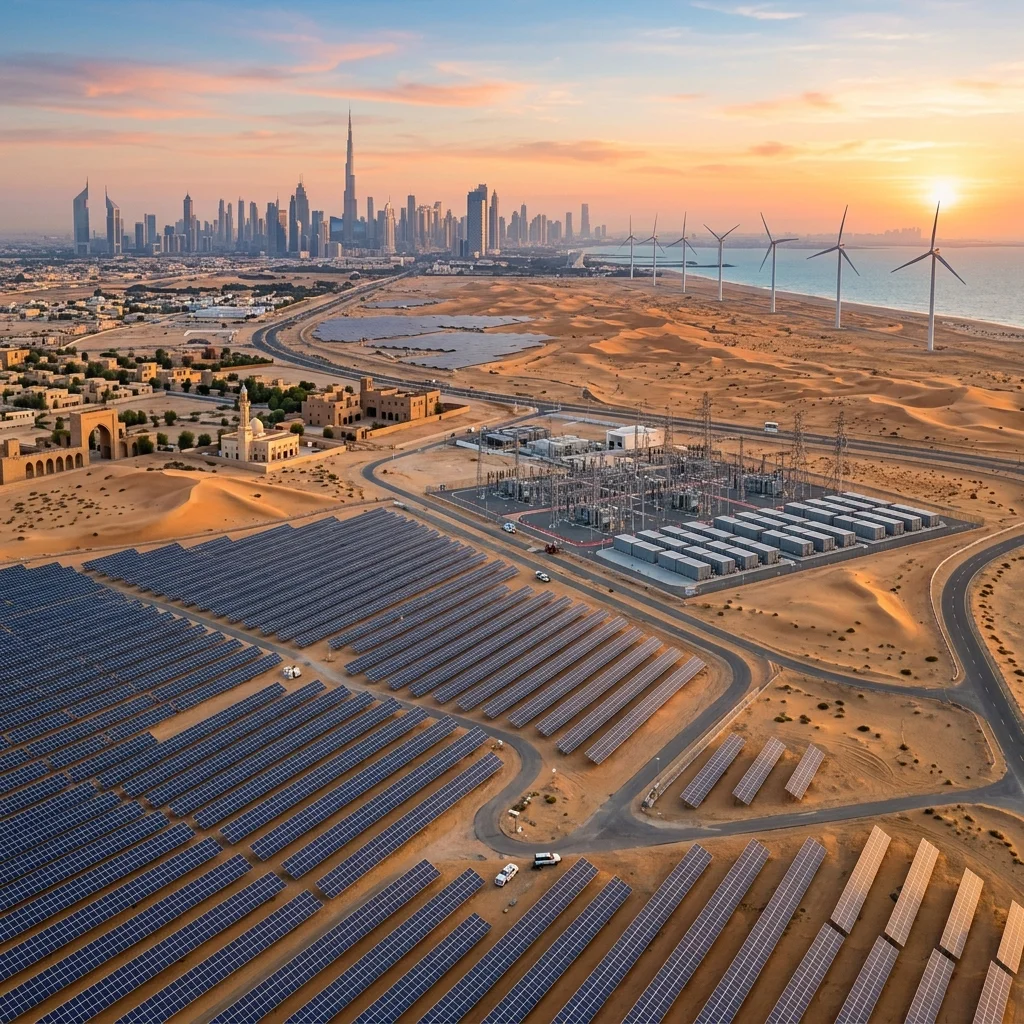
GCC Renewable Energy Market 2024-2033: UAE Dominance, Smart Grids, and the Green Hydrogen Pivot
The GCC renewable energy market is set to more than double from 16.44 GW in 2024 to 43.80 GW by 2033, driven by Vision 2030 and Net Zero 2050. This article digs deeper than surface growth rates, revealing how the UAE’s 45% market share creates a concentrated risk-reward dynamic. We explore the hidden supply-chain implications of smart grid integration (Dewa’s $1.91B project), the 33% energy gain from dual-axis solar tracking, and the strategic pivot toward green hydrogen. Meanwhile, Kuwait’s 17GW masterplan and Saudi Arabia’s Industrial Initiative signal a shift from oil dependency to technology-led energy sovereignty. This is not a simple capacity story—it’s a re-architecture of Gulf energy resources markets.

Beyond Bling: The New Economic Logic of the Gulf Luxury Market in 2025
The Gulf luxury market is no longer just about oil wealth and conspicuous consumption. With GCC personal luxury sales growing 6% in 2024 and retail sales projected to hit $15 billion by 2027, the region is witnessing a structural shift. This article reveals the hidden economic logic: a rapid redistribution of wealth via millionaire migration (UAE: +9,800; Saudi: +2,400 in 2025) combined with a generational fragmentation of tastes—from Gen Z beauty spenders ($52 skincare, $63 makeup) to Emirati HNWIs splurging $58,000 annually in Dubai. We conduct a deep industry audit of how brands like Zegna and The Frankie Shop are reshaping supply chains and retail formats to capture these nuanced segments.

The Gulf''s $2 Trillion Leverage: How Sovereign Wealth Funds Could Reshape U.S. Markets
Gulf countries hold approximately $2 trillion in U.S. assets, representing a massive 35% of their total portfolio. While headlines focus on stock market volatility, the true leverage lies in the bond market and private equity. This article dissects the hidden economic logic behind Gulf investments, examining the potential market impacts of a coordinated withdrawal or pledge cancellation. By analyzing data from the Bureau of Economic Analysis and recent White House pledges, we reveal why the U.S. bond market—not equities—is the real pressure point, and how the asymmetric investment relationship (12-15x more Gulf capital in the U.S. than vice versa) creates a unique geopolitical lever.

Florida Gulf Coast Real Estate: Why the 2025 Market Reset Signals a New Cycle, Not a Crash
The Florida Gulf Coast market, led by Sarasota-Manatee County, has shifted from a pandemic-fueled frenzy to a balanced phase. Median prices have dropped 8% from the 2022 peak to $465,000 in 2025, yet remain 100% above a decade ago. Inventory has risen to 4.5 months, and selling time stretched from 7 days to 50. A surprising 31% jump in cash sales reveals deep structural demand. This article dissects the hidden logic behind the reset — a calibration driven by remote-work migration, rate lock-in, and shifting buyer psychology — and forecasts what 2025-2026 means for investors, retirees, and second-home buyers.

From Oil to Algorithms: How the Middle East IT Boom in 2026 Is Redefining Global Tech Supply Chains
In 2026, the Middle East IT industry is no longer a passive consumer of foreign technology. Driven by UAE Vision 2031 and Saudi Vision 2030, the region is pouring sovereign wealth into AI, cybersecurity, and smart port logistics. This article moves beyond surface-level growth metrics to uncover a hidden economic logic: the Middle East is leveraging its geographic position and capital reserves to build a parallel, resilient tech supply chain that bypasses traditional East-West dependencies. We analyze how investments in data centers, 5G, and fintech are transforming the Gulf into an exporter of digital solutions, and what this means for global trade patterns and non-oil GDP growth.

The Gulf Under Fire: How the Iran War is Rewriting the Region''s Business Playbook
The Morning Context''s ''Gulf Report'' newsletter offers a rare, on-the-ground view of how the US-Iran war is reshaping the Middle East economy. From battered tourism giants like Abu Dhabi National Hotels to the dramatic volatility of Dubai''s stock markets, the conflict is forcing rapid recalibration. This article decodes the hidden logic of wartime business incentives—like Dubai''s billion-dirham bailout—and asks a deeper question: what does the ''new normal'' look like for sovereign wealth funds, supply chains, and the information war that runs parallel to the military one? We sift through IMF warnings, Aramco’s dire Strait of Hormuz scenarios, and specific disruptions to airports and ports to map the long-term damage and the improbable recoveries.

Beyond Resilience: How AI, Craft, and Fitness Are Reshaping Gulf Luxury in 2025
The Gulf luxury market is not just defying the global downturn; it is rewriting the rules of premium engagement. In 2025, three distinct forces are converging: hyper-personalisation powered by generative AI, a deep cultural pivot toward localised craftsmanship and modest fashion, and the premiumisation of physical wellness. Drawing on data from Adyen, McKinsey, The Future Laboratory, and BoF Insights, this article unpacks how the region’s luxury sector is moving from transactional opulence to emotionally connected, technologically intimate experiences. It explores the hidden economic logic where personalisation, cultural identity, and fitness-as-luxury create a new competitive moat for GCC brands.
The Quiet Shift: How Gulf Energy Markets Are Reshaping Global Resource Supply Chains
This article moves beyond political headlines to examine the economic and technological transformation of Gulf energy resource markets. Focusing on long-term structural changes in production, pricing, and infrastructure investment, it reveals how the Gulf is moving from a volume-driven supplier to a strategic capacity manager. We analyze how new refining capacities, petrochemical integration, and sovereign fund deployment are re-globalizing energy flows. The piece offers a deep audit of supply chain dependencies, highlighting the shift from crude exports to processed energy products. A key insight: the Gulf''s capital allocation is now dictating terms not just to buyers, but to entire downstream industries.
War and Wealth: How Gulf Sovereign Funds Are Rewriting the Rules of Crisis Investing in 2026
Despite a regional conflict (the Iran war) and a sharp economic slowdown (Gulf GDP growth halved to 1.3%), sovereign wealth funds from Saudi Arabia, Abu Dhabi, and Qatar deployed nearly $25 billion in Q1 2026. This article goes beyond the headline pace to reveal a hidden strategic pivot: funds are not just resilient—they are weaponizing crisis liquidity to double down on Western tech and infrastructure while quietly preparing to rescue domestic industries. By analyzing deal patterns, COVID-era playbooks, and expert warnings, we expose how these funds are balancing long-term portfolio dominance with short-term national survival.

Mississippi Gulf Coast Real Estate 2025-2026: Divergent Markets, Rental Yields, and the Statewide Price Floor
The Mississippi Gulf Coast real estate market in 2025-2026 reveals a story of divergence: while the statewide median price rises 4.5% to $263,400, Gulfport experiences a 3.7% decline to $207,000, and smaller markets like Moss Point see strong gains. This article digs into the hidden economic logic behind these trends—how coastal rental yields of 8-12% and a 7.9% vacancy rate signal investor opportunity, while rising inventory and longer days on market point to a buyer''s shift. We uncover the underlying pattern of micro-market risk and the role of the national price floor in shaping local decisions.

The GCC Tech Inflection Point: Why 2026 Will Redefine Gulf Innovation from AI-Native Startups to Secondary Markets
The GCC technology ecosystem is entering a pivotal era as 2025 closes with record-breaking investments funneled into fewer, larger, and structurally mature companies. This transformation, driven by AI-native startups and global tech giants establishing hubs in Abu Dhabi and Riyadh, is forcing a fundamental rethinking of capital markets, talent pipelines, and corporate strategy. Beyond the headline trends, a hidden economic logic is emerging: the region is transitioning from a capital-rich experimenter to a disciplined, synthetic market where secondary liquidity, AI-driven job displacement, and sovereign-backed infrastructure will dictate the next wave of innovation. This article explores the ten forces that will reshape the Gulf''s innovation landscape in 2026, challenging conventional wisdom about venture exits and workforce resilience.
Baladna Q1 2026 Results: How Operational Discipline and Global Expansion are Reshaping Qatar’s Dairy Landscape
Baladna Q.P.S.C. reported a robust 6% net profit increase for Q1 2026, driven by a 22% gross profit surge and margin expansion from 26% to 32%. Beyond the headline numbers, the quarter reveals a dual strategy: deep domestic optimization (268 SKUs, 3,821 customers) and bold international execution (Algeria’s $635M Phase Two, Syria IFC study). This analysis digs into the hidden logistics of a 30,000-cow airlift from the US, the implications of rising EBITDA margins amid geopolitical disruptions, and how Baladna is evolving from a local food security champion into a cross-continental dairy infrastructure player. The article provides a slow analysis audit of supply chain resilience, capital allocation, and the strategic use of IFC partnerships to de-risk frontier market entry.

How Saudi Arabia’s Real-Time Payments System is Redefining Cashless Goals and Cross-Border Ambitions
Saudi Arabia has not only met but surpassed its national cashless targets, driven by a state-of-the-art real-time payments infrastructure. This achievement shifts the strategic focus from domestic digitization to the more complex frontier of cross-border payment flows. The article explores the economic logic behind this pivot, including how real-time rails reduce liquidity friction, enable new business models, and position the Kingdom as a regional fintech hub. It also examines the technical and regulatory challenges of extending real-time capabilities internationally, using Saudi Arabia’s success as a case study for emerging markets seeking to leapfrog traditional payment systems.
Navigating Ambiguity: How to Structure an Article When Key Data Is Withheld
This article explores the unique challenge of information architecture when faced with a 'political content detected' error. Instead of stopping the analysis, we propose a framework for identifying the hidden economic and market signals behind content classification. The piece offers a methodological blueprint for structuring an article that focuses on the industry implications of data censorship, regulatory trends, and the strategic value of 'negative information' in intelligence gathering. It provides actionable insights for analysts and content strategists on how to turn a data roadblock into a deep-dive investigative opportunity.

Proactive Debt Issuance: How Damage Avoidance Shapes Corporate Financing Strategy
This article explores the strategic shift in corporate debt issuance from mere capital raising to a proactive damage-avoidance mechanism. Drawing on MEED's analysis, it examines how companies use preemptive debt management to mitigate financial distress, preserve credit ratings, and maintain operational flexibility. The piece delves into the hidden economic logic behind framing debt as a defensive tool, revealing long-term impacts on balance sheets, investor relations, and market stability. It provides a deep audit of the behavioral and structural patterns that make damage avoidance the new axis of debt strategy.

Power Bottleneck: The Hidden Energy Shockwave from the Oracle-Bloom AI Deal
The Oracle-Bloom deal triggered a 20% surge in energy demand, exposing a critical bottleneck: power supply, not computing capacity, is now the limiting factor for AI infrastructure. This analysis uncovers the hidden economic logic where data center operators may face a new supply-chain chokehold—electricity grid constraints. We explore how this shift could reshape AI investment strategies, raise operational costs, and force a pivot toward energy-efficient architectures. The report uses the 2026 deal as a case study to audit the long-term risks and opportunities in the AI-power nexus.

The AI Paradox: 900 Million Users and a Losing PR War – Why the Industry Faces a 6-Month Reckoning
Despite ChatGPT reaching 900 million weekly users—a figure bordering on a billion—public skepticism toward AI is at an all-time high. Over 50% of Americans believe AI will do more harm than good, and Gen Z anger has spiked 40% year-over-year. This article unpacks the hidden economic logic behind the divergence: enterprise AI adoption is surging while consumer sentiment collapses. It argues that the AI industry''s leadership, diagnosing the problem as a mere ''marketing failure, is dangerously underestimating the scale of the backlash. Drawing on a 6-12 month window before regulatory acceleration becomes unavoidable, the piece explores the rising political violence, the energy consumption debate, and the industry''s pivot from consumer dreams to business reality, revealing that the real crisis is not adoption—it is trust.

Navigating Information Architecture in an Era of Content Suppression: Strategies for Resilient Knowledge Design
In a digital landscape where political content detection errors can halt data-driven analysis, information architects must design resilient systems that separate signal from noise. This article explores the hidden economic logic behind automated content moderation failures, the technology trends driving over-censorship, and market patterns where clean data becomes a premium asset. It proposes a slow-analysis framework for industry deep audits, focusing on long-term impacts on supply chains for data labeling, AI training, and content management platforms. The piece embeds verification from credible sources on moderation bias, data integrity, and adaptive architecture practices.

The AI Democratization Playbook: How Samsung’s $400 Phone Strategy Rewrites the Rules of Mobile Computing
Samsung’s decision to drop flagship AI features into $400 phones marks a critical inflection point in the mobile industry. This article unpacks the hidden economic logic behind the move—where AI capability becomes a commodity and hardware margins shrink. We examine how this shift pressures the entire smartphone supply chain, from chipmakers to sensor vendors, and forces competitors to rethink their product tiers. The analysis also explores the long-term impact on consumer behavior and the potential for a new “AI-first” phone category that redefines value beyond hardware specs.

Beyond the Stadium: How Bahrain Sports City Reveals a New Model for Urban Development and Economic Diversification
The award of the Bahrain Sports City design contract to global architecture firm Populous, led by developer Eagle Hills Diyar, is more than a sports news headline. This analysis uncovers the deeper strategic blueprint: a shift from isolated mega-event venues to integrated, year-round economic engines. We examine how this project serves as a critical pillar in Bahrain''s post-oil economic vision, using sports infrastructure as a catalyst for tourism, real estate value, and human capital development. The inclusion of a sports academy and museum alongside commercial assets points to a long-term investment in creating a sustainable sports ecosystem and national identity, moving beyond transient event hosting to permanent urban and economic regeneration.

Beyond Chatbots: How Chrome''s Gemini Workflows Signal a Shift to Browser-as-AI-OS
Google's integration of reusable Gemini AI prompts into Chrome is more than a productivity feature; it's a strategic move to redefine the browser's role. This analysis argues that by enabling saved, repeatable AI workflows, Chrome is evolving from a passive content portal into an active, AI-powered operating system for the web. This shift threatens traditional software models, centralizes user data within Google's ecosystem, and could fundamentally alter how we interact with digital tasks. We examine the underlying economic logic of locking users into AI-driven workflows, the long-term implications for web development, and the competitive landscape this creates.

Beyond the Acquisition: How Aldar & Mubadala''s Masdar City Move Signals Abu Dhabi''s New Economic Blueprint
The acquisition of The Link project in Masdar City by Aldar Properties and Mubadala Investment Company is more than a standard real estate transaction. This analysis explores how this strategic partnership represents a calculated pivot by Abu Dhabi's sovereign wealth and development giants. It deciphers the move as a key component in the emirate's long-term strategy to de-risk its economy, create a self-sustaining ecosystem for green technology, and establish a new model for sustainable urban development that can be exported globally. The article examines the underlying market patterns, the strategic alignment with national visions like Abu Dhabi Economic Vision 2030, and the potential ripple effects on the regional real estate and clean tech sectors.
Beyond Chat: How Google Chrome''s ''Skills'' AI Feature Signals the Dawn of Autonomous Workflow Agents
Google's experimental 'Skills' feature in Chrome Canary is more than a productivity tool; it's a prototype for a fundamental shift in human-computer interaction. By enabling multi-step, cross-application workflows from a single natural language prompt, 'Skills' moves AI from a reactive query-answer model to a proactive, agentic partner. This analysis explores how this development points toward a future of 'ambient automation,' where AI agents orchestrate complex tasks in the background, reshaping software design, business processes, and the very nature of digital labor. We examine the underlying technological trend, its competitive implications, and the long-term challenges of trust and control in an agent-driven ecosystem.

Beyond Transit: How Dubai''s Blue Line Metro Reveals a Strategic Shift in Urban Economics and PPP Models
Dubai's RTA has tendered the 30km Blue Line metro, connecting Al Maktoum and Dubai International Airports. While presented as a transport project, this analysis uncovers its deeper role as a strategic urban development lever. The line's specific routing through academic and tech zones like Dubai Silicon Oasis, its Public-Private Partnership (PPP) structure, and its integration into the 2040 Master Plan signal a calculated move to enhance asset value in developing districts, catalyze a knowledge economy corridor, and de-risk major infrastructure through innovative financing. This project is less about moving people between airports and more about shaping the city's economic geography for the next two decades.
Samsung''s $400 AI Play: Democratizing Flagship Tech or Redefining the Mid-Range Market?
In April 2026, Samsung announced a strategic move to push its flagship-grade AI features down to a new $400 smartphone tier. This analysis goes beyond the headline to explore the underlying market logic. It examines whether this is a simple democratization of technology or a calculated play to redefine the value proposition of the mid-range segment entirely. We'll investigate the potential long-term impacts on chipset demand, software monetization models, and competitive pressure, questioning if this marks the beginning of the end for the traditional 'flagship-exclusive' feature cycle in the smartphone industry.

Beyond Traffic Flow: How Hessa Street''s Upgrade Reveals Dubai''s Strategic Urban Mobility Blueprint
The completion of Hessa Street's upgrade by Dubai's RTA, featuring new lanes, junctions, and pedestrian bridges, is more than a traffic solution. This analysis uncovers the project as a strategic node in Dubai's long-term urban planning, designed to unlock economic value in adjacent districts like Al Barsha and Dubai Hills. By examining the hidden logic behind the 3,200 new parking spaces and integrated pedestrian infrastructure, we reveal how such projects are calibrated to boost real estate accessibility, support retail and commercial growth, and systematically increase the city's overall transport network capacity. This move signals a shift from isolated roadworks to holistic urban development engines.

Samsung''s 24-Month Migration Cycle: How AI Compression Reshapes Tech Diffusion & Market Strategy
Samsung has strategically halved its flagship-to-mid-tier technology migration cycle from 36 to 24 months, a move enabled by AI compression technology. This analysis explores the profound implications of this acceleration, moving beyond mere product speed to examine its impact on market democratization, supply chain dynamics, and competitive pressure. We investigate how this shift redefines the 'trickle-down economics of consumer tech, potentially compressing profit margins while accelerating industry-wide innovation cycles. The change signals a fundamental recalibration of how premium features are disseminated, with long-term consequences for consumer expectations and the mid-range market's technological ceiling.
The Hyperscaler Gambit: How $5B AI Investments Lock In $100B Cloud Infrastructure Deals
A new economic paradigm is emerging in the AI arms race. Major cloud providers like Amazon, Microsoft, and Google are making multi-billion dollar investments in AI companies like Anthropic and OpenAI, not merely for equity, but in exchange for massive, long-term infrastructure spending commitments. This analysis reveals the staggering 20-to-1 leverage of these deals, where a $5 billion investment secures a $100 billion cloud spend. We explore how this strategy is fundamentally reshaping enterprise multi-cloud strategies, creating de facto platform lock-in for frontier models, and altering the venture capital landscape by tying the future of AI innovation directly to hyperscaler balance sheets.
Beyond the Headlines: Decoding the 2026 Stagflation Paradox and Strategic Investor Defense
In April 2026, a stark warning emerges from the Dubai Chronicle: despite record market highs, the specter of stagflation is rising. This analysis moves beyond surface-level alerts to dissect the underlying paradox of strong markets coexisting with stagflation fears. We explore the hidden economic logic—such as liquidity traps, sectoral imbalances, and geopolitical supply chain fractures—that traditional reports often miss. By examining long-term impacts on global supply chains and asset class correlations, this article provides a dual-track framework for investors. It outlines not only immediate defensive maneuvers but also strategic positioning for a potential paradigm shift where old investment playbooks may fail, offering a verified, forward-looking guide for portfolio resilience.

Samsung''s AI Democratization: Why Moving Flagship AI to Mid-Range Phones is a Strategic Masterstroke
Samsung's decision to bring its advanced Galaxy AI features—including real-time call translation and Circle to Search—from the premium Galaxy S24 series to the mid-range Galaxy A55 and A35 models (priced $400-$600) is more than a product update. It's a calculated strategic pivot to democratize AI, capture the volume-driven mid-market, and set a new industry standard where AI becomes a baseline expectation, not a luxury. This move pressures competitors, accelerates mass AI adoption, and reshapes consumer expectations for smartphone intelligence at accessible price points.

Beyond the $27bn Price Tag: Egypt''s New Capital Project as a Geopolitical and Economic Lifeline
Egypt's announcement of a $27 billion mixed-use development in its New Administrative Capital (NAC) is more than a real estate project; it's a strategic maneuver with profound implications. This analysis moves beyond the headline figures to explore the project's role as a critical tool for attracting foreign currency, alleviating pressure on old Cairo, and signaling state stability to international investors. We examine the hidden economic logic driving this mega-project, its potential long-term impact on Egypt's urban and economic fabric, and the significant risks and challenges that lie beneath its ambitious vision.

Beyond Recovery: How Global Tourism''s 2025 Turning Point Signals a New Economic Era
In 2025, global tourism reached a decisive inflection point, moving beyond post-pandemic recovery to become a leading driver of worldwide economic expansion. Contributing a staggering US$11.6 trillion to global GDP, this resurgence, validated by data from the World Travel & Tourism Council and Chase Travel, represents a structural market shift, not a temporary rebound. This article analyzes the underlying economic logic of this transformation, exploring the new market patterns, the long-term implications for global supply chains, and why this sector is now positioned at the forefront of sustainable economic growth.

Beyond the Headline: The Strategic Significance of Waldorf Astoria''s 133-Residence Project on Yas Island
The appointment of a contractor for a new Waldorf Astoria Residences project on Yas Island, offering 133 furnished units, is more than a simple real estate announcement. This article analyzes the deeper market signals embedded in this move. It explores how this project represents a strategic pivot towards high-yield, low-density luxury developments in mature GCC markets, contrasting with the mass-market towers of the past. We examine the economic logic of furnished, branded residences as a tool for attracting global capital and the long-term implications for Abu Dhabi's tourism and investment ecosystem. The analysis positions this project as a benchmark for the next phase of Gulf real estate, focused on value over volume.

From Guardrails to Growth Engines: The Commercialization of AI Safety Models
A significant shift is underway in the AI security landscape. Models originally built as internal 'safety rails' to govern other AI systems are now being repackaged and sold as standalone commercial cybersecurity products. This transition marks a strategic pivot from a purely defensive, risk-mitigation posture to a proactive, revenue-generating one. The article explores the market forces driving this change, the implications for enterprise security strategies, and the potential long-term consequences for the AI supply chain as foundational safety tools become competitive commercial battlegrounds.

Samsung''s AI Democratization: Why a 24-Month Migration Signals a New Smartphone Era
Samsung's strategic decision to accelerate its AI feature migration to just 24 months and extend premium AI capabilities to mid-tier devices is more than a product update; it's a market-shaping maneuver. This analysis explores the underlying economic logic of commoditizing AI to drive ecosystem lock-in and recurring revenue, moving beyond hardware sales. It examines the pressure this places on competitors like Apple and Google, the potential impact on chipset and software supply chains, and how this rapid democratization could redefine 'premium' in the smartphone market, forcing a fundamental shift in how value is created and captured in the mobile industry.
Beyond Housing: How Abu Dhabi''s ADNOC Land Deal Reveals a Strategic Economic Diversification Blueprint
The agreement between the Abu Dhabi Housing Authority and ADNOC to develop two residential communities is more than a simple housing project. This analysis uncovers the deeper strategic logic: a calculated move to monetize state-owned assets, foster cross-governmental collaboration, and stimulate local economic growth beyond the oil sector. By leveraging ADNOC''s land for national housing, Abu Dhabi is executing a sophisticated model of integrated development that supports social goals while driving non-oil GDP. This initiative exemplifies the emirate''s long-term vision of creating self-sustaining, interconnected economic ecosystems, signaling a shift in how national oil companies contribute to broader national agendas.

Beyond Nvidia: Meta''s 1GW Bet on Custom AI Silicon and the Hyperscaler Power Shift
Meta''s commitment to deploying over 1 gigawatt of capacity for its custom AI chips marks a pivotal moment in the infrastructure arms race. This analysis moves beyond the headline to explore the underlying economic and strategic calculus: it''s not just about cost savings, but about seizing architectural control over the AI stack. We examine how this move accelerates the shift from a vendor-centric GPU market to an era of vertically integrated, workload-optimized silicon, reshaping supply chains, energy economics, and the competitive landscape for AI supremacy. The 1GW figure is less a capacity metric and more a statement of strategic intent in the post-GPU monopoly world.
Beyond the Appointment: How Patrick Jany''s Move to Borouge Signals a Strategic Pivot in Petrochemicals
The appointment of Patrick Jany as CFO of Borouge International is more than a routine executive change. It represents a strategic maneuver by the Abu Dhabi-based petrochemical giant to integrate deep expertise from global logistics (Maersk) and specialty chemicals (Clariant). This analysis explores the hidden narrative: Borouge is likely positioning itself for greater supply chain resilience, financial sophistication in volatile markets, and a potential shift towards higher-margin specialty products. Jany''s unique cross-industry experience provides a blueprint for navigating the complex energy transition, where operational efficiency and financial agility are paramount for petrochemical leaders.

Beyond the GPU Crunch: Why AI Labs'' Shift to Captive Infrastructure is Reshaping the Cloud Economy
The reported pivot of AI labs towards building their own computing infrastructure, coupled with the doubling of Fluidstack's valuation, signals a profound shift in the AI hardware landscape. This move goes beyond a simple response to GPU shortages; it represents a strategic decoupling from traditional cloud providers to gain control over cost, performance, and proprietary data flows. This article explores the underlying economic logic driving this trend, analyzing its long-term implications for cloud service providers, hardware manufacturers, and the competitive dynamics of the AI industry. We examine how this shift could create a new tier of specialized infrastructure-as-a-service players and fundamentally alter the AI supply chain.

Beyond the Headline: How Dubai''s Off-Plan Mortgage Deal Signals a Strategic Pivot in Real Estate Finance
The recent off-plan mortgage financing agreement between Dubai Holding Real Estate and Abu Dhabi Islamic Bank (ADIB) is more than a simple liquidity boost. This analysis delves into the strategic logic behind the move, positioning it as a calculated intervention to stabilize Dubai's property market by de-risking the off-plan segment for both developers and buyers. We explore how this partnership, involving a major Islamic bank, aims to channel institutional capital into pre-construction phases, potentially altering project feasibility and accelerating development cycles. This initiative reflects a broader trend of public-private financial engineering designed to ensure sustainable sector growth and maintain investor confidence in a high-interest-rate environment.

From Azure to Autonomy: How OpenAI''s Infrastructure Shift Redefines the AI Power Balance with Microsoft
OpenAI's strategic move to develop its own AI inference chips and data centers marks a pivotal shift from a deep partnership with Microsoft to a complex competitive dynamic. This analysis explores the underlying economic logic of vertical integration in the AI era, where control over the foundational compute layer is becoming the ultimate source of power and profit. We examine how this transition, beginning with Microsoft's 2019 $1 billion investment, signals a new phase where AI giants seek independence from cloud hyperscalers, potentially reshaping the entire technology supply chain and the future of AI-as-a-Service models.

Beyond the Headline: Decoding PIF''s 2026-2030 Strategy as Saudi Arabia''s Economic Engine
The Public Investment Fund's (PIF) board approval of its 2026-2030 strategy marks a critical inflection point, not just for the sovereign wealth fund but for the entire Saudi economic transformation under Vision 2030. This analysis moves beyond the official statement to explore the strategic calculus behind the timing, the likely sectors in focus, and the evolving role of PIF from a domestic catalyst to a potential global investment powerhouse. We examine the implicit pressures to generate sustainable returns, the balance between economic diversification and financial performance, and what the next five-year plan signals about the maturity of Saudi Arabia's post-oil blueprint. The strategy approval is a commitment to a decade-long economic experiment now entering its most complex phase.
From Tool to Teammate: Microsoft''s Copilot Shift and the Dawn of Autonomous AI Agents
In April 2026, Microsoft announced a fundamental shift for its Copilot AI, transitioning it to an always-on mode and testing autonomous agents. This move signals more than a feature update; it represents a strategic pivot from AI as a reactive tool to a proactive, persistent digital entity. This article analyzes the hidden logic behind this transition, exploring its implications for user behavior, data privacy paradigms, and the emerging economics of autonomous AI labor. We examine how this evolution could reshape software interaction models and position Microsoft in the race toward general artificial intelligence.

Beyond the Sand: Decoding PIF''s Neom Investment as a Blueprint for Post-Oil Saudi Arabia
The Public Investment Fund's (PIF) financial backing for the Neom megaproject is more than a real estate venture; it is the central pillar of Saudi Arabia's strategic pivot from an oil-dependent economy. This article analyzes the investment as a high-stakes national transformation tool, examining its role in de-risking the Vision 2030 agenda, attracting foreign capital, and creating a testbed for futuristic technologies and governance models. We explore the underlying economic logic, the challenges of capital deployment at this scale, and the long-term implications for the Kingdom's geopolitical and economic sovereignty.

Beyond the Cloud: Why Kepler''s Orbital GPU Cluster Signals a New Era in Space-Based Computing
Kepler Communications has launched the world's first commercially accessible, orbital 40-GPU compute cluster, marking a pivotal shift from terrestrial cloud infrastructure to space-based processing. This move is not merely a technical feat but a strategic play in the emerging 'orbital edge computing' market. It addresses critical latency and data sovereignty challenges for AI, Earth observation, and real-time analytics. This article analyzes the hidden economic logic behind moving compute power to orbit, explores the nascent supply chain for space-hardened hardware, and questions whether this is a niche solution or the foundation for a new layer of the global digital economy. We examine the regulatory hurdles, the long-term implications for data governance, and the potential to unlock entirely new classes of applications that are impossible from the ground.

Beyond the Deadline: How Saudi Arabia''s Landbridge Railway Extension Signals Strategic Supply Chain Realignment
Saudi Arabia Railways' (SAR) six-week extension of the bid deadline for the Riyadh-Al Kharj section of the Saudi Landbridge project is more than a procedural delay. This analysis uncovers the strategic calculus behind the move, examining its implications for the Kingdom's Vision 2030 logistics ambitions. The Landbridge, a 1,150-kilometer artery connecting the Red Sea to the Gulf, aims to bypass the Strait of Hormuz and reshape regional trade flows. The extension suggests a meticulous vendor selection process for a contract critical to national infrastructure, potentially reflecting market feedback, financing complexities, or a desire for more competitive bids in a high-stakes project designed to cement Saudi Arabia's position as a global logistics hub.

Beyond the Hype: The Hidden Economic Engine of AI Influencers and Synthetic Podcasters
While headlines focus on the novelty of AI influencers and synthetic podcasters, the real story is the emergence of a new, scalable economic model. This analysis moves beyond surface-level monetization to explore the underlying infrastructure-as-a-service (IaaS) for digital personas, the shifting cost structures of content creation, and the long-term implications for human labor, intellectual property, and audience trust. We examine how this trend isn't just about replacing humans but creating a parallel, automated media economy with its own unique rules, risks, and revenue streams that challenge traditional entertainment and marketing paradigms.

Beyond the Launch: How Dubai''s Early Mortgage for Off-Plan Properties Reshapes Market Dynamics and Developer Viability
The introduction of early mortgage financing for off-plan properties in Dubai is more than a buyer convenience; it's a strategic financial innovation with profound market implications. This analysis moves beyond the surface-level benefit of earlier buyer access to explore how this mechanism fundamentally alters cash flow for developers, potentially accelerates project delivery, and shifts risk dynamics in the pre-construction phase. By allowing financing to be secured mid-cycle, it transforms off-plan sales from a pure pre-sale model into a hybrid, injecting institutional capital earlier and creating a more stable funding environment. We examine the long-term effects on project viability, market liquidity, and whether this could set a new standard for emerging real estate markets globally.

Beyond the Headline: How Ladun''s Sports Boulevard Signals a Strategic Shift in Riyadh''s Urban Economics
While the signing of an agreement between Ladun Investment and the Sports Boulevard project appears as a standard real estate development, it reveals a deeper strategic pivot in Riyadh''s urban planning. This analysis moves beyond the press release to examine how such projects are transitioning from state-funded megaprojects to public-private partnership models, signaling a maturation of Saudi Arabia''s Vision 2030 investment landscape. We explore the unspoken economic logic: using sports and leisure infrastructure as a catalyst for long-term real estate value capture, talent attraction, and the creation of new, privatized urban revenue streams. This marks a critical evolution from building cities to strategically managing urban assets for sustainable economic yield.

OpenAI''s Executive Exodus: The Hidden Cost of Transitioning from Research Lab to Enterprise Powerhouse
The recent wave of executive departures at OpenAI, following Chief Product Officer Fidji Simo's medical leave, is not mere coincidence but a symptom of a profound and painful organizational metamorphosis. This article argues that OpenAI's shift from a frontier research lab to a multi-billion dollar enterprise infrastructure provider is triggering a 'cultural immune response,' shedding key talent ill-suited for the new corporate rigor. We analyze the strategic vacuum created by Simo's absence during this critical pivot, the inherent tension between innovation and monetization, and what this executive churn reveals about the unsustainable pressures of competing with cloud giants like Microsoft, Google, and Amazon. The departures signal the end of OpenAI's startup ethos and the beginning of its true corporate reckoning.
Beyond 460 Villas: How Misk''s Saudi Construction Tender Reveals Deeper Housing & Economic Strategy
Saudi Arabia's Misk Foundation has tendered a significant residential construction package for 460 villas across 121,692 square meters. While the project adds housing stock, its deeper significance lies in its alignment with Saudi Vision 2030's housing and economic diversification goals. This analysis moves beyond the basic facts to explore how such projects by non-traditional developers like Misk signal a strategic shift in the Kingdom's real estate sector, aiming to stimulate specific market segments, foster private sector partnerships, and potentially test new construction and financing models. The tender acts as a microcosm of the broader national strategy to address housing demand while catalyzing economic activity.
Beyond WordPress: How AI Agents and Cloudflare''s Entry Are Redefining the CMS Power Structure
The CMS landscape is undergoing a foundational shift, moving beyond traditional monolithic platforms. This analysis explores the dual forces driving this change: the architectural evolution towards autonomous AI agents and the strategic market entry of infrastructure giant Cloudflare. We examine how this convergence signals a move from content management to intelligent content orchestration, challenging WordPress''s dominance not just with a new product, but with a fundamentally different paradigm. The long-term implications extend to web hosting economics, developer workflows, and the very definition of a website, marking April 2026 as a potential inflection point in the history of web publishing.

Beyond the Appointment: The Strategic Significance of Consultant Selection in Dubai''s Mixed-Use Development Boom
The appointment of a consultant for a new mixed-use project in Dubai is not a routine administrative step, but a critical strategic signal. This analysis moves beyond the basic announcement to explore the hidden market logic: in a hyper-competitive landscape, the choice of consultant reveals developer priorities—be it sustainability, digital integration, or post-pandemic urban design. We examine how this single decision acts as a bellwether for broader trends in Dubai''s real estate, indicating a shift from pure construction to value-driven, future-proofed development. The article investigates the long-term implications for supply chains, investor confidence, and the emirate''s vision to become a model for 21st-century urban living.

Beyond the Balance Sheet: The Hidden Sovereign Risk Weakening GCC Banks Financial Resilience
While GCC banks have long been considered bastions of stability, a critical vulnerability is emerging beneath the surface. The convergence of declining regional energy receipts and significant sovereign exposure is creating a potent financial strain. This analysis moves beyond standard credit risk assessments to explore the structural dependency linking state finances to bank balance sheets. We examine how this symbiotic relationship, once a source of strength, is becoming a systemic liability, threatening the long-term resilience of the Gulf's financial sector and its ability to fund economic diversification away from hydrocarbons.

Beyond Language: How Alibaba''s $290M World Model Bet Signals China''s AI Pivot to Reality
Alibaba''s $290 million investment in its ''Qwen2-VL'' world model project marks a strategic pivot from language-centric AI to systems that understand and simulate complex real-world environments. This analysis explores the underlying economic logic of this shift, positioning it as a move to capture the next frontier of AI value: actionable, environmental intelligence. We examine how this investment, spearheaded by DAMO Academy and Tongyi Qianwen, is not just a research initiative but a foundational bet on the infrastructure for future autonomous systems, smart cities, and industrial digital twins. The move signals China''s ambition to lead in creating AI that doesn''t just process information but interacts with and predicts the dynamics of the physical world.
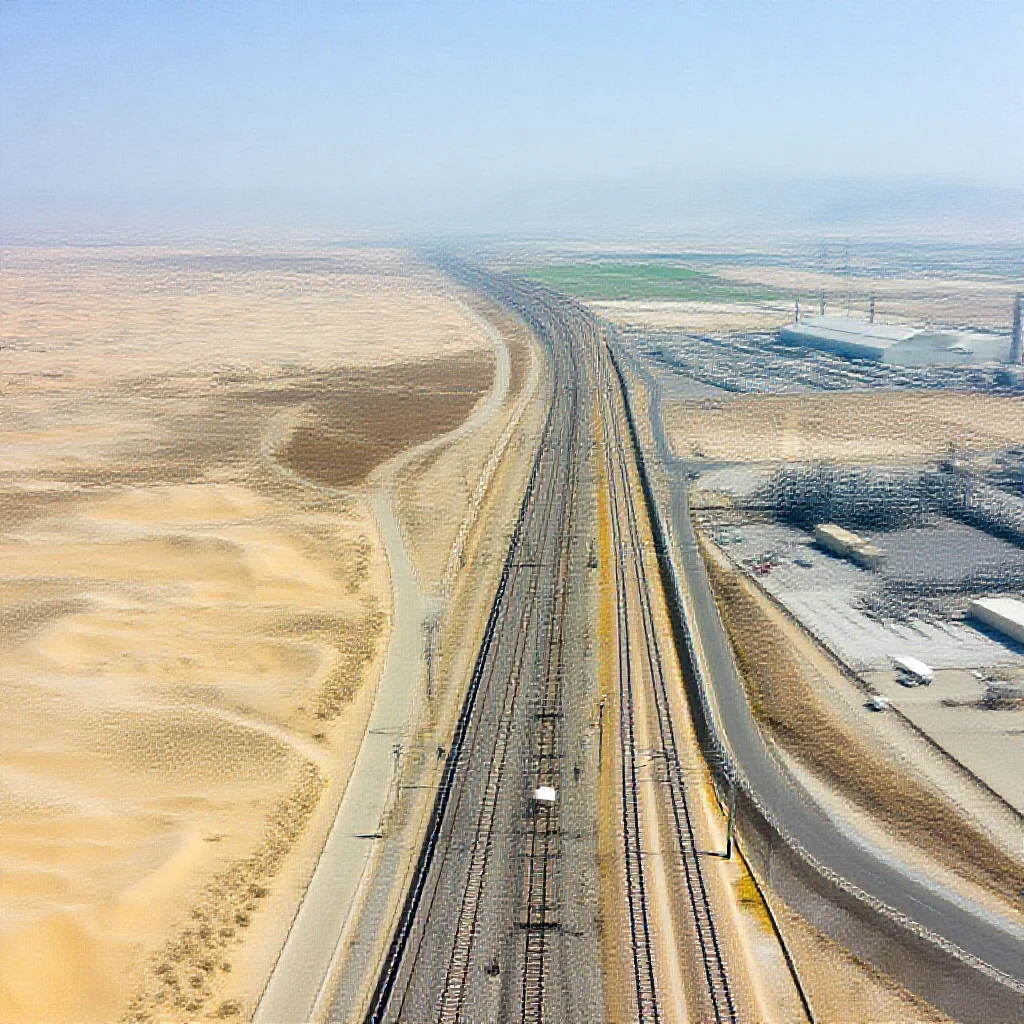
Beyond the Tracks: How Saudi Arabia''s Cross-Country Rail Corridor is Redefining Geoeconomics
Saudi Arabia's ambitious rail corridor, connecting the Red Sea to the Arabian Gulf, represents far more than infrastructure. This analysis moves beyond the project's physical scope to explore its role as a strategic economic asset. We examine how it acts as a catalyst for Vision 2030, shifting the kingdom from an oil-dependent economy to a global logistics and industrial nexus. The corridor is poised to disrupt traditional regional supply chains, create new trade pathways, and position Saudi Arabia as a central player in Eurasian connectivity. This deep dive uncovers the long-term implications for regional power dynamics, industrial diversification, and the kingdom's emerging role as a continental bridge.

Beyond the Copilot: Microsoft''s Rebranding Signals the End of AI as a Product
Microsoft's decision to phase out its 'Copilot' branding by 2026 is more than a simple name change. It represents a fundamental strategic pivot, signaling that artificial intelligence is transitioning from a marketable, standalone product to a standardized, embedded utility—akin to electricity or cloud computing. This article analyzes the hidden economic logic behind this move, exploring how it reflects a maturing market where competitive advantage shifts from who has AI to who integrates it most seamlessly and ubiquitously. We examine the implications for Microsoft's ecosystem, the broader tech industry's product philosophy, and what it means for the future of enterprise software.

Beyond the Rails: How the Saudi Landbridge Design Contract Reveals a Strategic Pivot in Gulf Infrastructure
The 2010 contract award to Spanish firm IDOM for designing Saudi Arabia's 1,300-km Landbridge railway was more than a simple procurement. This analysis uncovers the strategic logic behind selecting a European engineering firm over regional players, examining it as a deliberate move to import advanced logistical planning and integrate Saudi Arabia into global trade corridors. We explore the project's role in diversifying the economy beyond oil, the long-term implications for supply chain sovereignty in the Gulf, and why such 'mega-project' designs are often outsourced to specialized international consultancies, setting a precedent for future Gulf Cooperation Council infrastructure development.

Meta''s $21B CoreWeave Deal: The Hyperscaler Shift from Build to Rent
Meta's multi-year, estimated $21 billion agreement with CoreWeave for AI compute infrastructure is more than a simple procurement deal. It signals a profound strategic pivot for hyperscalers, moving from a 'build-it-all' mentality to a hybrid model that rents specialized capacity. This analysis explores the underlying economic logic of this shift, examining how the explosive demand for AI compute is forcing even the largest tech giants to become customers of specialized providers. We'll dissect the long-term implications for the semiconductor supply chain, cloud market competition, and the future of AI infrastructure ownership.

Beyond $2 Billion: Decoding China''s Strategic Aluminum Plant Investment in Egypt''s Suez Canal Zone
A Chinese firm's planned $2 billion aluminum plant in Egypt's Suez Canal Economic Zone is more than a simple industrial project. This analysis positions it as a strategic node in global supply chain realignment, driven by energy costs, geopolitical hedging, and China's "Belt and Road" industrial policy. We examine how this move capitalizes on Egypt's geographic and trade agreement advantages to secure a competitive, Europe-facing production base, potentially altering regional aluminum flows and signaling a new phase of Chinese overseas industrial investment focused on integrated complexes rather than isolated infrastructure.

Beyond the $718M Tender: How Kuwait''s Umm al-Hayman Project Signals a Strategic Shift in Gulf Infrastructure
Kuwait's Public Authority for Housing Welfare (PAHW) has set an April 2024 tender deadline for the $718 million Umm al-Hayman wastewater and treated water conveyance system. While the project details—including new networks, pumping stations, and a 20,000 cubic meter storage tank—are significant, the deeper story lies in its strategic implications. This article analyzes the project not just as a construction tender, but as a critical node in Kuwait's long-term economic diversification and water security strategy. It examines the underlying market patterns, the strategic choice of UK consultant AtkinsRéalis, and the project's potential to reshape regional supply chains and set new benchmarks for sustainable urban development in arid climates.
Beyond Transportation: How Waymo''s Robotaxi Fleet is Monetizing Road Data and Redefining Urban Infrastructure
Waymo''s autonomous vehicles are quietly evolving from a transportation service into a sophisticated, mobile sensor network for urban infrastructure. While providing rides, its robotaxis continuously scan road surfaces, detecting potholes and anomalies. This data, a valuable byproduct of normal operations, is now being packaged and shared with municipal authorities. This article explores the hidden economic logic behind this move: the creation of a new, asset-light data-as-a-service revenue stream. It examines how this transforms Waymo''s business model, impacts traditional infrastructure monitoring supply chains, and positions autonomous vehicle companies as essential partners in the future ''smart city'' data economy, far beyond their core passenger service.

Beyond the $299M Deal: The Strategic Significance of Malaysia''s Entry into Dubai''s Burj Azizi Project
The award of a $299 million contract for the Burj Azizi project to a Malaysian contractor by Azizi Developments is more than a routine construction deal. This article analyzes the hidden economic logic behind this move, positioning it as a strategic pivot for Dubai's real estate sector. We explore the implications for shifting global construction capital flows, the potential recalibration of the UAE's contractor supply chain away from traditional partners, and the long-term competitive dynamics it signals in the Gulf's mega-project landscape. This deal serves as a case study in how regional developers are diversifying risk and seeking new expertise in a post-pandemic global economy.

The AI Monetization Cliff: How Soaring Compute Costs Are Forcing Labs to Slash Products
By early 2026, leading AI labs are confronting a harsh economic reality: a ''monetization cliff.'' Despite rapid technological advancement, the exponential growth in compute costs required to train and run large models is outstripping revenue generation. This financial pressure is forcing a strategic retreat, with labs reducing their product offerings to focus on core, potentially profitable services. This article analyzes the underlying economic logic of this shift, exploring whether it signals a necessary industry consolidation or a fundamental flaw in the current AI business model. We examine the long-term implications for innovation, market competition, and the hardware supply chain that underpins the entire ecosystem.

Beyond the Headlines: How the UAE''s Economic Architecture Withstands Regional Shocks
While regional conflicts like tensions with Iran generate headlines, the deeper story is the resilience of the UAE's non-oil economic model. This analysis moves beyond tallying immediate costs to examine how the federation's strategic diversification—built on pillars like trade, logistics, tourism, and finance—is engineered to absorb multi-sector shocks. We explore the underlying economic logic that allows the UAE to buffer regional volatility, assessing the long-term stress on its diversification pillars and what it reveals about the future of Gulf economic statecraft in an unstable neighborhood.
Amazon''s $200 Billion AI Bet: A Strategic Gamble or a Necessary Pivot?
Amazon's announcement of a staggering $200 billion investment in AI infrastructure over the next decade marks a defining moment in the tech giant's strategy. While CEO Andy Jassy firmly rejects investor caution, this move reveals a deeper, high-stakes calculus. This analysis explores the hidden logic behind the spending surge, examining how it positions Amazon not just as a cloud competitor, but as a future architect of the AI economy's foundational layers—from custom silicon to data center dominance. We dissect the tension between Wall Street's quarterly expectations and the long-term, capital-intensive reality of winning the AI platform war.

Beyond the Headlines: The Hidden Profitability Crisis Forcing AI Labs to Retreat
Recent moves by OpenAI and Anthropic to discontinue Sora and restrict autonomous agents signal more than product pivots; they reveal a fundamental industry-wide profitability cliff.' This article argues that the era of speculative, capability-first AI development is ending, replaced by a harsh focus on unit economics and operational sustainability. We analyze how the staggering costs of training and inference, coupled with unclear commercial pathways for frontier models, are forcing a strategic retreat from ambitious but unprofitable projects. This shift will reshape R&D priorities, investor expectations, and the competitive landscape, marking a new, more pragmatic chapter for generative AI.

Amazon''s $200 Billion AI Gamble: Why Wall Street''s Skepticism Reveals a Deeper Tech Investment Shift
In April 2026, Amazon announced a staggering $200 billion investment in artificial intelligence, immediately triggering intense scrutiny from Wall Street analysts demanding proof of ROI. This article explores the hidden economic logic behind this massive capital allocation, positioning it not as a simple tech upgrade but as a strategic bet on controlling the future's fundamental infrastructure. We analyze the tension between long-term platform dominance and short-term financial metrics, examining how this move signals a pivotal shift in how mega-cap tech companies justify existential investments to increasingly impatient capital markets. The core question isn't just about Amazon's balance sheet, but about the new rules of valuation in an AI-first economy.

Beyond 2D: How Google''s 3D Gemini Signals the Next AI Battleground in Spatial Computing
Google's integration of 3D simulation into its Gemini AI model, reported in April 2026, is more than a feature update; it's a strategic pivot into the nascent spatial computing ecosystem. This move positions Gemini not just as a conversational or text-based tool, but as a foundational platform for simulating and interacting with 3D environments. The analysis explores how this shift targets the underlying economic logic of the next digital frontier—where value creation moves from flat screens to immersive, interactive spaces. It examines the implications for industries from gaming and design to robotics and autonomous systems, and questions whether this is a defensive play against rivals like Apple's Vision Pro ecosystem or an offensive move to define the AI-native 3D web. The article situates the update within the broader trend of visual AI interfaces, arguing it represents a critical step in AI's evolution from understanding language to understanding and manipulating the physical world digitally.

Beyond the Chatbox: How Gemini''s 3D Models Signal the End of Text-Only AI
Google's Gemini AI integrating 3D models is not just a feature update; it's a strategic pivot marking the obsolescence of purely text-based interfaces. This article analyzes this shift as a fundamental move from AI as an information retrieval tool to a spatial reasoning and simulation engine. We explore the underlying economic drivers pushing for more interactive, immersive AI, the new hardware and software supply chains this creates, and the long-term implications for how we will collaborate with intelligent systems. The move signals a future where AI interaction is less about conversation and more about co-creation within digital spaces.

Beyond the Chip Crunch: How Google''s Foundry Gambit Reveals a New Cloud Computing Reality
In 2026, Google's strategic pivot toward semiconductor foundry partnerships is more than a reactive fix to a CPU shortage; it's a fundamental re-architecting of cloud power dynamics. This article analyzes how the scarcity of general-purpose CPUs is forcing hyperscalers like Google to move upstream, blurring the lines between cloud service providers and chipmakers. We explore the long-term implications for supply chain control, industry competition, and the potential end of the 'infinite, homogenous compute' era that defined the cloud's first decades. This shift signals a new phase where infrastructure strategy is inseparable from silicon strategy.

Beyond Price Wars: The Strategic Logic Behind AI Service Pricing Stabilization
Recent moves by AI Labs and OpenAI to set fixed or matched subscription prices signal a pivotal shift in the AI-as-a-Service market. This article argues that this is not merely a competitive tactic but a deliberate strategy to move the industry from a chaotic growth phase into a mature, scalable, and enterprise-focused stage. By analyzing the hidden economic logic—shifting focus from user acquisition to predictable revenue, reducing market friction, and signaling market maturity—we uncover the long-term implications for infrastructure providers, startups, and the broader tech ecosystem. This stabilization is a precursor to deeper industry consolidation and a new era of AI commercialization.

OpenAI''s Proactive Pivot: How a Child Safety Blueprint Signals a New Era of AI Governance
On April 8, 2026, OpenAI's release of its Child Protection Blueprint marks a fundamental strategic shift from reactive to preventive AI safety. This article analyzes this pivot not merely as a policy update but as a critical inflection point in the AI industry's maturation. We explore the underlying economic logic driving this change—where proactive risk mitigation becomes a competitive and regulatory necessity—and examine the blueprint's technical and policy guardrails as a new model for responsible deployment. This move signals a broader trend where AI safety transitions from an afterthought to a core design principle, reshaping market expectations and the future regulatory landscape for all major AI developers.

Beyond Commands: How Samsung''s Agentic Bixby Signals the End of the App-Centric Era
Samsung''s announcement of a fundamental shift for Bixby, from a command-based assistant to an ''intent-based'' agentic AI, is more than a product update. It''s a strategic move that challenges the foundational app-based model of mobile computing. Scheduled for release with the Galaxy Z Fold 7 and Flip 7 in July 2026, the new Bixby promises to autonomously plan and execute multi-step tasks across services. This analysis explores the deeper implications: the battle for the AI interface layer, the potential erosion of app store economics, and Samsung''s attempt to reclaim the user experience narrative from pure software giants by leveraging its on-device and cloud AI hybrid model.

Beyond Compliance: How OpenAI''s Child Safety Framework Signals a Strategic Pivot in AI Governance
In April 2026, OpenAI published a comprehensive child safety framework, marking a significant shift from reactive to preventive AI safety. This analysis argues that the document is not merely a compliance exercise but a strategic move to pre-empt regulation, shape industry standards, and secure long-term market access. By embedding safety-by-design principles and explicit age-based restrictions, OpenAI is attempting to build public trust and establish a defensible governance model ahead of anticipated global legislation. This proactive stance could redefine competitive dynamics, forcing rivals to adopt similar frameworks and potentially creating a new layer of 'safety-as-a-differentiator in the AI market.

Beyond Commands: How Samsung''s Agentic AI Redefines Voice Assistants as Autonomous Digital Agents
In April 2026, Samsung shipped a paradigm-shifting agentic AI system integrated into its voice assistant platform. This technology moves beyond simple command-and-response to enable autonomous execution of complex, multi-step tasks like itinerary planning and smart home coordination without constant user confirmation. This article analyzes the core economic logic driving this shift—from engagement metrics to utility-based value creation—and explores its implications for the competitive landscape, user trust, and the underlying infrastructure of AI and smart devices. We examine whether this represents a genuine leap towards proactive digital agents or a new frontier of complexity and risk.

Meta''s Closed AI Pivot: Why Muse Spark Signals a Strategic Retreat from Open Source
Meta's announcement of a strategic shift to closed AI models, marked by the launch of Muse Spark under Wang's leadership, represents a fundamental reversal of its long-standing open-source philosophy. This analysis explores the hidden economic logic behind the pivot, arguing it is less about technological superiority and more about protecting future revenue streams, responding to investor pressure, and controlling the narrative in a saturated market. We examine the implications for the AI ecosystem, the competitive landscape, and what this move reveals about Meta's post-metaverse corporate identity.

Meta''s Muse Spark: Decoding the ''Personal Superintelligence'' Pivot and Its Market Implications
On April 8, 2026, Meta launched Muse Spark, framing it as a step toward 'personal superintelligence.'' This analysis moves beyond the press release to explore the strategic pivot this represents. We examine the shift from social graphs to individual cognitive augmentation, questioning the underlying economic logic: Is this a move to capture the high-value ''personal AI'' market and reduce dependency on ad revenue? We''ll dissect the potential long-term impacts on data sovereignty, the competitive landscape for AI assistants, and whether this signals a fundamental re-architecting of Meta''s core business model away from pure social networking.

Beyond Reorganization: How Meta''s ''Meta Labs'' and ''Muse Spark'' Signal a Strategic Pivot to AI-First
On April 8, 2026, Meta announced a significant consolidation of its AI teams under a new division, 'Meta Labs,' and launched a new AI product, 'Muse Spark. While presented as an internal reorganization, this move reveals a deeper strategic pivot. This analysis argues that Meta is transitioning from a social media and metaverse-centric company to an AI-first platform. The creation of 'Meta Labs' as a dedicated division suggests AI is no longer just a supporting technology but the core product engine. Muse Spark' likely represents the first consumer-facing output of this new structure, hinting at a future where AI services, rather than social graphs or virtual worlds, become Meta's primary value proposition and competitive moat in the post-app era.

Beyond the Deadline: How Qiddiya''s Rail Delay Signals Saudi Arabia''s Strategic Infrastructure Pivot
The extension of the bid submission deadline for the Qiddiya high-speed rail project is more than a procedural delay; it's a strategic recalibration. This article analyzes the move by Qiddiya Investment Company (QIC) as a reflection of Saudi Arabia's evolving approach to its giga-projects. We explore how the review of scope and technical requirements hints at a shift from rapid deployment to long-term integration, considering factors like supply chain resilience, technological sovereignty, and the alignment with broader Vision 2030 economic corridors. The delay may be a calculated step to ensure the rail link optimally serves future urban growth and tourism flows, rather than just meeting an initial timeline.

From Screen Mirroring to AI Watchdog: Astropad''s Strategic Pivot and the Rise of AI Supervision
Astropad, a company founded in 2014 and known for its Luna Display and Studio creative tools, is executing a dramatic strategic pivot. After launching hardware and software for creatives in 2018 and 2020, the company is now shifting its focus entirely to the burgeoning field of AI supervision. Its new product, ''Astro, is positioned as a ''mission control for AI agents,'' designed to monitor activity, track costs, and flag anomalies. This move signals a significant trend: as AI agents proliferate in business workflows, the market for tools to manage, audit, and control them is emerging as a critical new layer in the enterprise software stack. This article analyzes the economic logic behind abandoning established products, the market gap Astro aims to fill, and what this pivot reveals about the next phase of enterprise AI adoption.
OpenAI''s Hiro Acquisition: The Risky Bet That Could Redefine AI''s Role in Finance
OpenAI''s acquisition of AI personal finance startup Hiro marks a pivotal and perilous strategic shift. This move, confirmed in April 2026, sees the conversational AI giant entering the heavily regulated world of fiduciary-standard financial planning—a domain governed by FINRA and the SEC. This analysis explores the hidden logic behind the move: it''s not merely a product expansion but a fundamental business model transformation. OpenAI is trading the low-liability, high-margin world of API services for the high-compliance, recurring revenue stream of asset management. We examine the immense compliance hurdles, the potential clash of Silicon Valley''s ''move fast'' culture with financial regulation, and what this signals about AI''s future as a trusted agent, not just a conversational tool.

Tesla & xAI''s Intel Foundry Deal: Beyond Chip Supply, A New Hyperscale-Foundry Alliance Emerges
The April 2026 announcement that Intel Foundry will produce chips for Tesla's Dojo supercomputer and xAI's Grok AI model is more than a simple supply contract. It represents a strategic pivot in the semiconductor landscape, signaling the rise of deep, multi-year partnerships between AI hyperscalers and integrated device manufacturers (IDMs). This analysis explores how this move, centered on Intel's Terafab facility, challenges the pure-play foundry model, reshapes AI infrastructure supply chains, and reflects Elon Musk's broader strategy of vertical integration for compute sovereignty. The deal underscores a trend where leading AI companies are locking in custom silicon capacity to secure their future competitive edge.

Beyond the Clinic: How Qiddiya''s Sports Medical Centre Signals Saudi Arabia''s Strategic Pivot in Global Sports Economics
The agreement for a sports medical centre in Qiddiya is more than a construction project; it's a strategic node in Saudi Arabia's ambitious plan to capture value in the global sports ecosystem. This analysis moves beyond the press release to examine how such specialized infrastructure is central to the Kingdom's Vision 2030, serving as a critical enabler for attracting and sustaining elite sports events, teams, and tourism. We explore the hidden economic logic of building 'soft infrastructure to complement 'mega-projects', the long-term impact on regional healthcare and talent development, and how this positions Saudi Arabia as a future hub for sports science and rehabilitation, creating a new axis of competition beyond stadiums and events.

Anthropic''s Pivot: From Developer Tools to Managed AI Services and What It Reveals About Enterprise Adoption
In April 2026, Anthropic announced a significant strategic shift, moving from a developer-centric AI agent platform to a managed service model with its new 'Agent Center.'' This analysis explores the deeper market logic behind this pivot: it''s a response to the ''complexity gap'' hindering enterprise AI adoption. We examine how this move reflects a broader industry trend toward abstraction, where AI providers are becoming service operators rather than just toolmakers. The shift signals a maturation of the market, prioritizing accessibility and reliability over raw flexibility, and could reshape competitive dynamics by focusing on business outcomes over technical prowess.
Beyond the $1.3bn Deal: Decoding the Strategic Shift Behind Al-Jurf''s Local Contractor Award
The appointment of a local contractor for the $1.3bn Al-Jurf beachfront project, developed by Ohana Development and Jacob & Co, is more than a routine contract award. This analysis uncovers the underlying strategic pivot in Abu Dhabi's real estate and economic policy. We examine the move away from reliance on international mega-contractors towards empowering domestic construction champions, a trend with profound implications for capital retention, supply chain localization, and long-term economic sovereignty. The decision signals a calculated shift in how mega-projects are leveraged not just for tourism, but for building indigenous industrial capacity and controlling the value chain from design to delivery.

Beyond the Headlines: How Geopolitical Conflict is Unraveling the $35+ Billion GCC LNG Investment Thesis
The business case for major LNG facility projects in the Gulf Cooperation Council (GCC) region is being systematically undermined by war and instability. This analysis moves beyond immediate project delays to examine how sustained conflict is eroding the foundational pillars of long-term energy investments. With over $35 billion in projects now facing heightened uncertainty, we explore the hidden economic logic: how geopolitical risk premiums are recalibrating capital allocation, the potential for a structural shift in global LNG trade flows away from the Middle East, and the long-term implications for the underlying supply chain of engineering, procurement, and construction. This is not just a pause but a potential pivot point for the industry.

Beyond the Headlines: What Libya''s Three New Oil & Gas Discoveries Reveal About Its Strategic Resurgence
While the announcement of three new oil and gas discoveries in Libya signals immediate progress, it underscores a deeper, more significant trend: the country''s strategic pivot to re-engage international partners to secure its energy future. This analysis moves beyond the surface-level news to examine the fragile calculus of Libya''s National Oil Corporation (NOC) as it balances political instability with the urgent need for investment and technical expertise. We explore how these discoveries, made with foreign partners, are not just about adding barrels but are a critical test of Libya''s ability to rebuild trust, attract capital, and navigate a complex geopolitical landscape to reclaim its role as a reliable energy supplier. The long-term impact hinges less on the reserves themselves and more on the sustainability of these partnerships.
Beyond the $340 Million: Bahrain''s Highway Project as a Strategic Economic Catalyst
While Bahrain's recent approval of $340 million in financing for a highway project appears as straightforward infrastructure news, it reveals a deeper strategic pivot. This analysis moves beyond the headline figure to examine the project as a calculated tool for economic diversification, regional connectivity, and fiscal stimulus. We explore how this investment is less about asphalt and more about positioning Bahrain within the Gulf's post-oil economic landscape, attracting foreign investment, and alleviating pressure on public finances through strategic project financing models. The article dissects the unspoken long-term goals and the potential ripple effects on real estate, logistics, and national competitiveness.

Beyond Siri & Alexa: How Samsung''s 300M Agentic AI Deployment Redefines the Mobile Interface
Samsung's April 2026 rollout of 'agentic' AI to 300 million devices marks a pivotal shift from reactive assistants to proactive, autonomous agents. This move signals that conversation is becoming the primary user interface, moving beyond simple commands to complex, multi-step task execution within Samsung's ecosystem. The analysis explores the underlying economic logic of locking users into a service-driven, post-app economy and examines the long-term implications for mobile hardware commoditization, data sovereignty, and the competitive landscape. This isn't just an upgrade; it's a foundational change in how we interact with technology, prioritizing AI-driven agency over manual app navigation.

Beyond Bricks: The Strategic Significance of Turkey''s Emlak Konut Entering the Saudi Holy City Real Estate Market
The launch of the 'Makkah Villas' project by Turkish giant Emlak Konut GYO in partnership with Saudi Arabia's Al Rajhi International is more than a simple real estate development. This analysis delves into the strategic implications of a major Turkish state-backed entity entering the high-stakes, proximity-sensitive real estate market surrounding Islam's holiest site. We examine the project as a case study in deepening Turkey-Saudi economic diplomacy, the evolving investment patterns in sacred urban economies, and the calculated risk of a foreign developer navigating the unique regulatory and cultural landscape of Mecca. The move signals a new phase in Gulf-Turkey relations and reflects shifting dynamics in the construction sector's pursuit of resilient, high-value markets.

When Data is Silenced: The Economic and Strategic Cost of Information Blackouts
The detection of political content errors in data streams is not merely a technical glitch but a significant economic and strategic event. This article analyzes the hidden costs of information blackouts, exploring how the deliberate or systemic silencing of data disrupts market efficiency, obscures supply chain vulnerabilities, and creates blind spots for investors and policymakers. We examine the phenomenon as a market signal in itself, arguing that the absence of information has become a critical data point for risk assessment and long-term strategic planning in an increasingly fragmented global information landscape.

Syrian Capital in Mayfair: The $300M Beaumont Project and London''s Post-Pandemic Luxury Real Estate Revival
A $300 million project to convert London''s historic Beaumont hotel into luxury residences and a new five-star hotel is being developed by Beaumont Property Development, a subsidiary of the Syrian-owned Yildizlar SSS. Scheduled to begin construction in Q3 2024, this venture highlights a significant trend: the strategic influx of Middle Eastern capital into prime London real estate as a safe-haven asset, particularly in the post-pandemic recovery phase. This analysis explores the project''s role in revitalizing Mayfair''s luxury market, the geopolitical and economic logic behind Syrian-linked investment in the UK, and what this signals about the future of high-end urban redevelopment.

Beyond the Search Bar: How Tubi''s Conversational AI Signals the End of Passive Streaming
In April 2026, Fox Corporation''s Tubi announced a move toward conversational AI for content discovery, referencing ChatGPT. This is not merely a feature update but a strategic pivot that reveals a deeper industry trend: the shift from passive, algorithm-driven consumption to active, dialogue-based discovery. This article analyzes how this move challenges the fundamental economics of streaming, moving beyond engagement metrics to own the critical ''intent'' layer. We explore the long-term implications for user behavior, content monetization, and the potential for conversational interfaces to become the new gatekeepers in an oversaturated market, ultimately questioning who controls the pathway to content in the AI era.
Beyond the Tender: Kuwait''s Doha Port Study and the Strategic Reshaping of Gulf Logistics
Kuwait's Ministry of Public Works has initiated a critical step by tendering a feasibility study for Doha Port's development, with bids due by April 28. While seemingly a routine procedural step, this move signals a deeper strategic intent. This analysis explores how the study's technical, economic, and environmental assessments are not merely about port expansion but are a calculated play to reposition Kuwait within the fiercely competitive Gulf logistics corridor. We examine the underlying drivers, from economic diversification under Vision 2035 to the geopolitical calculus of reducing regional transit dependencies, and what a revitalized Doha Port could mean for supply chain patterns and Kuwait's long-term role as a regional trade nexus.

Samsung''s Bixby Bet: How a Callable Agent Architecture Signals a Strategic Pivot in the AI Assistant War
Samsung's announcement that Bixby is transitioning from a research project to a production-ready service, coupled with the release of a 'Callable Agent Architecture, is more than a technical update. It reveals a fundamental strategic shift. This analysis argues that Samsung is abandoning the futile quest to build a monolithic, all-knowing AI like its rivals. Instead, it is positioning Bixby as an open, federated orchestrator'—a hub designed to connect users to a universe of specialized third-party AI agents. This move targets the enterprise and developer ecosystem, aiming to create a new platform for AI-powered device functionality and services, thereby monetizing its vast hardware footprint in a way pure software players cannot easily replicate.

Content Moderation in the Digital Age: Navigating Political Filters and Information Integrity
The automated flagging of content as '[ERROR_POLITICAL_CONTENT_DETECTED] is not a simple technical glitch but a critical node in the global digital ecosystem. This article deconstructs the hidden logic behind political content filters, examining them as a form of algorithmic governance that shapes public discourse, influences market access, and redefines corporate responsibility. We analyze the dual-track nature of these systems—serving both as shields against harm and as potential tools for information control. By exploring the economic incentives for platforms, the geopolitical implications of moderation standards, and the long-term impact on the underlying 'supply chain' of information, this piece provides a deep audit of an often-opaque industry practice that sits at the intersection of technology, policy, and power.

The AI Server Boom''s Hidden Cost: How NAND Shortages Are Reshaping the SSD Market
The explosive demand for AI servers is creating a severe supply chain imbalance, diverting critical NAND flash memory away from consumer markets and causing SSD prices to surge. This article analyzes the underlying economic logic behind this shift, moving beyond simple supply-demand narratives to explore how hyperscalers procurement power is fundamentally restructuring the memory industry's priorities. We examine the long-term implications for consumer electronics, the potential for a two-tiered market, and whether this signals a permanent change in how NAND manufacturers allocate their most advanced production capacity.

Saudi Cement Industry 2024: Decoding the Sales Slump and Inventory Surge
Saudi Arabia's cement sector is signaling a significant market shift in 2024, with sales declining 7.7% in the first nine months while clinker inventories surged 8.8%. This article moves beyond the headline numbers to analyze the underlying economic pressures, including a potential construction slowdown, strategic inventory management by major producers, and the long-term implications for supply chain resilience and regional competition. We examine the data from 13 major companies to uncover the strategic and operational challenges facing the industry.

Samsung''s 300M Device AI Agent Deployment: The Infrastructure Shift from Apps to Conversations
Samsung's deployment of AI callable agents to 300 million devices, integrated into its AI Hub, represents more than a product update; it signals a fundamental shift in computing. This move frames 'conversation as infrastructure,' positioning Samsung to bypass traditional app ecosystems and control the primary interface layer for its vast user base. The analysis explores the strategic implications for mobile OS competition, data sovereignty, and the emerging economics of ambient computing, where the ability to summon AI becomes a core utility baked into the hardware itself.

Force Majeure in Construction: Why Pre-Existing Breaches Nullify Your Legal Shield
Force majeure clauses are not a universal 'get-out-of-jail-free' card for contractors, especially when performance failures predate the disruptive event. This article analyzes the strict legal principle, established in cases like MUR Shipping BV v RTI Ltd, that a causal link must be proven between the event and the inability to perform. We explore the hidden economic logic behind this judicial stance—preventing opportunistic use of external crises to excuse prior mismanagement—and its profound implications for risk allocation, contract drafting, and supply chain resilience in the construction industry. Contractors must understand that the burden of proof rests squarely on them.

Beyond Voice Commands: How Samsung''s Callable Agents Signal the Agentic AI Revolution
Samsung's release of Callable Agents on April 8, 2026, is not merely a product launch but a pivotal marker in the evolution of artificial intelligence. It represents the definitive transition from reactive voice assistants to proactive, goal-oriented Agentic AI. This article analyzes the underlying economic logic driving this shift, where AI moves from a cost center (handling simple tasks) to a revenue-generating agent capable of executing complex, multi-step workflows. We explore the unspoken implications for business models, the re-architecting of the AI software stack, and the long-term competitive dynamics this move triggers across the tech ecosystem, positioning Samsung's strategic play within the broader race for AI supremacy.

Beyond the Visa: How Dubai''s Property Residency Streamlining Signals a Strategic Economic Shift
Dubai's new agreement between the GDRFA and the Dubai Land Department to simplify the property residency process is more than administrative tidying. This analysis positions the move as a strategic pivot to enhance capital fluidity and maintain competitive advantage in a saturated global investment migration market. We explore the underlying economic logic—transforming real estate from a static asset into a dynamic, liquid gateway—and examine the long-term implications for Dubai's economic resilience, real estate valuation models, and its position against rivals like Portugal and Greece. The streamlining is a calculated response to global capital flight trends, aiming to lock in long-term wealth and talent.

The B2B Inflection Point: How OpenAI''s Enterprise Revenue Surge Redefines the AI Market
OpenAI's recent milestone, with enterprise revenue now constituting 40% of its total income, signals a profound strategic and market shift. This article analyzes how crossing this B2B inflection point moves OpenAI beyond its consumer-focused origins into a core enterprise infrastructure player. We explore the hidden economic logic behind this pivot, its implications for the competitive landscape with giants like Microsoft and Google, and the long-term consequences for AI product development, pricing models, and the broader technology supply chain. This shift marks a critical maturation phase for generative AI, from a novel tool to an indispensable business platform.
The Content Filtering Dilemma: Navigating Information Control in a Globalized Digital Economy
When a data request returns only an error flag for 'political content,' it reveals more than a simple block. This analysis explores the hidden architecture of modern information control, examining its economic logic, technological implementation, and long-term impact on global digital markets. We dissect how automated filtering systems create invisible trade barriers, influence platform governance costs, and reshape the underlying supply chain of data and content. Beyond surface-level censorship debates, this article investigates the commercial incentives for content moderation, the rise of 'compliance-as-a-service' industries, and how error messages themselves become strategic data points in geopolitical and economic competition.
Why Poke's Shift from Apps to SMS Signals a Major AI Agent Strategy Pivot
AI agent company Poke's decision to move user interactions from dedicated apps to SMS is more than a simple interface change. This analysis explores the strategic consumer reality' shift behind the move, examining the economics of app fatigue, the battle for user attention, and the potential for SMS to become a new, invisible operating system for AI. We'll dissect how this reflects a broader industry trend towards ambient computing, where AI integrates seamlessly into existing communication channels rather than demanding user migration to new platforms.

Samsung''s 300M AI Agent Deployment: The Silent Shift from Voice Assistants to Action Platforms
Samsung's deployment of AI callable agents to 300 million devices as of April 2026 marks a pivotal, underreported industry inflection. This move signals the end of the era where voice technology was limited to simple commands and queries. It represents a strategic shift towards 'actionable intelligence,' where voice becomes a direct interface for executing complex tasks, transactions, and workflows. This analysis explores the underlying economic logic of Samsung's platform play, the silent battle for the 'action layer' of computing, and the long-term implications for app ecosystems, data sovereignty, and the very definition of a 'smart' device. We examine why this is a slow-burn strategic realignment, not just a product feature update.

From Boardroom to Text Message: How SMS is Democratizing AI Agent Access
AI agents are undergoing a profound platform shift, moving from complex enterprise software to the simplicity of SMS. This article explores how the 2024 release of multimodal models like GPT-4o and Gemini 1.5 Pro laid the groundwork for services like Meridiem''s 2026 SMS-based agent, which books appointments and orders food via text. We analyze the hidden economic logic behind this move: leveraging the ultimate low-barrier, ubiquitous channel to unlock mass-market adoption. This shift represents not just a new interface, but a fundamental rethinking of AI''s addressable market, bypassing app stores and digital literacy requirements to tap into the global base of SMS users.

From Feature to Infrastructure: How Google''s Gemini Notebooks Signal the Commoditization of AI Context
Google's launch of Notebooks for Gemini, mirroring OpenAI's ChatGPT Projects, marks a pivotal shift. Organizational context management—the ability to structure files, conversations, and instructions into persistent projects—is no longer a competitive differentiator but baseline infrastructure. This analysis explores how this commoditization forces a strategic realignment for AI players like Microsoft and Anthropic, redefines the value proposition for enterprise users, and foreshadows a future where AI assistants compete on integration and workflow automation, not just on memory. The move signals the maturation of the AI assistant market, turning a once-innovative feature into an expected utility.

Beyond Automation: How Agentic AI is Redefining the Service Economy
The emergence of agentic AI—autonomous systems capable of shopping, booking, and banking on a consumer''s behalf—signals a fundamental shift in the service sector. This analysis moves beyond simple task automation to explore the hidden economic logic: the transition from service delivery to service orchestration. We examine how this technology creates a new layer of intermediation, potentially disintermediating traditional service providers while raising critical questions about data sovereignty, economic agency, and the future structure of consumer markets. The long-term impact may reshape entire supply chains, shifting power from brands to the AI agents that manage consumer intent.

Beyond Blueprints: How RIBA''s Saudi Partnership Signals a Strategic Shift in Global Construction
The Royal Institute of British Architects'' (RIBA) advisory partnership with Saudi Arabia is more than a standard consultancy agreement; it''s a strategic move in the global competition for influence over future urban landscapes. This analysis positions the MoU as a key component of Saudi Vision 2030''s economic diversification, where developing a world-class domestic construction sector is critical for reducing oil dependency. We explore the hidden logic: this is about exporting British professional standards and governance models to shape a multi-trillion dollar market, creating long-term dependencies and securing UK relevance in a post-oil Gulf. The collaboration aims to build not just infrastructure, but an entire indigenous ecosystem of skills, regulations, and sustainable practices, with profound implications for global construction supply chains and geopolitical soft power.

Beyond the Glitter: Dubai''s Home Gold Delivery and the Strategic Pivot of Luxury Retail
The Dubai Gold District's launch of a concierge home delivery service for gold and jewellery is more than a simple convenience. It represents a strategic response to rising regional demand and a fundamental shift in the high-value luxury retail model. This article analyzes the move as a calculated bet on security, privacy, and hyper-personalization in the post-brick-and-mortar era. We explore the underlying economic drivers, the critical role of trust infrastructure in enabling such a service, and the long-term implications for global luxury supply chains and consumer behavior in high-net-worth markets.

Beyond the Headline: The $300M Saudi Investment in Syria and Its Geopolitical Significance
The announcement of a $300 million Saudi real estate project in Damascus, led by Al-Mutlaq Real Estate Investment Company, is more than a business deal. This analysis explores the project as a potential indicator of shifting Gulf economic diplomacy and a cautious re-engagement with Syria's post-war reconstruction. We examine the strategic timing, the signal it sends regarding regional normalization, and the inherent risks of investing in a sanctioned and fragile economy. The article investigates what this move reveals about long-term Saudi economic strategy and the challenges of pioneering large-scale development in a complex geopolitical landscape.

Beyond the Cloud: Why Google''s Offline-First AI Strategy Signals a Major Industry Shift
Google''s reported pivot to an offline-first approach for AI development marks a critical inflection point, moving beyond a mere technical feature. This analysis argues that the ''necessity threshold'' for on-device AI is driven by a convergence of economic, privacy, and strategic imperatives. We explore the hidden logic: the high cost of cloud inference, the rising value of private data, and the need for ubiquitous, low-latency intelligence. This shift isn''t just about better phones; it''s a fundamental re-architecting of the AI value chain that will reshape hardware priorities, data economics, and the competitive landscape between tech giants.

Beyond the Stadium: How the King Salman Park Early Works Signal a New Era for Riyadh''s Urban Development
The launch of the prequalification process for the King Salman Stadium's early works is more than a procedural step; it's a strategic signal in Riyadh's ambitious urban transformation. This article analyzes the project not just as a sports venue, but as a critical catalyst within the massive King Salman Park development. We explore the underlying economic logic of sequencing major projects, the strategic importance of 'enabling works' in de-risking multi-billion dollar visions, and what this early phase reveals about the Arriyadh Development Authority's (ADA) project management philosophy. The move from design (awarded in 2022) to ground preparation marks a pivotal shift from vision to executable reality, setting the stage for supply chain mobilization and long-term urban value creation in the Saudi capital.

Beyond the Headcount: How Alibaba''s 10,000 Hanguang 800 Chips Redraw China''s AI Sovereignty Map
In 2026, Alibaba Cloud''s deployment of over 10,000 proprietary Hanguang 800 AI processors represents far more than a technical milestone. This analysis argues that the true significance lies in the strategic shift it signals: from a focus on chip design to the mastery of a full-stack, production-hardened AI ecosystem. We examine how this scale of deployment validates China''s domestic AI silicon in real-world, revenue-generating cloud services, creating a self-reinforcing loop of data, iteration, and software optimization that foreign alternatives cannot easily penetrate. The move critically reduces dependency at the infrastructure layer, allowing Chinese tech giants to control their core AI destiny amid global semiconductor tensions.

Beyond Desalination: Why Stormwater, Not Seawater, Is Now the UAE''s Top Water Investment Priority
Recent data reveals a significant strategic pivot in the UAE's water security strategy. While desalination has long been synonymous with Gulf water policy, it accounted for only 12% of total water project awards last year. The dominant focus has shifted decisively to stormwater drainage infrastructure. This article analyzes the underlying drivers of this shift, exploring how climate change adaptation, urban resilience, and economic diversification are reshaping national investment priorities. We examine the long-term implications for supply chains, engineering firms, and the region's broader environmental management paradigm, moving beyond the simplistic narrative of perpetual desalination expansion.

Beyond Beds: How King Faisal University''s New Hospital Signals a Strategic Shift in Saudi Healthcare & Education
The launch of the prequalification process for King Faisal University's new hospital in Al-Ahsa is more than a construction tender. This analysis reveals the project as a strategic node in Saudi Arabia's Vision 2030, integrating a 300-bed hospital with a medical hotel, dual colleges, and research facilities. We examine the underlying economic logic of creating a self-sustaining 'healthcare-education-innovation ecosystem, its role in decentralizing medical services from major cities, and the long-term implications for the regional supply chain and talent pipeline. This move positions the university not just as an educator, but as a direct driver of economic diversification and healthcare sovereignty.

Alibaba''s 10,000 Zhenwu Chips: A Strategic Pivot from Cloud to Silicon Independence
Alibaba's production of 10,000 Zhenwu processors and their deployment in its cloud data centers is far more than a simple hardware upgrade. This analysis positions the move as a critical strategic pivot in the US-China tech decoupling era. We explore how this in-house silicon initiative is not just about cost-saving or performance, but a fundamental re-architecting of Alibaba's core business model. By controlling the chip layer, Alibaba aims to lock in cloud customers with optimized, proprietary services, reduce vulnerability to global supply chain shocks, and create a new, defensible revenue stream. The 10,000-unit milestone signals a transition from R&D to scaled operational capability, marking a new phase in China's quest for technological self-sufficiency.

Beyond the Headline: The Off-Plan Engine Driving Dubai''s Q1 2026 Property Resilience
Dubai''s residential market recorded 44,100 transactions in Q1 2026, marking a 4.2% year-on-year sales increase. While this signals resilience, the core story lies beneath the headline figure. This analysis moves beyond simple growth metrics to examine the structural shift powering the market: surging off-plan demand. We explore what this reliance on future supply reveals about buyer psychology, developer financing strategies, and potential long-term risks to market stability. By dissecting the data from Cavendish Maxwell, we uncover the underlying economic logic of a market increasingly fueled by pre-construction sales and its implications for Dubai''s real estate ecosystem.

Beyond the Silicon: How Nvidia''s CoWoS Lockdown Reshapes the AI Supply Chain
The AI chip shortage is not just about transistors; it's about packaging. A critical bottleneck in TSMC's advanced CoWoS (Chip-on-Wafer-on-Substrate) packaging capacity is throttling global AI development. Nvidia's strategic move to secure a dominant share of this capacity has created a two-tier market, forcing competitors to scramble and exposing a fundamental vulnerability in the semiconductor supply chain. This article analyzes how this packaging choke point shifts power dynamics, impacts AI innovation beyond just hardware giants, and forces a strategic re-evaluation of supply chain dependencies for the entire tech industry.

The New AI Bottleneck: How Advanced Packaging Became the Critical Choke Point in the Global Supply Chain
The AI chip production bottleneck has shifted from transistor fabrication to advanced packaging, creating a 12-18 month delay. Nvidia''s dominance of TSMC''s CoWoS capacity has exposed a critical vulnerability: chips made in new U.S. fabs under the CHIPS Act must still travel to Taiwan for packaging. This reveals a strategic gap in U.S. semiconductor policy, with TSMC''s Arizona packaging facility not operational until late 2027. The article explores the implications of this new constraint, its impact on the broader AI ecosystem, and the emerging geopolitical and supply chain risks it creates.

Navigating Information Gaps: The Architect''s Guide to Content Analysis When Data is Unavailable
This article explores the critical professional challenge of information architecture when primary data is inaccessible or flagged. It moves beyond the surface error to analyze the systemic implications of content filtering, data silos, and verification roadblocks in modern research. We examine the methodologies for constructing robust analytical frameworks even in the absence of direct evidence, focusing on secondary source triangulation, logical inference from related domains, and the ethical considerations of reporting around restricted information. The piece serves as a guide for analysts, researchers, and writers on maintaining intellectual rigor and delivering valuable insights when faced with the common, yet seldom discussed, reality of incomplete data landscapes.

Beyond the Blast: The Long-Term Economic and Supply Chain Fallout of the UAE Energy Infrastructure Attacks
Recent aerial attacks on Abu Dhabi's industrial corridor have inflicted damage requiring a repair timeline of months to years, signaling more than a temporary disruption. This analysis moves beyond immediate security concerns to examine the deeper, systemic vulnerabilities exposed in a global energy and logistics hub. We explore the long-term economic logic of targeting such infrastructure, the potential for permanent shifts in supply chain risk assessment, and the hidden costs of resilience that could reshape regional investment patterns and global energy security strategies for years to come.

Beyond the Confident Face: Analyzing the Real Resilience of UAE Banks Amid Regional Conflict
More than a month into regional disruptions stemming from the Iran conflict, UAE banks have publicly projected confidence in their financial stability. This article moves beyond surface-level assurances to analyze the underlying economic logic and risk mitigation strategies that enable this stance. We examine the dual-track reality of short-term operational resilience versus long-term strategic vulnerabilities, exploring how geopolitical risk is priced into the Gulf's financial architecture. The analysis investigates the often-overlooked role of sovereign wealth buffers, interbank liquidity networks, and sectoral exposure management that form the true foundation of this confidence, questioning its sustainability in a prolonged crisis.

The AI Leadership Crisis: Why Fortune 500 CEOs Are Exiting Amid Digital Transformation
A 2026 report reveals a significant wave of CEO departures among Fortune 500 companies, directly linked to the immense pressure of leading AI-driven corporate transformations. This ''C-suite exodus'' signals a deeper crisis: the traditional CEO skill set is becoming misaligned with the demands of the AI era. This article explores the hidden economic logic behind this trend, examining how the failure to adapt leadership models for rapid, foundational AI integration is triggering a top-level talent reshuffle. We analyze the long-term implications for corporate governance, investor confidence, and the evolving definition of executive success in a technology-first business landscape.

The Machine-First Internet: How Bots Crossing 50% of Traffic Redefines the Web''s Future
In 2025, bots crossed a historic threshold, accounting for 51.8% of global internet traffic. This marks a fundamental shift from a human-centric web to a 'machine-first paradigm, where automated systems—AI agents, data scrapers, and API services—generate and consume the majority of online content. This article explores the hidden economic logic behind this shift, examining how it redefines digital infrastructure, challenges traditional business models, and signals a future where the internet's primary users and architects are no longer human. We analyze the long-term implications for security, content creation, and the very architecture of the web.

Beyond Convenience: How WhatsApp''s AI Reply Drafting Reveals Meta''s ''Ambient Computing'' Strategy
Meta's development of an AI feature for drafting WhatsApp message replies is more than a simple productivity tool; it's a strategic probe into 'ambient computing. This article analyzes how this limited beta test signals a fundamental shift towards embedding AI into the fabric of daily communication, aiming to capture user attention and behavioral data within the messaging layer. We explore the long-term implications for user agency, data privacy, and the competitive landscape, positioning this move as a critical step in Meta's quest to make AI an invisible, indispensable intermediary in our digital interactions.

Beyond Translation: How Webtoon''s AI Default Reshapes Creator Economics and Global Content Flow
Webtoon's decision to make its AI-powered 'Creator Localization' tool the default setting for all creators is not merely a technical upgrade; it's a strategic pivot with profound implications. This move signals a fundamental shift from a platform-centric, top-down localization model to a creator-empowered, bottom-up globalization engine. By lowering the cost and friction of multi-language publication to near zero, Webtoon is effectively weaponizing its creator base to achieve market saturation and data acquisition at an unprecedented scale. This analysis explores the hidden economic logic behind the default setting, the long-term risks of homogenized cultural translation, and how this tactic positions Webtoon to dominate the global comics supply chain by turning every creator into an unwitting data contributor for its AI models.

The Bot Majority: How AI-Driven Traffic Redefines the Internet''s Economic and Security Landscape
In a historic shift, bot traffic has overtaken human internet activity for the first time, accounting for 51.8% of global web traffic in Q1 2026 according to Orpheus Cyber. This milestone, driven primarily by AI-powered agents and crawlers, signals more than a statistical curiosity. It represents a fundamental re-architecting of the internet's economic model, where automated systems now form the dominant population' consuming resources, shaping infrastructure demand, and creating new security paradigms. This article explores the hidden economic logic behind this transition, its implications for digital supply chains, and why the era of a human-centric web is officially over.

Cohere''s Command R 2B: The Strategic Bet on Enterprise Self-Hosting That Redefines AI Economics
Cohere's release of the 2-billion-parameter Command R 2B model for enterprise self-hosting is more than a product launch; it's a strategic pivot in the AI industry's economic model. This analysis argues that the move signals a fundamental shift from a pure cloud-centric, API-driven revenue stream to a hybrid model that prioritizes data sovereignty, predictable costs, and long-term enterprise lock-in. By enabling on-premise deployment, Cohere is not just responding to market demand but actively shaping a new competitive landscape where control over infrastructure and data becomes the primary battleground, potentially challenging the dominance of hyperscalers and redefining value capture in the AI stack.

OpenAI''s ''Code Red'' Reset: Why Shelving an Adult AI Chatbot Signals a Deeper Strategic Pivot
OpenAI's decision to halt development of an adult-oriented AI chatbot is not an isolated product move but a symptom of a major strategic recalibration, internally dubbed 'Code Red.' This article analyzes the hidden economic and strategic logic behind this pivot. We explore how it reflects mounting pressure on AI giants to solidify enterprise and mainstream consumer credibility, moving away from perceived high-risk, niche applications. The shelving of this project signals a critical phase where commercial viability, regulatory foresight, and brand safety are becoming paramount, potentially redefining the boundaries of permissible AI development in the race for market dominance.

Beyond the Stock Drop: How Google''s TurboQuant Reshapes AI''s Economic Foundation
Google''s announcement of TurboQuant, a model compression technology claiming to reduce AI memory needs by up to 75%, triggered an immediate sell-off in memory chip stocks. This reaction reveals a deeper, underappreciated narrative: the nascent but critical shift from an AI hardware arms race to an efficiency revolution. This article analyzes how TurboQuant introduces a new variable into the long-term demand equation for high-bandwidth memory (HBM), potentially altering the economics of AI deployment and challenging the growth assumptions of the entire memory chip sector. We explore the tension between near-term demand and long-term technological disruption, examining what this means for chipmakers, AI developers, and the democratization of advanced AI.

Beyond the Wrist: How Mistral''s On-Device Speech AI Signals the True Edge Computing Revolution
Mistral AI's deployment of a speech model on smartwatches is more than a technical demo; it's a definitive signal of a major industry pivot. This article explores how this move validates the economic and technological shift from centralized cloud AI to distributed edge processing. We analyze the underlying drivers—privacy, latency, and cost—and examine the long-term implications for semiconductor design, device ecosystems, and the future of ambient computing. This shift redefines the battleground for AI dominance, moving it from data center scale to power efficiency and silicon innovation.

Beyond the Stock Drop: How Google''s TurboQuant Exposes the Fragile Symbiosis Between AI and Memory Chips
Google''s announcement of TurboQuant, an AI architecture designed to reduce reliance on high-bandwidth memory (HBM), triggered immediate declines in memory chip stocks. This analysis moves beyond the surface-level market reaction to explore the deeper implications. It examines the long-term strategic shift TurboQuant represents: a move by AI giants to decouple computational progress from the volatile and supply-constrained memory market. We dissect the hidden economic logic where AI efficiency becomes a tool for supply chain leverage, question the sustainability of the current AI hardware boom, and analyze what this means for the future of chipmakers like SK Hynix, Micron, and Samsung in an era where software seeks to outsmart hardware constraints.

Beyond the Cloud: How Mistral AI''s On-Device Voice Model Signals a New Era for Wearables and Privacy
In March 2026, Mistral AI announced a significant shift by deploying a voice generation model directly onto a wearable device, eliminating the need for constant cloud connectivity. This move is more than a technical milestone; it represents a strategic pivot in the AI industry towards edge computing, driven by intensifying demands for user privacy, data sovereignty, and real-time responsiveness. This article analyzes the underlying economic and technological forces behind this shift, exploring its implications for hardware design, the competitive landscape against cloud giants, and the potential to unlock new, privacy-sensitive applications in healthcare, personal assistants, and ambient computing. We examine why this marks a critical inflection point in the battle for the next computing platform.

Samsung''s Windows Browser Move: A Strategic Pivot to On-Device AI Dominance
Samsung's planned release of its Internet browser for Windows in 2026 is far more than a simple software port. This analysis reveals it as a calculated strategic move to extend its Galaxy AI ecosystem beyond mobile, directly challenging the cloud-centric AI models of rivals like Google and Microsoft. By bringing features like 'Circle to Search' to the PC via a Chromium-based client, Samsung is betting on the future of on-device processing for privacy, speed, and user lock-in. This article explores the underlying market logic, the implications for the browser wars, and how this positions Samsung in the coming era of hybrid AI architectures.

Beyond the Hype: Uber''s Platform Pivot and the Unseen Economics of Europe''s First Robotaxi Launch
On March 26, 2026, Uber, in partnership with an autonomous vehicle company, launched Europe's first commercial robotaxi service in a geofenced urban area. While this marks a significant technological milestone, the deeper story is Uber's strategic pivot from a ride-hailing operator to an autonomous vehicle (AV) platform. This article analyzes the hidden economic logic behind this shift, exploring how Uber is shedding capital-intensive vehicle ownership and driver management to become a capital-light, high-margin marketplace for AV fleets. We examine the unspoken implications for urban infrastructure, data sovereignty, and the long-term reconfiguration of the automotive and insurance supply chains, positioning this not as a mere service launch, but as a foundational move in the platformization of urban mobility.

Uber''s Platform Pivot: Decoding the Strategy Behind Europe''s First Live Robotaxi Launch
On March 26, 2026, Europe's first live robotaxi service launched, but the bigger story is Uber's strategic metamorphosis. This article moves beyond the headline to analyze Uber's pivot from a fleet operator to an autonomous vehicle (AV) platform. We explore the hidden economic logic of this shift, which transforms capital-intensive R&D risks into scalable software and data revenue. The analysis examines the long-term implications for urban mobility markets, the creation of a new 'mobility stack ecosystem, and the potential for Uber to become the 'Android of autonomy' while offloading the immense cost and liability of vehicle ownership. This strategic recalibration could redefine competition, regulation, and profitability in the next era of transportation.

Samsung''s Windows Browser Move: A Strategic Play in the AI-First Browser War
Samsung's release of its Internet browser for Windows, integrating both its Gauss and Google's Gemini AI, is more than a simple port. It signals a pivotal shift in browser competition from cross-platform ubiquity to AI-native functionality as the core battleground. This analysis explores how Samsung is leveraging its hardware ecosystem and strategic AI partnerships to challenge Microsoft Edge and Google Chrome, not just for users, but for control over the AI-powered web experience. The move reveals a new phase where browsers are becoming gateways to proprietary AI models and services.

Samsung''s AI Browser: A Cross-Platform Gambit That Redefines the Browser Wars
Samsung's reported development of a cross-platform AI browser, revealed in March 2026, is more than a new product—it's a strategic pivot. This move signals Samsung's intent to move beyond hardware dominance and establish a direct software and services relationship with users across all devices. By leveraging AI at the browser level, Samsung aims to create a unified, intelligent layer that captures user data, controls the service gateway, and challenges the walled gardens of Apple and Google. This analysis explores the underlying market logic, the shift from hardware to ecosystem competition, and the long-term implications for data sovereignty, advertising revenue, and the future of the open web.

Samsung''s Desktop AI Browser Move: The Cross-Device Agent Strategy Reshaping the OS Wars
Samsung's move to integrate its browser-based AI into desktop systems is more than a feature update; it's a strategic pivot in the battle for platform dominance. This analysis explores how Samsung is leveraging 'agentic' AI to create a seamless cross-device experience, challenging the traditional operating system-centric model. We examine the underlying economic logic of decoupling AI from the OS, the implications for user data flow and ecosystem lock-in, and how this positions Samsung against giants like Apple, Google, and Microsoft. The strategy signals a future where the AI agent, not the OS, becomes the primary user interface and value center.

Samsung''s PC Browser Move: Why AI''s Shift from Feature to Platform Changes Everything
Samsung's expansion of its AI browser to PCs is more than a product launch; it signals a fundamental industry realignment. This analysis explores how AI is transitioning from a value-added feature to the core operating platform for consumer tech, reshaping competitive dynamics, business models, and user experience paradigms. We examine the strategic implications for Samsung against rivals like Google and Microsoft, the emerging 'AI-first' platform wars, and the long-term consequences for data ecosystems, hardware design, and software development. This shift marks the beginning of a new era where the browser is no longer just a window to the web, but the central AI orchestrator of the digital experience.

Beyond the Browser: How Samsung''s Embedded AI Signals the End of the Standalone Assistant Era
The evolution of AI in consumer technology is undergoing a fundamental architectural shift. Moving beyond the model of browser-based or app-based assistants, companies like Samsung are embedding AI directly into device infrastructure. This transition from 'AI as a feature' to 'AI as infrastructure' represents a strategic pivot with profound implications for user experience, data privacy, platform control, and hardware design. This article explores the drivers behind this shift, its technological and economic logic, and what it means for the future of personal computing, where intelligence becomes an invisible, ambient layer rather than a separate application to be summoned.

Samsung''s AI Browser for Windows: A Strategic Move in the Agentic AI Race
Samsung's expansion of its AI browser to Windows desktops is more than a simple feature update; it's a calculated entry into the burgeoning agentic AI ecosystem. This move signals a shift from passive AI assistants to proactive, task-completing agents, directly challenging Microsoft's Copilot integration. By bringing its proprietary AI to the dominant desktop OS, Samsung is strategically positioning itself to capture user data and workflow control, potentially bypassing traditional app stores and creating a new layer of AI-driven interface. This analysis explores the underlying market dynamics, the long-term implications for software distribution, and how this positions Samsung in the high-stakes competition to define the future of human-computer interaction.
The AI Productivity Chasm: How a Two-Tier Workforce is Reshaping Corporate Strategy
A profound divide is emerging within the modern workforce, separating AI power users from the rest. This is not merely a skills gap but a fundamental shift in productivity and value creation. With 68% of leaders reporting this widening chasm, companies are responding aggressively: prioritizing AI-proven hires and scaling internal training by over 200%. The core challenge has evolved from theoretical AI understanding to practical data application, evidenced by a 140% surge in demand for data curation skills. This article analyzes the hidden economic logic behind this split, exploring how it compels a strategic overhaul in hiring, training, and long-term talent architecture, ultimately creating a new competitive landscape defined by internal AI fluency.

Spotify''s AI Music Gate: A Strategic Pivot in the Platform Defense Era
On March 25, 2026, Spotify announced a landmark policy requiring pre-approval for all AI-generated music uploads, framing it as a measure to 'gate AI fakes. This move transcends simple content moderation, signaling a fundamental shift in platform defense strategies. This analysis explores the hidden economic logic behind this gatekeeping, positioning it not as a reactive policy but as a proactive, strategic pivot. We examine how platforms like Spotify are transitioning from open ecosystems to curated, defensible 'walled gardens' in the face of AI's content deluge, fundamentally altering the creator economy's power dynamics and long-term value chains.

Meta''s Strategic Pivot: From Workforce Reduction to AI Investment - A Deep Dive into the Tech Giant''s Reallocation Logic
Meta's recent announcement of cutting hundreds of jobs while simultaneously ramping up investment in artificial intelligence is not merely a cost-cutting measure. This analysis explores the deeper strategic reallocation at play, positioning it as a critical inflection point in the tech industry's post-pandemic correction. We examine the underlying economic logic of shifting capital from human operational overhead to high-growth, future-proof technological infrastructure. The move signals a fundamental prioritization of efficiency and automation over scale, reflecting a broader industry trend where AI is no longer just a product feature but the core operational engine. This strategic pivot has significant implications for Meta's competitive positioning, its long-term talent strategy, and the wider tech labor market, marking a decisive turn from the 'growth at all costs' era to one of disciplined, intelligence-driven scaling.

Arm''s Pivot: From Chip IP to AGI Hardware and the End of an Era
Arm Holdings is undergoing a fundamental transformation, moving beyond its traditional role as a neutral IP licensor to become a direct chip designer and seller. This strategic pivot is being fueled by a sixfold surge in revenue from Artificial General Intelligence (AGI)-related products. This article analyzes the hidden logic behind this shift, exploring how the insatiable compute demands of AGI are reshaping semiconductor business models, forcing even foundational architecture providers to vertically integrate. We examine the long-term implications for the global chip supply chain, competitive dynamics with partners like NVIDIA and Apple, and whether this marks the end of the pure-play IP licensing paradigm in the age of AI.

The $2.5 Billion Lesson: How Disney''s Failed Platform Bet Exposes a Deeper Strategic Crisis
Disney's termination of a $2.5 billion platform investment is more than a costly misstep; it's a symptom of a profound strategic crisis at the intersection of legacy media, technological disruption, and shareholder pressure. This article analyzes how the failure reveals Disney's struggle to pivot from a content-first to a platform-first world, its reactive posture towards AI and the metaverse, and the inherent tension between aggressive cost-cutting and the need for transformative innovation. We explore the long-term implications for its competitive moat against tech giants and the underlying economic logic forcing entertainment titans into high-stakes, capital-intensive gambles with uncertain returns.

The Phoenix Police Incident: Why Human Override Is the Next Billion-Dollar Challenge for Autonomous Vehicles
In March 2026, Phoenix Police manually drove a stopped, unoccupied Waymo vehicle to clear a traffic lane—a ''first-of-its-kind'' intervention. This incident is not a simple anecdote but a critical stress test for the autonomous vehicle (AV) industry. It exposes a fundamental flaw in the current technological and regulatory paradigm: the lack of a standardized, secure, and legally defined protocol for authorized third-party human override. This article analyzes how this single event reveals a hidden economic logic, where the cost of developing failsafe human interaction systems may rival the core self-driving software itself. We explore the emerging market for ''override interfaces,'' the liability shifts it triggers, and why this incident signals a pivotal move from pure autonomy to managed human-AV coexistence.

The Unseen Gap: How Waymo''s Police Protocol Flaw Reveals a Critical Blind Spot in Autonomous Vehicle Deployment
A March 2026 incident where police could not take control of a Waymo robotaxi exposed a critical, overlooked vulnerability in autonomous vehicle (AV) deployment. This analysis moves beyond the immediate safety failure to explore the deeper, systemic gap in AV design philosophy: the assumption of a fully autonomous operational environment. We examine how this protocol flaw reveals a fundamental misalignment between AV technology and the messy reality of public infrastructure, law enforcement, and emergency response. The incident serves as a case study for a looming industry-wide challenge—integrating self-driving systems into legacy human-centric systems—and questions the economic and regulatory readiness for scaled deployment without resolving these integration failures.

Beyond the Headlines: How Meta''s $100B AI Bet and Reality Labs Restructuring Signal a New Tech Investment Era
On March 25, 2026, Meta announced a significant restructuring of its Reality Labs division, involving workforce reductions and resource reallocation. This move coincides with the company's cumulative AI investment surpassing the $100 billion threshold. This article argues that this is not merely a cost-cutting measure but a strategic pivot reflecting a fundamental shift in the tech industry's capital allocation logic. We analyze the move away from speculative 'metaverse' infrastructure towards a more pragmatic, AI-first future, exploring the long-term implications for talent markets, hardware supply chains, and the competitive landscape. The restructuring reveals a new era where AI is not just a product feature but the core infrastructure upon which all future tech, including the metaverse, must be built.

Samsung''s Galaxy A57 AI Push: A Strategic Gamble for Mass Market Domination
Samsung's decision to integrate advanced AI features into its mid-tier Galaxy A57 is more than a product update; it's a calculated strategic pivot. This move aims to democratize AI, shifting it from a premium differentiator to a baseline expectation for hundreds of millions of users. The strategy reveals Samsung's intent to capture the lucrative 'value-for-money' segment, lock users into its ecosystem early, and set a new industry standard that competitors must follow. By seeding AI in the mass market, Samsung is not just selling phones—it's cultivating the data and user habits that will fuel its long-term ecosystem and services revenue, fundamentally altering the smartphone landscape.

Disney''s $2.5 Billion Bet: The AI & Metaverse Gamble Inherited by a New CEO
In a high-stakes pivot, Disney committed $2.5 billion to AI and metaverse technologies, a massive strategic bet now landing on the desk of a new, unnamed CEO. This article analyzes the hidden logic behind this investment: a desperate race to future-proof the entertainment giant against technological disruption and shifting consumer habits. We explore whether this represents visionary foresight or a costly distraction, the immense pressure on the incoming leadership to demonstrate ROI, and the long-term implications for Disney''s core business model, creative processes, and competitive landscape in a post-linear media world. The new CEO''s first major test will be navigating this inherited technological frontier.

Samsung''s $400 AI Gamble: Democratizing Flagship Tech or Devaluing the Premium Segment?
Samsung''s strategic move to bring flagship-grade Galaxy AI features to its ~$400 mid-tier smartphones marks a pivotal shift in the mobile industry. This analysis explores the underlying market logic: a defensive play against Chinese OEMs, a long-term bet on ecosystem lock-in via AI, and a potential recalibration of the ''premium'' smartphone definition. We examine the implications for Samsung''s profitability, the competitive pressure on the mid-range segment, and how this democratization of AI could accelerate commoditization, forcing the true premium tier to innovate beyond software gimmicks. The decision reveals a fundamental industry trend where advanced AI becomes a mass-market expectation, reshaping supply chain priorities and consumer value perception.

Beyond Code Exploits: The Rise of Psychological Hacking Against AI Agents
A new frontier in cybersecurity is emerging, where AI agents are not targeted through traditional code vulnerabilities but through psychological manipulation. This article explores the paradigm shift from technical exploits to social engineering attacks that prey on the very cognitive biases and decision-making processes designed into AI systems. We analyze the underlying economic logic driving this trend, the inherent vulnerabilities in agent architectures, and the long-term implications for AI trust and deployment. The piece argues that this represents a fundamental flaw in current AI safety paradigms, which prioritize technical robustness over psychological resilience, potentially creating systemic risks as autonomous agents become more integrated into critical infrastructure and daily life.

Samsung''s AI Democratization: Why Bringing Flagship Features to Mid-Range Phones Is a Strategic Masterstroke
Samsung's decision to bring premium AI features like Live Translate and Circle to Search to its mid-range Galaxy A55 and A35 models, starting March 28, 2024, is more than a simple spec bump. This analysis reveals the strategic move as a calculated play to commoditize AI, lock users into the Galaxy ecosystem, and preempt competition in the crucial mid-tier market. By making advanced AI tools accessible to a broader base, Samsung is not just selling phones; it's cultivating a massive, data-generating user platform and reshaping the value proposition of the entire smartphone segment. This article explores the hidden economic logic, ecosystem strategy, and long-term market implications behind this seemingly consumer-friendly update.

Samsung''s AI Price War: How Sub-$500 Phones Are Redefining the Smartphone Market
Samsung's strategic move to push its Galaxy AI features into sub-$500 smartphones marks a pivotal shift in the industry. This analysis explores the hidden economic logic behind this democratization of AI, moving beyond simple feature trickle-down. We examine how Samsung is not just expanding its market but actively lowering the industry's price floor for 'smart' capabilities, forcing a fundamental recalibration of value. This tactic pressures competitors, accelerates consumer adoption of AI as a baseline expectation, and could reshape the entire mid-range and budget smartphone supply chain, prioritizing AI-optimized silicon over raw processing power.

From Lab to Studio: How Google''s Lyria 3 Pro Integration Signals AI Music''s Industrialization
Google's move to embed its Lyria 3 Pro AI music generation model directly into production tools represents a pivotal, under-reported shift in the creative economy. This is not merely a feature update; it marks AI music's transition from a novel experiment to a core, industrialized component of the content supply chain. The article will analyze the economic logic behind this integration, exploring how it commoditizes musical elements, reshapes production workflows, and pressures traditional licensing models. We'll examine the long-term implications for composers, producers, and platforms, positioning this as a strategic play to control the infrastructure of future media creation.

Beyond the Demo: How Lyria 3''s Production Shift Signals a New Era for the Music Industry''s Supply Chain
Google's announcement that its Lyria 3 music generation model has entered production is more than a technical milestone; it's a pivotal market signal. This move marks the transition of generative AI for music from a research novelty to a commercially viable, scalable product. The article analyzes the profound implications of this shift, exploring how it pressures traditional music production pipelines, redefines the roles of composers and producers, and forces a strategic reckoning for streaming platforms and record labels. We examine the emerging 'AI-native' supply chain, the economic logic behind Google's timing, and the long-term battle for control over the fundamental tools of music creation.

Waymo''s 2026 Protocol Shift: How Robotaxi Emergency Keys Signal the Maturation of Autonomous Fleets
In March 2026, Waymo announced a pivotal update to its emergency response protocols, introducing a physical key fob system for first responders to manually move stopped autonomous vehicles. This seemingly minor procedural tweak reveals a deeper industry inflection point: the transition from proving technological feasibility to managing large-scale, real-world fleet operations. The move, coupled with training over 150,000 first responders, underscores the critical shift towards institutional integration and operational resilience. This article analyzes how this protocol change reflects the maturing economics of robotaxis, the evolving interface between AI systems and human authorities, and the hidden logistical challenges that will define the next phase of autonomous mobility.

Beyond the Buzzword: Why Google''s ''Agentic Advisors'' Rebrand Signals a Strategic Pivot in Enterprise AI
Google's reported move to reframe its enterprise AI offerings as 'Agentic Advisors' is more than a simple name change. This analysis argues it represents a critical strategic pivot, shifting the narrative from AI as a passive tool to an active, autonomous partner. The rebrand aims to capture the high-value 'agentic AI market, directly counter competitors like Microsoft's Copilot, and refocus Google's enterprise strategy on outcome-driven solutions. By examining the timing, market context, and implications of this move, we uncover the deeper economic logic behind Google's attempt to redefine the enterprise AI conversation and secure its position in the next phase of AI adoption.

Meta''s $50 Billion AI Bet: The Strategic Pivot from Reality Labs and What It Reveals About Tech''s Future
Meta''s recent cuts to its Reality Labs division, juxtaposed with its staggering $50+ billion cumulative investment in artificial intelligence, signal a profound strategic recalibration. This article analyzes this dual-track move not as isolated cost-cutting, but as a calculated reallocation of capital towards the foundational infrastructure of the next digital era. We explore the hidden logic behind shifting from speculative hardware frontiers to scaling core AI capabilities, examining what this reveals about the evolving tech landscape, the race for AI supremacy, and the long-term implications for Meta''s position against rivals like Google, Microsoft, and Apple. The pivot underscores a critical industry trend: the consolidation of resources around generative AI as the new platform battleground.

Reddit''s Proactive AI Spam Defense: The End of Reactive Moderation and the New Arms Race
In March 2026, Reddit announced a fundamental shift from reactive to proactive anti-spam measures, a direct response to crossing a critical threshold of AI-generated content. This article explores the hidden economic logic behind this move: the unsustainable cost of human-led reactive moderation against scalable AI spam. We analyze how real-time content analysis and stricter account rules represent a new defensive paradigm, forcing a technological arms race that will reshape platform governance, user trust, and the underlying economics of online communities. This strategic pivot signals a broader industry trend where platforms must build defenses at the speed of AI, not human review.

Meta''s $50 Billion AI Bet vs. Reality Labs Cuts: The Pivot to Profitability
Meta''s simultaneous announcement of staff reductions in its futuristic Reality Labs division and the revelation of over $50 billion in cumulative AI spending signals a profound strategic pivot. This analysis moves beyond surface-level cost-cutting narratives to uncover the underlying economic logic: a decisive shift from speculative 'metaverse'' infrastructure to near-term, revenue-generating AI integration. We explore how this reallocation of capital and talent reflects a broader industry trend prioritizing applied AI over long-horizon moonshots, the potential impact on Meta''s competitive positioning against rivals like Google and OpenAI, and what this means for the future of immersive technology development. The restructuring is less about retreat and more about recalibrating for a new phase of technological warfare centered on AI utility and scalability.

Samsung''s Mid-Range AI Push: Democratization Strategy or Market Defense?
Samsung's integration of flagship AI features like Live Translate and Generative Edit into its mid-range Galaxy A55 and A85 models signals a pivotal strategic shift. This move, announced in March 2026 for an April launch, is more than a simple trickle-down of technology. It represents a calculated response to intense competition from Chinese OEMs and the commoditization of hardware. By democratizing AI, Samsung aims to lock users into its ecosystem early, create a new software-based value proposition, and defend its market share in the critical Europe and Asia regions. This analysis explores the underlying economic logic, the potential impact on consumer expectations and the supply chain, and whether this marks the true beginning of the 'AI-for-all era in smartphones.

Sequoia''s $11B Harvey Bet: Why Vertical AI Is Now the VC Inflection Point
Sequoia Capital''s leadership in a new funding round that catapults Harvey to an $11 billion valuation is not an isolated deal. It signals a strategic, aggressive pivot by one of Silicon Valley''s most influential firms to triple down on vertical AI. This analysis moves beyond the headline numbers to explore the underlying market logic: why specialized, industry-specific AI solutions are now seen as more defensible and lucrative than horizontal platforms. We examine what Sequoia''s conviction means for the broader AI investment landscape, the emerging competitive dynamics between vertical and horizontal AI, and the long-term implications for enterprise software and tech talent allocation.

From Meeting Notes to $1.5B: How Granola''s AI Pivot Reveals the Future of Enterprise Software
Granola''s journey from a simple meeting tool to a $1.5 billion AI agent platform is more than a startup success story; it''s a case study in the seismic shift of enterprise software value. This analysis explores the underlying market forces that made such a rapid, high-value pivot possible. We examine the ''AI-native imperative driving legacy SaaS tools to reinvent themselves, the specific market gap in autonomous workflow agents that Granola exploited, and what this valuation signals about investor appetite for foundational AI infrastructure over point solutions. The pivot underscores a critical trend: the center of value in business software is moving from human-led productivity to AI-driven automation and decision-making.

Beyond Sora: OpenAI''s Pivot from AI Research to IPO-Ready Revenue Machines
OpenAI''s decision to halt development of its Sora text-to-video model marks a profound strategic inflection point. This analysis argues the move is not merely a product cancellation but a calculated shift from frontier research to monetization, driven by the intense financial pressures preceding an IPO. We explore the underlying economic logic: the unsustainable burn rate of generative AI development, the market''s demand for near-term profitability over long-term moonshots, and the recalibration of OpenAI''s mission from ''safe AGI'' to ''sustainable AI business.'' The pivot signals a new era where even the most ambitious AI labs must bow to the realities of unit economics and investor expectations, potentially reshaping the entire AI innovation landscape.

Beyond the Hype: How Google''s Lyria 3 AI is Monetizing Professional Music Workflows
Google's launch of Lyria 3 on March 25, 2026, is not just another AI music toy. Its strategic integration into Google Cloud's Vertex AI and the Music AI Sandbox reveals a calculated move to capture the professional creative market. This article analyzes how Google is shifting from consumer-facing AI experiments to building a defensible, enterprise-grade ecosystem. We'll explore the underlying economic logic of offering copyright indemnification, the implications of training on licensed content, and how this positions Google against competitors by monetizing the entire creative pipeline—from ideation to legal protection.

From Assistants to Advisors: Google''s Strategic Rebranding Signals a Deeper Enterprise AI Shift
In March 2026, Google made a subtle but significant change, rebranding its enterprise AI 'Assistants' as 'Agentic Advisors.' This article analyzes the move beyond simple marketing. We explore how this shift from a passive to an active, authoritative role reflects a deeper strategic pivot in the enterprise AI market. It signals Google's intent to move beyond task automation toward AI systems capable of strategic guidance and decision-influence, positioning itself against competitors in the high-stakes battle for corporate AI dominance. The rebranding is a lens into the evolving expectations of AI in business and the race to own the 'trusted advisor role within enterprise software stacks.

Samsung''s Mid-Tier AI Push: Democratizing Intelligence or Reshaping the Smartphone Market?
Samsung's decision to bring its 'Awesome Intelligence' AI features to its mid-tier Galaxy A-series in 2026 is more than a product update; it's a strategic market maneuver. This analysis explores the underlying economic logic of commoditizing premium AI to capture volume, examines the potential long-term impact on chipset and software supply chains, and questions whether this move signals a fundamental shift in how smartphone value is defined. By pushing AI down-market, Samsung is not just expanding features—it is attempting to reset consumer expectations and competitive dynamics across the entire price spectrum.

Meta''s AI Pivot: The End of the Metaverse Dream and the New Reality of Corporate Strategy
Meta's decision to cut Reality Labs investment and reallocate resources to AI is not merely a product shift but a profound strategic realignment. This article analyzes the hidden economic logic behind the move, revealing it as a response to investor pressure for profitability and a concession that the metaverse's mass-market adoption timeline was vastly overestimated. We explore the implications for the broader tech industry, the reallocation of talent and capital, and what this signals about the current hierarchy of technological priorities—where near-term, revenue-generating AI applications now trump long-term, speculative virtual world-building. The pivot marks a critical moment in the evolution of both AI and immersive technology markets.

From $11 Billion to Vertical AI: Decoding Sequoia''s Bet on Harvey and the New Enterprise Frontier
Sequoia Capital's decision to triple its investment in Harvey, catapulting the AI startup to an $11 billion valuation, is more than a simple funding round. It represents a strategic pivot towards 'vertical AI'—highly specialized, industry-specific artificial intelligence solutions. This article analyzes the underlying economic logic of this massive bet, contrasting it with the horizontal AI model dominated by giants like OpenAI. We explore why deep specialization is becoming the new battleground for enterprise value, how it reshapes competitive moats, and what this signals for the future of B2B software and venture capital investment patterns. The move underscores a fundamental shift from general-purpose tools to AI systems that master domain-specific knowledge, workflows, and regulatory environments.
Samsung''s 2026 AI Democratization: A Strategic Gamble or the End of the Premium Smartphone?
In 2026, Samsung plans to integrate its flagship-grade AI features into the mid-range Galaxy A series, a move described as crossing a price barrier for AI accessibility. This analysis explores the profound strategic implications behind this decision. It's not merely a product update but a calculated shift that challenges the traditional premium smartphone model, potentially commoditizing advanced AI to capture broader market share and lock users into Samsung's ecosystem from an earlier price point. We examine the underlying market pressures, the long-term impact on consumer expectations and competitors, and whether this marks the beginning of the end for AI as a key differentiator for high-end devices.

Beyond the $11B Headline: How Harvey''s Valuation Signals a Fundamental Shift in AI Venture Capital
Harvey's staggering $11 billion valuation in March 2026 is not an isolated event but a definitive market signal. It marks a critical pivot in venture capital strategy from funding foundational AI model infrastructure to aggressively backing specialized, vertical AI applications. This article analyzes the underlying economic logic of this shift, exploring why investors are now betting on domain-specific solutions over horizontal platforms. We examine the long-term implications for startup formation, talent migration, and the potential creation of new, defensible moats in enterprise software, arguing that this trend redefines the path to value creation in the AI era.

Meta''s Strategic Pivot: Rehiring Hugo Barra Signals a Deeper Shift from VR to AI Agents
Meta's decision to rehire former VR executive Hugo Barra in March 2026 to lead its AI agent product group is more than a personnel move; it's a strategic pivot signaling a fundamental reallocation of resources and ambition. This analysis explores the underlying economic logic of Meta shifting from the capital-intensive, hardware-focused VR/metaverse vision toward the scalable, software-centric future of AI agents. We examine the implications for Meta's competitive positioning against AI-first companies, the potential sunsetting of its original VR roadmap, and what Barra's return—a hardware veteran tasked with a software mission—reveals about the convergence of interfaces and intelligence. This move underscores a broader industry trend where AI is becoming the core platform, subsuming previous technological frontiers.
Beyond the $11B Headline: How Harvey''s Valuation Signals a Fundamental Shift in AI Venture Capital
The announcement of AI startup Harvey's $11 billion valuation in March 2026 is not merely a headline-grabbing funding round. It serves as a definitive market signal that venture capital is undergoing a profound pivot. The era of massive, indiscriminate bets on foundational AI models is giving way to a new, more discerning phase focused on specific, high-value applications. This article analyzes the underlying economic logic of this shift, exploring why capital is now chasing deployment over discovery, and what this means for the future of AI startups, incumbent tech giants, and the broader technology supply chain. The move from 'building the engine' to winning the race' redefines success metrics and investment theses in the AI economy.

Beyond the Listing: Why SK Hynix''s U.S. IPO Signals a Strategic Pivot in the Mature AI Memory Market
SK Hynix''s filing for a U.S. stock listing on March 25, 2026, is more than a financial maneuver; it''s a strategic inflection point. This analysis argues that the move is a direct response to the AI memory market reaching maturity—a stage demanding new capital, closer customer proximity, and a shift from pure hardware innovation to integrated solutions. We explore the hidden logic: the listing is a defensive-offensive play to secure premium valuation amid slowing growth, fund the next phase of R&D for post-HBM architectures, and deepen ties with U.S. AI giants, fundamentally altering the semiconductor supply chain''s power dynamics.

Meta''s AI Agent Pivot & The Barra Return: A Strategic Reckoning for the Post-App Era
Meta's dual announcements—a strategic pivot to AI agents and the return of former executive Hugo Barra—signal a profound reckoning beyond a simple product shift. This analysis argues that Meta is confronting the twilight of the traditional app economy, betting that proactive, conversational AI agents will replace reactive app interfaces as the primary user gateway. Barra's return, with his deep hardware and platform experience from Xiaomi and Google, is not coincidental; it suggests Meta's AI future may be deeply intertwined with new hardware form factors (AR/VR, wearables) and global platform strategy, moving beyond software to own the full AI-agent stack. This move positions Meta against Apple's Siri and Google's Assistant in a battle to define the next human-computer interaction paradigm.

From General to Specific: How Harvey''s $11B Valuation Signals the Vertical AI Investment Boom
The staggering $11 billion valuation of legal AI startup Harvey is not an isolated event but a leading indicator of a profound shift in venture capital strategy. This article analyzes the move away from massive, capital-intensive foundation models toward targeted, industry-specific 'vertical AI' solutions. We explore the underlying economic logic driving this trend, including lower capital requirements, clearer paths to monetization, and defensible market niches. The pivot signals a new phase of maturity for the AI sector, where practical application and domain expertise are becoming more valuable than raw model scale.

Arm''s AI Chip Gambit: Decoding the Strategic Pivot from IP Licensor to Direct Competitor
Arm Holdings plc is executing a radical strategic pivot, moving beyond its foundational intellectual property licensing model to design and sell its own chips. This shift, detailed in a March 2026 report, is a direct response to the seismic changes in the economics of artificial intelligence computing. The move positions Arm not just as an enabler, but as a direct competitor to its own licensees in the high-stakes AI hardware market. This analysis explores the underlying economic logic driving this change, its potential to disrupt the semiconductor supply chain, and the long-term implications for the balance of power in the global AI compute landscape.

Beyond the Training Boom: How the AI Infrastructure Pivot to Inference Redefines Cloud Economics
The AI infrastructure landscape is undergoing a fundamental shift. While massive investment has long focused on model training, the industry is now pivoting toward the demands of inference—running AI models in production. Alibaba Cloud''s March 2026 announcement of services specifically for AI agent workloads is a key signal of this transition. This move reflects a deeper economic logic: as AI moves from experimentation to core business operations, the infrastructure must evolve for efficiency, scalability, and reliability at scale. This article explores the strategic implications of this pivot, examining how it reshapes cloud provider competition, alters hardware priorities, and signals the maturation of the AI-as-a-service economy.

Beyond the Chatbot: Gap''s AI Checkout Signals the End of the Traditional E-Commerce Funnel
Gap's integration of Google's Gemini AI for direct in-chat checkout is more than a convenience feature; it's a strategic pivot that dismantles the traditional e-commerce funnel. This analysis explores how this move represents a fundamental shift from 'browsing to buying' to 'conversation to conversion,' challenging the dominance of owned shopping carts and checkouts. We examine the underlying economic logic of capturing intent at its peak, the data implications for personalized retail, and the long-term threat this model poses to established platform intermediaries. This isn't just about faster checkout—it's about who owns the customer relationship in the AI-driven future of retail.

From Consumer Play to Enterprise Powerhouse: How Mirage''s $75M Funding Signals a Strategic Pivot in AI Video
Mirage''s recent $75 million funding round, led by Redpoint Ventures and Menlo Ventures, is more than just capital infusion—it''s a strategic pivot from consumer-facing AI video generation to the high-stakes enterprise arena. The launch of Mirage Studio, a service for training custom AI video models on proprietary data, reveals a calculated move to capture the lucrative B2B market in marketing, advertising, and entertainment. This analysis explores the underlying logic: the consumer app served as a proof-of-concept and data flywheel, priming the company for a more defensible and scalable enterprise model. The shift reflects a broader industry trend where AI startups mature by leveraging early consumer traction to build specialized, high-value B2B solutions, fundamentally altering the competitive landscape for creative content production.
DeepMind''s Strategic Pivot: From Proprietary Robotics to an Open Platform and What It Means for AI
DeepMind's recent announcement marks a significant strategic shift in robotics AI, moving from a closed, proprietary development model to an open, platform-based approach. By releasing the massive Open X-Embodiment dataset and RT-X models, the Google-owned lab is not just sharing tools—it's attempting to reshape the entire research ecosystem. This analysis explores the hidden economic logic behind this move, examining how it positions DeepMind as a standard-setter rather than just a competitor, accelerates the field to solve foundational problems it can later commercialize, and reflects a broader industry trend where controlling the platform and data pipeline is becoming more valuable than controlling a single robot. We delve into the long-term implications for startups, academic labs, and the future supply chain of robotic intelligence.

Beyond the Million Rides: Why Zoox''s Cautious Expansion Reveals the True Bottleneck of Autonomous Mobility
Zoox's milestone of 1 million rides in purpose-built vehicles is a significant technical achievement, yet its deliberate, sub-inflection geographic expansion points to a deeper industry truth. This analysis argues that the primary constraint for robotaxi services is no longer just vehicle technology, but the immense operational, regulatory, and infrastructural complexity of scaling a geographically dense service network. Zoox's strategy suggests a focus on mastering a single, complex urban environment to achieve operational profitability and safety validation before replicating the model—a stark contrast to the 'scale-first' approaches of others. This slow, deep audit of one location may ultimately define the sustainable economic model for autonomous mobility.

Beyond the Chatbot: How Gap''s Gemini Checkout Signals the End of the E-commerce Website
Gap's March 2026 announcement of a direct checkout powered by Google's Gemini AI is more than a convenience feature; it's a strategic pivot that reveals the future of retail. This analysis argues that the move represents a fundamental shift from destination-based e-commerce (websites, apps) to ambient, conversational commerce embedded within AI interfaces. By enabling purchases without leaving a chat, Gap is betting on the disintegration of the traditional digital storefront. We explore the underlying economic logic of reducing transaction friction to zero, the data sovereignty battle between retailers and platform AI, and the long-term implications for brand identity, supply chain responsiveness, and the very architecture of online shopping.

Amazon''s Zoox Doubles Robotaxi Footprint: The Hidden Strategy Behind the Expansion
In March 2026, Zoox, Amazon's autonomous vehicle subsidiary, announced it had doubled its operational city footprint. This expansion is a key move in Amazon's broader strategy to scale its robotaxi pilot program. This analysis goes beyond the headline to explore the underlying economic logic driving this push. We examine how this expansion is less about immediate passenger revenue and more about a strategic play to dominate the future of urban logistics, data collection, and last-mile delivery integration. The move signals Amazon's intent to use autonomous passenger vehicles as a Trojan horse for a larger, ecosystem-locking ambition in smart city infrastructure.
From Copilot to Autopilot: The Silent Shift to Autonomous AI Agents and What It Means for the Future of Work
The evolution of AI agents from assisted 'copilots' to fully autonomous 'autopilots represents a fundamental paradigm shift, not just a technological upgrade. This article explores the hidden economic logic driving this transition, moving beyond simple task automation to examine its long-term impact on business models, labor economics, and the underlying technology supply chain. We analyze how systems like Claude signal a move towards AI with independent operational control, dissecting the market patterns and strategic implications for industries poised to be transformed by self-directed artificial intelligence.

Beyond Chatbots: How Claude''s Autonomous Computer Control Redefines the AI Agent Economy
Anthropic's demonstration of Claude autonomously operating a computer marks a pivotal shift from AI as a tool to AI as an independent digital worker. This article analyzes the underlying economic logic of this transition, moving beyond the technical feat to explore its implications for the nascent 'AI Agent Economy.' We examine how this capability disrupts traditional business process outsourcing, creates new supply chain dependencies for compute and tooling, and raises urgent questions about security, liability, and the valuation of autonomous digital labor. The event signals the beginning of a new competitive axis where AI's value is measured not by its answers, but by its autonomous actions.

Beyond the Cart: How Gap''s AI Checkout Signals a Shift in Retail''s Core Economics
Gap's launch of Gemini Checkout on March 24, 2026, is more than a simple UX upgrade. This analysis positions it as a strategic move to fundamentally alter retail economics by converting checkout friction into a proprietary data asset. We explore how native AI features like this are shifting competitive advantage from logistics and pricing to owning the 'last-mile' of the customer's cognitive journey. The article examines the long-term implications for customer data ownership, the potential for dynamic pricing at the point of purchase, and how this signals a new battleground where the checkout process itself becomes a platform for profit and insight, challenging the traditional retail business model.

Beyond the Headline: Why the Pentagon''s First AI Security Risk Designation Signals a New Era of Tech Sovereignty
On March 24, 2026, the Pentagon designated Anthropic, a leading U.S. AI firm, as a security risk—the first such designation for a domestic AI company. This analysis moves beyond the immediate shock to explore the deeper implications. It argues this is not merely a bureaucratic action but a pivotal moment marking the formal weaponization of the U.S. regulatory apparatus to assert technological sovereignty. We examine the shift from viewing AI as a purely commercial asset to a national security asset, the potential chilling effect on open research and public-private collaboration, and the long-term strategic calculus behind targeting a firm known for its safety-focused, Constitutional AI' approach. This event foreshadows a new, fragmented global AI landscape defined by sovereign tech stacks and national security imperatives.

From Chat to Control: How Anthropic''s Claude Signals the End of Passive AI and the Rise of Autonomous Digital Agents
On March 24, 2026, Anthropic's demonstration of Claude autonomously controlling a computer to analyze data and create a chart in under three minutes marks a pivotal industry inflection point. This event transcends a mere technical demo; it signifies a fundamental strategic shift from developing passive language models to building active, goal-oriented digital agents. This article analyzes the underlying economic logic driving this shift towards AI autonomy, explores the nascent market for 'AI-first operating systems and tools, and examines the profound, yet underreported, implications for cybersecurity, digital labor markets, and the very architecture of human-computer interaction. We move beyond the spectacle to audit the emerging ecosystem this capability will create.

From Chatbots to Taskmasters: How Anthropic''s Autonomous AI Agents Signal the End of the GUI Era
In March 2026, reports emerged that Anthropic is developing AI agents capable of autonomously controlling computers to perform tasks. This move signifies a fundamental paradigm shift from conversational AI to functional, task-performing agents. This article analyzes the deeper implications, arguing this technology is not merely an upgrade but a foundational challenge to the graphical user interface (GUI) model that has dominated computing for decades. We explore the economic logic of automating white-collar workflows, the potential for a new 'agent economy,' and the critical safety and verification challenges that must be solved before these systems can be responsibly deployed.
Meta''s ARM Gambit: How Custom CPUs Are Redefining AI Infrastructure Economics
Meta's decision to transition its massive AI infrastructure from standard x86 processors to custom ARM-based CPUs is more than a technical upgrade; it's a strategic realignment of the entire AI compute stack. This move, driven by the unsustainable scaling demands of generative AI, signals a pivotal industry shift away from generic hardware toward vertically integrated, purpose-built silicon. The article explores the hidden economic logic behind this transition, analyzing its long-term implications for cloud competition, semiconductor supply chains, and the power dynamics between hyperscalers and traditional chip vendors. We examine why Meta is betting that control over its silicon destiny is the key to winning the AI race.

Beyond the $55M: How Doss''s AI Plugin Signals the ERP Integration Wars and the End of Standalone AI
Doss''s $55 million funding round for its AI ERP plugin is more than a company milestone; it''s a definitive signal of a critical industry pivot. The AI sector is moving beyond foundational models and standalone applications, entering the ''integration layer'' phase where value is captured by seamlessly embedding intelligence into core business operating systems like ERP. This analysis explores the strategic implications of this shift: the creation of new ''moats'' around enterprise data, the potential marginalization of point-solution AI startups, and the emerging battle for control over the enterprise workflow stack. The move towards integration represents a maturation of the AI market, prioritizing actionable insights over technological novelty.

Beyond Design: Arm''s AI-Driven Pivot to Chip Manufacturing and Its Supply Chain Reckoning
In March 2026, Arm Holdings announced a seismic shift from its pure-play IP licensing model to building its own semiconductor fabrication facilities. This analysis argues the move is not merely vertical integration but a direct response to AI workloads hitting a fundamental performance and efficiency wall that existing foundry partnerships cannot overcome. We explore the hidden economic logic of this pivot, examining how it threatens to disrupt the delicate balance of the global chip supply chain, challenges the dominance of established foundries like TSMC, and signals a new era where AI-specific architectures demand co-designed hardware and manufacturing processes. The long-term implications for tech sovereignty, industry competition, and the very structure of the semiconductor ecosystem are profound.

The Battle for the Buy Button: How AI Assistants Are Redefining Digital Commerce
A strategic race is intensifying among tech giants Google, OpenAI, and Amazon to integrate AI assistants directly into commerce platforms. This move, exemplified by Gemini in Google Shopping, ChatGPT in Shopify stores, and Amazon's Rufus, represents a fundamental shift from AI as a search tool to AI as a transactional concierge. The core objective is to 'own the buy button'—influencing the final, most valuable step in the consumer journey. This article explores the underlying economic logic of this integration, its potential to reshape merchant-customer relationships, and the long-term implications for data control, platform dependency, and the future of digital retail infrastructure.
Beyond the Chip Swap: Why Meta''s Move to Arm Silicon Signals a New Era in AI Infrastructure Economics
Meta's strategic pivot from x86 to Arm-based silicon for its AI data centers is more than a simple processor swap. This analysis delves into the profound economic and architectural shifts driving this decision. We explore how this move is a direct response to the unsustainable power and cost curves of massive-scale AI, marking a decisive break from the legacy PC-server paradigm. The transition signals a fundamental re-architecting of the cloud for the AI age, with long-term implications for semiconductor supply chains, data center design, and the competitive balance between cloud hyperscalers and chip vendors. This is not just Meta's journey; it's a blueprint for the future of efficient, scalable AI compute.

Beyond the Checkout: Why OpenAI''s Pivot to Product Comparison Signals a Deeper AI-Commerce Crisis
OpenAI's strategic shift from automating checkout to focusing on product comparison is not a simple feature tweak. It reveals a critical and widening chasm between the raw capabilities of generative AI and its practical, profitable application in complex commercial workflows. This article analyzes the underlying economic logic of this pivot, arguing it exposes the 'last-mile problem' of AI integration—where handling nuanced human judgment, trust, and multi-step decision-making remains a formidable, and costly, barrier. We explore what this means for the future of AI in e-commerce and the new battlegrounds it creates.

Beyond ChatGPT: Why Doss''s $55M Bet on ERP-Native AI Signals the Next Enterprise Shift
Doss''s recent $55 million funding round, led by Greenoaks Capital, is more than just another AI startup success story. It highlights a critical pivot in enterprise technology: the move from standalone AI applications to deeply integrated, ERP-native intelligence. Founded in 2023, Doss''s platform embeds AI directly into core systems like SAP and Oracle to automate workflows and generate insights from proprietary data. This investment underscores a growing market realization that the true value of AI lies not in flashy demos, but in its seamless fusion with the operational backbone of a business—the ERP. This article explores the economic logic behind this middleware trend, its implications for legacy software giants, and why this integrated approach may finally unlock AI''s promised enterprise productivity boom.

From Chat to Cart: How AI Assistants Are Becoming the New Transaction Hubs
The AI chatbot landscape is undergoing a fundamental transformation, shifting from pure information retrieval to becoming integrated commerce platforms. Tech giants like Google, OpenAI, and Amazon are actively embedding payment and purchasing capabilities directly into their AI assistants, such as Gemini and ChatGPT. This move signals a strategic pivot where conversational AI is no longer just an answer engine but a direct gateway for transactions. The competition is intensifying as multiple players, including Microsoft, Meta, and Anthropic, launch similar commerce-focused features, aiming to capture user intent at the moment of discovery and streamline it into a seamless purchase. This article explores the underlying economic logic of this shift, the emerging 'conversational commerce' battleground, and its long-term implications for digital marketplaces and consumer behavior.

Why OpenAI Abandoned Commerce: The Strategic Retreat from AI-Powered Payments
In March 2026, OpenAI announced the discontinuation of its Instant Checkout product, a service launched just a year prior to enable AI assistants to complete purchases. This move signals a full exit from the commerce sector. This analysis argues this is not a simple product failure, but a strategic recalibration. It reveals the immense, often underestimated, challenges of integrating frontier AI into regulated, high-friction domains like payments and commerce. The retreat underscores a critical industry inflection point: the tension between ambitious AI application and the pragmatic realities of compliance, user trust, and core competency. OpenAI''s decision to refocus on its foundational models suggests a prioritization of being the ''brain over building the transactional ''hands,'' a choice with significant implications for the future of AI commercialization.

Micron''s Paradox: Why a 15% Stock Drop Follows Triple-Digit Revenue Growth in the AI Memory Boom
Micron Technology presents a market paradox: its quarterly revenue tripled year-over-year, yet its stock price plunged 15%. This contradictory reaction reveals a critical inflection point in the AI-driven memory market. The core narrative is not about current performance but about future expectations. The market''s sharp sell-off signals a deep-seated fear that the explosive demand for High Bandwidth Memory (HBM) and other AI-specific DRAM may be nearing a cyclical peak. This article analyzes the underlying economic logic, separating short-term financial triumph from long-term growth sustainability, and explores what this moment reveals about investor psychology and the maturation of the AI infrastructure build-out.

Beyond PR: Why OpenAI''s Open-Source Teen Safety Tools Signal a Strategic Industry Shift
On March 24, 2026, OpenAI open-sourced a set of tools designed for teen safety. While framed as a public good, this move reveals a deeper strategic calculus. This analysis argues the release is less about altruism and more about a calculated industry play to establish shared safety infrastructure. By open-sourcing these tools, OpenAI is attempting to set the de facto standards for a contentious regulatory area, shifting the compliance burden onto the wider industry while positioning itself as a responsible leader. This article explores the hidden economic logic behind this shift, examining its implications for market competition, future regulation, and the long-term consolidation of power in the AI sector.

From Cloud to Countertop: How Edge AI is Disrupting the $10B Meeting Notes Market
The AI meeting notes industry, dominated by cloud-based SaaS models, faces a fundamental challenge from a new paradigm: edge computing. Talat''s $249 standalone device, processing audio locally and shipping in 2026, directly targets user anxieties over data privacy and subscription fatigue plaguing incumbents like Otter.ai and Fireflies.ai. This shift represents more than a new product; it''s a philosophical and economic realignment. By moving processing from recurring cloud fees to a one-time hardware purchase, it challenges the core subscription logic of the software industry and could reshape data sovereignty, cost structures, and competitive dynamics in the knowledge worker toolset. This analysis explores the hidden economic logic behind the move to edge AI and its potential long-term ripple effects.
Beyond the RFP: How Samsung''s AI-RAN Validation Signals a Power Shift in Telecom Economics
Samsung''s completion of AI-RAN production validation and the opening of an RFP window is more than a product launch; it''s a strategic move to redefine the value chain in next-generation networks. This article analyzes how Samsung is leveraging its vertical integration—from semiconductors to software—to position AI-RAN not just as a technical upgrade, but as a new economic model for operators. We explore the hidden implications: the potential erosion of traditional RAN vendor power, the shift from CapEx to AI-driven OpEx savings as the primary sales narrative, and the long-term play to make network intelligence a core, billable asset. This move challenges the status quo of Open RAN by offering a proprietary, performance-guaranteed alternative.
Beyond the Lab: How Samsung''s AI-RAN ''Operator Ready'' Claim Signals a Strategic Shift in Telecom Economics
Samsung''s announcement that its AI-RAN technology has progressed from ''experimental to ''operator ready'' in a lab environment is more than a technical milestone. This analysis argues it represents a calculated strategic pivot, moving the industry''s focus from pure R&D to tangible economic models. The validation is a bid to de-risk operator investment in AI-native networks by offering a pre-integrated, tested solution. We explore the hidden implications: the potential commoditization of RAN software, the new competitive axis of ''AI integration readiness,'' and the long-term pressure this places on traditional vendors who must now compete on AI orchestration, not just hardware. The lab validation is the first step in reshaping the entire telecom value chain around AI-driven efficiency and new revenue streams.

Beyond the Wrist: How Qualcomm''s Wear Elite Platform Signals a Strategic Shift in Wearable AI
Qualcomm's launch of the Snapdragon Wear Elite platform is more than a new chipset; it's a strategic pivot to capture the next frontier of wearable AI. By explicitly targeting non-wrist devices and providing a developer kit, Qualcomm is not just selling hardware but cultivating an ecosystem for ambient, context-aware computing. This move reveals a calculated effort to diversify beyond the saturated smartwatch market and establish a foundational architecture for AI-powered wearables in healthcare, enterprise, and industrial applications. The platform's success hinges on its ability to attract developers to build novel form factors, potentially reshaping the entire wearable supply chain and competitive landscape.

Beyond NVIDIA: How Samsung & AMD''s 2026 AI-RAN GPU Alliance Reshapes Telecom Economics
Samsung and AMD's collaboration to deploy AI-RAN GPU technology at commercial scale by 2026 is not merely a technical partnership; it's a strategic market intervention. This analysis reveals the move as a calculated effort to dismantle the GPU vendor lock-in that currently dominates AI-powered telecom infrastructure, primarily held by NVIDIA. By targeting the Radio Access Network (RAN), the alliance aims to create a new, open ecosystem for AI processing at the network edge, fundamentally altering cost structures and competitive dynamics for global telecom operators. The 2026 timeline signals a long-term play to establish a second source in a critical, high-margin segment before 6G standards solidify.

Why Samsung's AI-RAN CPU Validation Signals a Major Power Shift in Telecom Infrastructure
Samsung's recent validation that AI-RAN workloads can run on CPUs, coupled with operator preference for CPUs over GPUs, reveals a fundamental shift in telecom economics and architecture. This move is not merely a technical choice but a strategic realignment driven by total cost of ownership (TCO), energy efficiency, and the need for flexible, distributed network intelligence. It challenges the prevailing narrative of GPU dominance in AI and suggests a future where heterogeneous compute, with a renewed role for the CPU, defines the intelligent edge of next-generation networks. This analysis explores the underlying market forces, supply chain implications, and long-term strategic calculus for operators and vendors alike.

Beyond Validation: How Samsung and AMD''s AI-RAN Milestone Unlocks a New Telecom Procurement Cycle
The recent validation of AI-RAN technology by Samsung and AMD marks a pivotal shift from lab trials to commercial reality. This milestone is not merely a technical checkbox; it acts as the formal trigger for a global operator procurement window, signaling the start of a new investment cycle in radio access networks. This analysis explores the underlying market mechanics: how vendor validation de-risks adoption for cautious telcos, the strategic race to define the AI-RAN stack, and the long-term implications for network economics and vendor landscape power dynamics. The move positions early movers to capture foundational market share in the AI-native network era.

Beyond Silicon: How NVIDIA''s $4B Photonics Bet Reveals AI''s Optical Future
NVIDIA's massive $4 billion investment in photonics technology, reported in March 2026, is not merely a financial move but a strategic pivot signaling a fundamental shift in AI infrastructure. This analysis explores the underlying economic logic driving this transition from electrons to photons, examining the looming bottlenecks in traditional computing that make optical interconnects inevitable. We delve into the long-term implications for the semiconductor supply chain, the potential for new market leaders beyond silicon, and why this investment marks a critical inflection point in the race to build sustainable, scalable AI systems. The move underscores a broader industry trend where data movement, not just processing, becomes the defining challenge of next-generation AI.

The $2.75 Billion Bet: How Eli Lilly''s AI Deal Signals Pharma''s Pivot from R&D to ROI
Eli Lilly's landmark $2.75 billion partnership with Insilico Medicine is not just another AI collaboration; it's a strategic inflection point for the pharmaceutical industry. This analysis moves beyond the headline numbers to explore how this deal represents a fundamental shift from validating AI as a research tool to integrating it as a core commercial engine. We examine the underlying economic logic—using AI to de-risk the traditional 10-15 year, $2.6 billion drug development cycle—and what it reveals about Big Pharma's new calculus for value creation. The partnership signals a mature phase where AI's promise is now being measured against tangible pipeline acceleration and financial returns, setting a new benchmark for the entire biotech sector.

Beyond Cost-Cutting: The Strategic Calculus of AI Customer Support at 14.ai
The 2026 case of 14.ai replacing its entire human customer support team with an AI system is not merely a story of automation. It represents a strategic inflection point where businesses begin to treat customer service not as a cost center to be minimized, but as a core data-generating and product-enhancing engine. This analysis moves beyond labor displacement to explore the hidden logic: how AI support systems create a closed-loop data flywheel, fundamentally altering business models, product development cycles, and the very definition of ''customer support from a reactive function to a proactive, predictive asset. The long-term impact reshapes organizational structures and competitive moats.

From Oil to Security: How Geopolitical Risk is Reshaping Saudi Arabia''s Investment Strategy
Saudi Arabia's ambitious investment plans, central to Vision 2030, are undergoing a critical strategic pivot. The primary driver is no longer just economic diversification but an accelerating need to mitigate profound geopolitical risk, exemplified by regional tensions with Iran. This analysis argues that the calculus for Saudi spending is shifting from long-term economic transformation to near-term strategic resilience. We examine how this risk-accelerated shift impacts capital allocation, prioritizes domestic security and supply chain independence over pure ROI, and redefines the kingdom's path to a post-oil future. The convergence of economic ambition and security imperative is creating a new, more complex investment paradigm for the world's largest sovereign wealth fund.
Content Moderation in the Digital Age: Navigating Political Speech and Platform Governance
The detection of political content by online platforms, as indicated by automated error flags like '[ERROR_POLITICAL_CONTENT_DETECTED]', represents a critical juncture in digital governance. This article moves beyond surface-level discussions of censorship to analyze the underlying economic incentives, technological infrastructure, and geopolitical pressures that shape content moderation systems. We explore how automated filters create new market patterns for compliant content, examine the long-term impact on information supply chains, and assess the strategic choices platforms face between transparency and opacity in their enforcement. This deep audit reveals how error messages are not mere technical glitches but strategic tools in the global battle for narrative control and user trust.

Content Moderation in the Digital Age: Navigating the ''Political Content Filter
The error message '[ERROR_POLITICAL_CONTENT_DETECTED]' serves as a powerful case study for analyzing modern digital governance. This article moves beyond surface-level discussions of censorship to explore the underlying economic and technological architecture of automated content moderation. We will dissect how algorithms are trained to identify political' content, the market forces driving platform policies, and the long-term implications for global information supply chains. The analysis focuses on the hidden logic of risk management, data sovereignty, and the creation of 'digital borders that reshape how ideas and discourse flow across the internet.
The 14.ai Threshold: How AI Customer Support Crossed from Augmentation to Elimination
On March 2, 2026, 14.ai's AI customer support system crossed a critical production threshold, marking a pivotal shift in corporate strategy from workforce augmentation to workforce elimination. This event signals a new phase in the AI adoption lifecycle, where technology moves beyond assisting human workers to fully replacing them in specific, high-volume roles. The article explores the economic logic behind this threshold, the market patterns it reveals about AI's maturity, and the long-term implications for labor markets, corporate investment, and the future of service industry employment. We examine what this milestone means for the underlying supply chain of AI talent and data, and how it forces a re-evaluation of the social contract between technology and work.

Content Moderation in the Digital Age: The Economics and Ethics of Political Speech Filters
The automated detection and filtering of political content, as indicated by error flags like '[ERROR_POLITICAL_CONTENT_DETECTED]', represents a critical juncture in digital governance. This article moves beyond surface-level debates to analyze the hidden economic logic driving these systems. We examine how content moderation is not merely a compliance cost but a core business strategy, shaping user engagement, market access, and platform valuation. The analysis explores the long-term implications for the 'trust and safety' supply chain, the rise of a new compliance-tech industry, and how automated filters are reshaping the very architecture of public discourse, often prioritizing risk mitigation over nuanced political dialogue.

The AI Ad Tipping Point: How OpenAI''s ChatGPT Monetization Shift Reveals the Unsustainable Economics of Free AI
OpenAI''s introduction of ads to ChatGPT''s free tier is not merely a revenue tactic; it''s a watershed moment exposing the fundamental economic tension in generative AI. This analysis moves beyond the surface-level announcement to dissect the underlying calculus: the staggering $700,000 daily compute cost against 200 million free users, the strategic pivot from pure subscription to a hybrid model under intense competitive pressure from Google, Microsoft, and Anthropic, and the long-term implications for user trust, product experience, and the entire AI-as-a-service landscape. We map the precise rollout timeline from March 2026 and contextual targeting patterns to forecast a new era where ''free'' AI comes with an implicit price.

Beyond Features: How Anthropic''s ''Retention Mode'' Shift Reveals the AI Industry''s Maturation Crisis
In March 2026, Anthropic''s deployment of new switching tools for Claude and its strategic pivot to ''retention mode'' signals a critical inflection point for the generative AI industry. This analysis moves beyond the surface-level feature update to explore the underlying economic logic: the end of the pure user-acquisition growth model. We examine how the industry is transitioning from a ''feature war to a ''utility war,'' where the ability to retain and deepen user engagement becomes the primary competitive moat. This shift has profound implications for business models, investor expectations, and the very definition of what constitutes a successful AI product, marking the beginning of a new, more challenging phase of market consolidation.

Beyond the Art: The Strategic Economic Vision Behind teamLab Abu Dhabi''s 2026 Opening
The announcement of teamLab Abu Dhabi, a digital art museum set to open on Saadiyat Island in 2026, is more than a cultural event; it's a calculated move in Abu Dhabi's long-term economic diversification and tourism strategy. Operated by teamLab and local developer Miral, with a tiered pricing model (120 AED adults, 60 AED children), the project signals a shift towards high-value, experience-driven tourism. This article analyzes the exhibition as a strategic asset, examining its role in boosting post-oil economy resilience, positioning Abu Dhabi as a global leisure hub, and creating a new benchmark for cultural-entertainment investments in the Middle East. We explore the underlying market patterns and the project's potential ripple effects on real estate, tech adoption, and regional competition.

From Cost Center to Revenue Stream: How Stripe is Monetizing the AI Infrastructure Boom
Stripe is strategically pivoting to transform the unpredictable costs of AI infrastructure from a developer pain point into a core revenue opportunity. By launching 'Optimized Checkout for AI' and 'AI Traffic Management,' the company leverages its payments and billing expertise to help developers manage and monetize AI API consumption. This move is fueled by explosive growth on its platform—a 1,200% increase in AI companies and over 1 billion AI API calls processed in 2025. This article analyzes how Stripe is not just facilitating AI development but actively shaping its economic model, positioning itself as a critical financial layer in the AI stack.

Beyond the Lights: How Qasr Al Watan''s Eid Celebration Reflects UAE''s Cultural Economy Strategy
The Eid Al Fitr celebration at Qasr Al Watan, featuring light shows and cultural displays, is more than a festive event; it is a strategic pillar in the UAE's cultural economy and nation-branding efforts. This analysis moves beyond surface-level reporting to examine how such events leverage heritage sites to drive tourism, foster national identity, and create sustainable economic value. We explore the intersection of cultural diplomacy, experiential tourism, and urban activation, positioning Qasr Al Watan not just as a palace, but as a dynamic platform for soft power and economic diversification beyond oil. The event exemplifies a global trend where historical landmarks are repurposed as engines for cultural engagement and revenue generation.

Beyond ''Sloppy'': How Market Pressure Forced OpenAI''s Pentagon Reversal and What It Reveals About AI''s Future
Sam Altman''s admission that a Pentagon deal was ''sloppy'' and OpenAI''s subsequent strategic reversal are not merely PR missteps. This analysis reveals the deeper narrative: a fundamental clash between OpenAI''s founding ethos of ''safe and beneficial'' AI and the relentless market pressure to commercialize and scale. The incident serves as a critical case study in how venture capital expectations and competitive threats from well-funded rivals (like Anthropic, Google, Meta) are forcing even mission-driven AI labs to pivot toward lucrative government and enterprise contracts. This strategic wobble exposes the underlying fragility of AI governance models when confronted with real-world economic imperatives, signaling a new phase where commercial viability may increasingly dictate the ethical boundaries of AI deployment.

The Dubai Real Estate Pivot: Decoding the 2026 Slowdown and the Shift in Global Capital Strategy
In early 2026, the Dubai real estate market entered a phase of moderated growth, with slowing transaction volumes and price increases prompting a strategic reassessment by investors. While analysts point to strong underlying fundamentals—robust economic growth, population influx, and sustained government infrastructure spending—this deceleration signals a critical maturation point. This article analyzes the slowdown not as a weakness, but as a market recalibration. It explores how sophisticated investors are pivoting from pure speculation to risk-adjusted portfolio strategies, reallocating capital within and beyond Dubai. We examine the long-term implications for market stability, the potential cooling of speculative froth, and what this strategic shift reveals about the evolving role of Dubai in the global asset allocation playbook.

Beyond Oil: How Saudi Arabia''s Wind Power Surge Reveals a New Economic Blueprint
Saudi Arabia's recent wind farm contracts and tenders, including the landmark 1.8GW Nairyah project, signal more than just renewable energy adoption. This analysis reveals a strategic pivot towards a new industrial and economic model. By leveraging its vast, windy landscapes through competitive IPP tenders, the Kingdom is methodically building a domestic power project development and financing ecosystem. This move aims to create a parallel, non-oil industrial base, attract foreign expertise under local partnership models, and secure long-term energy cost advantages for future industries. The wind rush is a calculated play for economic diversification, technological sovereignty, and positioning in the future global green energy supply chain.

Beyond the Scan: How Google''s Rural AI Heart Diagnostics Reveals a New Healthcare Market Logic
Google''s 2026 initiative to deploy an AI model for echocardiogram interpretation in rural areas is more than a tech pilot. This analysis uncovers the strategic pivot behind it: a shift from urban-centric, high-margin medical AI to a volume-based, accessibility-first model targeting underserved markets. We explore how this move preempts regulatory trends, builds data moats from non-traditional sources, and redefines ''value'' in digital health by prioritizing healthcare worker enablement over full automation. The initiative signals a fundamental recalculation of where the next wave of scalable, impactful—and profitable—AI in medicine will be found.

Beyond the Ranking: How Dubai Engineered a $5 Billion Startup Ecosystem to Become a Global #2
Dubai''s #2 global ranking in the Startup Friendly Cities Index 2026 is not a coincidence but the result of a deliberate, state-led engineering project. This analysis moves beyond the headline score to dissect how the emirate has systematically constructed a startup ecosystem now valued at over $5 billion. We examine the strategic interplay between aggressive public capital deployment (like the $500M Future District Fund), regulatory innovation (Golden Visas, 9% tax), and world-class digital infrastructure (>90% 5G). The core insight reveals Dubai''s model: leveraging sovereign wealth and policy as foundational ''infrastructure'' to de-risk private venture capital, which attracted over $2B in 2025 alone, creating a unique public-private flywheel for innovation.

Beyond the Boom: Why Saudi Arabia''s Downstream Market is Shifting from Expansion to Efficiency
Saudi Arabia's downstream projects market is undergoing a fundamental strategic pivot. The era of rapid, large-scale greenfield construction in refining and petrochemicals is giving way to a leaner period focused on optimizing existing assets. This analysis explores the deeper economic logic behind the slowdown in new project awards, revealing a calculated shift towards operational excellence, margin enhancement, and sustainability. The move signals a maturation of the kingdom's industrial strategy, prioritizing value over volume and aligning with global energy transition pressures. We examine the long-term implications for engineering contractors, technology providers, and the broader supply chain as the market redefines what 'growth' means in a changing energy landscape.

Google''s Outback AI: A Strategic Play for Rural Healthcare and Data Dominance
Google's deployment of an AI system for heart disease diagnosis in rural Australia is more than a healthcare initiative; it's a strategic move with deep economic and technological implications. This analysis explores how the project serves as a real-world testbed for AI in low-resource settings, providing Google with invaluable, hard-to-replicate data to refine its models and establish a foothold in the global digital health market. By collaborating with the Australian government, Google is navigating regulatory landscapes while addressing a critical social need, positioning itself at the intersection of public health and proprietary technology. The initiative reveals a pattern of using targeted, high-impact projects to build scalable platforms for future commercial and data-driven expansion.
Beyond the Headlines: How Drone Attacks Are Rewriting the Rules of Oil Price Volatility
The recent surge in Brent and WTI crude prices to $95 and $92 per barrel, respectively, following drone attacks in the Middle East and North Africa, signals more than a temporary market blip. This article analyzes the deeper structural shift in oil markets: the transition from traditional supply-demand shocks to a new era of ''asymmetric supply risk.'' We explore how drone warfare has become a low-cost, high-impact tool capable of bypassing traditional defenses, creating a persistent risk premium that is recalibrating market fundamentals. The analysis moves beyond immediate price reactions to examine the long-term implications for energy security, supply chain resilience, and the evolving calculus of geopolitical risk in commodity trading.

Navigating Content Moderation: The Economics and Ethics of Political Content Filtering
This article explores the hidden infrastructure and complex decision-making behind automated content moderation systems, specifically focusing on political content flags. We move beyond surface-level debates to analyze the economic logic of building such filters, the technological trends in AI-driven policy enforcement, and the market patterns that incentivize their creation. The analysis examines how error messages like '[ERROR_POLITICAL_CONTENT_DETECTED]' are not mere bugs but features of a global digital governance model, impacting everything from supply chain visibility for tech components to long-term shifts in online discourse and information ecosystems. We investigate the unintended consequences on adjacent markets and the underlying verification frameworks that power these systems.

Beyond Diagnostics: How Google''s Rural AI Deployment in Australia Reveals a New Healthcare Market Strategy
In March 2026, Google began deploying AI diagnostic tools in rural Australia, ostensibly to address healthcare access disparities. However, this move represents far more than a philanthropic tech trial. This analysis uncovers the core strategic axis: Google is using rural Australia as a low-risk, high-impact proving ground to refine AI for underserved markets globally, while simultaneously building a proprietary dataset on decentralized healthcare delivery. This initiative is a slow-burn market entry, testing regulatory frameworks, clinician-AI collaboration models, and infrastructure requirements for scalable telemedicine. The long-term play is not just selling tools, but potentially shaping and owning the data pipelines and platform infrastructure for future public-private healthcare partnerships worldwide.

Beyond Abundance: The 2026 Luxury Paradigm Shift from Opulence to Precision
A 2026 report from the Dubai Chronicle, synthesizing insights from leading global consultancies, signals a fundamental redefinition of luxury. The core thesis is clear: luxury is no longer defined by abundance or conspicuous consumption but by precision—exactness in curation, experience, and value. This article analyzes this pivotal shift, exploring its economic drivers in a volatile global market, its technological enablers like AI-driven personalization, and its profound implications for supply chains, brand strategy, and consumer identity. We examine why this move towards ''measured luxury'' represents not just a trend, but a new market logic for the post-excess era.

Beyond Transactions: How AI-Powered Orchestration is Redefining Stablecoin Payments
This article explores the development of a prototype AI payment orchestration layer, a system designed to intelligently manage transactions using stablecoins. Moving beyond simple automation, we analyze how this technology represents a fundamental shift from passive payment rails to active, intelligent financial networks. We examine the core economic logic driving this innovation—reducing friction and cost in a multi-chain, multi-currency world—and its potential to reshape liquidity management, merchant adoption, and the very architecture of digital commerce. The discussion positions this not as a mere technical proof-of-concept, but as a critical step toward adaptive, self-optimizing financial infrastructure.

Beyond the Bailout: Decoding the UAE''s Strategic Banking Resilience Package
The approval of the UAE Resilience Package for its banking sector on March 18, 2026, is more than a routine financial support measure. This article analyzes the strategic intent behind the move, positioning it as a proactive shield against global economic volatility and a calculated step to cement the UAE's status as a premier financial hub. We explore the unspoken drivers, including pre-emptive risk management ahead of potential global recessions, the role of sovereign wealth in national economic defense, and the long-term implications for regional financial sovereignty. The package is framed not as a reactive bailout but as a strategic investment in systemic stability, designed to attract foreign capital by signaling unparalleled institutional strength.
Content Moderation in the Digital Age: Navigating the ''Political Content Filter
This article analyzes the phenomenon of automated content filtering, specifically the '[ERROR_POLITICAL_CONTENT_DETECTED]' flag, as a critical node in the modern information ecosystem. Moving beyond surface-level discussions of censorship, we examine the hidden economic logic of platform risk management, the technological arms race in AI-driven moderation, and the market patterns that incentivize over-blocking. We explore how these filters shape not just public discourse but also the underlying supply chains of data labeling and AI training, creating a new, opaque layer of digital infrastructure with profound long-term implications for global communication and access to information.

Nvidia''s Vera CPU & the Agentic AI Shift: Beyond GPUs to a New Computing Paradigm
Nvidia's announcement of the Vera CPU, purpose-built for agentic AI and slated for 2026, is more than a new product launch—it's a strategic pivot signaling the end of the one-chip-fits-all AI era. This analysis explores the underlying economic logic driving Nvidia from hardware vendor to AI systems architect. We examine how the shift to specialized agentic chips will reshape the semiconductor competitive landscape, create new dependencies in the AI software stack, and force a fundamental rethinking of data center infrastructure. The move reveals Nvidia's long-term play to own the foundational silicon for autonomous, reasoning AI systems, potentially locking in the next decade of AI development.

Beyond Detection: How ComplyCube''s Fraud Intelligence Suite Signals a Shift to Proactive Financial Crime Prevention
On March 4, 2025, identity verification leader ComplyCube launched an expanded fraud intelligence suite, integrating new data sources and enhanced analytics. This move is more than a product update; it reflects a critical industry pivot from reactive fraud detection to proactive, intelligence-led prevention. The expansion underscores a growing market demand for solutions that can navigate increasingly sophisticated synthetic identity fraud and cross-platform attacks. This analysis explores the underlying drivers of this shift, the emerging 'intelligence-as-a-service' model in RegTech, and the long-term implications for how businesses will manage financial crime risk, moving beyond simple compliance to building resilient operational frameworks.

Beyond the Boom: Decoding Dubai''s 2025 Real Estate Services Resilience and Its Strategic Future
While headlines celebrate Dubai's strengthened real estate services sector in 2025, a deeper analysis reveals a critical inflection point. This article moves beyond surface-level performance metrics to explore the underlying drivers of this resilience—likely a shift towards premium, value-added services and sophisticated investor relations in a maturing market. We examine why this sector's strong future outlook, reported in 2026, signals a strategic evolution from transactional volume to sustainable service ecosystems. The analysis positions this growth not as a mere cyclical uptick, but as a foundational recalibration preparing Dubai's real estate landscape for long-term, knowledge-driven competitiveness on the global stage.

Why Aramco's 2026 Capex Bet on Offshore Projects Signals a Strategic Pivot
Saudi Aramco's reported plan to allocate the largest share of its 2026 capital expenditure to offshore oil and gas projects is more than a simple budget item. This analysis decodes the strategic intent behind this move, positioning it as a long-term hedge against geopolitical volatility and a commitment to securing low-cost, high-volume reserves. We explore the implications for global energy security, the underlying supply chain dynamics, and how this capital allocation reflects a calculated response to energy transition pressures, ensuring Aramco's dominance in the coming decades. The insight is grounded in analysis of industry trends and the cited MEED report.
Beyond Compute: How Storage Bottlenecks Are Forcing NVIDIA''s Pivot to Agentic AI Architecture
The relentless scaling of AI models is exposing a critical, under-discussed bottleneck: data storage and I/O. This article argues that NVIDIA''s strategic pivot towards an "agentic architecture" is not merely a software evolution but a direct response to this hardware-level constraint. We explore how the traditional compute-centric model is breaking down as model sizes and training datasets explode, forcing a fundamental re-architecture where intelligence is distributed and data movement is minimized. This shift signals a new phase in AI development, where system-wide dataflow efficiency becomes as crucial as raw FLOPS, with profound implications for data center design, software stacks, and competitive dynamics beyond just GPU manufacturing.

Beyond Banking: How Sunstate''s Crypto-Checking Hybrid Signals the End of Traditional Finance
Sunstate Bank''s partnership with InvestiFi to embed stock and crypto trading directly into checking accounts is not a mere feature addition; it is a strategic dismantling of the traditional financial silo model. This analysis explores the deeper implications: the move represents a fundamental shift from banks as custodians of money to orchestrators of capital flow, leveraging embedded finance to capture higher-margin revenue and combat disintermediation by fintechs. We examine the underlying technology platform strategy, the long-term risks of conflating transactional and investment accounts, and what this portends for the future of retail banking, regulatory frameworks, and consumer financial behavior.

Beyond the Calendar Shift: The Strategic Realignment Behind Arabian Travel Market''s Move to October
The Arabian Travel Market''s (ATM) rescheduling from May to October 2026 is more than a simple date change; it signals a profound strategic realignment for the Middle East''s premier travel industry event. This analysis moves beyond the announcement to explore the underlying market logic: a calculated shift to capture the post-summer planning cycle, better align with global industry budgeting timelines, and solidify Dubai''s position as a year-round hub. We examine how this move reflects the evolving dynamics of the Gulf''s tourism economy, its potential impact on exhibitor ROI and visitor quality, and what it reveals about the long-term vision of the region''s travel sector in a post-pandemic landscape.

Profitability Squeeze: How Regulatory Shifts and Economic Diversification Are Reshaping Saudi Banks
Saudi Arabia's banking sector is navigating a pivotal transition. Q1 2024 saw a 9.8% year-on-year drop in combined net profits for listed banks, driven by shrinking net interest income and a sharp 22% rise in impairment charges. This financial pressure coincides with transformative regulatory actions from SAMA, including new rules on salary-linked loan deductions and a centralized debt information system. While these measures aim to strengthen financial stability and consumer protection, they challenge traditional profitability models. Concurrently, the sector must align with the Kingdom's broader economic vision, as robust non-oil growth (3.4% in Q1) presents both opportunities and the imperative to fund diversification away from hydrocarbon dependency. This analysis explores the complex interplay between immediate profitability pressures, regulatory evolution, and the long-term strategic repositioning of Saudi banks.

Beyond Blackwell: How NVIDIA''s Vera Rubin Platform Signals a Strategic Shift from AI Training to Agentic Deployment
NVIDIA''s announcement of the Vera Rubin platform on March 16, 2026, is more than a product launch; it''s a strategic pivot. Built on the next-generation Blackwell architecture, the platform is explicitly designed to move ''agentic AI from research to production. By integrating NIM inference microservices and new networking capabilities, NVIDIA is addressing the critical bottleneck of deploying autonomous, reasoning AI agents at scale. This analysis explores the hidden economic logic behind this move: NVIDIA is systematically shifting its value capture from the training phase of AI to the far more lucrative and sticky deployment and inference phase, aiming to own the entire operational lifecycle of enterprise AI.

Crypto.com''s AI-Driven Layoffs: A Harbinger of Fintech''s Automated Future
Crypto.com's January 2025 announcement of a 12% workforce reduction, explicitly linked to increased automation and AI, is not an isolated cost-cutting measure. This analysis positions the move as a strategic inflection point for the broader fintech and crypto industry. We explore the underlying economic logic of prioritizing capital expenditure (AI/automation tech) over operational expenditure (human labor), examine the trend of 'efficiency' as the new growth metric in a post-bull-market environment, and question the long-term impact on innovation and customer trust. The event serves as a case study for the inevitable tension between technological progress and human capital in the digital finance sector.

Beyond the Discount: The Strategic Economics of Dubai''s Luxury Staycation Boom
Dubai's hotels and resorts are aggressively courting UAE residents with discounted luxury staycation packages. While presented as simple getaways, this trend reveals a sophisticated market strategy. It represents a deliberate pivot to stabilize revenue by cultivating a dependable domestic luxury consumer base, reducing reliance on volatile international tourism. This article analyzes the underlying economic logic, examining how these offers are not just promotions but tools for data collection, brand loyalty building, and asset utilization optimization in a post-pandemic landscape. We explore the long-term implications for Dubai's hospitality sector and what it signals about the evolving spending habits of the UAE's resident population.

Qatar''s $8 Billion LNG Bet: Decoding the Strategy Behind the Global Gas Race
QatarEnergy's recent $8 billion investment to expand its LNG production capacity by 16 million tonnes per annum is more than a simple capacity boost; it's a calculated move in a high-stakes global energy chess game. This analysis delves beyond the headline numbers to explore the underlying economic logic of pre-empting future demand, the strategic timing amidst geopolitical shifts, and the long-term implications for global gas markets and supply chains. We examine how Qatar is leveraging its cost-advantaged position to solidify market dominance, potentially reshaping trade flows and pricing dynamics for decades, while competitors scramble to secure their own positions in the evolving energy landscape.

Beyond Digital Literacy: How Google''s AI Research Pivot in Africa Signals a New Geopolitical Tech Strategy
In March 2026, Google announced a fundamental shift in its African AI education strategy, moving from basic digital skills to advanced, research-level training. This analysis argues this is not merely a philanthropic upgrade but a strategic realignment with significant geopolitical and economic implications. It reflects a long-term bet on Africa as a future hub for AI talent and innovation, aiming to build indigenous research capacity that could reshape global tech supply chains and challenge traditional centers of AI development. The move positions Google to secure first-mover advantage in an emerging market for high-end AI intellect, while potentially creating a more distributed and resilient global AI ecosystem.

Why UK Banks Are Holding the Line: The Strategic Logic Behind the £100 Contactless Limit
UK banks' decision to maintain the £100 contactless payment limit, following an FCA review, is more than a simple consumer protection measure. This analysis explores the hidden economic and strategic logic behind the choice. It examines the delicate balance between driving cashless adoption and managing systemic fraud risk, the competitive dynamics between traditional banks and fintech challengers, and the long-term implications for payment infrastructure and consumer behavior. The decision reveals a pivotal moment where financial institutions prioritize risk mitigation and profitability over pure transaction convenience.

Beyond Charity: The Strategic Consumer Shift Supporting UAE Small Businesses in Economic Uncertainty
In the face of economic uncertainty, UAE consumers are evolving from passive shoppers to strategic partners for small businesses. This article explores the deeper economic logic behind this shift, arguing that targeted consumer spending is not merely an act of charity but a critical market mechanism for resilience. We analyze how this behavior strengthens local supply chains, fosters innovation, and builds a more diversified, future-proof economy. By examining the symbiotic relationship between conscious consumers and agile SMEs, we uncover the long-term strategic impact of today's purchasing decisions on the UAE's foundational economic fabric.

Dubai''s Real Estate Paradox: Slowing Sales Amid Record Prices and Major Deals
Dubai's real estate market presents a complex picture in mid-2024. While sales volume and value have declined significantly year-on-year, average prices and rents continue to soar at over 20% annual growth. Simultaneously, major developers like Aldar and Emaar are executing billion-dollar land acquisitions and launching new premium projects. This analysis explores the underlying forces—including interest rate hikes, currency pegs, and divergent investor vs. end-user demand—that are creating this paradoxical market phase. We examine whether this signals a healthy normalization or the precursor to a sharper correction, featuring insights from leading market analysts.

Beyond the $10M: Google''s Clinician AI Training as a Strategic Play for Healthcare Dominance
Google's $10 million investment to train over one million clinicians in AI is more than a philanthropic upskilling initiative. It represents a calculated strategic move to accelerate the adoption of its healthcare AI ecosystem, shape industry standards, and secure a first-mover advantage in the data-driven future of medicine. This analysis delves into the hidden economic logic behind the training, examining how it serves as a low-cost, high-leverage method to overcome the critical adoption barrier of clinician trust and literacy, thereby creating a ready market for Google's future AI-powered products and services. The collaboration with the American Academy of Family Physicians (AAFP) is a masterstroke in gaining institutional credibility and direct access to a vast professional network.
The Gulf Report 2024: Boardroom Capex Confidence Stays Firm Across Priority Sectors
Executive sentiment across the Gulf remains constructive as industrial, logistics, and digital infrastructure pipelines continue to move from approval to execution.
Dubai Branded Residences 2024: Hospitality Design Extends the Luxury Demand Cycle
Developers are using hospitality-led branding to protect pricing power in Dubai's upper-tier residential market.
Saudi Cloud Zone Expansion 2024: Enterprise Localization Drives Platform Competition
Cloud providers expanding in Saudi Arabia are competing on enterprise migration support, compliance confidence, and partner ecosystem depth.
GCC Gas Processing Capacity 2024: Industrial Feedstock Security Shapes New Investment
Gas processing and downstream capacity planning are regaining attention as Gulf producers balance export strategy with domestic industrial demand.
Abu Dhabi Private Credit Pipeline 2024: Mid-Market Capital Deepens Beyond Bank Lending
Private credit managers are finding more opportunity in Gulf mid-market transactions as family businesses and growth companies seek flexible financing structures.
Dubai Real Estate Market: Q1 2024 Transaction Volume Hits Record $12.3B
Dubai's property market continues its unprecedented growth trajectory with Q1 transactions reaching $12.3 billion, driven by off-plan sales and foreign investment inflows.