Gulf Luxury Lifestyle Trends 2026: The Intersection of Tradition and Modern Elegance
The Gulf luxury market is undergoing a fascinating evolution, blending deep-rooted traditions with global modernity. This article, based on insights from gulfluxur.com, explores key trends shaping the region’s fashion, accessories, and lifestyle sectors. From the rise of Gulf-inspired fashion in 2026 to the timeless prestige of Swiss watches, the allure of high-end oud perfumes from Amouage and Ajmal, and the curated selection of luxury bags, we uncover how heritage and innovation converge. Discover the economic logic behind these trends and what they reveal about the region’s shifting consumer preferences and supply chain dynamics.
Ahmed Al-Farsi
Editorial Analyst
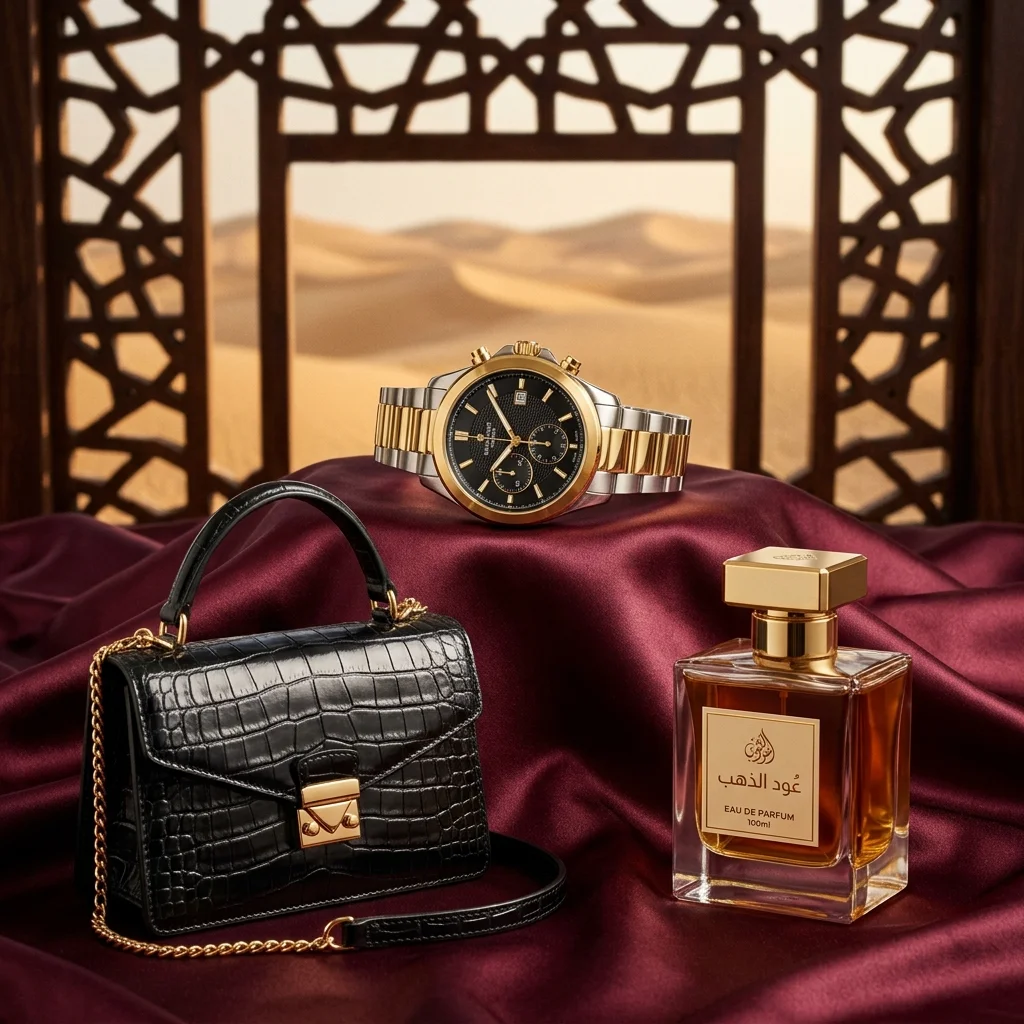
Gulf Luxury Lifestyle Trends 2026: The Intersection of Tradition and Modern Elegance
The Gulf region has long been a crossroads of tradition and opulence, where ancient trade routes meet contemporary wealth. From the spice-laden souks of Dubai to the gleaming towers of Doha, luxury here is not merely a transaction—it is a deeply ingrained cultural expression. As the global luxury market recalibrates, the Gulf is emerging as a bellwether for how heritage and innovation can coexist. Website gulfluxur.com serves as a curated portal highlighting this fusion, featuring articles on fashion, beauty, accessories, and lifestyle. Published on October 8, 2025, its content offers a timely snapshot of consumer priorities and market direction, capturing the nuanced evolution of Gulf luxury lifestyle trends as they move toward 2026.
[IMAGE: A panoramic shot of a modern Gulf city skyline with traditional dhows in the foreground at sunset.]
Gulf Fashion Trends 2026: Forecasting the Next Wave
The article “Gulf Fashion Trends 2026” on gulfluxur.com signals a forward-looking approach, blending high-end Western couture with regional aesthetics like intricate embroidery and flowing silhouettes. This is not a superficial mash-up; designers are increasingly studying traditional Gulf garments—the bisht, the abaya, the kandura—and reinterpreting their cuts and embellishments for a global audience.
Key themes include sustainability, with a growing emphasis on local materials such as camel wool, silk from the UAE’s nascent sericulture projects, and natural dyes derived from henna and saffron. At the same time, digital integration is reshaping the shopping experience. Virtual try-ons for luxury items, powered by augmented reality, are becoming standard in high-end boutiques across Riyadh and Abu Dhabi. The trend suggests a measurable shift from purely international labels to homegrown designers gaining traction. Names like Saudi Arabia’s Honayda and Kuwait’s Moez Elegance are no longer niche; they are commanding premium prices and waiting lists.
This evolution reflects broader economic logic: Gulf governments are actively diversifying away from oil, and fashion is a key pillar of their “soft power” strategies. The Dubai Fashion Week and the Saudi 100 Brands initiative are incubating local talent, and consumers are responding with pride. By 2026, industry analysts project that regionally designed fashion will account for 18–20% of the Gulf’s personal luxury goods market, up from 12% in 2023.
[IMAGE: A fashion sketch mixing a modern abaya with bold, colorful accessories and a digital interface overlay.]
Swiss Watches: Timeless Prestige in the Gulf
The article “Swiss Watches: Timeless Prestige” on gulfluxur.com underscores the enduring affinity for precision horology in a region that values craftsmanship and status above mere fashion. In the Gulf, a watch is rarely just a timepiece—it is a statement of heritage, a store of value, and often a family heirloom.
Gulf consumers frequently favor limited-edition, diamond-encrusted or gold models from brands like Rolex, Patek Philippe, and Audemars Piguet. Yet the market is also seeing a rise in independent watchmakers gaining traction, particularly those that offer bespoke dials featuring Arabic numerals or intricate geometric patterns inspired by Islamic art. The appeal is twofold: exclusivity and cultural resonance.
This segment reflects a broader economic logic: watches as alternatives to volatile asset classes in wealth preservation. In a region where real estate and equities can be subject to sudden swings, high-end Swiss watches have emerged as a tangible, portable store of value. According to the Swiss Watch Industry Federation, the Gulf Cooperation Council (GCC) countries now represent roughly 8% of global Swiss watch exports by value, with the average transaction price in the UAE exceeding 25,000 Swiss francs. The trend shows no sign of slowing; collectors are increasingly turning to vintage and neo-vintage pieces, driving up prices at auctions in Doha and Dubai.
[IMAGE: Close-up of a Swiss watch with an open heart movement, resting on a prayer bead (misbaha) to highlight cultural fusion.]
Oud Perfumes: The Scent of Luxury – Amouage and Ajmal
Oud, the resinous heartwood of the agar tree, is a cornerstone of Gulf olfactory culture. The article “Must-Have Oud Perfumes” on gulfluxur.com features Amouage and Ajmal, both revered for their artisanal blends that marry the smoky, animalic depth of oud with floral, citrus, or amber notes. Amouage, founded in Oman in 1983, is known for its audacious compositions—often costing several thousand dollars per bottle—while Ajmal, an Emirati house with a century-long history, offers everything from mass-market scents to ultra-exclusive attars.
Together, these brands represent a $3-billion regional fragrance industry that is going global. The supply chain is rooted in Southeast Asian agarwood forests, particularly in Cambodia, Vietnam, and Laos, where sustainable harvesting has become a pressing concern. Deep insight: The rising demand for “sustainable oud” is reshaping harvesting practices and creating new ethical certifications. Brands are now tracing their agarwood to certified plantations, and some—like Ajmal—have invested in their own distilleries to control quality and environmental impact. For Gulf consumers, the story behind the scent matters as much as the scent itself.
The trend also intersects with broader wellness movements. Oud is increasingly marketed not just as a perfume but as an aromatic therapy, with brands highlighting its calming and meditative properties. As the 2026 Gulf luxury lifestyle trends unfold, expect to see more oud-infused candles, home diffusers, and even skincare lines—all carrying the same premium positioning.
[IMAGE: Two ornate perfume bottles – one metallic gold, one dark wood – with oud chips and rose petals scattered on a dark surface.]
Top 5 Luxury Bags to Shop in 2025: Curated Investments
The article “Top 5 Luxury Bags to Shop in 2025” on gulfluxur.com provides a curated guide for the discerning Gulf shopper. The selection spans classic houses and emerging artisans, reflecting a market where bags are often seen as both functional accessories and investment assets.
The list prominently features Hermès, with the Birkin and Kelly models remaining perennial favorites. Gulf buyers tend to favor exotic skins—crocodile, ostrich, python—often custom-ordered with gold or palladium hardware. The secondary market for these bags in the region is robust; pre-owned boutiques in Dubai’s DIFC and Doha’s Pearl district report that limited-edition Birkins can appreciate 15–20% annually.
But the list also includes brands like Bottega Veneta, whose Intrecciato weaving appeals to those who prefer understated luxury, and the Italian house Loro Piana, known for its cashmere and suede totes that align with the region’s growing appetite for quiet luxury. Notably, an emerging Gulf-based label, Rabea, has made the cut, offering bags handcrafted from recycled camel leather and featuring gold clasp details inspired by traditional Omani door handles. This signals a shift: Gulf consumers are increasingly open to homegrown luxury that tells a story of place and sustainability.
The economic logic is clear. Luxury bags, like Swiss watches, function as alternative assets. With the global resale market for handbags projected to reach $5 billion by 2026, Gulf buyers are treating their collections as a store of wealth—one that can be worn, displayed, and eventually liquidated. The trend is supported by dedicated auction houses in the region, such as the Monaco-based Asprey’s new Dubai branch, which now holds regular handbag sales.
The Economic Logic Behind the Trends: Heritage, Innovation, and Supply Chains
What unites these seemingly disparate trends—fashion, watches, perfumes, and bags—is a deeper economic logic rooted in the Gulf’s unique position as both a wealthy consumer market and a hub for global trade. The region’s luxury spending is projected to reach $25 billion by 2026, according to Bain & Company, driven by a young, digitally native population with high disposable incomes and a strong sense of cultural identity.
Supply chains are being reshaped accordingly. For oud, the shift toward sustainable harvesting involves partnerships between Gulf perfumers and Southeast Asian cooperatives. For Swiss watches, the Gulf has become a key distribution and authentication hub, with brands opening service centers and boutiques that offer on-site certification. For fashion, the rise of regional manufacturing—particularly in Saudi Arabia’s new industrial zones—is reducing lead times and fostering local craftsmanship.
Meanwhile, the digital transformation of luxury retail is accelerating. Virtual try-ons, blockchain-based authentication, and tokenized ownership of rare items are no longer experiments; they are expected features. Gulfluxur.com, as a curated portal, exemplifies this convergence: it aggregates editorial content, direct-to-consumer links, and community discussions, serving as a one-stop reference for the modern Gulf luxury consumer.
Conclusion: The Gulf as a Blueprint for 21st-Century Luxury
The Gulf luxury lifestyle trends heading into 2026 reveal a region that is no longer simply a consumer of imported luxury but an active creator of its own aesthetic. The fusion of tradition and modern elegance is not a marketing gimmick—it is a business strategy, a cultural statement, and a reflection of shifting consumer preferences.
From the sandswept souks of Amouage’s Oman to the glittering watch boutiques of Qatar’s Pearl, the Gulf is charting a distinctive path. Swiss watches and luxury bags serve as hedges in volatile economies; oud perfumes tie modern scents to ancient forests; fashion blends global silhouettes with local pride. As these trends mature, they offer lessons for luxury markets worldwide: authenticity, sustainability, and cultural relevance are not optional—they are essential. And in the Gulf, they are being woven into the very fabric of a new luxury paradigm.
[IMAGE: A minimalist flat-lay of an elegant Gulf-inspired lifestyle: a cup of Arabic coffee, a gold fountain pen, a silk scarf, and a single rose arranged on a wooden tray with geometric inlay.]
Keywords

Ahmed Al-Farsi
Luxury & Lifestyle Editor with expertise in high-end hospitality and retail.