Beyond Oil: How Gulf Nations Are Forging a Digital Future with AI, Blockchain, and Renewables
The Gulf region is undergoing a profound transformation as oil-dependent economies pivot toward technology-driven futures. From Dubai's AI-powered smart city initiatives to Saudi Arabia's ambitious AI investments, and from Bahrain's cryptocurrency platforms to the UAE's renewable energy targets, this article explores the interconnected trends reshaping the Middle East. It reveals a strategic race for digital sovereignty, where government-led projects, blockchain logistics, and e-commerce growth are creating a new economic axis. By examining the hidden logic behind these innovations, we uncover how the region aims to become a global hub for tech talent and sustainable infrastructure, with long-term implications for global supply chains and energy markets.
Layla Ibrahim
Editorial Analyst
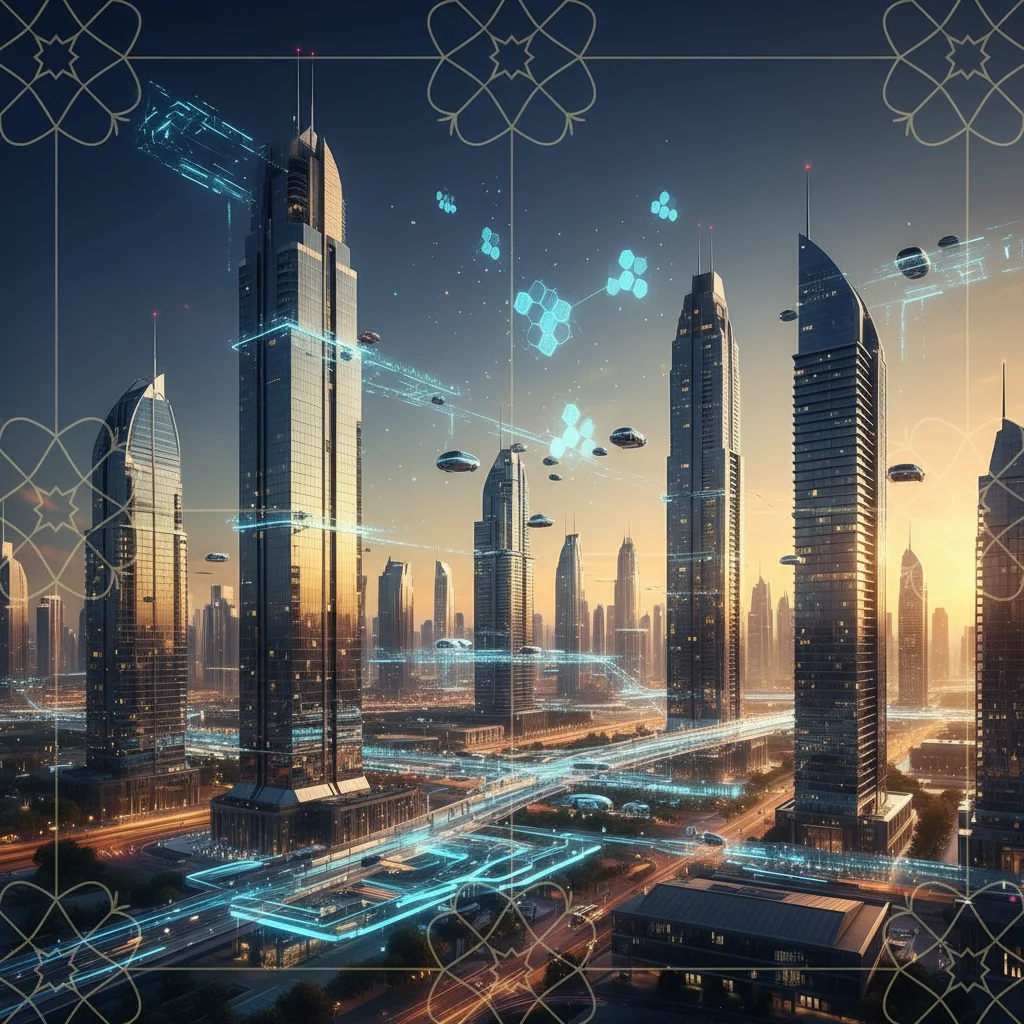
From Oil to Code: How Gulf Nations Are Building a Digital Future with AI, Blockchain, and Renewables
The Persian Gulf is witnessing a strategic pivot that could redefine the region's identity for decades to come. No longer content to be the world's energy station, Gulf nations are investing hundreds of billions of dollars into technologies that promise to make them the architects of the next global economy.
For nearly a century, the Gulf region's wealth and geopolitical influence rested on a single resource: crude oil. But as the global energy transition accelerates and the world's economic center of gravity shifts toward data, code, and connectivity, the six nations of the Gulf Cooperation Council (GCC) are executing one of the most ambitious economic transformations in modern history.
From the algorithmic governance of Dubai's smart city systems to Saudi Arabia's multibillion-dollar AI ventures, from Bahrain's pioneering cryptocurrency regulations to the UAE's aggressive renewable energy targets, a coherent strategic mosaic is emerging. This is not a haphazard adoption of trendy technologies. It is a coordinated, government-led push for digital sovereignty — an attempt to secure the region's relevance in a post-oil world by becoming a global hub for technology, talent, and sustainable infrastructure.
This article explores the five interconnected trends driving this transformation and the hidden logic that binds them together.
---
[IMAGE: Split image showing an old oil derrick silhouetted against a desert sunset on the left, transitioning to a futuristic Dubai skyline with glowing data streams and holographic displays on the right. The transition line features a subtle sand-to-circuit-board gradient.]
---
1. Smart Cities and AI: Dubai's Algorithmic Governance Model
The most visible manifestation of the Gulf's tech pivot is the proliferation of smart city projects. But these are not merely showcases of architectural ambition. They represent a new model of urban governance — one where data flows as freely as traffic, and artificial intelligence makes decisions that once required human judgment.
Dubai has positioned itself as a global testbed for urban AI. The city's smart city initiative integrates AI into traffic management, energy consumption optimization, public safety monitoring, and waste management. The Dubai Electricity and Water Authority (DEWA) uses AI to predict demand and reduce energy loss. The Roads and Transport Authority (RTA) deploys AI-powered traffic systems that have reportedly cut commute times in some corridors by up to 20%. These are not pilot programs; they are operational systems that have been running, iterating, and producing measurable results for years.
Saudi Arabia's ambitions are even larger. The Kingdom's Vision 2030 plan treats AI as a foundational technology for economic diversification. The Public Investment Fund (PIF) has committed billions to AI research, including a partnership with SoftBank's Vision Fund and the establishment of a dedicated AI authority. NEOM, the $500 billion megacity project, is designed from the ground up as an AI-native urban environment — one where autonomous mobility, predictive infrastructure maintenance, and AI-driven healthcare are standard features.
The deeper insight here goes beyond technology. These cities are creating data ecosystems that function as competitive exports. When multinational tech firms establish regional headquarters in Dubai or Riyadh, they gain access to a controlled but fertile testing ground. The infrastructure itself becomes a product — a model that can be packaged and sold to other developing economies looking to leapfrog into the digital age.
[IMAGE: A smart city control room with multiple curved screens displaying real-time traffic flow, energy grid data, and AI analytics dashboards. Arabic script appears in the interface design. The operators are a diverse team in business attire, monitoring data streams. Photorealistic style with cool blue and green tones.]
---
2. Blockchain and Crypto: Dubai's Platform vs. Bahrain's Sandbox
If AI represents the Gulf's bet on intelligence, blockchain represents its bet on trust. The region is pursuing two distinct but complementary strategies for distributed ledger technology, revealing different philosophical approaches to digital sovereignty.
Dubai has adopted a top-down, enterprise-first approach. The Dubai Blockchain Strategy, launched in 2018, aims to make the city the first blockchain-powered government by migrating all applicable transactions to the platform. The logic is pragmatic: by reducing paperwork, eliminating fraud, and streamlining business registration, the government estimates it can save millions of work hours annually. This is blockchain as infrastructure — invisible, efficient, and state-controlled.
Bahrain, by contrast, has chosen a regulated open-market model. The Central Bank of Bahrain introduced one of the world's first comprehensive regulatory frameworks for cryptocurrency exchanges, attracting major players like Rain and CoinMena. Bahrain positions itself as a safe, regulated gateway for crypto businesses looking to operate in the Middle East. The approach has worked: Bahrain has become a hub for blockchain startups and crypto investors seeking clarity in a region where regulations are often ambiguous.
This divergence reveals a hidden pattern in Gulf tech strategy. Dubai prioritizes control and efficiency — blockchain as a tool for enhancing state capability. Bahrain prioritizes innovation and openness — blockchain as a platform for attracting global capital and talent. Both models serve the same ultimate goal: making the region indispensable to the future digital economy.
The impact on supply chains is particularly significant. Gulf ports like Jebel Ali and Khalifa Port handle massive volumes of global trade. Blockchain-based logistics platforms reduce paperwork, track goods in real-time, and prevent fraud. For a region built on trade — from ancient frankincense routes to modern container ships — this is a natural evolution. The same technology that verifies cryptocurrency transactions can verify that a shipment of electronics from China reached its Dubai warehouse without tampering.
[IMAGE: A network visualization showing blockchain nodes connecting Dubai's iconic skyline (Burj Khalifa) to Bahrain's financial district. Cryptocurrency symbols like BTC and ETH float as translucent holograms between the two cities. The background is a night sky with a digital grid overlay. No text.]
---
3. E-Commerce Boom: The Digital Retail Transformation of Saudi and UAE
The Gulf's technology investments are not limited to infrastructure. A parallel transformation is happening in the retail sector, driven by one of the highest smartphone penetration rates in the world and a young, digitally native population.
Saudi Arabia and the UAE have experienced explosive growth in e-commerce. The Saudi market grew by over 50% during the pandemic and has sustained double-digit growth since. The UAE's e-commerce market is projected to exceed $17 billion by 2025. Major global players like Amazon, Noon, and local platforms like Saudi Arabia's Salla are competing for market share in a region where cash-on-delivery is giving way to digital payments.
This growth is not happening in isolation. It is deeply intertwined with the logistics innovations made possible by blockchain and AI. E-commerce fulfillment in the Gulf requires navigating multiple free trade zones, customs jurisdictions, and last-mile delivery challenges in extreme desert conditions. Blockchain provides supply chain transparency. AI optimizes delivery routes and predicts demand. The result is a digital retail ecosystem that is leapfrogging traditional models.
The strategic implication is clear: digital retail creates data, and data creates opportunities for AI training, financial services, and targeted advertising. For Gulf governments, a thriving e-commerce sector is not just about tax revenue — it is about generating the digital exhaust that powers the entire technology ecosystem.
[IMAGE: A busy e-commerce fulfillment center in Dubai's logistics corridor, with robotic sorting systems, workers scanning packages, and a digital display showing real-time delivery metrics. The background features rows of shelves and conveyor belts. Photorealistic, warm lighting. No logos or branding on packages.]
---
4. Renewable Energy: Powering the AI Revolution
There is a critical component of the Gulf's tech pivot that is often overlooked. AI data centers, blockchain validation nodes, and smart city infrastructure consume enormous amounts of electricity. A single large-scale AI model training run can consume as much energy as several hundred households in a year. If the Gulf's digital ambitions are to be credible — and sustainable — they must be powered by something other than burning more oil.
This is where renewable energy enters the picture. The UAE has set a target of generating 50% of its energy from clean sources by 2050. Saudi Arabia plans to produce 50% of its electricity from renewables by 2030. These are not aspirational statements; they are backed by massive investments. The Mohammed bin Rashid Al Maktoum Solar Park in Dubai is one of the largest solar installations in the world. Saudi Arabia's NEOM is home to what will be one of the world's largest green hydrogen projects.
The hidden logic connecting renewable energy UAE targets to AI investments is elegant. The Gulf has an abundance of solar radiation — among the highest in the world. By building massive solar farms, these nations can produce cheap, clean electricity that powers their digital infrastructure. This creates a competitive advantage: data centers in the Gulf can be among the most energy-efficient and lowest-carbon in the world, attracting tech companies under pressure from investors and regulators to reduce their environmental footprint.
The Gulf is essentially betting that it can export both energy and intelligence — solar power during the day to run AI workloads overnight in other time zones, and AI services powered by that cheap clean energy back to global markets. This is the vision of a truly integrated digital-energy economy.
[IMAGE: Aerial view of a solar farm in the UAE desert, with rows of photovoltaic panels stretching to the horizon. In the distance, a modern data center building with cooling towers. The sun is setting, casting long shadows and a warm golden light across the panels. Photorealistic, no text or watermark.]
---
5. Talent, Policy, and the Race for Digital Sovereignty
All of the above trends converge on a single challenge: talent. Building AI systems, managing blockchain networks, and maintaining renewable energy infrastructure requires a workforce that the Gulf — like most regions — does not yet have in sufficient quantity.
The response has been aggressive. Saudi Arabia's AI talent acquisition strategy includes generous visa programs, university partnerships with top global institutions, and a dedicated fund for attracting and retaining AI researchers and engineers. The UAE has created "golden visa" programs that grant long-term residency to exceptional talent in technology and science. Qatar has built Education City, a campus hosting branch campuses of leading international universities.
These policies reflect a deeper understanding: digital sovereignty is not just about owning infrastructure; it is about owning the skills and knowledge to operate and improve that infrastructure. The Gulf recognizes that technology dependence on foreign vendors is as risky as economic dependence on oil. The goal is to build an indigenous ecosystem of tech talent that can innovate, adapt, and compete globally.
The results are measurable. The Gulf is now home to a growing number of AI startups, blockchain R&D labs, and clean technology ventures. International tech firms are establishing regional R&D centers not just for market access, but for the talent pool being cultivated. The region is becoming a viable destination for engineers and entrepreneurs who might previously have gone to Silicon Valley, London, or Singapore.
[IMAGE: A modern co-working space in Riyadh or Abu Dhabi, with young professionals from diverse backgrounds working on laptops and collaborating at whiteboards. Some screens show AI code or blockchain network dashboards. The architecture is contemporary, with Arabic geometric patterns incorporated into the design. Natural light. No logos.]
---
Conclusion: The Gulf's New Economic Axis
The transformation underway in the Gulf is not a collection of isolated projects. It is a strategic mosaic — a deliberate, government-coordinated effort to build a new economic axis where digital intelligence and clean energy converge.
The five trends explored in this article — smart cities and AI in Saudi Arabia, blockchain in Dubai and Bahrain, e-commerce growth in Saudi and UAE, renewable energy targets in the UAE, and talent acquisition across the region — are interlocking pieces of a single vision. The AI systems need clean energy. The blockchain networks need logistics integration. The e-commerce platforms need data-driven governance. The talent pipeline needs policy support.
For the global economy, the implications are significant. The Gulf is not just a market for technology; it is becoming a builder and exporter of technology. Its smart city models will be deployed in other developing regions. Its blockchain platforms will handle global trade. Its AI talent will contribute to international research. Its renewable energy will power data centers serving multiple continents.
The old Gulf was a supplier of black gold. The new Gulf aims to be a supplier of digital gold — the algorithms, infrastructure, and energy that will power the world's transition to a sustainable, intelligent future.
Whether they succeed will depend on execution, geopolitical stability, and the ability to attract and retain the world's best minds. But one thing is clear: the region is no longer waiting for the oil to run out. It is building its next chapter, byte by byte, panel by panel, algorithm by algorithm.
---
Key takeaways:
| Trend | Lead Nation | Strategic Approach | Global Impact |
|--------|-------------|-------------------|---------------|
| Smart Cities & AI | Saudi Arabia, UAE | Data ecosystems as exportable models | Urban AI testbed for developing economies |
| Blockchain & Crypto | Dubai (platform), Bahrain (sandbox) | State-controlled vs. market-led regulation | Supply chain transformation for global trade |
| E-Commerce | Saudi Arabia, UAE | Digital retail creates data for AI training | Leapfrog model for high-mobile-penetration markets |
| Renewable Energy | UAE | Cheap clean power for energy-hungry AI infrastructure | Low-carbon data centers attract global tech |
| Talent & Policy | GCC-wide | Visa programs, university partnerships, sovereign funds | Indigenous tech ecosystem reduces dependency |
Keywords

Layla Ibrahim
Technology Reporter covering fintech, AI, and startup ecosystems in the Gulf.