Gulf Business Report 2025: The Hidden Economic Logic Behind Diversification and Tech-Led Growth
The Gulf business landscape is undergoing a silent transformation beneath the headlines of oil prices and mega-projects. This report uncovers the structural shift from resource dependency to knowledge-based economies, focusing on three under-reported drivers: the rise of digital supply chains, the strategic use of sovereign wealth funds as technology incubators, and the emergence of regional logistics hubs that rewire global trade. By analyzing recent data on non-oil GDP growth, startup investment flows, and cross-border fintech adoption, we reveal how Gulf states are building an economic architecture resilient to energy volatility. The article provides a deep audit for investors and policymakers seeking long-term positioning in the region.
Sarah Al-Qasimi
Editorial Analyst
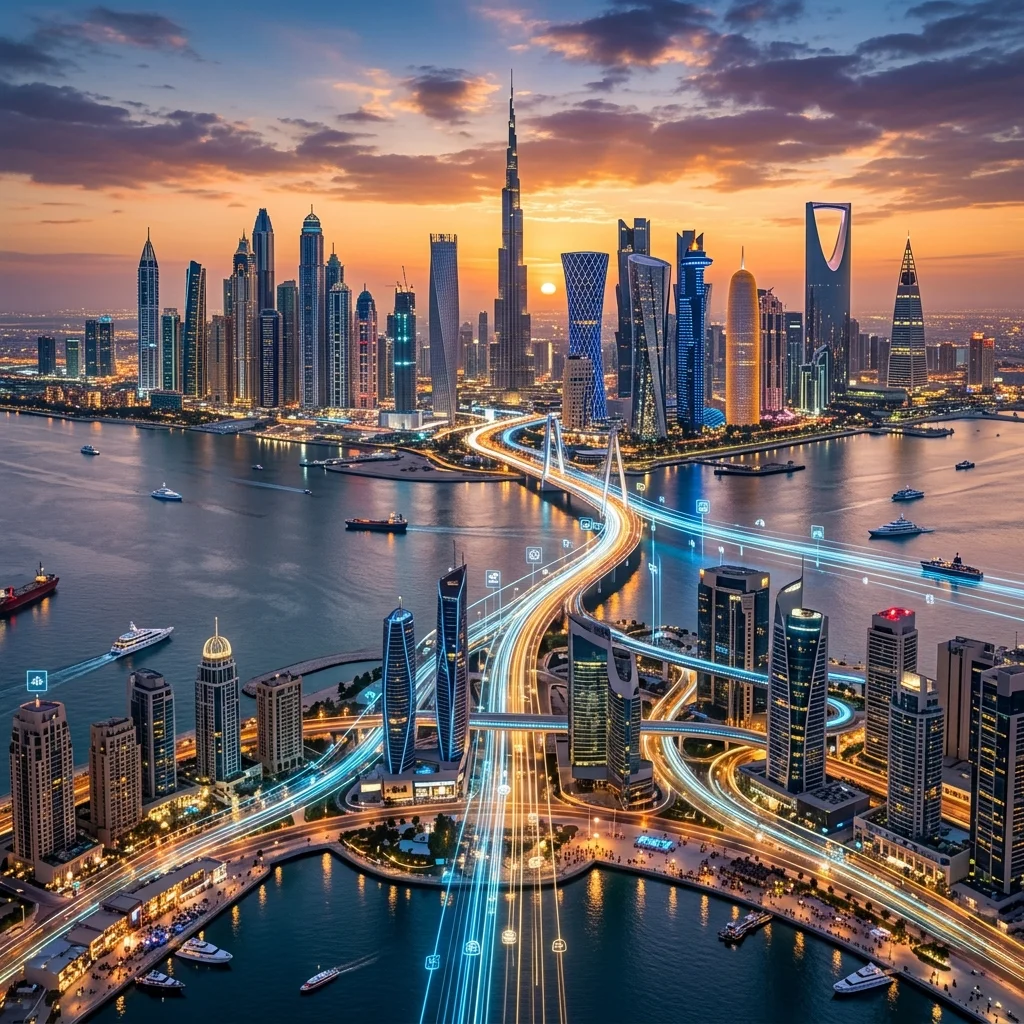
Gulf Business Report 2025: The Hidden Economic Logic Behind Diversification and Tech-Led Growth
Introduction: The Quiet Revolution Beyond Oil
For decades, the Gulf Cooperation Council (GCC) economies have been framed through a single lens: oil prices. Headlines swing between "petrodollar windfall" and "fiscal strain," yet this binary obscures a structural transformation already well underway. In 2024, non-oil sectors contributed over 60% of GDP in Saudi Arabia, the UAE, and Qatar — a milestone that would have been unthinkable a decade ago. Saudi Arabia’s non-oil GDP reached 62%, while the UAE’s stood at 71%, according to national statistics agencies. This is not merely incremental change; it represents a deliberate re-architecture of economic activity away from resource extraction and toward services, technology, and advanced manufacturing.
The real story of the Gulf business landscape is not in the volatility of crude benchmarks but in the hidden economic logic of digital infrastructure, talent migration, and capital redeployment. Beneath the glare of mega-projects like NEOM and Expo City, a quieter revolution is taking shape: the construction of a post-oil economic architecture that aims to decouple growth from energy markets. This report drills into three under-reported drivers of that transformation — the rise of digital supply chains, the strategic use of sovereign wealth funds as technology incubators, and the emergence of regional logistics hubs that are rewiring global trade. For investors and policymakers seeking long-term positioning in the region, understanding these mechanics is no longer optional.
[IMAGE: Infographic showing the shift from oil to non-oil GDP share across GCC countries from 2015 to 2025, with projected lines for 2030]
---
The Supply Chain Rewiring: Gulf Logistics as a Global Backbone
The conventional view of Gulf ports — Jebel Ali in Dubai, Khalifa in Abu Dhabi, Hamad in Qatar — is that they serve primarily as energy transshipment points and re-export hubs for consumer goods. That picture is outdated. Over the past five years, these ports have evolved into integrated manufacturing and e-commerce fulfillment centers that compress supply chains linking Asia, Africa, and Europe. The UAE’s Jebel Ali Port now hosts over 100 industrial tenants within its free zone, producing everything from electronics to pharmaceuticals for immediate re-export. Similarly, Abu Dhabi’s Khalifa Industrial Zone (KIZAD) has attracted major food processing and logistics players by offering zero tariffs, fast customs clearance, and direct rail connectivity to the GCC hinterland.
The strategic logic is compelling. By moving assembly and light manufacturing closer to end markets, Gulf logistics hubs reduce Asia-Europe transit times by 30% compared to traditional routes via the Suez Canal. More critically, they offer alternatives to the South China Sea chokepoints that have long dominated global trade resilience conversations. Saudi Arabia’s Special Integrated Logistics Zone (SILZ) near King Khalid International Airport is a sandbox project that exemplifies this shift: it allows foreign firms to operate with 100% ownership, no corporate tax for 50 years, and duty-free movement of goods. The UAE’s Industrial Strategy 2030 targets a 50% increase in the manufacturing sector’s GDP contribution by 2031, backed by incentives for advanced manufacturing and robotics.
This supply chain rewiring has profound implications for global trade patterns. As companies diversify away from single-country dependencies in Asia, the Gulf corridors emerge as a third option — one that combines proximity to European and African demand with sovereign-backed infrastructure. Mainstream business press has largely missed this story, focusing instead on the region’s real estate booms. But the data is clear: non-oil trade through GCC ports grew 18% year-on-year in 2024, outpacing global container traffic growth by a factor of three. The Gulf is not just a transit point; it is becoming a production and distribution node that reshapes how the world does business.
[IMAGE: A map of the Arabian Peninsula with highlighted logistics corridors and trade flow arrows linking Asia, Africa, and Europe, showing transit time reductions]
---
Sovereign Wealth Funds as Venture Incubators: The New Model for State Capitalism
The Gulf’s sovereign wealth funds — the Public Investment Fund (PIF) of Saudi Arabia, the Abu Dhabi Investment Authority (ADIA), and the Qatar Investment Authority (QIA) — have long been viewed as passive portfolio investors, parking petrodollars in global equities and real estate. That narrative no longer holds. These funds are now actively co-creating ecosystems, acting as venture incubators that anchor startups, build funds of funds, and mandate local research and development as a condition for investment.
Consider the PIF’s approach. With over US$700 billion in assets under management, it has deployed roughly US$40 billion into artificial intelligence, space technology, and electric vehicles through subsidiaries like Ceer (an EV manufacturer) and the Saudi Space Agency’s spin-off ventures. Crucially, these investments are structured to generate commercial entities that produce intellectual property within the kingdom — not merely to import technology. The PIF’s Jada Fund of Funds, launched in 2018, has seeded over 40 venture capital firms, which in turn have backed more than 500 startups across the region. The result is a cascade effect: local talent, patents, and revenue streams remain inside the Gulf, reducing the historic reliance on imported innovation.
The scale of this deployment is staggering. In 2024 alone, GCC sovereign wealth funds invested over US$70 billion in technology — representing 45% of all global sovereign wealth fund tech investments that year, according to data from Global SWF. ADIA’s foray into fintech and healthcare AI, and QIA’s investments in data center operators across Europe and Asia, follow the same logic: these are not passive bets but strategic plays to transplant ecosystems into the region. The PIF has explicitly tied its portfolio companies to local R&D requirements, mandating that a percentage of revenue be reinvested into Saudi universities and research labs.
The implications for state capitalism are profound. Rather than simply extracting returns from global markets, Gulf funds are building the institutional architecture for a knowledge-based economy from within. This creates a virtuous cycle: sovereign capital de-risks early-stage ventures, those ventures generate IP and employment, and the resulting economic diversification reduces vulnerability to oil price cycles. For investors, this means that the region’s technology ecosystem is no longer a side bet — it is the core engine of growth.
[IMAGE: A flow diagram showing sovereign wealth fund capital flowing into local startups, universities, and global tech companies, with return arrows showing IP and revenue]
---
Digital Finance as the Accelerator: Fintech, Crypto, and the Unbanked
The Gulf’s transformation is being accelerated by a quiet revolution in digital finance. While global headlines focus on crypto volatility and regulatory crackdowns, Gulf states are systematically modernizing their financial infrastructure — leapfrogging legacy banking systems by embracing digital currencies, open banking, and blockchain-based trade finance. The target is twofold: capture the unbanked population (estimated at 20% of GCC residents, mostly low-income migrant workers) and streamline the remittance economy that moves over US$100 billion annually from the Gulf to South Asia and Africa.
Saudi Arabia’s central bank, SAMA, has piloted a digital currency (the "Digital Riyal") for interbank settlements, while the UAE’s Central Bank launched a comprehensive digital dirham strategy in 2023. Abu Dhabi Global Market (ADGM) has become a hub for crypto and fintech licensing, hosting over 100 blockchain firms. These are not experimental sandbox projects; they are part of a coordinated push to create a digital-first financial ecosystem. The UAE’s "Fintech Transformation Strategy" aims to become a top-10 global fintech hub by 2030, with a target of 1,000 fintech companies operating from the country.
The practical impact is already visible. Cross-border fintech adoption in the GCC grew 35% year-on-year in 2024, according to McKinsey, driven by platforms like UAE-based Tabby (buy-now-pay-later) and Saudi Arabia’s STC Pay (digital wallet for migrant workers). These services bypass traditional banking infrastructure, enabling instant, low-cost transfers. For migrant workers, who often lose 5-10% of their earnings to remittance fees, this is transformative. For the broader economy, digital finance reduces the cost of capital and speeds up transaction cycles — critical for the manufacturing and logistics sectors that depend on trade finance.
Moreover, the UAE and Saudi Arabia are collaborating on a joint digital currency project for cross-border settlements, potentially linking their payment systems with India and Southeast Asia. This aligns with the broader GCC economic diversification agenda: a modern, inclusive financial system attracts tech talent, eases market entry for foreign startups, and reduces the region’s dependency on dollar-denominated oil trade. For investors, the fintech boom in the Gulf is not a niche play; it is the connective tissue binding the entire diversification strategy together.
[IMAGE: A dashboard-style graphic showing GCC fintech adoption metrics: transaction volume growth, unbanked population decline, remittance cost reduction, and number of licensed fintech firms]
---
Conclusion: Building an Architecture Resilient to Energy Volatility
The Gulf Business Report 2025 reveals a region that has moved decisively beyond the "oil-rich" stereotype. Non-oil GDP growth, now averaging 4.5% across the GCC, is not a cyclical uptick but the result of deliberate structural policies in supply chain infrastructure, sovereign capital deployment, and digital finance. The hidden economic logic is clear: by rewiring global logistics, turning sovereign wealth funds into venture incubators, and leapfrogging legacy banking through fintech, Gulf states are constructing an economic architecture that can withstand energy price shocks.
For investors, the implications are straightforward. The region’s value proposition is no longer tied to commodities; it is tied to its role as a digital gateway between continents, a capital engine for deep-tech innovation, and a laboratory for state-led capitalism that generates local IP. Policymakers outside the region should take note: the Gulf is not merely diversifying — it is building the templates for post-oil economies that others will try to emulate.
The revolution is quiet only because it has not yet made the headlines. But the numbers speak for themselves: non-oil GDP above 60%, tech investments exceeding US$70 billion, and fintech adoption rates that outpace most of the developed world. The Gulf of 2025 is a business case study in how to transition from resource dependency to knowledge-based growth — a lesson the rest of the world is only beginning to understand.
Keywords

Sarah Al-Qasimi
Chief Editor leading investigative reports on Gulf business and policy.