Gulf Real Estate Markets: Hidden Supply, Capital Flows, and the Next Phase of Regional Growth
This article will examine Gulf real estate markets through a deeper economic lens, focusing on the forces that shape pricing, supply, investor behavior, and long-term development cycles. Rather than treating property trends as isolated market news, it will connect demand drivers, financing conditions, infrastructure expansion, and cross-border capital flows. The structure is designed as a slow analysis piece, suitable for an industry deep audit, with verification points embedded where market data, transaction evidence, and supply pipeline indicators can be checked against credible sources. The article will also explore an underreported angle: how real estate activity in the Gulf reflects broader shifts in logistics, labor mobility, urban planning, and sovereign economic diversification strategies.
Fatima Al-Zahra
Editorial Analyst
Gulf Real Estate Markets: Hidden Supply, Capital Flows, and the Next Phase of Regional Growth
The Gulf real estate markets have become one of the clearest ways to read the region’s broader economic direction. Property prices, lease rates, and new project announcements are not only signals of housing demand. They also reflect population inflows, state-led infrastructure spending, capital allocation, and the pace of economic diversification. In that sense, real estate functions as both an asset class and a policy indicator.
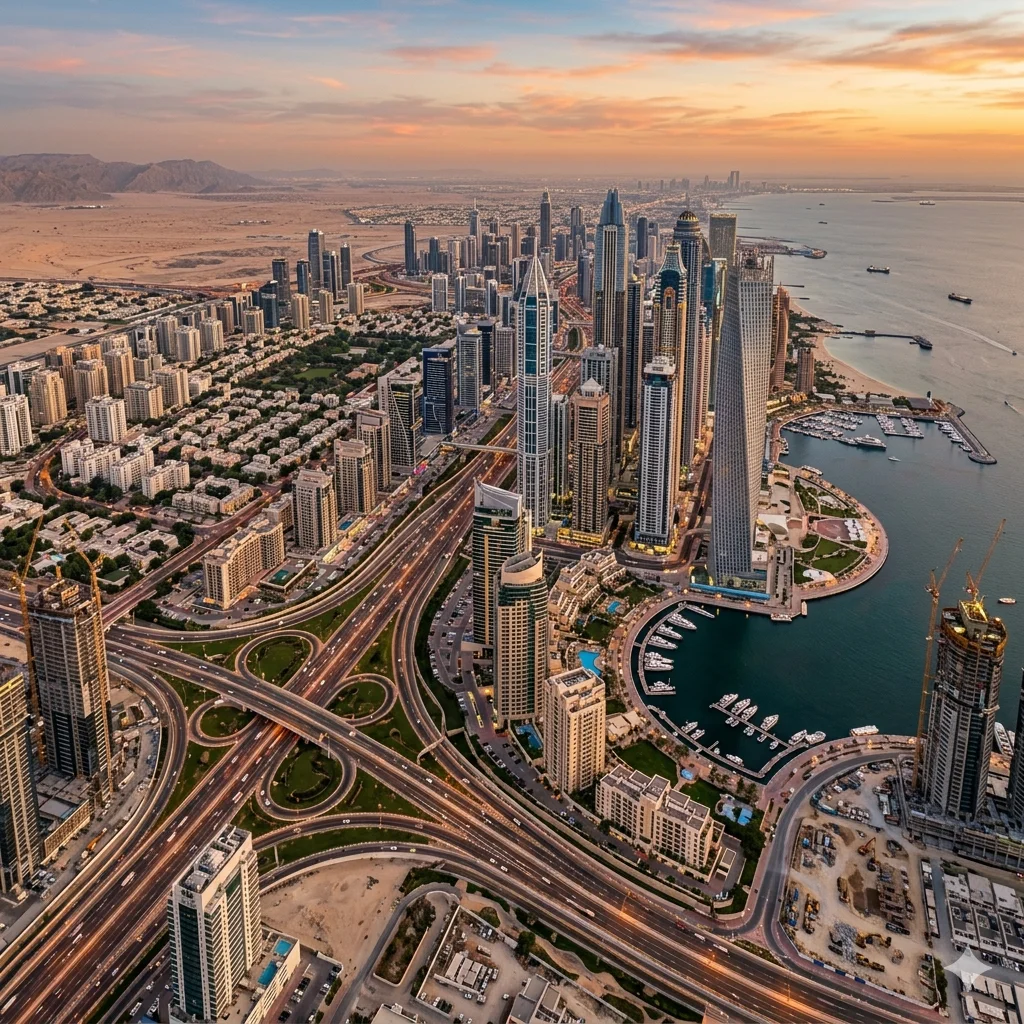
[IMAGE: A modern panoramic aerial view of a Gulf city skyline with luxury towers, emerging residential districts, desert-edge infrastructure, highways, waterfront development, and construction cranes]
1. The Core Market Logic Behind Gulf Real Estate
The first thing to understand about Gulf real estate markets is that they do not behave like purely private housing systems. In many cities across the region, market activity is shaped by a combination of government planning, expatriate labor demand, sovereign investment programs, and international capital flows. This creates a market structure where demand can rise quickly, but supply is often released in waves rather than continuously.
Population growth matters, but not in isolation. In Gulf cities, demand tends to be driven by employment creation, residency rules, infrastructure access, and the perceived stability of the legal and investment environment. At the same time, property markets also absorb liquidity. When local and regional capital looks for a store of value, residential and mixed-use assets often become an alternative to equities or lower-yielding cash positions.
This is why Gulf property investment should be read as more than a housing story. It is a proxy for regional diversification and liquidity absorption. A market with strong sales volumes may be reflecting not only end-user demand, but also confidence in the broader urban and economic model.
2. Fast Analysis or Slow Analysis? Why This Topic Requires a Deep Audit
This topic belongs in the category of slow analysis. A fast news-driven frame is usually insufficient because property outcomes depend on supply pipelines, mortgage conditions, regulation, and project delivery timelines that unfold over years rather than weeks.
A transaction spike in one quarter can be misleading if the market has several large completions scheduled later. Likewise, a temporary rise in rents may not indicate structural strength if new inventory is about to enter the market in concentrated form. For that reason, any serious review of Gulf real estate markets should include verification points such as:
- completion schedules by district,
- launch pipelines by segment,
- mortgage rate trends,
- bank lending standards,
- rental yield movements,
- occupancy data where available,
- and land release or zoning changes.
A fast analysis layer is still useful, but only in specific cases. For example, a sharp policy shift, a change in visa rules, a new transport corridor, or an abrupt move in interest rates can justify a short-term assessment. Even then, the broader market context remains essential.
3. Demand Drivers: Who Is Actually Buying and Renting?
A common mistake in commentary on Gulf property markets is to treat “demand” as a single category. In practice, demand comes from several distinct groups.
First are end users. These are households purchasing or renting homes primarily for occupation. Their decisions are driven by school access, commute times, neighborhood quality, and long-term affordability.
Second are expatriate tenants. In many Gulf cities, the rental market is heavily influenced by mobile labor and professional migration. Employment growth, residency stability, and employer-sponsored housing arrangements all affect occupancy levels.
Third are regional investors. These buyers often respond to currency stability, capital preservation motives, and the relative attractiveness of yields compared with nearby markets. Their activity can be especially important in prime apartment and villa segments.
Fourth are institutional buyers and private capital pools. These participants may seek income-producing assets, development opportunities, or portfolio diversification. Their actions are often tied to financing conditions and confidence in medium-term absorption.
In other words, property demand in the Gulf is shaped less by speculative narratives than by migration policy, job creation, and lifestyle demand. The most resilient submarkets are usually those that combine livability with access to employment and transport networks.
[IMAGE: Conceptual illustration of diverse buyers and tenants linked to apartments, villas, and commercial property]
4. Supply Pipeline: The Real Variable Most Reports Understate
If demand is one side of the equation, supply is often the more important variable. Many reports focus on headline sales growth or price gains, but they understate the effect of the project pipeline. In Gulf real estate markets, the timing of new completions can change pricing dynamics very quickly.
Supply risk is rarely uniform. It is often concentrated in specific submarkets, asset types, or delivery windows. A district that appears tight today may face significant competition once multiple projects are completed within the same 12- to 24-month period. This is especially relevant in residential towers, branded residences, and large master-planned communities where launches are clustered.
The supply story also extends beyond finished units. Construction activity affects contractors, building materials, labor availability, and infrastructure capacity. When development accelerates, it can place pressure on roads, utilities, and service provision. When it slows, it can affect employment across the construction ecosystem.
For market observers, the key question is not simply how many units are being announced, but where and when they will be delivered. That distinction often explains why some districts hold pricing power while others soften even in a generally strong market.
5. Capital Flows and Financing Conditions
Prices in Gulf property investment markets are influenced not only by end-user demand but by the cost and availability of capital. Local liquidity, foreign direct investment, developer financing, and mortgage availability all shape absorption rates and pricing power.
When bank lending is accommodative, buyers can stretch into higher price brackets and developers can finance new launches more easily. When lending standards tighten, even markets with healthy rental demand may experience slower sales velocity. Interest rates matter as well. Higher rates can reduce affordability and shift buyers toward smaller units, lower leverage, or delayed purchase decisions.
This financing link is especially important in markets where a large share of activity is off-plan or developer-led. In those cases, the pace of sales often depends on installment structures, payment plans, and confidence in delivery. A market can appear active on the surface while still relying on a narrow set of financing channels.
Capital flows also deserve careful observation. Cross-border investors may enter when they see stable regulation, currency confidence, or attractive yields. Conversely, they may pause when geopolitical risk rises or when global rates make alternative assets more competitive. Tracking these flows helps explain why some Gulf cities attract sustained demand while others remain more cyclical.
[IMAGE: Abstract financial flow visual connecting banks, developers, and property assets]
6. The Underreported Angle: Real Estate as an Infrastructure Signal
One of the most important but least discussed aspects of Gulf real estate markets is that they often signal where infrastructure will expand next. Property growth does not occur in a vacuum. It typically follows roads, metro lines, airports, logistics zones, schools, hospitals, and digital infrastructure.
This is why real estate activity should be read alongside urban development plans. A rising project pipeline in a specific district may indicate more than speculative confidence. It may reflect expected improvements in transport access, utility delivery, or district-level amenities. In other words, the market is often pricing future infrastructure, not just present conditions.
This perspective also helps explain the link between real estate and sovereign diversification strategies. Many Gulf economies are actively shifting toward logistics, tourism, financial services, advanced manufacturing, and digital industries. Where those sectors grow, housing demand and commercial absorption often follow.
Urban planning is therefore central to the long-term outlook. Districts with coherent master planning, walkability, transit access, and service density are more likely to sustain value than fragmented areas with weak connectivity.
7. What Verification Points Matter Most
A credible review of Gulf real estate markets should rely on evidence, not impressions. The most useful verification points include:
- transaction data by segment and district,
- rental index trends,
- completion and handover calendars,
- mortgage lending volumes,
- developer balance sheet strength,
- land price movements,
- vacancy and occupancy levels,
- and infrastructure project timelines.
These indicators help separate temporary sentiment from structural change. They also reduce the risk of overinterpreting headline price growth without understanding what is happening underneath.
8. The Next Phase of Regional Growth
The next phase of growth in Gulf property markets is likely to be defined by selectivity rather than broad-based momentum. Prime urban districts may remain supported by capital inflows, while secondary locations will depend more on infrastructure delivery and affordability. Rental markets will continue to reflect migration trends and employment creation, while the office and mixed-use segments may benefit from broader economic diversification.
At a regional level, the most important question is not whether property remains active. It is how real estate is being used by governments, developers, and investors to channel capital into new urban forms and new economic sectors.
Seen this way, Gulf real estate markets are not simply a reflection of demand for homes. They are a record of how the region is absorbing liquidity, reorganizing cities, and building the physical platform for its next stage of growth.
Keywords

Fatima Al-Zahra
Real Estate Editor specializing in Dubai and Riyadh mega-projects.