GCC Real Estate Market Shifts: From Luxury Boom to Sustainable, Mixed-Use Transformation
The GCC real estate market is undergoing a structural transformation driven by economic diversification, sustainability mandates, and technology integration. While luxury residential in Dubai hits record prices (30% annual increase) and Sharjah's trading volume surges 48% to 40 billion AED, Saudi Arabia's Vision 2030 fuels a broader shift toward mixed-use, smart, transit-oriented developments. This article explores the hidden logic behind these trends—how oil-dependent economies are leveraging real estate to attract foreign capital, embed green infrastructure, and create new urban ecosystems. We analyze the supply chain implications, regulatory divergence between UAE and Saudi Arabia, and the long-term growth trajectory projected at 2.98% CAGR through 2030.
Fatima Al-Zahra
Editorial Analyst
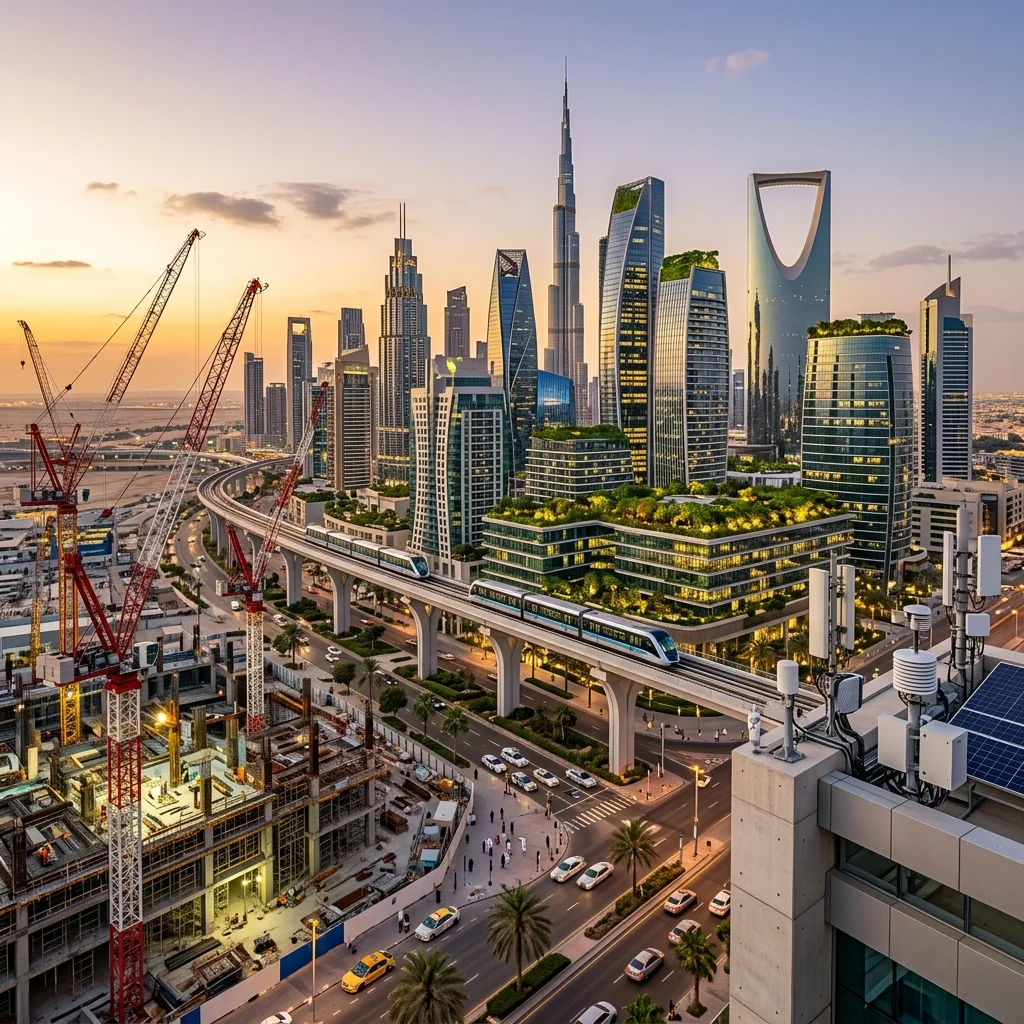
GCC Real Estate Market Shifts: From Luxury Boom to Sustainable, Mixed-Use Transformation
[IMAGE: Aerial view of Dubai Marina with new smart buildings and metro line visible, sunset lighting]
Introduction: The New Face of Gulf Real Estate
The Gulf Cooperation Council (GCC) real estate market has long been viewed as a barometer for the region’s economic health, historically tied to oil prices and government spending. But the numbers emerging in 2024 tell a story that goes far beyond cyclical commodity swings. The GCC luxury residential market reached an estimated $176.29 billion in 2024, with projections pointing to $215 billion by 2030—a compound annual growth rate of 2.98%. Meanwhile, Sharjah’s real estate trading volume surged 48% to 40 billion AED in 2024, and Dubai luxury property prices climbed 30% year-on-year to record levels.
These figures are striking, but they mask a deeper structural transformation. The GCC is no longer simply building homes for a growing population; it is architecting new urban ecosystems that blend tourism, technology, sustainability, and transport integration. From Dubai’s high-end residential towers to Saudi Arabia’s giga-projects under Vision 2030, the region is leveraging real estate as a tool for economic diversification, foreign capital attraction, and infrastructure modernization. This article unpacks the hidden logic behind the headlines—examining how oil-dependent economies are using real estate to create lasting value, and what that means for investors, developers, and supply chains.
1. Luxury Hotspots: Dubai’s Record Surge and Sharjah’s Volume Explosion
Dubai: The Price Frontier
Dubai’s luxury property market has reached unprecedented heights. The emirate’s residential luxury price index hit a record 184.3 points in the third quarter of 2024, rising 6.5% quarter-on-quarter and 30% annually, according to data cited by CNN. This surge is driven by a confluence of factors: high-net-worth migration from Europe, Asia, and Russia; crypto-wealth flowing into premium assets; and the emirate’s well-established freehold ownership laws that allow foreign buyers to own property outright in designated areas.
The demand is concentrated in prime neighborhoods such as Palm Jumeirah, Dubai Marina, and Downtown Dubai, where ultra-luxury villas and penthouses routinely trade for eight-figure sums. But the boom is not just about the ultra-wealthy. The broader luxury segment—properties priced above AED 5 million—has seen sustained absorption, supported by a growing base of wealthy expatriates and regional investors seeking safe-haven assets in a volatile global economy.
[IMAGE: Side-by-side: Dubai luxury tower with infinity pool, and Sharjah residential community with parks]
Sharjah: Volume over Price
Just 30 kilometers north of Dubai, Sharjah is writing a different story. The emirate’s real estate trading volume reached 40 billion AED in 2024, up 48% from 2023, according to Ajmal Makkan Real Estate Development. While Dubai’s market is characterized by eye-popping price appreciation, Sharjah’s growth comes from volume—more transactions, more first-time buyers, and a surge in affordable and mid-market housing.
The shift is no accident. In recent years, Sharjah has introduced foreign investor-friendly laws, including long-term residency permits and the expansion of freehold ownership zones. For buyers priced out of Dubai’s soaring market, Sharjah offers comparable lifestyle benefits—proximity to Dubai’s jobs and airports, new infrastructure projects, and a lower cost of entry. The result is a market that serves as a release valve for Dubai’s price pressures while building its own identity as a family-oriented, culturally rich alternative.
What ties these two markets together is investor confidence in Gulf real estate markets. Whether through price growth in Dubai or volume growth in Sharjah, the underlying narrative is the same: capital is flowing into the region at an accelerating pace, and the demand base is broadening beyond traditional oil-linked cycles.
2. Saudi Arabia’s Vision 2030: A New Paradigm for Real Estate
Megaprojects and Diversification
Saudi Arabia’s real estate market posted positive momentum in Q3 2024, fueled by the kingdom’s ambitious Vision 2030 program. Data from MarkNtel Advisors highlights the GCC luxury market’s overall growth, but Saudi Arabia’s contribution is unique in scale and ambition. The kingdom is driving a wave of giga-projects—NEOM, the Red Sea Project, Diriyah Gate, and Qiddiya—that are redefining what real estate development looks like in the region.
Unlike Dubai’s market, which grew organically through private-sector entrepreneurship and foreign investment, Saudi Arabia’s transformation is sovereign-led, financed by the Public Investment Fund (PIF) and backed by the full weight of the state. These projects are not merely residential or commercial; they are mixed-use destinations that combine hospitality, entertainment, retail, healthcare, and technology. NEOM, for instance, is conceived as a smart city powered entirely by renewable energy, with autonomous transportation and AI-driven infrastructure.
Foreign Investment Incentives
To attract international capital, the Saudi government has introduced a suite of incentives: long-term residency visas (Premium Residency), easier foreign ownership rules in designated zones, and tax breaks for property developers and investors. Monumental projects ensure high returns in both residential and commercial sectors, while the broader economic reforms—including the opening of the tourism sector and the relaxation of social codes—are making the kingdom a more attractive place to live and invest.
The shift from traditional standalone housing to integrated, mixed-use communities mirrors Dubai’s model but operates on a different scale—both in terms of land area and investment volume. Saudi Arabia is effectively leapfrogging from a car-dependent, villa-centric urban model to transit-oriented, sustainable developments that aim to reduce carbon footprints and improve quality of life.
[IMAGE: Rendering of the NEOM smart city with residential zones, green spaces, and autonomous transport]
3. Sustainability and Smart Buildings: Not Optional, Core Requirements
From Afterthought to Prerequisite
One of the most significant changes in GCC real estate over the past five years is the elevation of sustainability and smart technology from optional add-ons to core development requirements. In Dubai, new buildings must comply with the Al Sa’fat green building rating system, while Saudi Arabia’s Mostadam certification is increasingly mandated for large-scale projects. The result is a fundamental shift in how developments are designed, constructed, and operated.
Smart building systems now integrate energy management, water conservation, air quality monitoring, and IoT-enabled sensors that allow real-time adjustments. These features are no longer limited to luxury towers—they are becoming standard in mid-market apartments and commercial spaces. The supply chain implications are substantial: demand for green materials (low-carbon concrete, recycled steel, high-performance glass) is rising, while the installation of smart sensors and control systems requires a new wave of specialized contractors and technology providers.
Transit-Oriented Development and Urban Ecosystems
Sustainability in the GCC goes beyond individual buildings. The region is embracing transit-oriented development (TOD)—the concept of concentrating high-density residential and commercial uses around public transport hubs. Dubai’s Metro extension to the Expo 2020 site and the upcoming Route 2020 integration are examples, but Saudi Arabia is taking it further. Riyadh’s Metro system, partly operational, is being surrounded by mixed-use zones designed to reduce car dependency and create walkable neighborhoods.
For developers, this means that the value of a project is increasingly tied to its connectivity and its ability to form part of a larger urban ecosystem. Mixed-use developments that combine residential, office, retail, and leisure within walking distance of a metro station command premium prices and faster absorption rates. This trend is reshaping land valuation models and forcing traditional developers to partner with transport authorities and technology firms.
[IMAGE: A modern transit hub in Riyadh with mixed-use towers above a metro station, green rooftops visible]
The Long View: Growth at 2.98% CAGR Through 2030
The 2.98% CAGR projected for the GCC luxury market through 2030 may seem modest compared to the double-digit surges seen in Dubai recently. But that steady growth masks the composition of the market’s transformation. The luxury segment is evolving from a niche of ultra-high-net-worth buyers into a broader premium residential category that includes “mass affluent” investors. Meanwhile, the overall GCC real estate market—including affordable housing, commercial, and industrial—is growing at a faster clip as governments prioritize housing for citizens and expatriates.
What will sustain this growth? Three factors stand out:
- Demographic fundamentals: The GCC population is young and growing, with high rates of urbanization. Saudi Arabia’s population is expected to exceed 40 million by 2030, driving demand for housing and services.
- Regulatory divergence and convergence: The UAE and Saudi Arabia are pursuing distinct paths—the UAE through market-led liberalization, Saudi Arabia through state-led megaprojects. Yet both are converging on best practices: freehold ownership, long-term visas, and sustainability mandates.
- Technology integration: Smart buildings, proptech platforms, and digital transaction systems are making GCC real estate more transparent and efficient, attracting institutional investors who once hesitated.
Conclusion: The Hidden Logic of Gulf Real Estate
The numbers—30% annual luxury price growth in Dubai, 48% volume surge in Sharjah, $215 billion market projection—are attention-grabbing, but they are not the whole story. Behind them lies a calculated strategy by Gulf governments to use real estate as an engine for economic diversification. By embedding sustainability, technology, and transport integration into new developments, they are creating assets that will retain value even as the global energy transition unfolds.
For investors, the message is clear: the GCC real estate market is no longer a simple play on oil prices. It is a complex, multi-layered ecosystem that rewards those who understand the interplay between regulation, infrastructure, and shifting consumer preferences. As the region moves from a luxury boom to a sustainable, mixed-use transformation, the winners will be those who adapt to a new reality—where buildings are smart, cities are connected, and growth is measured not just in square meters, but in quality of life.
Keywords

Fatima Al-Zahra
Real Estate Editor specializing in Dubai and Riyadh mega-projects.