Beyond the Stadium: How Bahrain Sports City Reveals a New Model for Urban Development and Economic Diversification
The award of the Bahrain Sports City design contract to global architecture firm Populous, led by developer Eagle Hills Diyar, is more than a sports news headline. This analysis uncovers the deeper strategic blueprint: a shift from isolated mega-event venues to integrated, year-round economic engines. We examine how this project serves as a critical pillar in Bahrain''s post-oil economic vision, using sports infrastructure as a catalyst for tourism, real estate value, and human capital development. The inclusion of a sports academy and museum alongside commercial assets points to a long-term investment in creating a sustainable sports ecosystem and national identity, moving beyond transient event hosting to permanent urban and economic regeneration.
Fatima Al-Zahra
Editorial Analyst
Beyond the Stadium: How Bahrain Sports City Reveals a New Model for Urban Development and Economic Diversification
Introduction: Decoding the Contract Award – More Than Just Architecture
The award of the design contract for Bahrain Sports City to the global architecture firm Populous, as announced by developer Eagle Hills Diyar, is a transaction that extends beyond a standard procurement update. (Source 1: [Primary Data]) This event signals a strategic pivot in the approach to large-scale infrastructure within the Gulf Cooperation Council (GCC) region. The project, situated within the Diyar Al Muharraq development, is positioned as a direct contributor to Bahrain’s Vision 2030 economic diversification framework. (Source 1: [Primary Data]) The core thesis emerging from this announcement is the evolution from constructing isolated mega-event venues to implementing integrated sports cities. This model is engineered to function as a permanent engine for urban regeneration, tourism, and human capital development, moving decisively beyond the transient economic impact of hosting singular events.
The Populous Blueprint: Deconstructing the Integrated Ecosystem
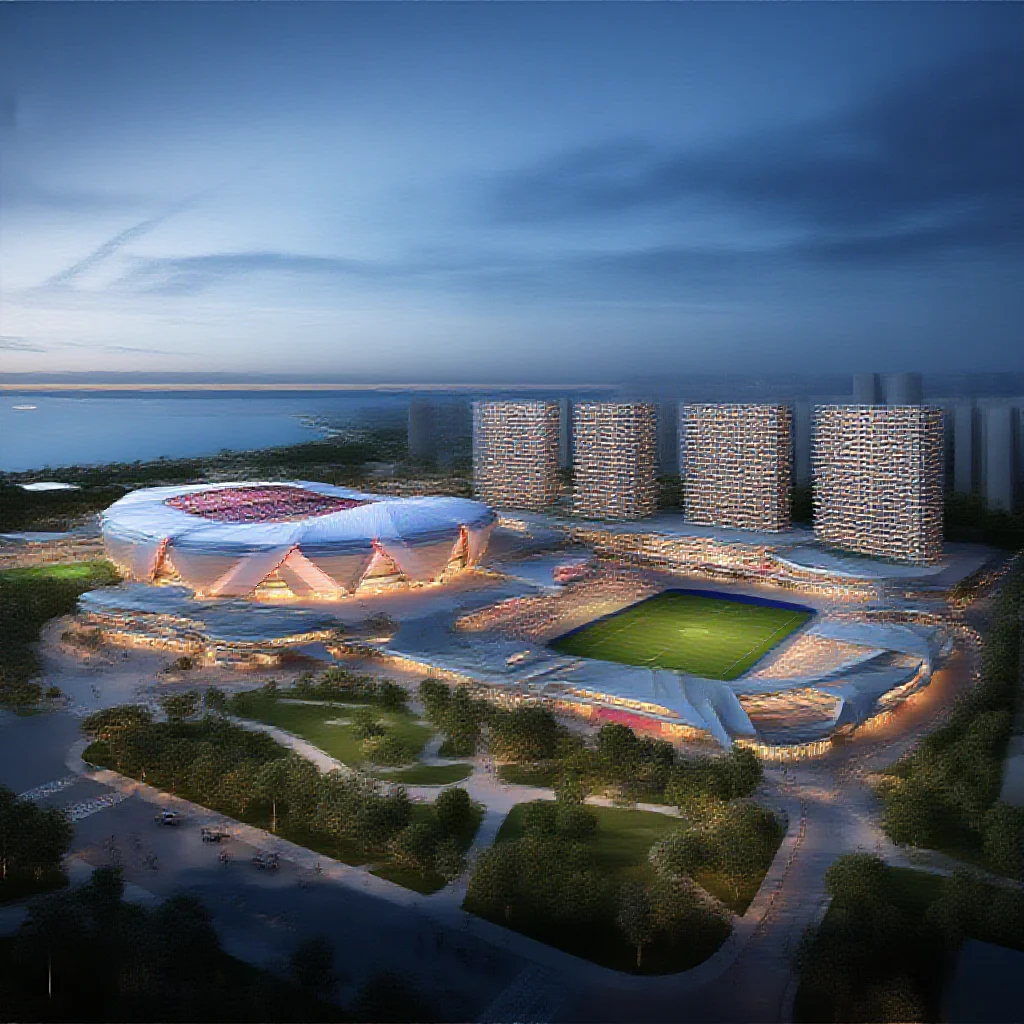
The design brief for Bahrain Sports City outlines a comprehensive ecosystem rather than a standalone stadium. The sports infrastructure is designed for scalability and multi-sport utility, comprising a 20,000-seat multi-purpose stadium, a 6,000-seat indoor arena, a 2,000-seat aquatic centre, and a 1,000-seat velodrome. (Source 1: [Primary Data]) This mix allows for concurrent events and a diversified calendar, reducing reliance on any single sport or competition.
More analytically significant is the inclusion of "soft" infrastructure: a sports museum and a sports academy. (Source 1: [Primary Data]) These components represent a long-term investment in human capital and national narrative-building. The academy functions as a talent pipeline and a center for sports science, while the museum curates a national sports identity, fostering public engagement beyond live events.
The commercial engine of the project—encompassing hotels, residential units, and retail spaces—is critical to its financial logic. (Source 1: [Primary Data]) This mixed-use model ensures the district maintains economic activity and footfall on non-event days, transforming it into a 24/7 urban quarter. The revenue streams from these commercial assets are designed to subsidize the operational costs of the sporting venues, addressing a key failure point of traditional stadium projects.
The Client's Gambit: Eagle Hills Diyar and the Privatization of Nation-Building
The client for this project, Eagle Hills Diyar, is a focal point for analysis. Eagle Hills, a private real estate investment and development company backed by Abu Dhabi’s Mubadala Investment Company, has a portfolio demonstrating a pattern of using mega-projects as tools for urban transformation, with notable developments in Serbia, Morocco, and elsewhere. (Source 1: [Entity Data]) The selection of a private developer, rather than a direct government contract, carries significant implications.
This structure suggests a model where the state sets the strategic vision (aligned with Vision 2030) while delegating execution, financing, and long-term operational risk to a specialized private entity. This can potentially lead to faster execution through streamlined decision-making and access to international capital and expertise. It also implies a shift toward a more commercially-driven legacy plan, where the developer has a vested interest in the district’s sustained economic viability post-construction. This reflects a broader trend in the GCC toward public-private partnerships in realizing national development objectives.
The Deep Economic Logic: Sports Infrastructure as a Diversification Tool
The economic rationale for Bahrain Sports City extends well beyond direct tourism from sports events. The project acts as a large-scale capital investment that stimulates the local construction sector, engineering firms, and professional services. Its role as a premium "anchor tenant" within Diyar Al Muharraq is designed to catalyze a ripple effect, increasing real estate valuations in the surrounding area and attracting complementary businesses in hospitality, retail, and entertainment.
The integrated model explicitly targets the "white elephant" risk associated with past mega-event venues. By embedding the sports facilities within a functioning urban district with its own residential population and commercial base, the project creates a built-in demand driver. The sports academy adds a layer of human capital development, potentially creating a new professional services sector around sports medicine, management, and training.
The primary challenges remain executional: seamless integration of the components, creating a genuine sense of place, and establishing a sustainable operational model from inception. The success of this model will be measured not by the spectacle of an opening ceremony, but by the district’s economic productivity and social activity a decade after completion.
Conclusion: A Template for the Post-Oil Gulf
The Bahrain Sports City project, through its design mandate and development structure, presents a template for the next generation of urban infrastructure in resource-rich economies seeking diversification. It demonstrates a calculated move from symbolic, event-driven construction to holistic, economically-engineered urban ecosystems. The involvement of a global architect like Populous ensures design credibility, while the leadership of a private developer like Eagle Hills Diyar introduces a market discipline often absent in state-led projects. The long-term impact will depend on the successful fusion of its sporting, cultural, and commercial elements into a coherent and vibrant urban destination. Its progress will be closely monitored as a case study in whether integrated sports cities can fulfill their promise as sustainable engines for post-hydrocarbon economic growth.
Keywords

Fatima Al-Zahra
Real Estate Editor specializing in Dubai and Riyadh mega-projects.