Beyond the $27bn Price Tag: Egypt''s New Capital Project as a Geopolitical and Economic Lifeline
Egypt's announcement of a $27 billion mixed-use development in its New Administrative Capital (NAC) is more than a real estate project; it's a strategic maneuver with profound implications. This analysis moves beyond the headline figures to explore the project's role as a critical tool for attracting foreign currency, alleviating pressure on old Cairo, and signaling state stability to international investors. We examine the hidden economic logic driving this mega-project, its potential long-term impact on Egypt's urban and economic fabric, and the significant risks and challenges that lie beneath its ambitious vision.
Fatima Al-Zahra
Editorial Analyst
Beyond the $27bn Price Tag: Egypt's New Capital Project as a Geopolitical and Economic Lifeline
Introduction: The $27bn Announcement – More Than Bricks and Mortar
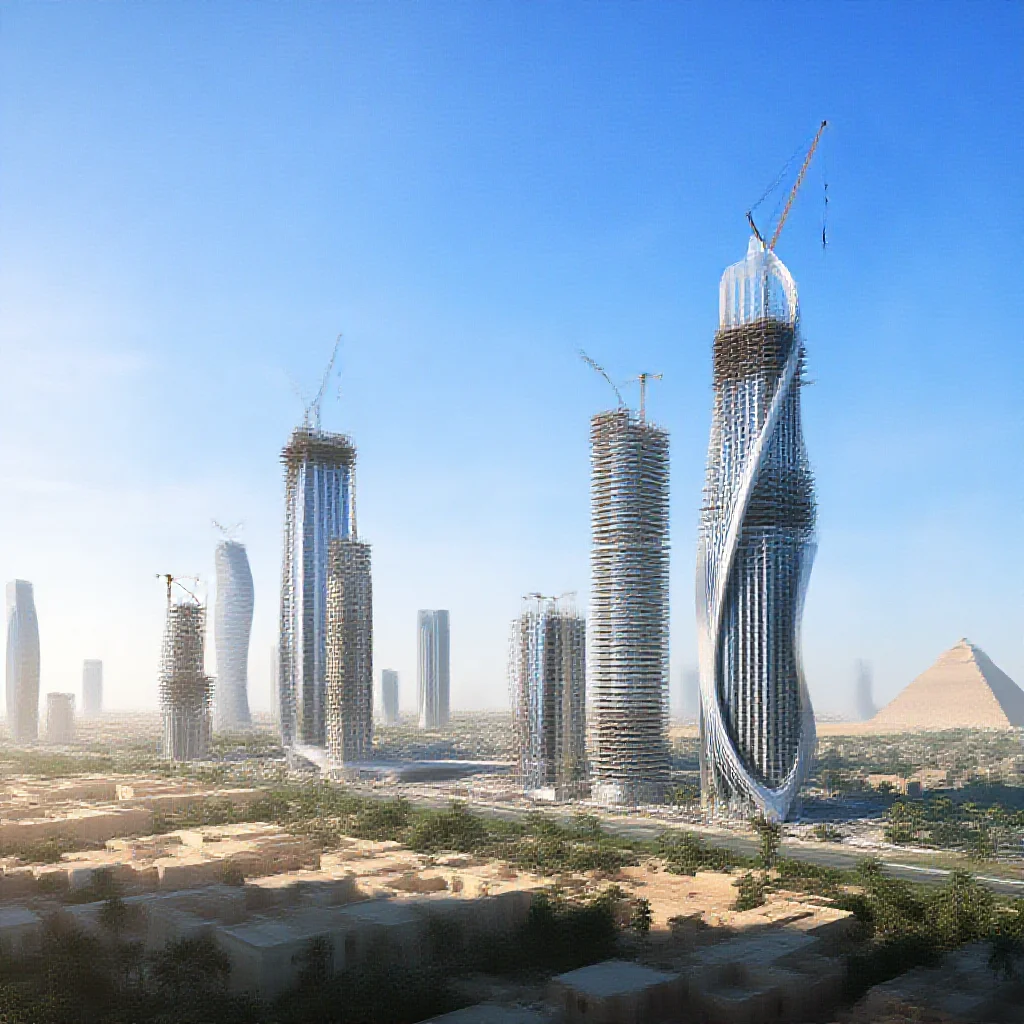
Egypt has announced plans for a $27 billion mixed-use development within its New Administrative Capital (NAC) (Source 1: [Primary Data]). This declaration occurs within a specific economic context: an economy grappling with a persistent foreign currency shortage and operating under a stringent $8 billion financial support agreement with the International Monetary Fund. The scale of the investment, equivalent to approximately 6% of Egypt's current GDP, positions it not as an isolated real estate venture but as a calculated component of a broader national strategy. The project's significance extends beyond its physical footprint, serving as a multi-faceted instrument aimed at addressing structural economic pressures and reshaping the nation's geopolitical posture.
!A graphic comparing the $27bn project cost to other major global infrastructure investments.
Decoding the Core Economic Logic: A Project for Hard Currency and Confidence
The primary economic rationale for the NAC development is its function as a conduit for foreign currency. Egypt's economy requires sustained inflows of hard currency to stabilize the Egyptian pound, service external debt, and finance essential imports. Large-scale, government-backed real estate projects are established mechanisms for attracting direct foreign investment (FDI), particularly from Gulf Cooperation Council states whose sovereign wealth funds have historically been active in Egyptian infrastructure. The $27 billion mixed-use model is engineered to capture value across residential, commercial, and leisure sectors, aiming to create a self-contained economic ecosystem that promises returns in foreign currency.
Concurrently, the project executes a critical "signaling effect" to global financial markets. In an environment of economic strain, the continued advancement of a mega-project of this magnitude is a demonstrative act. It signals state capacity, long-term planning stability, and an unwavering commitment to a modernization agenda. This signal is targeted at two key audiences: international institutional investors assessing sovereign risk and regional partners evaluating the viability of their capital deployments. The project, therefore, operates on a dual financial plane: as a direct generator of investment inflows and as a confidence-building instrument designed to lower the perceived risk premium of investing in Egypt.
The Dual-Track Reality: Fast-Paced Construction vs. Slow-Burn Urban Transformation
The development exists within two distinct temporal realities. The fast-track reality is visible and immediate. Construction activity generates employment, stimulates ancillary industries, and provides a tangible symbol of progress and momentum, which can have a stabilizing socio-political effect during periods of economic hardship. The physical rise of a new city skyline serves as a potent narrative of national advancement.
A slower, more analytical audit reveals deeper questions of long-term viability and structural impact. The core risk lies in the absorption capacity of a luxury real estate market within an economy experiencing high inflation and pressure on disposable income. The potential outcome is the creation of an exclusive enclave—a "capital for the government and the elite"—with slow occupancy rates, which would undermine its economic logic as a revenue generator. Furthermore, the project's supply chain implications require scrutiny. A heavy reliance on imported construction materials, fixtures, and finishing would lead to significant foreign currency leakage, negating a portion of the project's intended financial benefit. The extent to which it catalyzes local industrial and manufacturing capacity remains a critical variable in its net economic contribution.
!A split-image showing rapid construction at the NAC site versus a crowded street in old Cairo.
The Unspoken Entry Point: Sovereignty, Security, and a Redirected Capital
Beyond economics, the NAC project embodies a profound exercise in spatial governance and administrative re-engineering. The relocation of government ministries, diplomatic missions, and state institutions to a planned city built on empty desert land represents a strategic shift. It creates a secure, controllable, and efficient administrative zone physically and symbolically distanced from the dense, historically complex, and occasionally restive urban fabric of old Cairo. This move enhances state security protocols and operational continuity.
The long-term impact on Greater Cairo's underlying urban structure is a subject of analysis. The stated objective of decongesting the historic capital may yield mixed results. A plausible scenario is the creation of a parallel, high-functioning city for government, business, and affluent residents, while older districts continue to face infrastructural neglect and demographic pressures. This could accentuate socio-spatial inequalities. The social contract implication is inherent: significant state focus and resource allocation are directed toward building a new capital, which will be measured against the pace of improvement in public services and living standards in the rest of the urban agglomeration.
Conclusion: A Calculated Gambit with Defined Asymmetric Outcomes
The $27 billion New Administrative Capital development is a strategic gambit with clearly defined asymmetric outcomes. Its success is not measured solely by its completion but by its performance against specific strategic objectives: its efficiency in attracting and retaining foreign hard currency, its success in catalyzing broader economic activity, and its effectiveness in reconfiguring state administration and urban dynamics.
Market and industry predictions remain bifurcated. In the short to medium term, the project will continue to drive construction sector GDP and serve as a focal point for FDI. Its long-term viability as a thriving urban center, however, is inextricably linked to Egypt's broader macroeconomic stability and its ability to generate sustainable demand for its premium real estate and commercial space. The ultimate audit of the NAC will be a cold assessment of whether it evolves into a dynamic economic engine that benefits the national balance sheet or remains a monumental testament to state capacity that struggles to achieve its full projected economic return. The risks are substantial, but within Egypt's current strategic calculus, the perceived necessity of the project appears to outweigh them.
Keywords

Fatima Al-Zahra
Real Estate Editor specializing in Dubai and Riyadh mega-projects.