Amazon''s Zoox Doubles Robotaxi Footprint: The Hidden Strategy Behind the Expansion
In March 2026, Zoox, Amazon's autonomous vehicle subsidiary, announced it had doubled its operational city footprint. This expansion is a key move in Amazon's broader strategy to scale its robotaxi pilot program. This analysis goes beyond the headline to explore the underlying economic logic driving this push. We examine how this expansion is less about immediate passenger revenue and more about a strategic play to dominate the future of urban logistics, data collection, and last-mile delivery integration. The move signals Amazon's intent to use autonomous passenger vehicles as a Trojan horse for a larger, ecosystem-locking ambition in smart city infrastructure.
Layla Ibrahim
Editorial Analyst
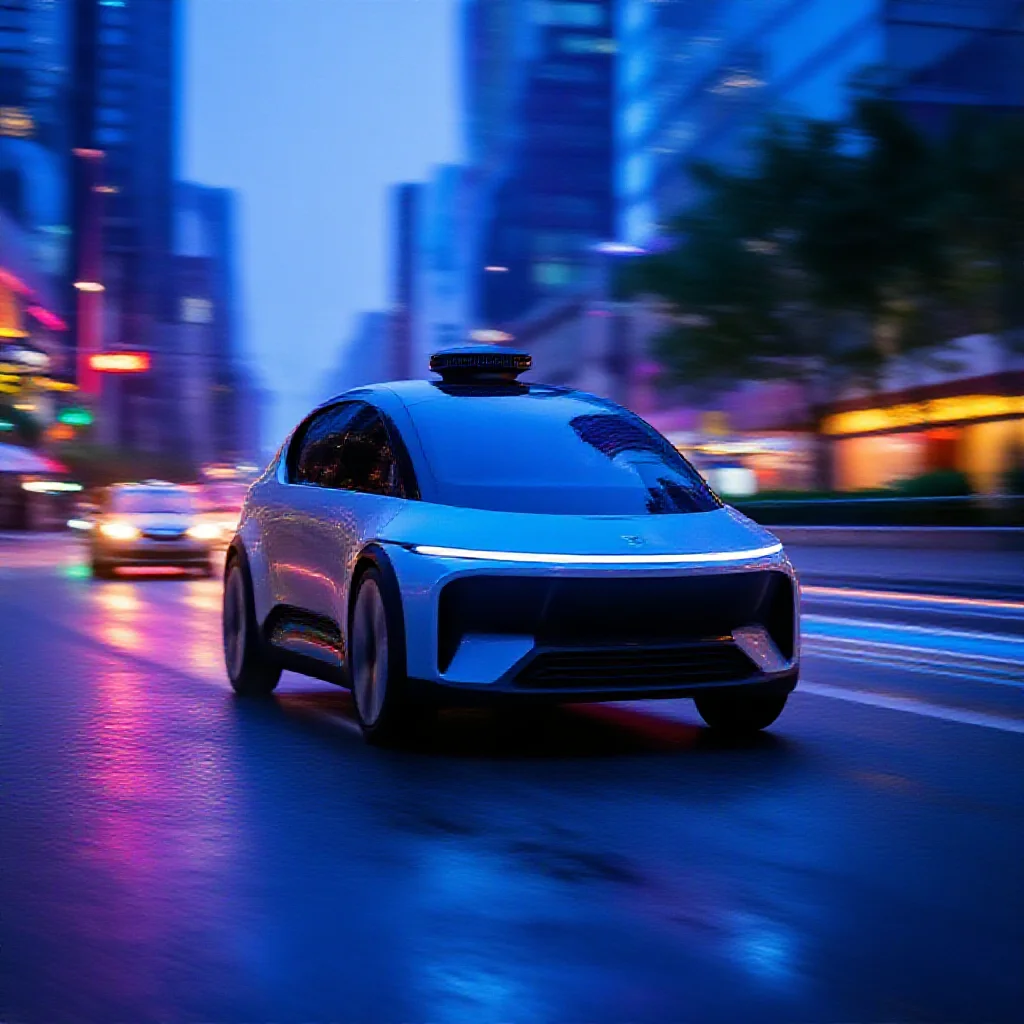
Amazon's Zoox Doubles Robotaxi Footprint: The Hidden Strategy Behind the Expansion
March 2026 — In a strategic update dated March 24, 2026, Amazon’s autonomous vehicle subsidiary, Zoox, announced it had doubled its operational city footprint (Source 1: [Primary Data]). This expansion is framed as a key phase in Amazon’s push to scale its robotaxi pilot program. The move represents a significant logistical milestone, indicating a transition from protracted research and development to the deployment of scalable operations. The expansion’s scale invites analysis beyond passenger service, pointing to a deeper integration within Amazon’s ecosystem and a long-term play for urban infrastructure influence.
Beyond the Headline: Decoding the 'Doubled Footprint'
The announcement is a milestone marker, not an inception point. The phrase “doubled footprint” implies a quantitative leap in geographic presence, but its qualitative implications are more significant. This expansion likely involves entry into new city typologies—contrasting dense, legacy urban cores with sprawling Sun Belt metros—each presenting distinct regulatory, infrastructural, and traffic pattern challenges. Successfully navigating this variety demonstrates a maturation of Zoox’s technology stack and operational playbooks. It provides evidence of the operation transitioning from a controlled, R&D-focused endeavor to a repeatable, scalable service model under Amazon’s corporate stewardship. The expansion acts as a stress test for the system’s adaptability and a signal to the market and regulators regarding its viability.
The Amazon Logic: Why a Robotaxi Pilot is a Logistics Play
Conventional analysis of robotaxi expansion focuses on the nascent market for autonomous passenger rides. A deeper examination reveals a different strategic calculus for Amazon. Zoox’s expansion functions foremost as a large-scale, real-world data acquisition and route-optimization mission. Each vehicle is a mobile sensor suite, generating petabytes of data on street-level navigation, traffic flow, pedestrian behavior, and urban dynamism across diverse environments.
This data stream feeds directly into refining the core algorithms and simulation models for Amazon’s entire logistics network. Insights gained from navigating complex cityscapes in a passenger vehicle have direct applications for Amazon’s autonomous delivery vans, drone navigation systems, and warehouse robotics. The long-term architectural vision appears to be a unified, adaptive autonomous network capable of transporting both people and packages, optimizing asset utilization across a 24-hour cycle. The robotaxi pilot, therefore, is less an end in itself and more a critical R&D pathway and proving ground for Amazon’s fundamental logistics supremacy.
The Unspoken Entry Point: Dominating the Smart City Stack
The most profound strategic angle positions robotaxis as a primary sensor platform for future smart city infrastructure. By maintaining a large, constantly roaming fleet, Zoox vehicles collect a real-time, high-fidelity data layer on municipal assets—traffic patterns, road surface conditions, congestion hotspots, and public space utilization. This dataset’s value may far exceed potential fare revenue.
This positions Amazon, through Zoox, as a potential critical data vendor and infrastructure partner to city governments. Municipalities seeking to optimize traffic management, plan infrastructure, or implement dynamic pricing zones would require access to such comprehensive, live data. The entity that controls the dominant fleet sensor network gains immense leverage. The future scenario this enables is one where urban mobility policy and infrastructure planning are increasingly designed around the capabilities and data streams provided by the prevailing autonomous fleet, creating a significant ecosystem lock-in effect.
Verification & Context: Scaling Amidst Industry Headwinds
This expansion occurs against a backdrop of significant headwinds for the autonomous vehicle industry. The period of 2025-2026 saw continued regulatory scrutiny, operational challenges, and scaled-back ambitions for several key players, such as Cruise and a more cautious, measured expansion by Waymo. In this climate, a declared “doubling” of operational footprint is a notable divergence.
The move is verifiable not merely by corporate statement but by the resource profile behind it. Analysis from independent research firms like Guidehouse Insights and BloombergNEF consistently highlights the capital-intensive nature of AV deployment and the trend toward consolidation (Source 2: [Industry Reports]). Zoox’s ability to scale aggressively underscores the decisive advantage of Amazon’s deep capital reserves and long-term strategic patience. Unlike pure-play AV startups reliant on incremental funding rounds, Zoox operates with a mandate for strategic value over immediate profitability, allowing it to sustain the high burn rate associated with rapid geographic and operational scaling. This financial insulation is a critical, often overlooked, variable in the competitive landscape.
Conclusion
Zoox’s footprint expansion is a multi-faceted strategic maneuver. Its immediate function is the scaling of a commercial robotaxi service. Its primary value to Amazon, however, is as a data-generation engine for logistics AI and a sensor network for urban intelligence. The expansion demonstrates the capability to operate at scale, which is a prerequisite for achieving these broader aims. Market predictions suggest that the autonomous mobility sector will increasingly bifurcate between niche operators and ecosystem players with vast resource backing. Zoox’s March 2026 milestone firmly places it in the latter category, using geographic expansion as a vector to advance Amazon’s integrated ambitions in the future of transportation, logistics, and urban infrastructure data.
Keywords

Layla Ibrahim
Technology Reporter covering fintech, AI, and startup ecosystems in the Gulf.