The Gulf Under Fire: How the Iran War is Rewriting the Region''s Business Playbook
The Morning Context''s ''Gulf Report'' newsletter offers a rare, on-the-ground view of how the US-Iran war is reshaping the Middle East economy. From battered tourism giants like Abu Dhabi National Hotels to the dramatic volatility of Dubai''s stock markets, the conflict is forcing rapid recalibration. This article decodes the hidden logic of wartime business incentives—like Dubai''s billion-dirham bailout—and asks a deeper question: what does the ''new normal'' look like for sovereign wealth funds, supply chains, and the information war that runs parallel to the military one? We sift through IMF warnings, Aramco’s dire Strait of Hormuz scenarios, and specific disruptions to airports and ports to map the long-term damage and the improbable recoveries.
Sarah Al-Qasimi
Editorial Analyst
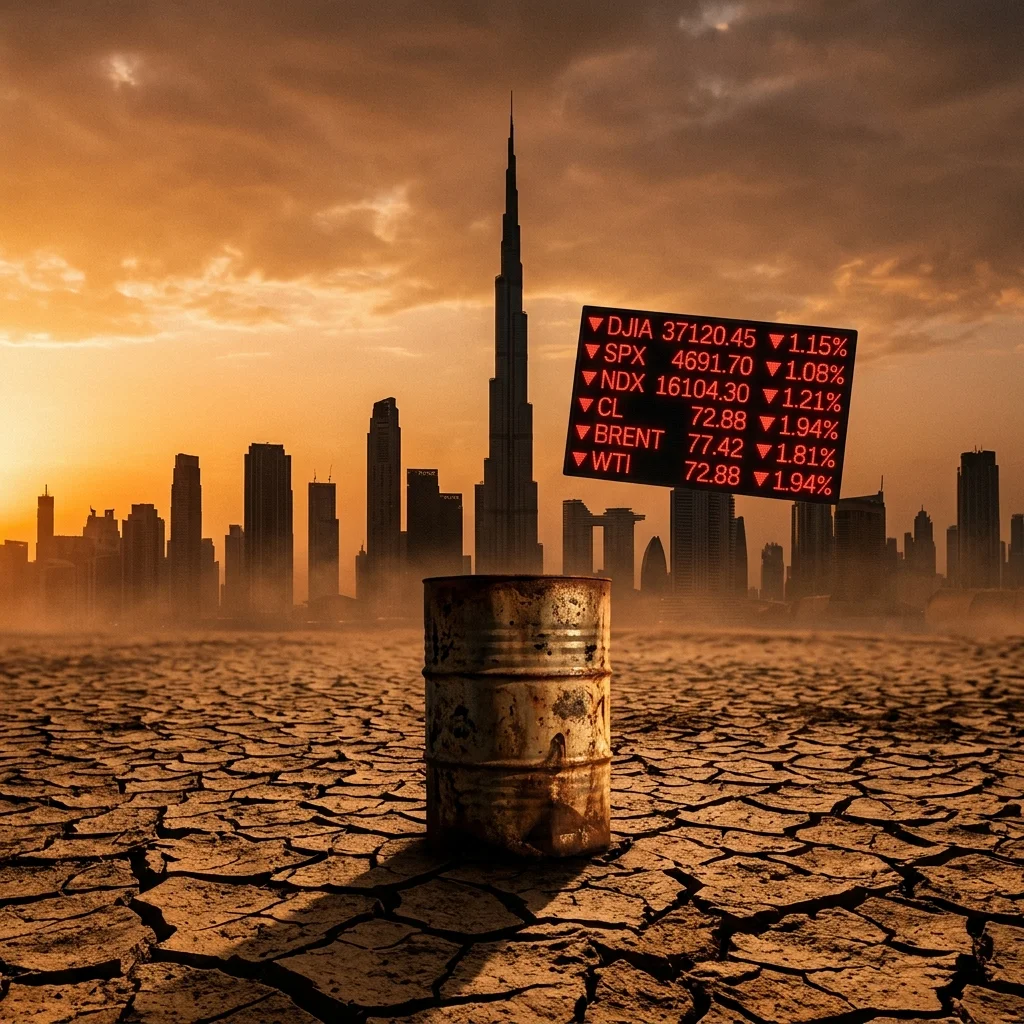
The Gulf Under Fire: How the Iran War is Rewriting the Region's Business Playbook
The Morning Context's Gulf Report decodes the dual conflict reshaping Middle East economies—kinetic attacks on infrastructure and a parallel information war that moves markets faster than military events.
---
Introduction: The Two Wars – Military and Economic
The Gulf region is currently experiencing two simultaneous conflicts. The first is kinetic: attacks on civilian infrastructure including Dubai International Airport and Fujairah port, as documented in the March 16 edition of The Gulf Report (Source: The Morning Context). The second is a shadow war of unverified information, where claims circulate across Middle Eastern media channels faster than any official confirmation or denial.
This duality creates a paradox for financial markets. On April 8, 2026, Dubai stocks recorded their "best day in a while" following a US-Iran ceasefire announcement. Yet only days earlier, the International Monetary Fund had slashed growth projections for the entire Middle East region, warning that the conflict could trigger the region's worst economic crises in decades (Source: IMF Official Statement). The market is pricing short-term relief; the IMF sees structural damage that will persist through 2026 and beyond.
The core thesis emerging from this data: the Iran war is not a temporary geopolitical disruption but a catalyst accelerating the region's transformation from a tourism-and-oil-based economic model to one centered on resilience and sovereign state capitalism.
---
Section 1: The Tourism Trauma – Abu Dhabi National Hotels and the Human Cost
Abu Dhabi National Hotels reported a decline in both revenue and profit in Q1 2026 directly attributable to the war chilling tourism demand (Source: The Gulf Report, financial disclosure). This single data point functions as a bellwether for the entire Gulf hospitality sector, which had been enjoying a post-pandemic boom driven by luxury travel, international events, and business conferences.
The structural problem is distinct from COVID-19. During the pandemic, domestic tourism partially offset the collapse in international travel. Geopolitical risk, however, cannot be diversified away with domestic substitution. When the Strait of Hormuz faces disruption and airspace is compromised, the entire travel ecosystem seizes up simultaneously.
Implications for mega-projects: The forced recalibration has direct consequences for Saudi Arabia's $30 billion-plus tourism investments, including NEOM and the Red Sea Project. These developments were predicated on regional stability and the assumption that the Gulf could function as a unified travel corridor. If the Iran war persists, the return on investment calculations for these projects must be re-evaluated. Sovereign wealth funds financing these developments face a choice: extend timelines, accept lower returns, or pivot capital toward defense and resilience infrastructure.
---
Section 2: The Market Rollercoaster – Ceasefires and Fake News
The April 8, 2026 surge in Dubai stocks demonstrates a market trading on headline risk rather than fundamental valuation. The pattern is consistent: positive ceasefire news triggers buying; subsequent attacks trigger selloffs. On March 16, new attacks disrupted Dubai International Airport and Fujairah port (Source: The Gulf Report). On April 8, a ceasefire drove the best trading session in months.
This volatility reveals a structural change in Gulf market behavior. The Gulf Report's coverage explicitly documents "unverified information across the Mideast" moving markets with velocity exceeding that of confirmed military events (Source: The Gulf Report editorial content). For fund managers operating in Gulf equities, misinformation-driven flash crashes have become a permanent risk category that cannot be hedged with traditional instruments.
The information war asymmetry: Verified news suffers from latency—confirmation chains, official statements, and on-the-ground reporting take hours. Unverified claims circulate on Telegram, WhatsApp, and regional news channels in minutes. Markets, increasingly algorithmic, react to the first signal. This creates a structural advantage for actors who can control the initial information narrative.
---
Section 3: The Sovereign Pivot – Dubai's Billion-Dirham Bailout and the New State Capitalism
On March 25, 2026, the Gulf Report edition titled "Gulf on edge as diplomacy and danger collide" was followed by the April 1 edition revealing Dubai's approval of a billion-dirham economic incentive package for local businesses (Source: The Gulf Report). This is not a standard stimulus. It represents a strategic pivot toward state-directed economic management that mirrors the approach taken by sovereign wealth funds during the 2008 financial crisis.
The logic: when private capital retreats from geopolitical risk zones, the state must become the buyer, lender, and insurer of last resort. Dubai's billion-dirham package serves three functions simultaneously:
- Liquidity provision for businesses facing revenue collapse (particularly hospitality and retail)
- Signal to international investors that the government will backstop the economy
- Political stabilizer to prevent social unrest from economic contraction
This model has historical precedent. Following the 2008 crisis, Gulf sovereign wealth funds deployed capital globally. The current strategy reverses that flow: capital is being redirected inward to maintain domestic economic stability.
---
Section 4: The Strait of Hormoz Calculus – Aramco's Warning and IMF's "Unthinkable" Scenario
Aramco's chief executive has stated that the ongoing Middle East conflict and consequent Strait of Hormuz disruption could have "catastrophic consequences" (Source: The Gulf Report, quoting Aramco leadership). This statement, delivered while the company continues operations, carries specific weight because Aramco possesses the most granular data on global oil supply chain vulnerabilities.
The IMF has simultaneously asked policymakers to prepare for the unthinkable, warning that the new Middle East conflict poses inflation risks that could ripple globally (Source: IMF Official Statement). The mechanism is straightforward: if the Strait of Hormuz is disrupted for an extended period, oil prices spike, transportation costs rise, and inflation accelerates across economies dependent on Gulf energy exports.
The regional contagion map: The March 16 disruption of Fujairah port—a critical oil bunkering hub—demonstrates that the conflict is not contained to military targets. Fujairah handles a significant percentage of the region's oil product storage and ship refueling. Its disruption creates cascading effects: ships reroute, insurance premiums spike, and crude oil futures become detached from physical supply realities.
---
Section 5: The New Normal – Resilience Models for Sovereign Wealth Funds
The IMF's warning that the region could face its worst crises in decades forces sovereign wealth funds to reconsider their asset allocation strategies. The traditional Gulf SWF model—investing global surpluses into diversified international portfolios—assumed that the home region's political stability was a given.
Three structural shifts are emerging:
- Reshoring of capital: Funds are increasing allocations to domestic defense, energy security, and logistics infrastructure. This reduces returns compared to global equity markets but provides sovereign insurance.
- Scenario planning for prolonged conflict: Investment committees are now modeling 3-5 year timelines for geopolitical disruption, not the 3-6 month cycles assumed previously.
- Liquidity preference: The billion-dirham Dubai package signals that governments expect to deploy capital as emergency backstops. SWFs will maintain larger cash reserves to fund these interventions.
---
Conclusion: The Gulf Economy After the War
The current conflict is accelerating a transformation that was already underway: the Gulf's shift from an open, tourism-and-oil-driven economy to a more controlled, state-managed system focused on resilience. The billion-dirham incentive package, the re-evaluation of mega-tourism projects, and the information war all point in the same direction.
Three predictions:
- Tourism recovery will lag ceasefire announcements by 12-18 months. Even if hostilities cease, the reputational damage and elevated insurance costs will suppress travel demand.
- Sovereign wealth funds will increase domestic allocation by 15-25% over the next three years, reducing their traditional role as global capital exporters.
- Gulf stock markets will remain structurally volatile until mechanisms are developed to filter verified information from unverified claims during crisis periods. This creates an opening for financial technology companies offering real-time verification tools.
The war's economic legacy will not be measured in destroyed infrastructure but in the permanent recalibration of how Gulf states allocate capital, manage risk, and project stability to international investors. The playbook is being rewritten while the airstrikes continue.
Keywords

Sarah Al-Qasimi
Chief Editor leading investigative reports on Gulf business and policy.