Beyond the Tracks: How Saudi Arabia''s Cross-Country Rail Corridor is Redefining Geoeconomics
Saudi Arabia's ambitious rail corridor, connecting the Red Sea to the Arabian Gulf, represents far more than infrastructure. This analysis moves beyond the project's physical scope to explore its role as a strategic economic asset. We examine how it acts as a catalyst for Vision 2030, shifting the kingdom from an oil-dependent economy to a global logistics and industrial nexus. The corridor is poised to disrupt traditional regional supply chains, create new trade pathways, and position Saudi Arabia as a central player in Eurasian connectivity. This deep dive uncovers the long-term implications for regional power dynamics, industrial diversification, and the kingdom's emerging role as a continental bridge.
Fatima Al-Zahra
Editorial Analyst
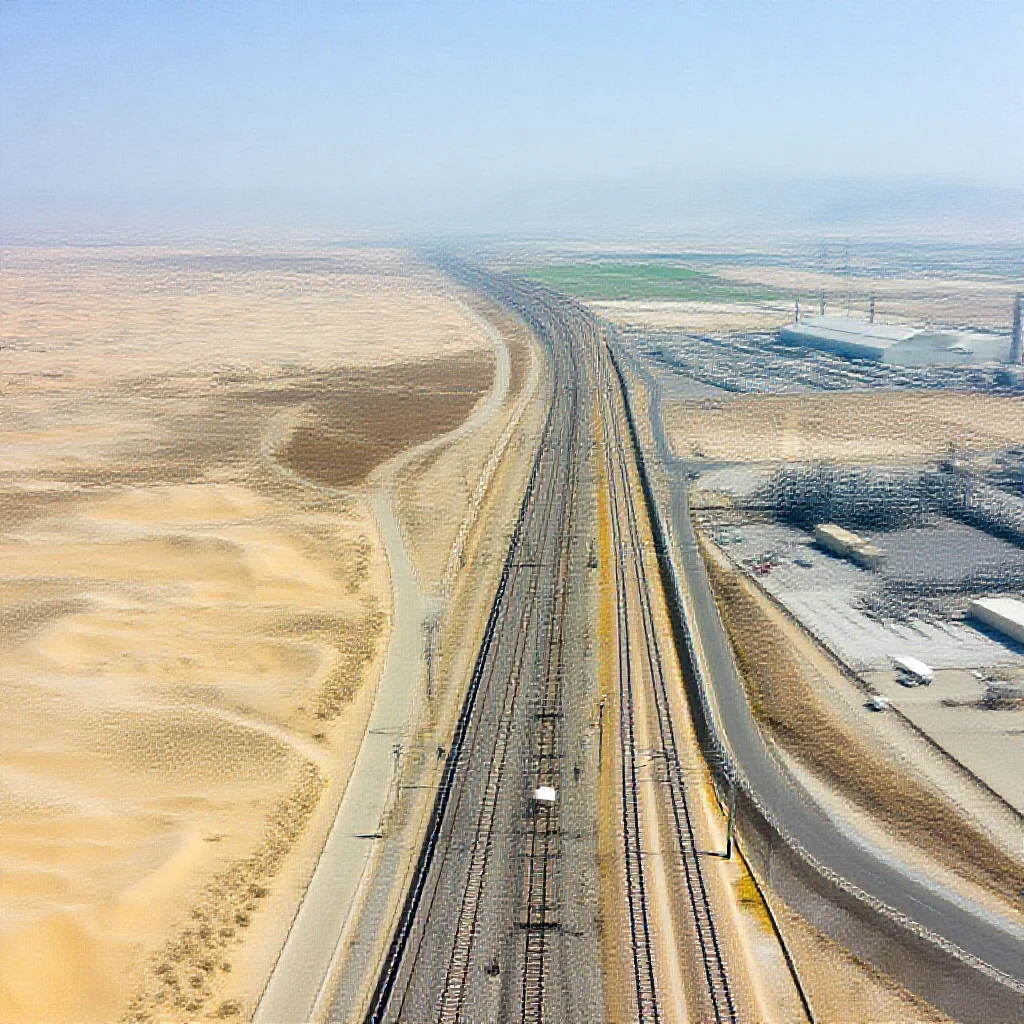
Beyond the Tracks: How Saudi Arabia's Cross-Country Rail Corridor is Redefining Geoeconomics
From Blueprint to Backbone: The Evolution of a Strategic Asset
The concept of a rail corridor connecting the Red Sea to the Arabian Gulf in Saudi Arabia has progressed from a theoretical line on a map to a recognized pillar of national economic strategy. (Source 1: [Primary Data]) This evolution signifies a fundamental shift in the project's perceived utility. Its primary stated objective is transport efficiency, reducing the cross-country transit time for goods and passengers. However, a deeper analysis reveals unstated objectives centered on economic sovereignty and redundancy. The corridor provides a domestic land-based alternative to maritime chokepoints, enhancing supply chain resilience. Its development is inextricably linked to the Vision 2030 framework, serving as a physical manifestation of the kingdom's transition from an oil-dependent rentier state to a diversified, logistics-driven economy. The railway is engineered not merely to move cargo, but to underpin a new economic architecture.
The Geoeconomic Calculus: Disrupting Regional Logistics and Trade Flows
The corridor's operationalization introduces a new variable into the regional logistics equation. Its most immediate geoeconomic impact is the provision of an alternative to the Strait of Hormuz for Gulf Cooperation Council (GCC) states. Goods destined for Saudi markets or for transshipment can be offloaded at Red Sea ports like Jeddah Islamic Port or the new King Abdullah Port, then moved eastward via rail, bypassing the maritime chokepoint entirely. This rerouting capability challenges established trade flows. A significant portion of intra-GCC cargo and regional imports, which currently move via short-sea shipping around the Arabian Peninsula, may shift to this land bridge for its speed and predictability. In the long term, this poses a structural challenge to the dominance of traditional transshipment hubs, such as Jebel Ali in the United Arab Emirates, by enabling direct, efficient access from Saudi ports to the kingdom's—and potentially the broader region's—hinterland.
The Industrial Catalyst: More Than a Railway, an Economic Spine
The corridor's function extends beyond transit into generation. It is designed to act as an economic spine, enabling the development of industrial clusters, Economic Cities, and special economic zones along its route. This transforms the railway from a port-to-port link into a platform for value-added industries. It facilitates the cost-effective movement of raw materials to manufacturing sites and finished goods to export terminals, making inland industrial investment viable. The project exhibits a symbiotic relationship with Saudi giga-projects. It provides the critical bulk logistics required for the construction and operation of NEOM and the Red Sea Project, while these destinations, in turn, generate freight and passenger demand. This integration marks a strategic shift from transporting primarily hydrocarbons to moving minerals, processed goods, and agricultural products, directly supporting economic diversification.
The Continental Bridge: Saudi Arabia's Bid for Eurasian Connectivity
The Saudi rail corridor is positioned to become the central national segment of broader transnational connectivity initiatives. It aligns geographically and strategically with the China-led Belt and Road Initiative (BRI), offering a potential land bridge component across the Arabian Peninsula. Future connections are theoretically plausible: northward links to Jordan and the Levant could integrate the corridor into the Fertile Crescent, while southward extensions to Yemen and Oman would deepen its penetration into the southern Arabian Peninsula. The long-term strategic vision appears to be the transformation of Saudi Arabia from a continental terminus into a throughput nation. By positioning itself as the most efficient land link between the Red Sea and the Gulf, the kingdom aims to capture a segment of Europe-Asia trade flows, elevating its role from a regional energy exporter to a node in global commerce.
Verification and Future Horizons: Scrutinizing the Promise
The realization of the corridor's full geoeconomic potential is contingent on several factors beyond its physical completion. Commercial viability will be determined by competitive pricing, reliability, and seamless integration with port operations and customs procedures. Its success in attracting freight away from established maritime routes depends on offering a compelling total cost and time advantage. The project's role as an industrial catalyst requires parallel success in attracting foreign direct investment into non-oil sectors along its route. Furthermore, its ambition to become a continental bridge hinges on geopolitical stability and the materialization of cross-border rail agreements with neighboring states. Market analysis suggests that while the corridor will undoubtedly reshape domestic logistics and bolster Vision 2030 goals, its disruption of entrenched regional and global supply chains will be gradual. The most probable outcome is the creation of a new, complementary logistics pathway that enhances Saudi Arabia's strategic autonomy and economic complexity, incrementally altering the Middle East's logistical geography.
Keywords

Fatima Al-Zahra
Real Estate Editor specializing in Dubai and Riyadh mega-projects.