Four Trends Defining Gulf Luxury in 2025: AI, Local Soul, Relationships, and Fitness
The Gulf luxury market in 2025 is being reshaped by four interconnected trends: AI-powered hyper-personalisation, a shift from transactions to curated relationships, the fusion of global luxury with local cultural soul, and the premiumisation of fitness as an aspirational lifestyle. These trends reflect the rise of a younger, self-made ultra-wealthy clientele who demand meaning, exclusivity, and storytelling. Backed by data from Adyen, McKinsey, and The Future Laboratory, this article provides a deep audit of how technology, heritage, and wellness are redefining exclusivity in the region, with implications for brand strategy and the luxury supply chain.
Ahmed Al-Farsi
Editorial Analyst
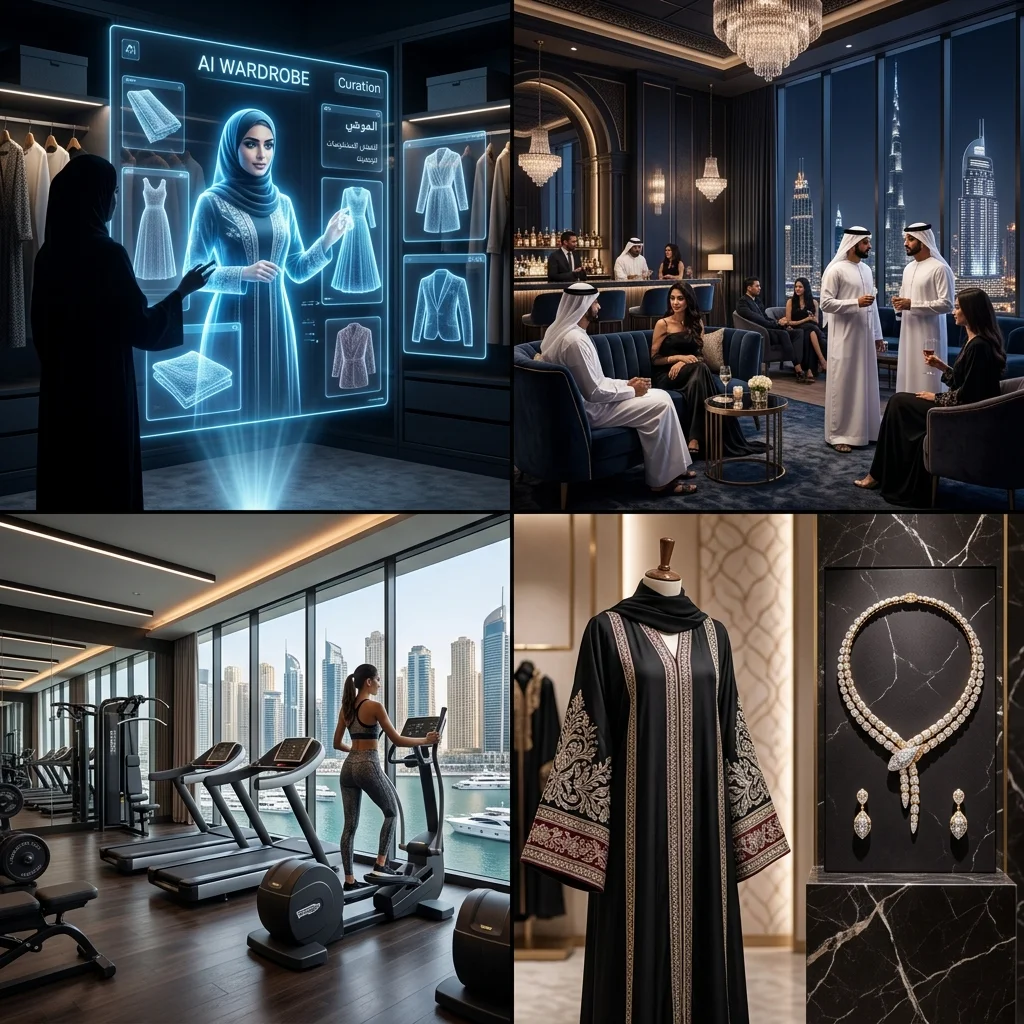
Gulf Luxury in 2025: Four Trends Reshaping an Opulent Market
The Gulf’s ultra-wealthy are rewriting the rules of luxury. Here’s how AI, cultural authenticity, curated relationships, and fitness-as-status are defining the next era.
[IMAGE: Collage of Gulf luxury scene: AI interface, abaya fashion, fitness suite, private club]
Introduction: The New Rules of Gulf Luxury
While the global luxury market faced a notable downturn in 2024, the Gulf region emerged as a defiant outlier. Consumer spending on high-end goods and experiences in the UAE, Saudi Arabia, and Qatar continued to climb, driven not by old-money dynasties but by a rising cohort of self-made, sophisticated clients. These are entrepreneurs, tech founders, and young professionals who have accumulated wealth through innovation and ambition — and they expect their luxury experiences to match their own complexity.
In 2025, four interconnected trends are converging to reshape the Gulf luxury landscape: AI-powered hyper-personalisation, a shift from transactional retail to relationship-centric luxury, the fusion of global prestige with local cultural soul, and the premiumisation of fitness as an aspirational status marker. Together, they reflect a deeper economic logic: technology enables exclusivity at scale, while cultural authenticity and wellness become the new currencies of true distinction.
This article examines each trend in depth, drawing on data from Adyen, McKinsey, and The Future Laboratory, and explores the implications for brand strategy and luxury supply chains across the region.
---
1. AI-Powered Personalisation: The New Exclusivity Engine
Nothing says luxury in 2025 quite like being understood before you even speak. In the UAE, 70% of consumers now use AI shopping tools — a staggering 44% increase from 2024, according to Adyen’s latest retail report. Across the Gulf Cooperation Council (GCC), more than half of organisations are investing at least 5% of their digital budgets in generative AI, McKinsey data shows. This is not merely a tech trend; it is a fundamental shift in how luxury brands deliver exclusivity.
Predictive analytics now allow brands to anticipate client preferences, curating bespoke product recommendations, tailored trunk shows, and personalised pricing strategies. Virtual stylists have become the new concierges. Take Taffi’s “Amira,” an AI-powered stylist that learns a client’s body measurements, colour palette, and lifestyle preferences before suggesting a capsule wardrobe from regional and international designers. The result is a shopping experience that feels intimate yet effortless — a paradox that only advanced AI can resolve.
“From predictive analytics to virtual stylists, technology is now a key driver of personalised exclusivity,” says Taqua Malik, founder of luxury consultancy Freedomvisory. “The Gulf’s new wealthy are digital natives. They expect brands to know them — not just their purchase history, but their mood, their schedule, their aspirations.”
However, personalisation at this level demands robust data infrastructure. Brands must invest in secure, ethical AI systems that respect privacy while delivering relevance. The risk of overstepping is real: consumers in the Gulf are increasingly aware of data misuse, and trust is fragile. The winners will be those who use AI to enhance human connection, not replace it.
[IMAGE: Concept image showing a smartphone with AI stylist interface overlaid on a luxury boutique]
---
2. Beyond Transactions: Cultivating Relationships That Last
The days of a simple purchase followed by a thank-you email are fading. Gulf luxury clients in 2025 expect international standards of service — and they are willing to pay a premium for it. But what sets the region apart is the depth of relationship-building expected. Private clubs, invitation-only events, and intimate brand gatherings are replacing traditional retail interactions.
Consider the Villa Zegna pop-up in Dubai, where select clients were invited to a private villa for a curated experience that included personalised styling, champagne, and a conversation with the brand’s creative director. Or Ounass, the leading luxury e-commerce platform in the Gulf, which now offers VIP clients private Pilates sessions with the fitness brand Adanola as part of a loyalty programme. In Kuwait, 3oud.com hosts exclusive evening events where clients can preview new fragrance collections alongside artisans who explain the scent creation process.
“One of the most defining trends is the rise of the self-made ultra-wealthy client,” explains Daniel Langer, CEO of luxury strategy firm Équité. “These individuals expect meaning, storytelling, and hyper-personalised experiences. They are not impressed by logos alone. They want to feel a connection to the brand’s heritage, its values, and the people behind it.”
This shift demands that brands invest heavily in human capital. Sales advisors must become curators, historians, and confidants. Training programmes now focus on emotional intelligence, cultural fluency, and long-term relationship management. The metric of success is no longer average transaction value but lifetime client value — measured in years of loyalty, referrals, and shared brand advocacy.
[IMAGE: Elegant private club lounge with curated art and attentive staff; guests in conversation]
---
3. Global Luxury with a Local Soul: The Cultural Imperative
Perhaps no trend is more transformative than the marriage of global luxury with local cultural identity. In Saudi Arabia, 95% of young consumers say they value brands that actively support local craftsmanship, according to The Future Laboratory’s 2025 Culture of Luxury report. Meanwhile, 77% of young Saudis expect luxury brands to offer localised or seasonal products that reflect regional traditions, customs, and festivities.
This cultural imperative is reshaping everything from product design to marketing campaigns. International fashion houses are collaborating with Emirati and Saudi artisans to incorporate traditional embroidery, calligraphy, and jewellery techniques into collections. Bulgari, for instance, launched a limited-edition Serpenti necklace inspired by the palm motifs of the Al Ain oasis. Louis Vuitton’s Saudi Arabia flagship in Riyadh features an entire floor dedicated to local artists and craftspeople.
Localisation goes beyond aesthetics. Brands are rethinking their supply chains to source materials regionally — from silk in the UAE to pearls in Bahrain — reducing carbon footprints while celebrating heritage. The abaya, once a purely modest garment, has become a canvas for haute couture. Designers are fusing traditional silhouettes with modern cuts, using precious fabrics and embellishments that rival anything from Paris or Milan.
This trend is not limited to fashion. Luxury hospitality brands are incorporating local architecture, cuisine, and rituals. The newly opened Six Senses Southern Dunes in the Red Sea, for example, draws on Nabataean building techniques and offers guests workshops in traditional Bedouin weaving. Luxury automotive brands like Rolls-Royce now offer bespoke interior options using locally sourced wood and leather.
The message is clear: in 2025, global luxury must have a local soul. Brands that fail to authentically engage with regional heritage risk being seen as culturally tone-deaf, no matter how prestigious their name.
[IMAGE: A modern abaya featuring traditional gold embroidery alongside a Bulgari Serpenti necklace; backdrop of a luxury boutique in Riyadh]
---
4. Fitness as Status: The Premiumisation of Wellbeing
Wellness has long been part of the Gulf luxury lifestyle, but in 2025, fitness has taken on a new status dimension. The region’s ultra-wealthy are investing in bespoke fitness regimes, high-end gym equipment, and wellness retreats as symbols of discipline, longevity, and self-care. It is no longer enough to own a beautiful watch or a rare handbag; one must also boast a sculpted physique and a morning routine that includes cryotherapy, infrared saunas, and personal bio-hacking sessions.
The numbers back this up. According to a 2024 report by the World Health Organization, the UAE has the highest per capita spending on wellness in the Middle East, with luxury health clubs and personal training services growing at 18% annually. Premium fitness brands like Equinox, Barry’s, and Third Space have all expanded aggressively into Dubai and Riyadh, offering memberships that cost upwards of $5,000 per year. But the real luxury lies in personalisation: private trainers who travel to clients’ homes, biometric monitoring, and nutrition plans crafted by Michelin-starred chefs.
Fitness has also become a social currency. Fitness-focused social clubs, such as Reform Athletica in Dubai, combine state-of-the-art training facilities with curated networking events. The “sporty chic” aesthetic — luxury athleisure from brands like Lululemon, Alo Yoga, and The Upside — has become a daily uniform for the Gulf’s new elite. Even high-end hospitality now integrates fitness into the guest experience: the Four Seasons Resort Dubai at Jumeirah Beach recently opened a 1,000-square-metre fitness pavilion with a dedicated yoga studio, lap pool, and recovery suite.
For luxury brands, this trend opens new revenue streams. Collaborations between high fashion and fitness are booming: Chanel launched a limited-edition yoga mat, while Dior partnered with Technogym to create a custom home-gym line. The supply chain implications are significant — from sustainable performance fabrics to smart wearable technology that syncs with health data.
[IMAGE: A high-end fitness suite with state-of-the-art Technogym equipment, floor-to-ceiling windows overlooking the Dubai skyline, and a wellness smoothie bar in the corner]
---
Implications for Brand Strategy and the Luxury Supply Chain
These four trends are not operating in isolation. They feed into each other, creating a new ecosystem of Gulf luxury that demands agility, authenticity, and foresight from brands.
Technology as backbone: AI personalisation is the engine that powers relationship-building, cultural localisation, and fitness insights. Brands must invest in seamless omnichannel data platforms that connect online browsing with in-store experiences, private events, and wellness data. Without robust infrastructure, personalisation becomes guesswork.
Human touch as differentiator: While AI handles data, human advisors deliver the emotional resonance. Training programmes must prioritise cultural intelligence, storytelling, and long-term engagement. Brands that treat their sales staff as order-takers will lose ground to those who elevate them to brand ambassadors.
Cultural authenticity as non-negotiable: Localisation is not a marketing tactic; it is a strategic imperative. Brands need to embed regional talent in design teams, collaborate with local artisans, and adapt supply chains to incorporate regional materials. The young Gulf consumer can smell inauthenticity from miles away.
Wellness as lifestyle integration: Fitness is no longer a category; it is a lifestyle touchpoint. Luxury brands should consider partnerships with premium fitness operators, develop co-branded wellness products, and create experiential retail spaces that incorporate workout areas, nutrition bars, and recovery zones.
Supply chain evolution: The demand for local soul and premium fitness requires agile supply chains capable of small-batch production, ethical sourcing, and rapid customisation. Luxury brands must forge deeper relationships with regional suppliers, invest in near-shoring, and adopt sustainable practices that resonate with eco-conscious clients.
---
Conclusion: The Gulf’s New Luxury DNA
The Gulf luxury market in 2025 is not simply wealthier; it is wiser. The self-made millionaires and billionaires driving this transformation demand more than status symbols. They want experiences that reflect their individuality, their culture, and their values. AI enables personalisation at a scale never before possible. Relationship-driven retail creates loyalty that transcends transactions. Local soul grounds global brands in authentic heritage. And premium fitness elevates wellness to a badge of honour.
For brands that can master this convergence, the Gulf offers a fertile ground for innovation and growth. For those that fail to adapt, the region’s increasingly discerning clientele will simply move on to the next brand that understands them better.
The rules have changed. Exclusivity is no longer about who can afford the highest price tag. It is about who can tell the most compelling story — and who can make that story feel uniquely, personally true.
[IMAGE: A futuristic luxury retail space with holographic displays, local art installations, and a wellness corner; diverse Gulf clientele engaging with brand ambassadors]
Keywords

Ahmed Al-Farsi
Luxury & Lifestyle Editor with expertise in high-end hospitality and retail.