Beyond the $340 Million: Bahrain''s Highway Project as a Strategic Economic Catalyst
While Bahrain's recent approval of $340 million in financing for a highway project appears as straightforward infrastructure news, it reveals a deeper strategic pivot. This analysis moves beyond the headline figure to examine the project as a calculated tool for economic diversification, regional connectivity, and fiscal stimulus. We explore how this investment is less about asphalt and more about positioning Bahrain within the Gulf's post-oil economic landscape, attracting foreign investment, and alleviating pressure on public finances through strategic project financing models. The article dissects the unspoken long-term goals and the potential ripple effects on real estate, logistics, and national competitiveness.
Fatima Al-Zahra
Editorial Analyst
Beyond the $340 Million: Bahrain's Highway Project as a Strategic Economic Catalyst
The Surface Facts: A $340 Million Infrastructure Approval
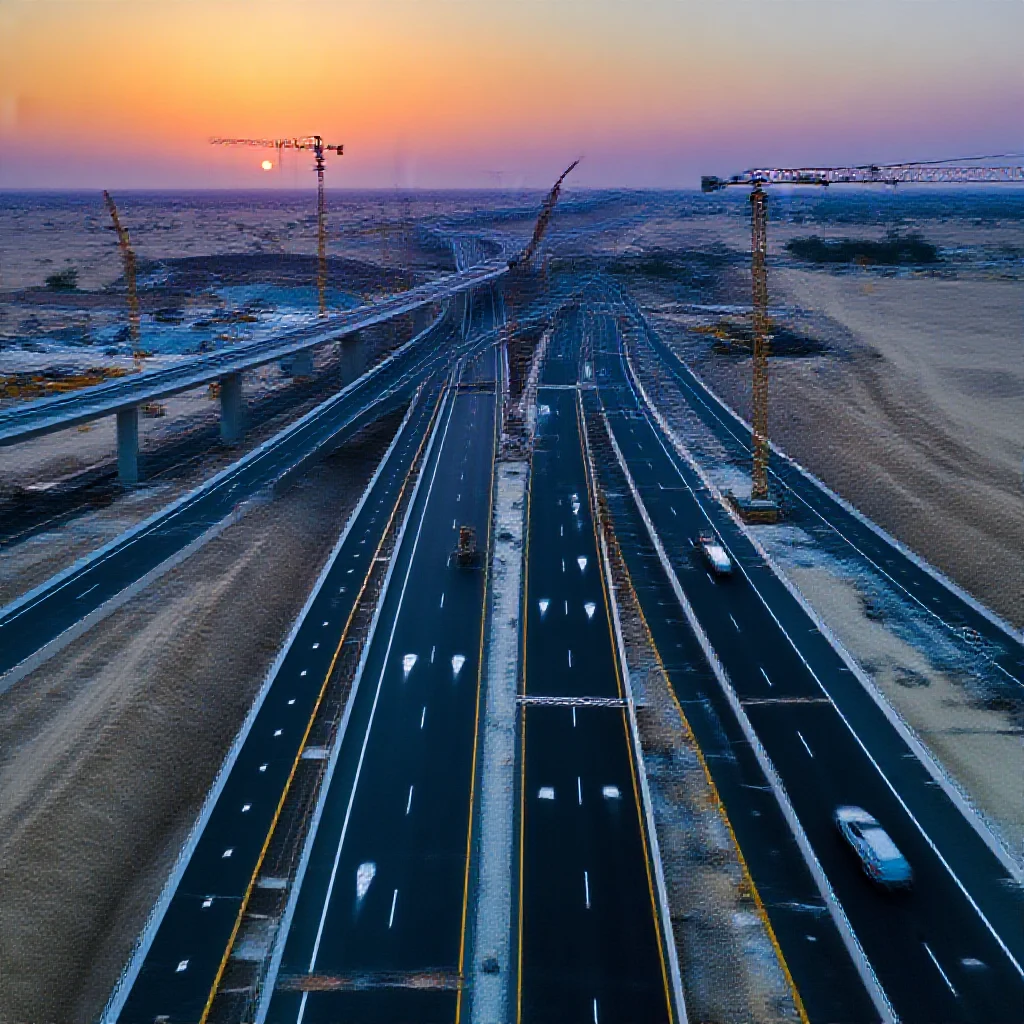
Bahrain’s government has approved financing for a major highway project, with the committed capital amounting to $340 million. (Source 1: [Primary Data]) The immediate, stated objectives of such an initiative are standard for public infrastructure investment: the creation of construction-sector employment, a short-term stimulus to related industries, and the alleviation of traffic congestion in key corridors. This approval aligns with a consistent pattern of capital expenditure within the kingdom’s national development frameworks, which have historically prioritized transport network upgrades as a component of urban planning and economic modernization.
Image Suggestion: A formal government document or a CGI rendering of the planned highway released by official sources.
The Hidden Economic Logic: More Than a Road
The strategic significance of this project extends far beyond its civil engineering function. At its core, the investment serves as a deliberate lever for economic diversification, a central pillar of Bahrain’s long-term policy. The kingdom’s Economic Vision 2030 explicitly identifies infrastructure development as a critical enabler for a competitive economy less dependent on hydrocarbon revenues. The highway’s likely routing—connecting industrial zones, logistics parks, and residential centers—is designed to enhance commercial fluidity and reduce operational frictions for businesses.
This creates a calculated multiplier effect. Improved transport corridors typically catalyze adjacent real estate development, increase asset values in connected areas, and significantly boost logistics efficiency. For foreign direct investment (FDI), such enhancements to the physical business environment are a tangible signal of stability and long-term planning, making Bahrain a more compelling destination for capital seeking a foothold in the Gulf region.
Financing as Strategy: Decoding the $340 Million
The structure and approval of the $340 million financing package are as strategically informative as the project itself. In a fiscal climate where Gulf states are managing budget constraints, the chosen financing model is critical. If the project utilizes a Public-Private Partnership (PPP) framework or external financing, it demonstrates a strategy to share risk, leverage private sector efficiency, and alleviate immediate pressure on the state’s balance sheet. This approach aligns with broader recommendations for fiscal sustainability in the region.
The act of approving substantial capital for a non-oil infrastructure project, irrespective of the funding source, sends a definitive signal to financial markets. It underscores the government’s commitment to executing its development agenda despite macroeconomic headwinds, thereby reinforcing investor confidence in the kingdom’s strategic direction and its capacity to implement large-scale projects.
The Ripple Effect: Supply Chain and Competitive Landscape
The long-term implications will manifest across Bahrain’s economic landscape. For the underlying supply chain, reduced intra-country transportation costs directly enhance the competitiveness of locally produced goods and services. This efficiency gain could incentivize the reshoring or expansion of logistics and light manufacturing hubs within Bahrain’s borders.
Regionally, the project must be viewed within the context of intense competition for connectivity and trade. Neighboring states, notably Saudi Arabia with its giga-projects, are making unprecedented investments in infrastructure. Bahrain’s targeted highway development is a calculated move to strengthen its own connectivity proposition, ensuring it remains an integrated and accessible partner within Gulf Cooperation Council (GCC) supply chains rather than a bypassed node.
An additional, often overlooked, dimension is the highway’s potential role as a future digital corridor. The right-of-way and physical infrastructure create a foundational grid upon which smart city technologies, fiber-optic networks, and Internet of Things (IoT) sensor systems can be deployed, embedding digital transformation within physical modernization.
Conclusion: Paving the Path to 2030
The $340 million highway project is a physical manifestation of Bahrain’s broader strategic economic calculus. Its true value is not encapsulated in its budgetary cost but in its intended catalytic function. The project operates simultaneously as a stimulus tool, a diversification mechanism, a fiscal policy signal, and a competitive positioning asset.
The key takeaway is that in the Gulf’s evolving post-oil economic landscape, infrastructure is no longer merely a public utility. It is a strategic investment in national competitiveness. The success of this project will ultimately be measured not by its completion date, but by its measurable impact on logistics costs, FDI inflows, and the development of non-oil GDP—the core metrics of Bahrain’s Economic Vision 2030.
Keywords

Fatima Al-Zahra
Real Estate Editor specializing in Dubai and Riyadh mega-projects.