Global Real Estate Market to Reach $8.45 Trillion by 2034: Gulf Implications
The global real estate market is projected to rise from USD 4.37 trillion in 2025 to USD 8.45 trillion by 2034. This analysis examines the growth drivers, opportunities, and implications for Gulf economies and corporate strategies.
Gulf Business Weekly Editorial Desk
Editorial Analyst
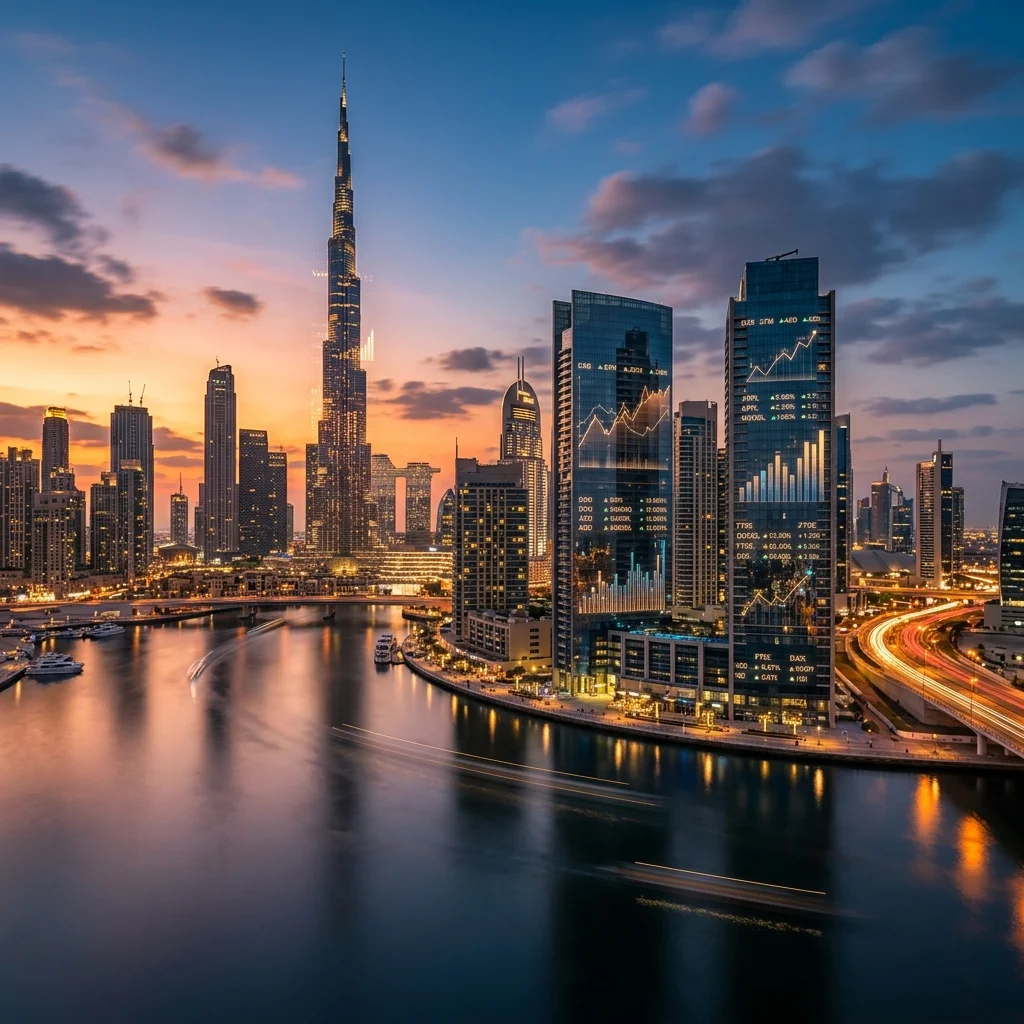
Global Real Estate Market to Reach $8.45 Trillion by 2034: Gulf Implications
With global real estate projected to nearly double in value by 2034, Gulf economies are set to benefit from sustainability drives, urban expansion, and growing investor confidence in regional property markets.
Global real estate is entering a phase of sustained expansion. According to a recent analysis by Straits Research, the market, valued at USD 4.37 trillion in 2025, is expected to climb to USD 4.70 trillion in 2026 and reach USD 8.45 trillion by 2034, registering a compound annual growth rate (CAGR) of 7.6% from 2026 to 2034. While North America remains the largest regional market, with 34% share in 2025, Europe is projected to be the fastest-growing region. For the Gulf Cooperation Council (GCC) countries, whose economies are increasingly pivoting toward non-oil sectors, these global trends are not just external indicators, but signals of where capital, talent, and policy attention must be directed.
Introduction
The real estate sector has long been a bellwether for economic health. Yet the current growth story is driven less by speculative cycles and more by structural shifts: urbanization, demographic change, and an accelerating demand for environmentally responsible construction. The Middle East, as the Straits Research analysis highlights, is already witnessing increased demand for residential flats, a development that is pushing property prices upward. This regional dynamism, combined with national diversification targets, makes the Gulf an important theater for real estate-led growth.
Main Analysis
Market Drivers and Restraints
Urbanization remains the primary engine of global real estate demand. The report notes that over 55% of the global population lives in urban areas, with a projected rise to 68% by 2050. This migration fuels the need for housing, commercial spaces, and infrastructure, especially in emerging economies. The Gulf has its own version of this trend, as young populations and expatriate inflows concentrate in key metropolitan areas such as Riyadh, Dubai, Doha, and Abu Dhabi.
However, the sector is not without risks. Economic uncertainty, interest rate fluctuations, and geopolitical volatility can disrupt valuations and suppress transaction volumes. The pandemic-era disruptions may have eased, but the report warns that regulatory changes and policy shifts continue to inject unpredictability. For Gulf developers and financiers, these global volatility factors must be balanced against local market conditions and government support.
The Sustainability Premium
The report singles out sustainable and green building initiatives as a major opportunity. Green buildings are shown to reduce energy consumption by up to 30% and water usage by up to 50%, while governments worldwide are offering incentives and certifications like LEED. For the Gulf, where energy-intensive cooling systems dominate building operations, the case for green construction is particularly compelling. Nationally determined contributions under the Paris Agreement and specific initiatives such as the Saudi Green Initiative and UAE Net Zero 2050 encourage the adoption of such practices. Consequently, developers and investors who integrate sustainability into their portfolios are likely to gain a competitive edge, both in terms of regulatory compliance and tenant preference.
Segment Insights: Land and Sales Dominate
On a global basis, land transactions and property sales are the dominant market segments. The expansion of construction for residential, commercial, and industrial purposes has increased land-related transactions, and the report observes that investment firms are increasingly acquiring agricultural land for leasing opportunities. In the Gulf, governments have launched large-scale land development programs designed to attract private capital and enable mixed-use communities. Sales activity remains the strongest indicator of market confidence, with record property transactions in markets like Dubai in recent years—a pattern consistent with the report's finding of rising demand for flats in the Middle East.
Business Impact
Corporate Strategy and Investment Decisions
For Gulf enterprises, the implications are threefold:
- Portfolio diversification: The growth in industrial and logistics real estate—bolstered by the global e-commerce trajectory—encourages developers to expand beyond residential and commercial projects. The Gulf's strategic location as a transshipment hub makes this an attractive proposition.
- Financing and capital allocation: Institutional investors and sovereign wealth funds in the Gulf are likely to increase allocations toward technology-enabled real estate platforms and green assets, as these are expected to offer risk-adjusted returns that align with long-term value creation.
- Public-private partnership models: As the report indicates that government incentives are boosting green building, companies that innovate in construction methods, materials, and PropTech will find fertile ground for growth.
FDI and Supply Chains
The global market's vigor is set to boost foreign direct investment in the Gulf's real estate sector. The report suggests that FDI accessibility has been a factor in market expansion, underscoring the need for continued regulatory modernization. Already, the UAE and Saudi Arabia have introduced long-term visas and foreign ownership zones, strengthening their appeal. As supply chains regionalize, the demand for warehouses, logistics parks, and distribution centers in the Gulf is expected to grow, providing a buffer against cyclical downturns.
Regional Perspective
The Gulf states are at different points on their real estate development curves, but common themes emerge. Saudi Arabia's ambitious giga-projects, the UAE's established free-zone ecosystem, and Qatar's post-World Cup asset management all contribute to a regional market that is less correlated with global volatility than in previous decades. The Straits Research report notes that the Middle East has seen a surge in demand for multifamily residential units, which aligns with policy shifts toward denser, more sustainable urban living in cities like Riyadh and Dubai.
Across the GCC, real estate is increasingly viewed as a critical pillar of economic transformation rather than just a haven for speculative capital. Governments have streamlined ownership rules, enhanced mortgage accessibility, and introduced transparent property registration systems. These reforms, in turn, are attracting institutional capital from Asia and Europe, reinforcing the region's status as a bridge between global markets.
Future Outlook (2026-2030)
Looking ahead to the next three to five years, the Gulf real estate market is expected to experience:
- Stronger alignment with ESG benchmarks: As global investors adopt stricter environmental, social, and governance criteria, Gulf developers will need to certify their projects under international sustainability frameworks.
- Accelerated PropTech adoption: Technologies enabling virtual property viewings, tokenized real estate assets, and AI-based valuation are likely to penetrate the market, improving transparency and liquidity.
- Expansion of mixed-use and smart city projects: The report's emphasis on technological innovation in property management suggests that the Gulf's smart city initiatives, including NEOM and Expo City Dubai, will serve as testbeds for new real estate models.
- Resilience to interest rate cycles: While monetary policy will influence leverage costs, the region's relatively high property yields and expansionary fiscal policies should mitigate negative impacts.
Conclusion
The global real estate market is on a growth pathway that by 2034 will see its value nearly double from 2025 levels. For the Gulf—where urban development is both an economic driver and a reflection of societal aspirations—the opportunity is not to be taken lightly. By embracing sustainability, monitoring volatility, and fostering cross-border investment, the region can convert these global tailwinds into durable sources of growth. The key for business executives and policymakers is to remain agile, data-driven, and focused on long-term competitiveness.
Key Takeaways
- Global real estate is expected to grow from USD 4.37 trillion in 2025 to USD 8.45 trillion by 2034, a CAGR of 7.6%.
- North America led the market with 34% share in 2025; Europe is projected to be the fastest-growing region.
- Sustainable construction and green building initiatives represent a major opportunity, aligning closely with Gulf climate and diversification goals.
- Land transactions and property sales dominate, with the Middle East experiencing rising flat demand and price pressures.
- For Gulf corporations, the growth trajectory points to opportunities in industrial, logistics, and PropTech segments, alongside traditional residential development.
- Policy reforms and FDI accessibility will remain critical in enabling the Gulf to capture a larger share of global real estate investment.
Source
- Straits Research: Real Estate Market Size, Share, Growth, Analysis, Report, 2034 — https://straitsresearch.com/report/real-estate-market

Gulf Business Weekly Editorial Desk
Gulf Business Weekly编辑部负责公开信息整理、内容生成审核与栏目更新。