Beyond the Chip Swap: Why Meta''s Move to Arm Silicon Signals a New Era in AI Infrastructure Economics
Meta's strategic pivot from x86 to Arm-based silicon for its AI data centers is more than a simple processor swap. This analysis delves into the profound economic and architectural shifts driving this decision. We explore how this move is a direct response to the unsustainable power and cost curves of massive-scale AI, marking a decisive break from the legacy PC-server paradigm. The transition signals a fundamental re-architecting of the cloud for the AI age, with long-term implications for semiconductor supply chains, data center design, and the competitive balance between cloud hyperscalers and chip vendors. This is not just Meta's journey; it's a blueprint for the future of efficient, scalable AI compute.
Layla Ibrahim
Editorial Analyst
Beyond the Chip Swap: Why Meta's Move to Arm Silicon Signals a New Era in AI Infrastructure Economics
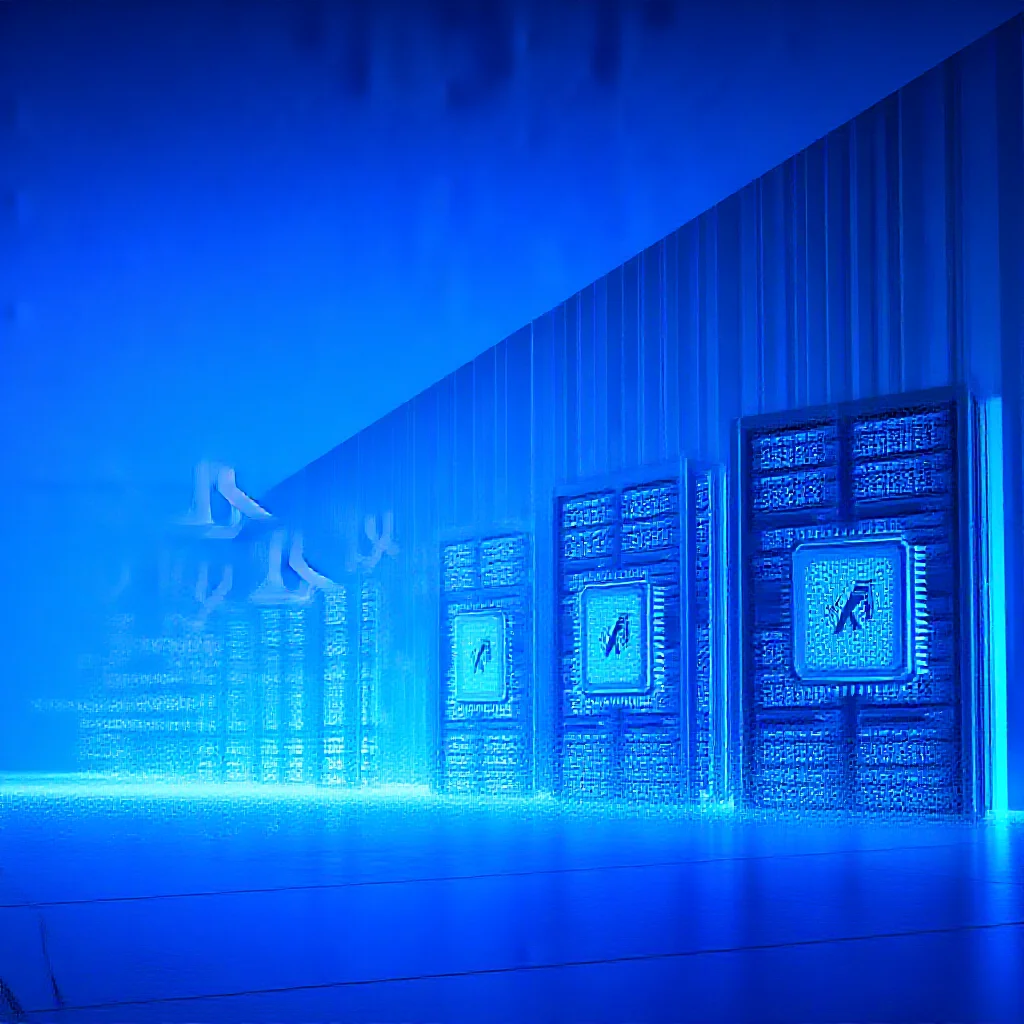
Cover Image Prompt: A futuristic, minimalist 3D rendering of a massive, sleek data center hall. Inside, server racks glow with a cool blue light, but instead of generic boxes, the core chips are visually represented as intricate, luminous Arm architecture logos. Faint, fading x86 logos are shown crumbling into digital dust in the foreground. The perspective is wide and imposing, emphasizing scale and technological transition.
---
Introduction: The End of an Era – More Than Just a Chip Transition
Meta has initiated a strategic pivot in its core infrastructure, transitioning its artificial intelligence data centers from processors based on the x86 architecture to those built on Arm-based silicon. This decision represents a definitive endpoint for the x86 paradigm within Meta's AI operations, a symbolic break from a computing legacy rooted in the personal computer and traditional server markets. The transition is not a simple component swap but a calculated response to a fundamental economic imperative. It signifies the beginning of a systemic re-architecting of compute infrastructure specifically for the demands of hyperscale AI, where efficiency transcends raw performance.
Image Suggestion: A split visual metaphor: one side shows a traditional server rack (x86), the other a denser, more efficient AI-optimized rack (Arm).
The Core Economic Logic: Breaking the Power-Cost-Performance Deadlock
The driving force behind Meta's architectural shift is an unsustainable economic trajectory. The computational requirements for training and inferencing frontier AI models are growing at a rate that far outpaces the efficiency gains of general-purpose x86 processors. The primary bottleneck has shifted from pure floating-point operations per second (FLOPS) to FLOPS per watt and FLOPS per dollar of total cost of ownership (TCO).
The competitive advantage of Arm-based designs lies in this refined TCO equation. Arm's licensing model and energy-efficient architecture allow for the creation of custom system-on-chips (SoCs) optimized for specific workloads. This optimization reduces power consumption at the chip level, which cascades into significant savings in data center cooling and power delivery infrastructure. Furthermore, improved power efficiency enables higher compute density per rack, maximizing capital expenditure on data center real estate. Industry analyses indicate that power consumption for AI and accelerated computing is becoming the dominant factor in data center operational expenditure, a trend that favors radically efficient architectures (Source 1: [Uptime Institute Intelligence data on data center power trends]).
Image Suggestion: An infographic-style chart showing the skyrocketing curve of AI compute demand against the flatter curve of traditional CPU efficiency, with the Arm transition point marked as a divergence.
The Deep Entry Point: Meta's Vertical Integration and the New Supply Chain Dynamic
Meta's move is a definitive exercise in vertical integration, constructing a competitive moat through silicon sovereignty. By designing its own Arm-based processors, Meta gains control over its performance roadmap, feature set, and supply chain priorities, reducing dependency on the innovation cycles and pricing strategies of merchant silicon vendors like Intel and AMD.
This action precipitates a shift in power within the semiconductor ecosystem. Influence migrates from traditional integrated device manufacturers to internal silicon design teams and Arm's intellectual property licensing model. The long-term implication is increased pressure on other hyperscale cloud providers—such as Amazon Web Services with its Graviton processors and Google with its Tensor Processing Units—to deepen their custom silicon efforts. This trend consolidates business for pure-play foundries like TSMC and elevates the strategic importance of Arm's IP portfolio, potentially altering licensing economics and competitive dynamics in the core IP market.
Image Suggestion: A diagram illustrating the old supply chain (Meta -> Intel/AMD -> OEM) vs. the new one (Meta Silicon Team -> Arm IP -> TSMC).
Architectural Domino Effect: Ripple Effects on Software and Data Center Design
The processor transition triggers a cascade of necessary changes across the entire technology stack. A new instruction set architecture (ISA) requires the recompilation and optimization of the complete AI software ecosystem, from low-level kernels to high-level frameworks. Meta's prior, sustained investments in open-source AI software, most notably the PyTorch framework and compiler stacks like Glow, were strategic preparations for this moment. These tools provide a layer of abstraction and portability that mitigates the software migration burden and demonstrates that the software groundwork is a critical, enabling precursor to hardware shifts.
The physical architecture of data centers will also evolve. The superior power efficiency of Arm-based silicon facilitates the adoption of advanced cooling solutions, such as direct-to-chip or immersion liquid cooling, which are prerequisites for next-generation, high-density rack designs. This efficiency may eventually grant greater geographical flexibility for data center placement, potentially reducing constraints related to power grid capacity and local climate.
Conclusion: A Blueprint for the AI-First Cloud
Meta's architectural transition from x86 to Arm-based silicon is a leading indicator of a broader industry inflection point. It provides a concrete blueprint for re-architecting cloud infrastructure where AI workloads are the primary design constraint, not a secondary consideration. The decision validates a model where hyperscale operators internalize silicon design to achieve optimal workload-specific efficiency, directly challenging the one-size-fits-all approach of the past decades.
The logical market prediction is an acceleration of vertical integration among major cloud providers and a corresponding specialization within the semiconductor industry. Foundries and IP licensors will see demand surge from these custom design efforts, while traditional CPU vendors will face intensified pressure to demonstrate unparalleled value in a rapidly fragmenting market. The era of homogeneous, general-purpose server farms is concluding, giving way to a heterogeneous, AI-optimized infrastructure built on economic principles of total efficiency. This transition marks the definitive end of the PC-server paradigm's dominion over the core of modern computing.
Keywords

Layla Ibrahim
Technology Reporter covering fintech, AI, and startup ecosystems in the Gulf.