Gulf Finance Investment Trends: How Capital, Diversification, and Policy Are Reshaping the Region
This article will analyze the structural forces behind Gulf finance investment trends, focusing on how sovereign capital, banking reform, private market growth, and diversification strategies are changing the region’s investment landscape. The piece is best suited for slow analysis because it requires an industry-level audit of long-term capital allocation patterns, not just a timeliness check. The core insight is that Gulf investment is shifting from oil-linked liquidity cycles toward a more durable allocation model centered on infrastructure, technology, logistics, and strategic domestic capacity. Verification will be embedded through data on fund flows, policy announcements, sector allocations, and credible institutional reporting.
Khalid Al-Mansouri
Editorial Analyst
Gulf Finance Investment Trends: How Capital, Diversification, and Policy Are Reshaping the Region
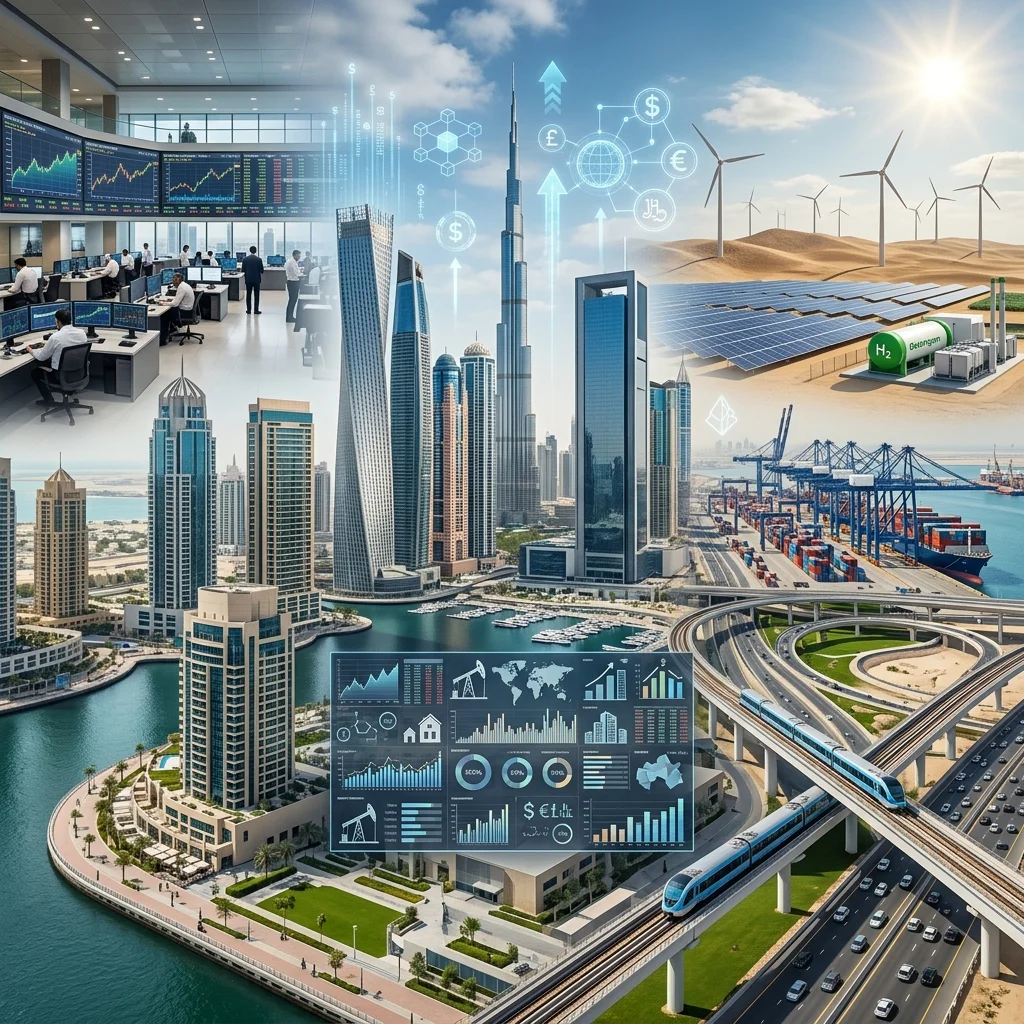
[IMAGE: A wide-angle premium financial landscape scene showing Gulf skyscrapers, a modern stock exchange interior, sovereign wealth portfolio visuals, infrastructure projects, renewable energy assets, and digital finance motifs blended into a clean, high-end editorial composition, realistic style, no text, no watermark]
Gulf finance investment trends are undergoing a notable shift. For years, the region’s capital markets were shaped by oil-linked liquidity cycles: periods of surplus fueled by high energy prices, followed by slower deployment when revenues softened. That pattern has not disappeared, but it is no longer the only framework that matters. Today, capital allocation across the Gulf is increasingly driven by long-term state planning, industrial policy, and a search for durable economic capacity.
The result is a more strategic investment model. Sovereign capital, domestic banks, private markets, and government-backed development platforms are now being used to build infrastructure, scale technology ecosystems, expand logistics networks, and deepen industrial capability. In other words, Gulf investment is moving from cyclical capital preservation toward a broader logic of economic transformation.
The Core Axis: From Oil-Led Liquidity to Strategic Capital Allocation
The hidden economic logic behind current Gulf investment behavior is straightforward: the region is trying to convert hydrocarbon wealth into non-hydrocarbon resilience. This is not simply a question of spending more money in new sectors. It is about deploying capital in ways that reduce dependence on commodity revenues and strengthen the domestic economy’s ability to generate value on its own.
That shift is visible in how regional institutions think about returns. Financial performance remains important, but it is increasingly weighed alongside strategic outcomes such as supply-chain control, local job creation, industrial capacity, digital infrastructure, and food and energy security. Gulf finance investment trends now reflect a broader allocation model in which capital is expected to do more than preserve wealth; it is expected to restructure the economy.
[IMAGE: A conceptual graphic showing oil revenues transforming into a diversified portfolio of infrastructure, tech, logistics, and energy assets.]
This is why the story should be understood as structural rather than tactical. A single acquisition or fund launch may attract attention, but the larger pattern is the steady redirection of capital into sectors that can support post-oil growth.
Why This Requires a Slow Industry Audit
This topic is best approached as slow analysis, not a fast market read. The central question is not whether one transaction happened this quarter. It is whether investment behavior has changed across multiple cycles, policy regimes, and capital market conditions.
To answer that properly, an analyst needs to look at several layers at once:
- sovereign wealth fund allocation patterns
- central bank and banking-sector balance sheet trends
- public-private investment programs
- exchange listings and market depth
- policy announcements tied to diversification and industrial development
Timeliness still matters. Recent policy shifts, new fund commitments, and transaction announcements can confirm whether the direction of travel is continuing. But the main evidence base comes from institutional reporting: annual reports from sovereign wealth funds, central bank publications, bank lending data, ministry statements, and exchange filings.
[IMAGE: A newsroom-style desk with market reports, charts, and policy documents arranged beside a Gulf skyline.]
That is what makes Gulf finance investment trends analytically demanding. The story is not just about capital moving; it is about the changing purpose of capital.
Infrastructure Logic Is Becoming the Organizing Principle
One of the most underreported aspects of Gulf investment is how strongly it is now tied to infrastructure logic. The region is not only financing roads, ports, rail, housing, and utilities. It is also funding the physical and digital systems that allow a more diversified economy to function.
This includes:
- logistics corridors and port expansion
- industrial parks and free zones
- cloud computing and data-center capacity
- payment infrastructure and fintech rails
- renewable energy assets and grid upgrades
- telecom and digital backbone projects
These investments matter because they address bottlenecks. In a post-oil economy, competitiveness depends on throughput, connectivity, and the ability to coordinate capital, labor, and goods efficiently. Gulf capital is increasingly being used to control those strategic bottlenecks rather than simply earn passive returns.
[IMAGE: Aerial view of a Gulf port, logistics hub, and adjacent industrial zone with digital network overlays.]
This is a critical change in interpretation. Investment is no longer just about picking assets. It is about building the conditions under which future economic activity can happen.
Sovereign Wealth Funds as Market-Makers
Sovereign wealth funds are central to this transition. They remain among the most influential institutions in the region, not only because of their size, but because of their ability to shape market structure.
Their role is dual. At home, they help stabilize domestic capital formation and anchor strategic sectors. Abroad, they operate as global allocators, taking positions in infrastructure, technology, private equity, and real assets. That combination gives them unusual influence over both local development and international portfolio construction.
In practice, sovereign wealth funds often act as market-makers in sectors the private market may not fund at scale without state participation. They can crowd in co-investment, de-risk new industries, and support ecosystem formation around emerging sectors such as advanced manufacturing, digital services, and clean energy.
Verification for this trend is visible in:
- annual fund reports and strategic reviews
- major acquisition and joint-venture announcements
- disclosed allocations into infrastructure and private markets
- cross-border investment filings and consortium structures
Their impact on Gulf investment is significant because they help define what kinds of assets the region values most. Increasingly, those assets are not just financial; they are strategic.
[IMAGE: Elegant infographic-style image of a sovereign wealth fund portfolio spanning global and regional assets.]
Banking, Regulation, and the Rise of Local Capital Depth
Banking systems across the Gulf are also adapting to this new investment model. A stronger domestic capital base requires deeper financial intermediation, better risk pricing, and regulatory frameworks that can support more complex funding channels.
In many Gulf economies, banks still play a central role in credit allocation. But their function is expanding. They are increasingly involved in financing infrastructure, supporting small and medium-sized enterprises, structuring project finance, and enabling capital-market development. Regulatory reforms have often followed the same logic: encourage longer-duration financing, improve disclosure, and support local investor participation.
This matters because diversification cannot be achieved through sovereign spending alone. A durable investment ecosystem needs local capital depth. That means pension pools, insurance capital, asset managers, exchanges, and bank lending all need to function as part of a broader system.
Recent policy measures in some Gulf states have reflected this goal through:
- capital-market modernization
- improved listing rules
- foreign ownership adjustments
- development-finance programs
- public-sector procurement aligned with local industrial capacity
Together, these changes are helping convert Gulf finance investment trends into a more mature capital-allocation framework.
Private Markets Are Filling the Middle Ground
Another important development is the growth of private markets. Private credit, private equity, venture capital, and infrastructure funds are increasingly filling the space between traditional bank lending and public-market financing.
This is especially relevant for sectors that need flexible capital and longer time horizons. Technology firms, logistics operators, healthcare platforms, renewable energy developers, and industrial suppliers often need financing structures that do not fit neatly into conventional banking models. Private markets can provide that flexibility.
The growth of this segment also reflects a regional willingness to accept more complex ownership and governance models. That is a sign of market maturity. It suggests that Gulf investment is moving beyond large-state balance sheets toward a more layered system with multiple sources of capital and risk appetite.
[IMAGE: A modern financial meeting room with private equity charts, venture portfolios, and infrastructure financing documents.]
Private markets are not replacing sovereign capital or banks. They are broadening the system around them.
Diversification Is Becoming Operational, Not Just Strategic
The language of diversification has been central to Gulf policy for years. What is changing now is that diversification is becoming operational. It is no longer simply a strategic aspiration or policy slogan. It is being embedded into investment decisions, procurement choices, and capital deployment frameworks.
That can be seen in the way capital is being channeled into sectors with direct spillover effects:
- advanced logistics support manufacturing and trade
- digital infrastructure supports service exports and fintech growth
- renewable energy supports utility resilience and industrial power supply
- local industrial investment supports supply-chain localization
This matters because diversification is ultimately a question of capability. A region cannot diversify by declaration alone. It must finance the ecosystems that make new sectors viable.
That is why regional capital allocation now looks less like a search for quick returns and more like a long-duration program of economic construction.
What to Watch Next
The next phase of Gulf finance investment trends will likely depend on several indicators.
First, watch whether sovereign capital continues increasing allocations to domestic infrastructure, private markets, and strategic industries. Second, monitor whether banks deepen lending to non-oil sectors without sacrificing credit quality. Third, observe whether exchanges and regulators succeed in creating more liquid, transparent local capital markets. Fourth, track whether industrial policy and investment policy stay aligned.
Also important is the balance between domestic development and international diversification. Gulf institutions will likely continue to invest abroad, but the center of gravity appears to be shifting toward assets that support national transformation at home.
If that pattern continues, the region’s investment landscape will look increasingly different from the oil-cycle model that defined earlier decades. Capital will still be shaped by energy revenues, but it will no longer be limited by them. Instead, Gulf finance may increasingly function as a long-horizon system for building infrastructure, technology capacity, and strategic domestic resilience.
Conclusion
The main story in Gulf finance investment trends is not just that more money is being deployed. It is that the logic of deployment is changing. Sovereign wealth funds, banks, regulators, and private capital are all contributing to a model in which capital is used to diversify the economy, strengthen infrastructure, and reduce long-term vulnerability to oil-price cycles.
That shift is gradual, but it is consequential. It suggests a region that is moving from liquidity management to strategic capital allocation, and from dependence on commodity surpluses to a more durable investment structure centered on infrastructure, technology, logistics, and economic capacity.
For analysts, investors, and policymakers, the key question is no longer whether Gulf capital will continue to grow. It is how that capital will be organized, directed, and governed as the region builds its next economic model.
Keywords

Khalid Al-Mansouri
Senior Financial Analyst covering GCC capital markets with 15 years of experience.