The Gulf Business Report: Why the GCC’s Digital Shift is Redefining Decision-Making in the Middle East
This article explores how Arabian Gulf Business, as a premier digital platform, is not just reporting news but reshaping the information architecture for leaders across the GCC. Moving beyond a standard platform description, we uncover the hidden economic logic: the GCC’s accelerated digital transformation demands real-time, in-depth analysis to maintain competitive advantage. We examine how this platform’s focus on Saudi Arabia, the UAE, and other member states serves as a strategic lens for understanding cross-border investment flows, supply chain resilience, and the new decision-making velocity required in a post-oil diversification era. The piece provides a deep audit of why specialized digital news platforms have become essential infrastructure for the region’s business leaders.
Sarah Al-Qasimi
Editorial Analyst
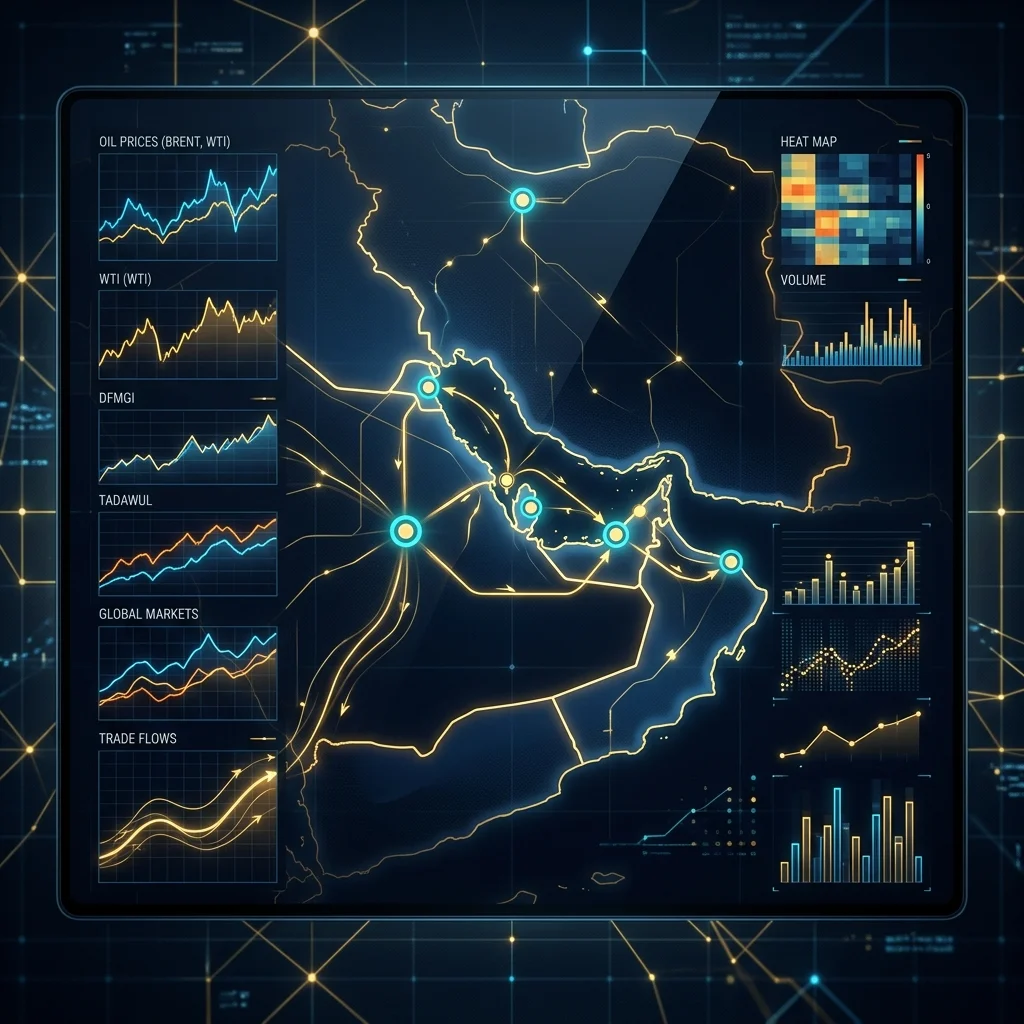
The Gulf Business Report: Why the GCC’s Digital Shift is Redefining Decision-Making in the Middle East
Introduction: Beyond a News Site – The Rise of Information Infrastructure in the GCC
The Gulf Cooperation Council (GCC) is executing the most significant economic reconfiguration in its modern history. Saudi Arabia’s Vision 2030, the UAE’s post-oil economic blueprint, and parallel diversification strategies across Kuwait, Bahrain, Qatar, and Oman are generating a structural demand for business intelligence that conventional news platforms cannot satisfy. This transformation is not merely about reducing hydrocarbon dependency; it is about creating entirely new cross-border industrial ecosystems that require real-time, verified, and context-rich information flows.
Arabian Gulf Business has positioned itself as a strategic information layer within this architecture. The platform functions beyond the traditional media paradigm of breaking news aggregation. For decision-makers navigating six distinct regulatory environments—each with its own labor laws, tariff structures, and investment frameworks—the value proposition is not speed alone but analytical depth. The platform’s mission, as stated, is to provide comprehensive coverage and in-depth analysis tailored for leaders and decision-makers in the Middle East and beyond (Source: Arabian Gulf Business mission statement).
The core thesis here is structural: the GCC’s accelerated digital transformation has created a feedback loop where business intelligence becomes an operational asset, not merely a reference tool. The platform’s curated cross-border data points to hidden supply chain shifts and capital movement patterns that are invisible to single-country analysis. Understanding these patterns is no longer optional for regional executives; it is a prerequisite for maintaining competitive advantage in a landscape where investment flows now cross six borders within hours.
The Hidden Logic: Why ‘Fast Analysis’ Fails for Gulf Decision-Makers
Most international business media operate on a dual-track model: breaking news and fast analysis. This model, optimized for quarterly earnings cycles and oil price volatility, systematically fails to address the decision-making requirements of GCC executives. The region’s economic complexity stems from the intersection of six sovereign legal systems, each with distinct foreign ownership rules, visa regimes, and sector-specific regulations. A Saudi-based investor evaluating a UAE logistics partnership must simultaneously parse Saudi labor localization laws, Abu Dhabi’s commercial licensing requirements, and the compound tax implications of cross-border profit repatriation.
Arabian Gulf Business differentiates itself through what can be termed “slow analysis”—deep dives into regulatory changes and their compound effects on cross-border operations. Consider the recent development of Saudi-UAE joint industrial zones. The success of these zones depends entirely on understanding tariff exceptions, customs harmonization protocols, and labor mobility agreements between the two countries. Standard business news outlets report the headline; the platform in question provides the granular tariff schedules, labor flow projections, and legal interpretation necessary for actual investment decisions (Source 1: GCC trade agreement documentation).
The market logic is self-reinforcing. The platform’s target audience—C-suite executives, institutional investors, and sovereign wealth fund analysts—requires fact verification across multiple GCC states simultaneously. No single government source provides this unified view. The demand for a single, trusted digital platform that synthesizes regulatory changes, infrastructure developments, and capital flows across all six member states creates a unique information intermediation opportunity. This is not media consumption; it is intelligence procurement.
Deep Dive 1: The Platform as a Supply Chain Radar for the Region
A critical blind spot in global business reporting is the assumption that GCC economic news is regionally contained. This assumption is empirically false. The Suez Canal disruptions of 2021 and 2023, combined with ongoing Red Sea security considerations, have demonstrated that Gulf port operations, logistics corridors, and free zone regulations directly impact global supply chain resilience. When Saudi Arabia expands King Abdullah Port’s capacity or the UAE deepens Khalifa Port’s container handling capabilities, the effects propagate through European, Asian, and African supply chains within weeks.
Arabian Gulf Business covers these developments through a distinctive lens: linking local infrastructure projects to international trade flow consequences. The platform does not merely report port expansion timelines; it analyzes the shift in shipping route preferences, the tariff implications of new free zone regulations, and the logistics cost differentials between competing Gulf ports. For a European supply chain manager evaluating whether to reroute through Jebel Ali or a Saudi Red Sea port, this analysis constitutes operational intelligence, not background reading.
The platform’s coverage of intra-GCC logistics competition provides another layer of strategic insight. Qatar’s Hamad Port, Oman’s Duqm Special Economic Zone, and Bahrain’s Khalifa Bin Salman Port are not isolated projects. They represent a competitive landscape where infrastructure investment signals long-term trade policy intentions. A platform that tracks and cross-references these developments allows decision-makers to anticipate which Gulf state will offer the most favorable logistics arbitrage in three to five years—a time horizon directly relevant to capital expenditure planning.
Deep Dive 2: Capital Flow Tracking and Investment Signal Detection
The GCC’s sovereign wealth funds collectively manage assets exceeding $3.5 trillion. The investment decisions made by the Public Investment Fund (Saudi Arabia), ADQ and Mubadala (UAE), and Qatar Investment Authority constitute a significant portion of global direct investment flows. Traditional business media cover these entities through press releases and occasional profile pieces. Arabian Gulf Business approaches sovereign wealth activity as a signal detection problem.
The platform’s analytical framework examines capital deployment patterns: which sectors receive allocation, which geographies are prioritized, and how investment strategies correlate with domestic economic policy shifts. When Saudi Arabia’s PIF increases its allocation to electric vehicle manufacturing while simultaneously investing in lithium supply chains, the pattern signals both domestic industrial policy intent and a broader bet on global energy transition timelines. A platform that connects these dots for regional decision-makers provides forward-looking intelligence that cannot be extracted from individual transaction announcements.
Furthermore, the cross-border investment dynamic within the GCC itself requires specialized analytical tools. UAE-based investors now represent the largest source of intra-GCC direct investment, with capital flowing into Saudi real estate, Qatari technology startups, and Omani tourism infrastructure. Tracking these flows—their volumes, sector compositions, and regulatory friction points—reveals the actual integration trajectory of the Gulf economies, which often diverges from political statements about GCC unity. Arabian Gulf Business’s coverage of these patterns allows executives to calibrate their own investment strategies against observed market behavior rather than aspirational policy documents.
Deep Dive 3: The Regulatory Arbitrage Intelligence Gap
One of the most complex challenges for GCC decision-makers is regulatory arbitrage across the six member states. Each country has calibrated its foreign ownership laws, taxation regimes, and sector-specific regulations to attract specific types of capital. Saudi Arabia now permits 100% foreign ownership in most sectors but imposes stringent localization requirements. The UAE offers full foreign ownership in mainland companies but maintains sector-specific restrictions in resources and utilities. Qatar’s free zones provide tax holidays but require local partnership in onshore activities.
Most business media treat these differences as static facts to be referenced. Arabian Gulf Business approaches them as dynamic variables that shift with each policy announcement, cabinet decision, or regulatory circular. The platform’s comparative regulatory analysis allows decision-makers to calculate the effective cost of doing business across multiple GCC jurisdictions simultaneously. For a multinational corporation deciding where to locate a regional headquarters, this analysis directly impacts a capital allocation decision worth tens of millions of dollars.
The compound effect of regulatory changes across multiple states creates decision complexity that single-jurisdiction analysis cannot address. When Kuwait reforms its foreign investment law while Bahrain adjusts its visa regime and Oman introduces new tax incentives, the combined effect alters the relative attractiveness of the entire region. A platform that captures these simultaneous changes and quantifies their cumulative impact provides a decision-support function that no government source or individual consultant can replicate at scale.
Market Prediction: The Platform as Institutional Infrastructure
The directional trend is clear: as the GCC continues its economic diversification trajectory, the demand for specialized, cross-border business intelligence will increase monotonically. The region’s information ecosystem is transitioning from fragmented, single-country news sources to integrated digital platforms that function as institutional infrastructure. Arabian Gulf Business occupies a structural position in this transition, serving as a unified analytical lens for an increasingly complex regional economy.
Several observable trends support this prediction. First, the volume of intra-GCC capital flows is projected to increase as tariff harmonization and regulatory convergence accelerate under GCC economic integration initiatives. Second, the number of regional headquarters being established in the UAE and Saudi Arabia—now exceeding 1,500—creates a permanent professional audience requiring continuous cross-border intelligence. Third, the sophistication of sovereign wealth fund investment strategies demands analytical depth that general business media cannot provide.
The platform’s sustainability as a business model depends on maintaining analytical rigor and avoiding the commoditization pressure that affects general business news. Specialized intelligence platforms in other regions—such as those serving the energy sector or logistics industry—have demonstrated that decision-makers will pay premium prices for information that directly impacts capital allocation. The GCC’s unique regulatory and economic structure creates a natural moat against generic competitors.
The implication for market participants is straightforward: platforms that successfully synthesize the GCC’s six economies into a coherent analytical framework will become essential infrastructure, as indispensable as legal counsel and accounting firms for any entity conducting significant business in the region. Arabian Gulf Business’s positioning at this intersection of digital transformation and regional economic integration places it as a structural beneficiary of the GCC’s long-term evolution toward a fully integrated, post-oil economic bloc.
Keywords

Sarah Al-Qasimi
Chief Editor leading investigative reports on Gulf business and policy.