Top 6 Energy Trends Shaping the Sector in 2026: Surging Demand, Natural Gas as Backbone, and the Clean Energy Slowdown
The energy sector in 2026 is being reshaped by six powerful forces: rapidly growing electricity and natural gas demand driven by data centers, reshoring, and electrification; an ‘all-of-the-above’ energy mix embracing oil, gas, renewables, nuclear, and geothermal; a deceleration in clean energy growth due to policy changes under the One Big Beautiful Bill Act; natural gas’s redefinition from a bridge to a backbone fuel; higher-for-longer cost of capital forcing consolidation and cash preservation; and rising electricity prices from grid modernization and supply-demand tensions. This article provides a deep, forward-looking analysis of these trends and their implications for investors, utilities, and policymakers.
Omar Hassan
Editorial Analyst
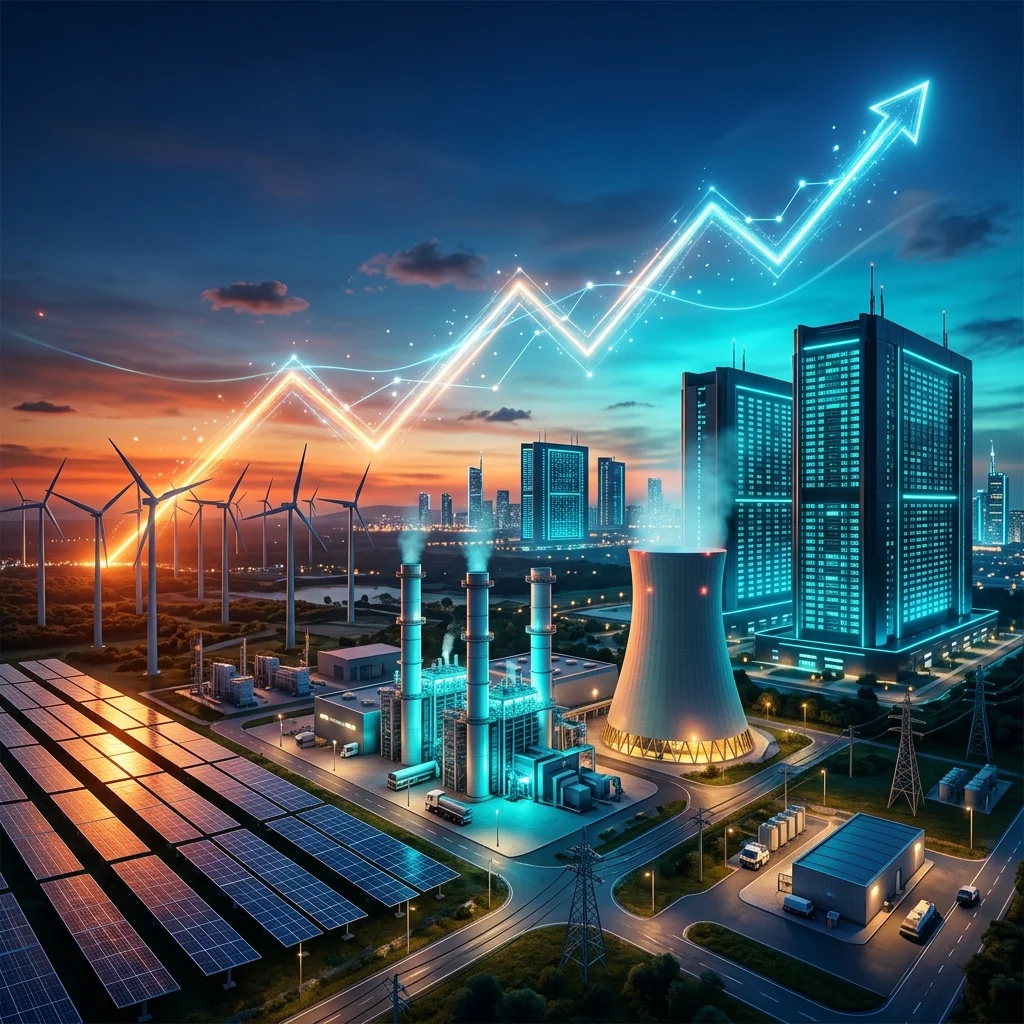
Top 6 Energy Trends Shaping the Sector in 2026: Surging Demand, Natural Gas as Backbone, and the Clean Energy Slowdown
Introduction: A Pivotal Moment for Energy
Energy demand is accelerating across all forms—electricity, natural gas, and renewables—driven by a convergence of structural shifts that few forecasters predicted just three years ago. The global energy sector in 2026 finds itself navigating a paradox: clean energy ambitions are tempered by policy changes and a higher cost of capital, while natural gas gains permanent status as the backbone of the power grid rather than a mere bridge fuel. At the same time, electricity demand is climbing at rates not seen since the early 2000s, fueled by data center buildouts, reshoring of manufacturing, and widespread electrification. This article unpacks the six defining trends for 2026, drawing on insights from RSM US LLP and RSM Canada, and examines their implications for investors, utilities, and policymakers worldwide.
[IMAGE: A montage showing a power grid, a data center, and a chart with rising bars.]
---
1. Surging Electricity Demand: Data Centers, Reshoring, and Electrification
Electricity demand growth in 2026 is no longer a linear forecast. Data center buildouts alone are adding the equivalent of a mid-sized country’s electrical load every few years. Hyper-scale cloud providers and AI training facilities require massive, round-the-clock power, pushing utilities to reassess their resource plans. According to RSM analysis, “Electricity demand growth is fueled by a combination of factors: increasing data centre needs, reshoring of manufacturing, widespread electrification and electric vehicle adoption.”
Reshoring of semiconductor fabrication, battery plants, and other heavy industries is creating sustained structural load growth that utilities must plan for years in advance. Meanwhile, electric vehicle adoption continues to climb, adding incremental demand as charging infrastructure expands. Major tech firms—Amazon, Google, Microsoft—have already begun collaborating directly with utility providers on dedicated power projects, including behind-the-meter natural gas peakers and co-located renewable-plus-storage systems. This signals a new era of corporate-utility partnerships that will reshape how new generation capacity is financed and sited.
[IMAGE: Aerial view of a massive data center campus next to a substation.]
---
2. The ‘All-of-the-Above’ Energy Mix: Pragmatism Replaces Dogma
The energy sector has formally adopted an “all-of-the-above” strategy that includes oil, natural gas, renewables, nuclear, geothermal, and emerging technologies like long-duration energy storage. This approach reflects market realities: no single fuel can satisfy surging demand alone while maintaining affordability and reliability. In 2026, investment is flowing into every category—from LNG export terminals and advanced small modular reactors (SMRs) to utility-scale solar farms and enhanced geothermal systems.
Regulators and grid operators are acknowledging that a diversified portfolio is the only path to energy security. Texas, for example, has seen a boom in natural gas generation alongside record solar installations. California, while pushing aggressively toward renewables, has extended the life of its last remaining nuclear plant and approved new gas peakers for reliability. The “all-of-the-above” mindset is pragmatism replacing dogma, and it is reshaping capital allocation across the sector.
[IMAGE: Split-screen showing a wind farm on one side and a natural gas plant on the other, with a pipeline in between.]
---
3. Clean Energy Growth Slows: The One Big Beautiful Bill Act’s Impact
Renewable energy deployment, which soared in the early 2020s, is decelerating in 2026. The primary driver is policy uncertainty stemming from the One Big Beautiful Bill Act, a sweeping piece of U.S. legislation that restructured clean energy tax credits, extended some provisions but phased out others, and introduced new domestic-content requirements that have slowed project timelines. According to RSM analysis, the Act “has created a pause in project development as developers reassess financial models under the new rules.”
The result is a slowdown in new wind and solar additions compared to the record pace of 2024-2025. While battery storage continues to grow—driven by standalone storage tax credits—the overall trajectory for renewables is flatter. This does not mean clean energy is collapsing; rather, it is entering a period of more measured growth. Developers are prioritizing projects with offtake agreements in hand, and the shift away from speculative build-out is leading to healthier project economics but fewer gigawatts online.
[IMAGE: Line chart comparing annual renewable capacity additions 2022-2026, showing a plateau in 2026.]
---
4. Natural Gas Redefined: From Bridge to Backbone Fuel
Natural gas has been called a “bridge fuel” for years, implying a temporary role on the path to full decarbonization. In 2026, that label no longer fits. Gas is being redefined as a backbone fuel—a permanent, indispensable part of the generation fleet. The reasons are clear: gas plants can ramp up and down quickly to complement intermittent renewables, they can be sited near data centers, and they offer reliability at a time when grid planners are increasingly worried about capacity shortfalls.
Newbuild gas capacity in the United States is expected to exceed 20 GW in 2026, the highest level in a decade. LNG exports continue to expand, with new liquefaction capacity coming online in the Gulf Coast. Meanwhile, the natural gas transport and storage network is being upgraded to handle higher flows, driven by both domestic demand and export commitments. RSM notes that “natural gas is becoming the structural backbone of the North American power system, not just a transient solution.”
[IMAGE: A modern natural gas combined-cycle power plant at dusk, with steam plumes barely visible, next to a pipeline valve station.]
---
5. Higher-for-Longer Cost of Capital: Consolidation and Cash Preservation
The cost of capital for energy projects remains elevated in 2026, well above the low-interest-rate era that preceded 2022. Central banks have held rates steady, and the bond market continues to demand higher risk premiums, especially for project finance with uncertain regulatory outlooks. This “higher-for-longer” environment is forcing strategic changes across the sector.
Independent power producers and midstream companies are consolidating at a rapid pace. Mergers and acquisitions in the energy space hit $120 billion in 2025, and the trend continues in 2026 as companies seek scale to lower their cost of capital and spread fixed costs across larger portfolios. Cash preservation has become a priority: dividends are being trimmed, share buybacks are paused, and capital expenditure is tightly focused on the highest-return projects. Smaller developers without strong balance sheets are struggling to secure financing, accelerating a shakeout that favors large, diversified players.
[IMAGE: A financial chart showing elevated interest rates and a timeline of M&A deals in the energy sector.]
---
6. Rising Electricity Prices: Grid Modernization and Supply-Demand Tensions
Consumers are feeling the pinch as electricity prices rise across most U.S. and Canadian markets. The drivers are structural: grid modernization investments required to integrate renewables, replace aging infrastructure, and harden against extreme weather are driving up utility capital expenditures. At the same time, the supply-demand imbalance created by surging demand and slower-than-needed generation additions is pushing wholesale power prices higher.
In regions like PJM and ERCOT, forward capacity prices have more than doubled year-over-year. Utilities are filing rate cases at a pace not seen since the 1970s, and regulators are increasingly approving multi-year rate increases to fund grid upgrades. For industrial customers and data center operators, rising electricity costs are prompting them to pursue behind-the-meter generation and long-term power purchase agreements (PPAs) to hedge against volatility. For households, the impact is being felt in higher monthly bills, adding to inflationary pressures in the broader economy.
[IMAGE: A graph showing average residential electricity prices in the U.S. from 2020 to 2026 with an upward trend, annotated with key drivers like grid upgrades and gas prices.]
---
Conclusion: Navigating a Complex Energy Landscape
The six trends shaping the energy sector in 2026—surging demand, an all-of-the-above mix, clean energy slowdown, natural gas as backbone, higher cost of capital, and rising electricity prices—paint a picture of an industry in rapid transformation. The days of linear growth and simple narratives are over. For investors, the key is to back companies with strong balance sheets, diversified portfolios, and the ability to adapt to policy shifts. For utilities, the challenge is to build enough generation and grid capacity to meet demand without bankrupting ratepayers. For policymakers, the imperative is to craft stable, technology-neutral frameworks that encourage investment while maintaining reliability and affordability.
As RSM’s analysis underscores, the energy landscape of 2026 is defined by pragmatism over ideology, complexity over simplicity, and resilience over ambition. The decisions made this year will reverberate for decades.
[IMAGE: A wide-angle digital illustration of a futuristic energy landscape at dusk, with solar panels, wind turbines, a natural gas plant, and a nuclear cooling tower, with an upward-trending graph line of light across the sky.]
Keywords

Omar Hassan
Energy Correspondent tracking OPEC+ policies and renewable energy transitions.