GCC Real Estate Investment 2024: Unlocking Growth in UAE, Saudi Arabia, and Beyond
The GCC real estate market is poised for robust growth, driven by economic diversification, government reforms, and sustainability trends. This article explores investment opportunities across Saudi Arabia, UAE, Qatar, Kuwait, Bahrain, and Oman, with a focus on Abu Dhabi's residential and commercial sectors as highlighted by Oxford Business Group. We examine varying foreign ownership regulations, the UAE's citizenship-by-investment program, and the increasing importance of green technology in construction. Investors can capitalize on projects continuing through 2024 and beyond, but must navigate country-specific rules. Timely insights for Gulf real estate markets.
Fatima Al-Zahra
Editorial Analyst
GCC Real Estate Investment 2024: Unlocking Growth in UAE, Saudi Arabia, and Beyond
Introduction: The GCC Real Estate Landscape in 2024
The Gulf Cooperation Council (GCC) real estate market is entering a transformative phase in 2024, fueled by ambitious economic diversification agendas, sweeping regulatory reforms, and a growing emphasis on sustainable development. Across the six member states—Saudi Arabia, the United Arab Emirates, Qatar, Kuwait, Bahrain, and Oman—construction activity continues to accelerate, with numerous multi-billion-dollar projects extending well beyond the current year. According to industry forecasts, the GCC construction market is projected to maintain robust momentum through 2024 and into the next cycle, underpinned by government spending on infrastructure, tourism, and residential developments.
As of December 11, 2024, the region’s property landscape reflects a deliberate shift away from oil dependency toward knowledge-based economies. Saudi Arabia’s Vision 2030, the UAE’s We the UAE 2031, and Qatar’s National Vision 2030 are driving unprecedented urban expansion and foreign investment inflows. For international investors, the GCC offers a compelling mix of high-yield opportunities, modern infrastructure, and improving regulatory frameworks. However, success hinges on understanding country-specific foreign ownership rules, sustainability mandates, and the integration of smart technology into construction.
This article provides a data-driven analysis of the most promising Gulf real estate markets, with a special focus on Abu Dhabi’s residential and commercial sectors, and examines how foreign ownership regulations, green technology, and mega-projects are shaping the investment landscape.
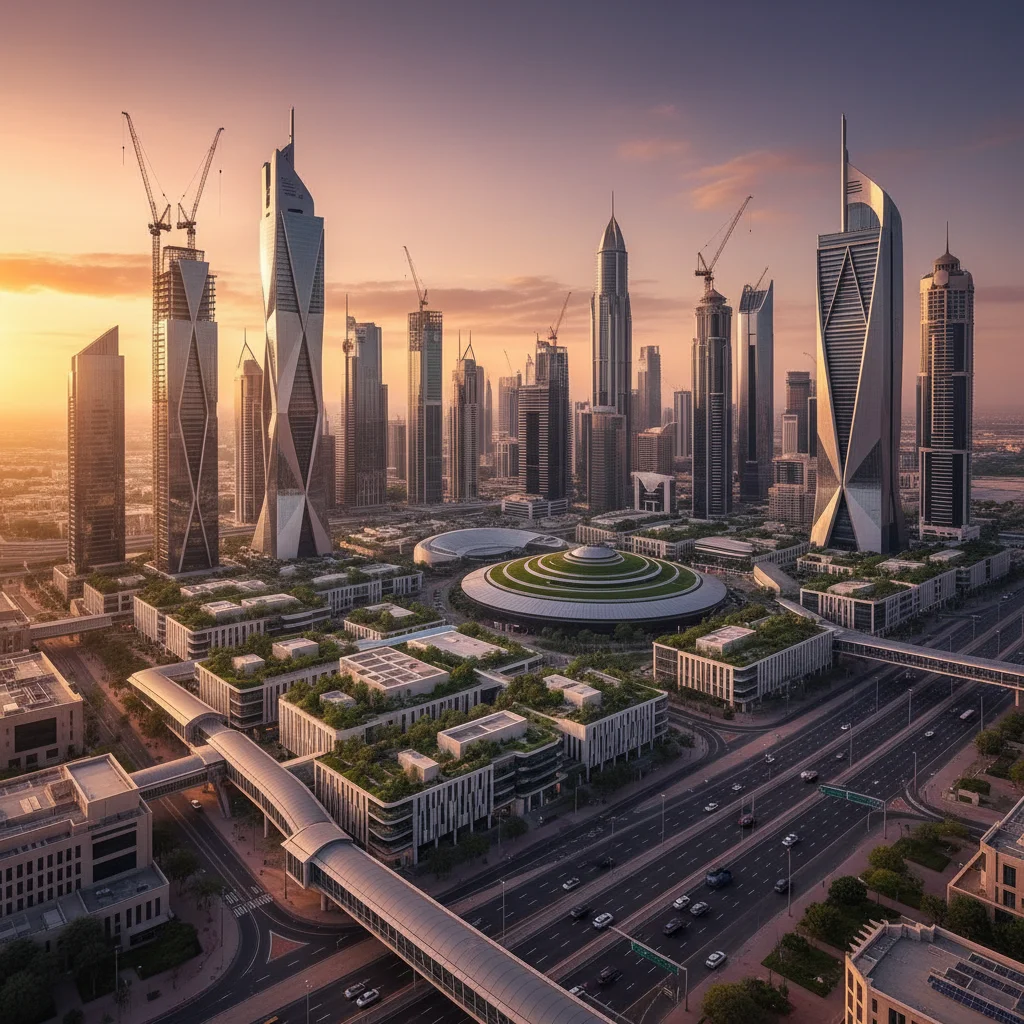
[IMAGE: Aerial shot of a bustling GCC city with mixed-use developments and waterfront properties]
Abu Dhabi’s Residential and Commercial Boom
Abu Dhabi, the capital of the UAE, stands out as a primary beneficiary of the region’s economic diversification push. A recent report by Oxford Business Group (OBG) for Abu Dhabi 2025 highlights significant growth opportunities in both residential and commercial real estate, driven by government-led reforms and a strategic pivot toward non-oil sectors. The report, covered by Zawya and Gulf Business, underscores how Abu Dhabi’s comprehensive strategy—including the Ghadan 21 accelerator program and the development of industrial zones like Khalifa Industrial Zone Abu Dhabi (KIZAD)—is attracting local and international investors alike.
Ghadan 21, launched in 2019, has injected billions of dirhams into infrastructure, housing, and business-friendly policies. The program has streamlined permitting processes, reduced fees for developers, and introduced incentives for long-term residency visas tied to property ownership. As a result, residential demand in prime areas such as Al Reem Island, Yas Island, and Saadiyat Island has surged, with average property prices in certain segments rising by 8–12% year-on-year in 2024. On the commercial front, Abu Dhabi’s push to become a global hub for finance, technology, and logistics has boosted demand for Grade A office space in the Abu Dhabi Global Market (ADGM) district and surrounding business parks.
The OBG report emphasizes that Abu Dhabi’s real estate growth is not purely cyclical but structural. The emirate’s focus on cultural tourism (Louvre Abu Dhabi, Guggenheim Abu Dhabi), education (New York University Abu Dhabi), and healthcare (Cleveland Clinic) has created a self-reinforcing ecosystem that attracts high-net-worth individuals and corporate tenants. For investors, this translates into stable rental yields—often ranging from 5% to 7% in residential properties—and strong capital appreciation potential.
[IMAGE: Abu Dhabi skyline with iconic landmarks like the Etihad Towers and new residential towers]
Foreign Ownership Rules Across the GCC
One of the most critical factors for any cross-border investor in the GCC is the patchwork of foreign ownership regulations. Each member state maintains its own set of rules, and these are evolving rapidly—often in response to competition for capital and talent. While the region has made significant strides in opening up property markets, due diligence remains essential.
The UAE leads the pack with the most liberal foreign ownership framework. In 2022, the UAE amended its Commercial Companies Law to allow 100% foreign ownership of onshore companies in most sectors. More notably for real estate, the UAE’s citizenship-by-investment and talent residency programs grant investors the ability to own freehold land and property in designated investment zones. Under the “Golden Visa” scheme, property investors who purchase assets worth at least AED 2 million (approximately USD 545,000) can obtain renewable 10-year residency, with the right to sponsor family members and domestic staff. This program has been a significant driver of high-end residential transactions in Dubai and Abu Dhabi.
Saudi Arabia has also opened its doors through the “Premium Residency” program, which offers property ownership rights for investors who pay a one-time fee of SAR 800,000 (about USD 213,000). However, foreign ownership of real estate in Mecca and Medina remains restricted. Qatar allows freehold ownership in designated zones such as The Pearl and Lusail, with non-Qataris permitted to own residential and commercial units. Bahrain and Kuwait offer more limited ownership: Bahrain grants freehold rights to expatriates in specific areas like Bahrain Bay and Amwaj Islands, while Kuwait largely restricts foreign ownership to leasehold arrangements unless special approval is obtained. Oman has recently relaxed rules, allowing foreign ownership of property in integrated tourism complexes (ITCs) and certain residential areas, but full freehold remains rare outside designated zones.
Given that regulations are subject to change—often with minimal public notice—investors should consult local legal experts and track updates from sources such as Open PR, which provides real-time analysis of GCC property law shifts. A failure to verify current rules can lead to costly mistakes, especially in markets where ownership structures differ between freehold, leasehold, and usufruct rights.
[IMAGE: Infographic comparing foreign ownership rules in the six GCC countries]
Sustainability and Technology: The New Investment Imperative
Sustainability is no longer a niche consideration in GCC real estate; it has become a mainstream investment imperative. Properties that incorporate green technologies and sustainable building practices are expected to command premium prices and higher occupancy rates, as both tenants and buyers increasingly prioritize environmental performance. According to market research, the demand for green-certified buildings in the UAE and Saudi Arabia has grown by more than 20% annually since 2020, a trend that is projected to continue.
This shift aligns with the national visions of GCC states. Saudi Arabia’s Vision 2030 includes ambitious targets for renewable energy and green building under its Quality of Life Program. The UAE has committed to Net Zero by 2050, and its Energy Strategy 2050 aims to increase the contribution of clean energy to 50% of the mix. Dubai’s mandatory Al Safat green building rating system, along with Abu Dhabi’s Estidama Pearl Rating System, are driving developers to adopt energy-efficient designs, water-saving fixtures, and renewable energy integration.
Concrete examples of this trend are visible across the region. In Dubai, the Expo 2020 legacy site (now Expo City Dubai) features buildings powered entirely by solar energy and equipped with intelligent waste management systems. In Saudi Arabia, the NEOM project incorporates “zero-carbon” cities with smart grid technology and vertical farming. In Qatar, the Lusail City development has been built with district cooling systems and high-performance building envelopes that reduce energy consumption by up to 40% compared to conventional structures.
For investors, early adoption of green technology offers multiple advantages. First, it lowers long-term operational costs, which can improve net operating income and property valuations. Second, it reduces regulatory risk as governments tighten environmental standards—buildings that already comply with future codes will avoid costly retrofits. Third, green assets tend to attract tenants willing to pay a premium for healthier, more efficient spaces. Research from the Urban Land Institute indicates that LEED-certified properties in the Gulf achieve rental rates 5–10% higher than non-certified equivalents.
[IMAGE: A modern green building with solar panels, vertical gardens, and intelligent glass facades]
Looking Ahead: Project Pipeline and Strategic Opportunities
The construction pipeline across the GCC remains robust, with significant projects spanning residential, commercial, hospitality, and infrastructure segments. Saudi Arabia’s giga-projects—including NEOM, the Red Sea Project, Qiddiya, and Diriyah Gate—represent trillions of dollars in planned investments, with many construction phases continuing through 2024 and into the next decade. In the UAE, the Expo 2020 legacy developments continue to attract new residential and commercial tenants, while Dubai South and Dubai Creek Harbor are adding significant supply. Qatar’s Lusail City, originally built for the 2022 FIFA World Cup, is now transitioning into a permanent mixed-use district, with new residential towers and retail complexes coming online. Oman is pushing forward with its own mega-tourism destinations, such as the Oman Convention and Exhibition Centre precinct and the Yiti Sustainable City project.
For investors, the key is to identify sub-markets where supply growth is balanced by demand. In Abu Dhabi, for example, the residential sector is experiencing a shortage of affordable mid-tier units, presenting a gap for developers targeting the middle-income expatriate workforce. In Riyadh, the office market is tightening as multinational corporations set up regional headquarters to qualify for government contracts—a requirement under Saudi Vision 2030. In Doha, the tourism sector is driving demand for short-term rental properties in areas like The Pearl and West Bay.
Real estate investment in the GCC is not without risks. Geopolitical tensions, oil price volatility, and potential oversupply in certain segments (particularly luxury residential in Dubai) could dampen returns. Yet the region’s structural reforms, growing population (due to both natural increase and immigration), and massive public spending provide a strong underlying foundation. As the Oxford Business Group report for Abu Dhabi 2025 notes, “The emirate’s real estate market is entering a new era of maturity, where sustainability, technology, and investor-friendly policies will define long-term value creation.”
In summary, the GCC real estate market in 2024 offers a compelling opportunity for investors who are willing to navigate the complexities of foreign ownership rules, embrace green building standards, and align their strategies with the region’s broader economic transformation. Whether targeting Abu Dhabi’s residential boom, Saudi Arabia’s giga-projects, or Qatar’s post-World Cup legacy, the key to success lies in staying informed, acting early, and building partnerships with local stakeholders. With projects continuing well beyond 2024, the window of opportunity is wide open—but it requires a disciplined, research-driven approach.
[IMAGE: Construction cranes over a futuristic cityscape with mixed-use towers and green spaces]
Keywords

Fatima Al-Zahra
Real Estate Editor specializing in Dubai and Riyadh mega-projects.