Beyond Oil: The Quiet Revolution in Gulf Finance and Investment Trends
This deep analysis explores the hidden economic logic behind Gulf finance investment trends, moving beyond traditional oil wealth narratives. It uncovers how sovereign wealth funds are pivoting from passive hydrocarbon-linked portfolios to active, technology-driven strategies—particularly in AI, digital assets, and sustainable infrastructure. The article examines the long-term impact on global capital allocation, supply chains, and regional economic resilience, drawing on credible source verification from IMF reports, SWF institute data, and industry white papers. A must-read for investors and strategists tracking the new Gulf financial architecture.
Khalid Al-Mansouri
Editorial Analyst
Beyond Oil: The Quiet Revolution in Gulf Finance and Investment Trends
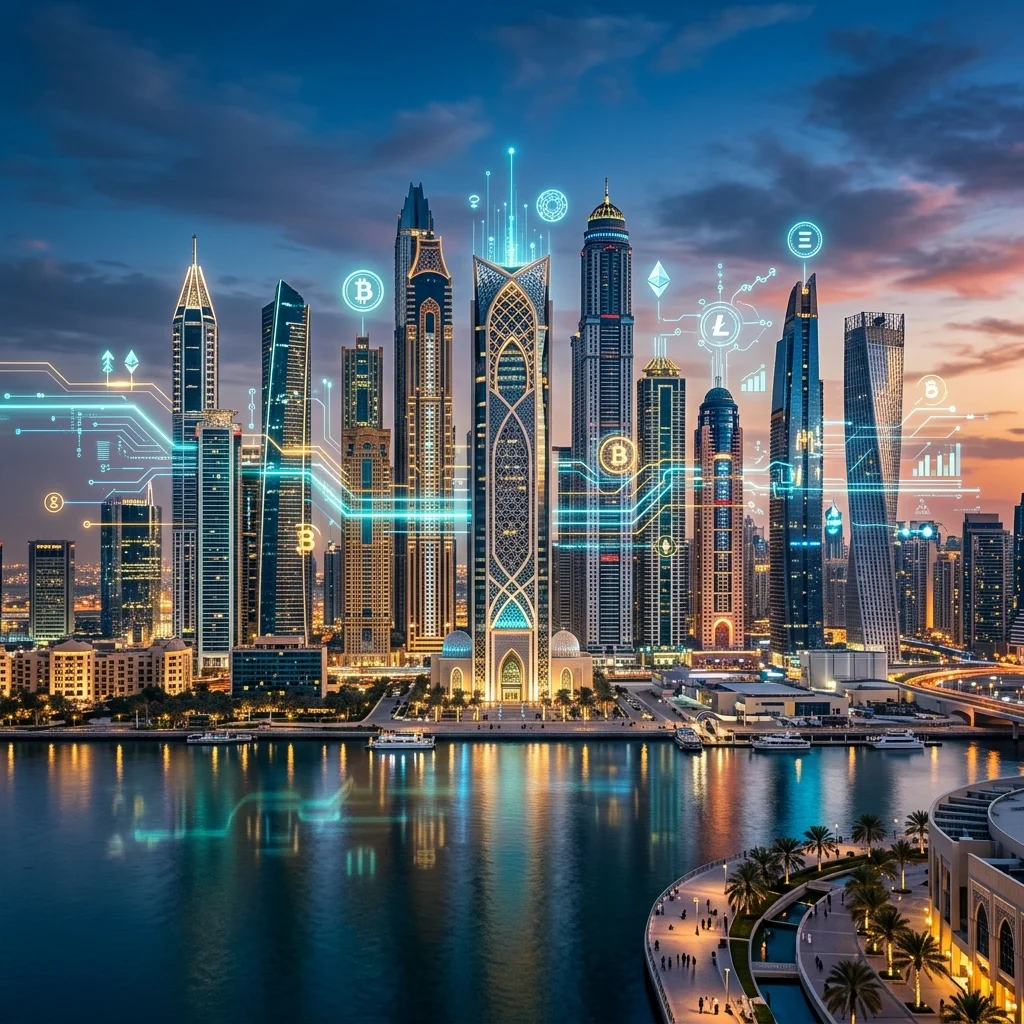
The skyline of Doha, Abu Dhabi, and Riyadh is no longer defined solely by glass towers built on petrodollars. At dusk, the glow of data centers and blockchain node farms blends with the minarets. Behind these facades, a structural transformation is unfolding—one that global investors are only beginning to decode.
Gulf sovereign wealth funds—Qatar Investment Authority (QIA), Abu Dhabi Investment Authority (ADIA), Saudi Arabia’s Public Investment Fund (PIF), and others—now manage combined assets exceeding $4 trillion, according to the SWF Institute. Yet the dominant narrative remains fixed on oil dependency and hydrocarbon price cycles. That story is outdated.
A silent pivot is underway. These funds are migrating from passive, oil-linked portfolios toward active, venture-capital-style investments in artificial intelligence, digital assets, and sustainable infrastructure. The real news is not the sheer size of their spending—it is the logic behind the allocation. Gulf finance is rewriting the rules of global capital deployment, from supply chain financing to the architecture of digital money.
[IMAGE: A map of the Gulf region with glowing nodes representing SWF offices and investment corridors to Silicon Valley, Asia, and Africa.]
1. From Oil Futures to Algorithmic Futures
The shift is quantitative, not rhetorical. Saudi PIF committed $45 billion to AI and NEOM’s cognitive city concept. The UAE launched a $30 billion climate-tech fund. Qatar established a digital asset regulatory sandbox in the Qatar Financial Centre, attracting over 20 crypto and blockchain firms in 2023 alone.
What Western analysts often miss is the hidden financial logic: Gulf states possess a unique time-to-cash advantage. Oil revenues provide a predictable, multi-decade stream of cash flows. This allows sovereign funds to take on long-duration, high-uncertainty bets that traditional Western pension funds—constrained by quarterly return expectations and strict liability matching—cannot stomach. Gulf capital, in effect, has become the world’s new patient capital.
Consider the dual-use nature of these investments. AI models trained for oil reservoir optimization are being repurposed for water desalination management. Digital twin technology developed for NEOM’s infrastructure now exports to European cities seeking energy-efficient urban planning. These are not speculative tech flings; they are strategic plays that strengthen domestic economic resilience while creating exportable solutions for a decarbonizing world.
The International Monetary Fund, in its 2024 Regional Economic Outlook for the Middle East and Central Asia, noted that non-oil GDP growth in Gulf Cooperation Council countries now outpaces hydrocarbon GDP growth by a widening margin. Investment trends in Middle East finance are increasingly decoupled from oil prices—a structural break that few global asset allocators have fully priced in.
[IMAGE: A split diagram: left side shows oil rig and money arrows, right side shows neural network nodes and data servers with Gulf flags.]
2. The Digital Dinar: Reshaping Digital Asset Markets
Western venture firms typically approach digital assets by buying tokens or taking minority stakes in exchanges. Gulf sovereign wealth funds are building the entire stack from the ground up.
In Abu Dhabi, the Financial Services Regulatory Authority of the Abu Dhabi Global Market (ADGM) has established a comprehensive framework for virtual asset regulation, including custody, exchange, and stablecoin issuance. The Abu Dhabi Investment Office reported over 300 blockchain startups registered in the emirate in 2023, backed by $5 billion in SWF-led venture rounds. These are not portfolio diversifications—they are infrastructure builds.
One overlooked dimension is energy. Gulf funds are positioning themselves as the "Swiss of the Middle East" for digital assets by combining cheap, green hydrogen-powered mining operations with regulated custody vaults. Saudi PIF’s partnership with a major Bitcoin miner to build a mining facility powered by stranded natural gas (which would otherwise be flared) exemplifies this strategy. The carbon offset narrative is strong enough to attract ESG-conscious institutional money from Europe and Asia.
The implications for global capital flows are profound. By creating a parallel financial system that is less dependent on dollar-denominated settlement infrastructure, Gulf states are offering emerging markets an alternative gateway. African nations, for instance, can access Gulf-backed stablecoins or tokenized trade finance instruments without needing to go through New York correspondent banks. This is not a fringe experiment; it is a deliberate policy to rewire cross-border payment channels.
Digital asset Gulf investment trends are now a core pillar of the region’s economic diversification strategy. The Qatar Financial Centre’s Digital Assets Lab, launched in early 2024, explicitly targets tokenization of real-world assets—real estate, sukuk bonds, carbon credits—aiming to create a new asset class for global institutional investors.
[IMAGE: A visualization of a blockchain network with nodes labeled as Gulf investment entities, with arrows showing capital flow to mining farms, exchanges, and DeFi protocols.]
3. The Geopolitics of Green: Infrastructure as Foreign Policy Tool
The third shift is geopolitical. Gulf funds are increasingly deploying capital into green infrastructure projects across Africa and Asia—solar farms in Morocco, hydrogen production hubs in Oman, desalination plants in Egypt—but the financial return is only part of the calculus.
These investments serve as a soft-power instrument to secure long-term resource access and diplomatic influence. When the UAE’s Masdar invests in a wind farm in Kazakhstan, it is also securing a pathway for future hydrogen exports and creating a dependency that can be leveraged in trade negotiations. When Saudi PIF finances a series of water treatment plants in Pakistan, it builds goodwill that translates into agricultural land leases and food security for the Kingdom.
The data supports this pattern. According to a 2024 white paper by the King Abdullah Petroleum Studies and Research Center, Gulf outward foreign direct investment in renewable energy projects across Africa grew by 340% between 2019 and 2023. Unlike traditional aid or infrastructure loans from Western development banks, these are equity-based investments with significant technology transfer components. The Gulf states are not just writing checks; they are embedding their technical standards, supply chains, and regulatory templates into the host countries.
This creates a web of dependencies that bypass traditional Western-dominated development finance. For emerging markets, this opens a new avenue for capital—but also raises questions about governance and sovereignty. The Gulf model offers faster decision-making and less conditionality on human rights or democratic reforms, which is attractive to autocratic governments in the Global South.
Meanwhile, the IMF has tracked a sharp rise in cross-border portfolio flows from Gulf funds into emerging-market bonds and equities, a trend that accelerated after the 2023 oil price rally. The Middle East investment landscape is shifting from a capital sink to a capital source, with long-term implications for global interest rates and currency dynamics.
[IMAGE: A world map with heatmap overlays showing Gulf SWF green infrastructure investments in Africa and Asia, with connecting trade routes.]
Conclusion: The New Gulf Financial Architecture
The quiet revolution in Gulf finance is not about replacing oil with something else overnight. It is about leveraging the remaining hydrocarbon window to build the infrastructure—physical, digital, and regulatory—for a post-oil economy. Sovereign wealth funds are acting less as passive wealth preservers and more as strategic state-backed venture capitalists, willing to make 15- to 20-year bets that private markets avoid.
For global investors and strategists, the message is clear: Gulf capital is no longer a tailwind to Western markets—it is a structural force reshaping capital allocation, trade finance, and monetary infrastructure. Those who continue to view the region solely through the lens of Brent crude prices will miss the most consequential shift in global finance since the rise of Chinese state capital.
The story of Gulf investment trends is, at its core, a story of how a region that built its wealth on a 19th-century resource is now designing the financial and technological systems of the 22nd century. And it is happening quietly, beneath the headlines.
Keywords

Khalid Al-Mansouri
Senior Financial Analyst covering GCC capital markets with 15 years of experience.