The Renewable Revolution: Doubling Capacity by 2030 – But Are We Ready for the Grid and Supply Chain Challenges?
The IEA projects global renewable electricity capacity will more than double by 2030, adding 4,600 GW – equivalent to the combined power generation of China, the EU, and Japan. Solar PV dominates, accounting for nearly 80% of the surge. While this growth is unprecedented, it masks critical bottlenecks: grid integration, supply chain vulnerabilities, policy instability, and workforce gaps. This article provides a deep industry audit, leveraging IEA reports (Renewables 2025, COP28 pledge tracker, and technology collaborations) to uncover the hidden economic logic behind capacity additions. It explores what it takes to turn record-breaking installation numbers into a reliable, low-emissions energy system – and why the next frontier is not just generation, but infrastructure and systemic resilience.
Omar Hassan
Editorial Analyst
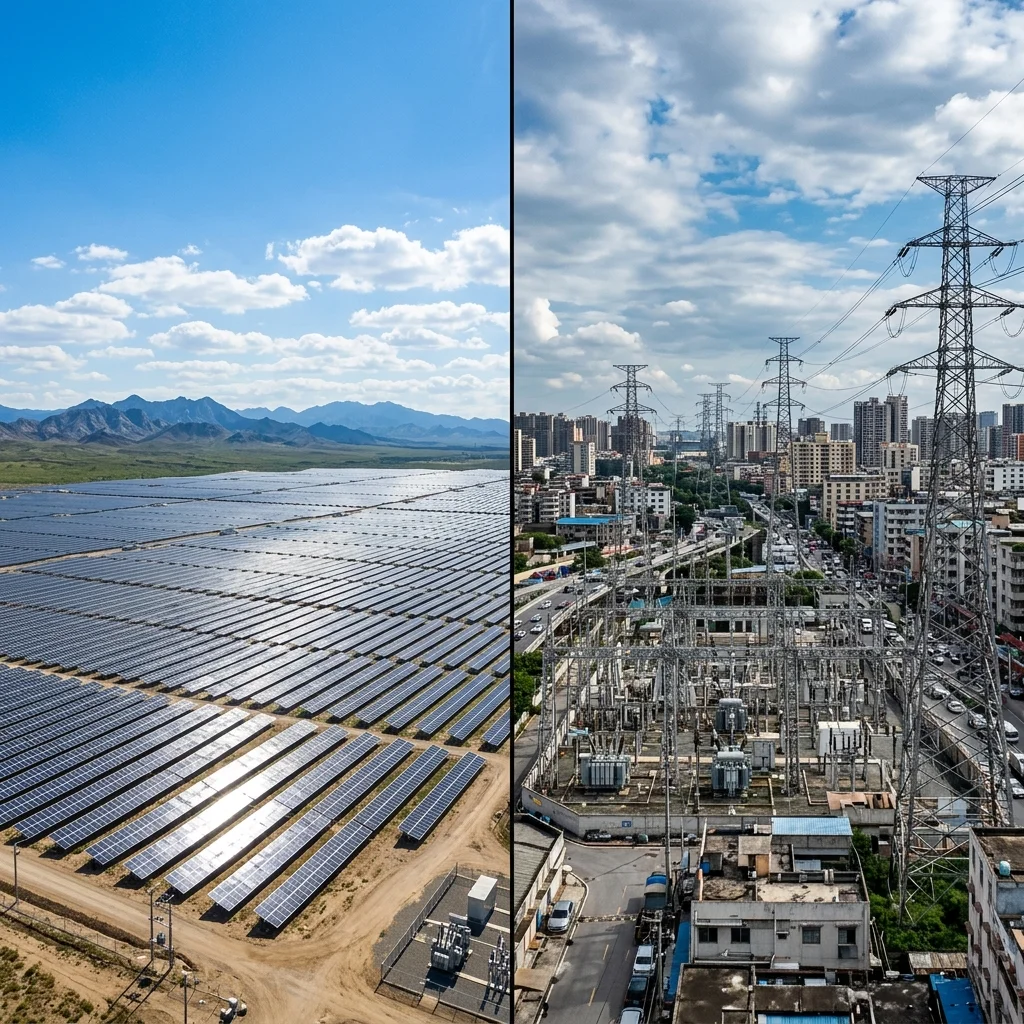
The Renewable Revolution: Doubling Capacity by 2030 – But Are We Ready for the Grid and Supply Chain Challenges?
Introduction: The Numbers That Define a Decade
Global renewable electricity capacity is on track to more than double by 2030, according to the International Energy Agency (IEA). The agency projects that an additional 4,600 gigawatts (GW) will be installed over the next five years—a volume equivalent to the combined power generation capacity of China, the European Union, and Japan today. This unprecedented surge is being driven almost entirely by solar photovoltaic (PV) technology, which accounts for nearly 80% of the expected increase. Wind, hydropower, bioenergy, and geothermal will contribute the remainder.
The pace is striking: over 80% of countries worldwide are expected to see higher renewable energy capacity growth in the 2025–2030 period than they did in the previous five years. For the first time in history, clean energy additions are outpacing global electricity demand growth in every major region. Yet behind these headline numbers lies a deeper and more uncomfortable question: is the world’s infrastructure—its power grids, supply chains, policy frameworks, and workforce—ready to turn record-breaking installation figures into a reliable, low-emissions energy system?
[IMAGE: Global map with color-coded growth rates by country, referencing IEA data.]
The Solar Tsunami: Why PV Dominates and What It Means
Solar PV’s dominance is no accident. Dramatic cost reductions—modules have fallen by more than 90% over the past decade—combined with modularity and strong policy support have made solar the cheapest new source of electricity in a growing number of markets, from sun-drenched deserts to temperate urban rooftops. The IEA’s latest modelling shows that solar alone will account for roughly 80% of all renewable capacity additions through 2030, turning the energy transition into a solar-led transformation.
But this rapid expansion exposes a structural vulnerability: supply chain concentration. China currently controls over 80% of the global production capacity for polysilicon, ingots, wafers, and solar cells. While this concentration has enabled economies of scale and low prices, it also creates a single point of failure. Any disruption—whether from trade tensions, geopolitical friction, or raw material shortages—could ripple through global solar deployment.
Raw material dependencies compound the risk. Solar PV manufacturing requires significant amounts of silver and copper, both of which face potential supply constraints as demand escalates. Rare minerals such as tellurium and indium, used in thin-film technologies, also present sourcing challenges. The IEA’s technology collaboration programmes, particularly the Photovoltaic Power Systems Technology Collaboration Programme (PVPS TCP), provide granular tracking of these supply chains. The agency’s data explorer, which covers over 640 technology designs, allows policymakers to monitor cost trends, material flows, and innovation pathways in real time.
[IMAGE: Infographic showing solar PV supply chain stages (polysilicon, ingots, wafers, cells, modules) with country shares.]
Beyond Capacity: The Unseen Challenge of Grid Integration
Adding 4,600 GW of renewable capacity is only half the battle. The other half—arguably the more difficult one—is integrating that capacity into existing power grids. Solar and wind are inherently variable: they generate electricity when the sun shines or the wind blows, not necessarily when consumers need it. Without massive investments in transmission infrastructure, energy storage, and demand-side flexibility, peak production events will lead to curtailment—essentially throwing away clean energy that could otherwise displace fossil fuels.
The IEA’s forthcoming reports on scaling demand flexibility (June 2026) and district energy networks (June 2026) highlight exactly these needs. Grids must be expanded and modernized to handle bidirectional flows, accommodate distributed generation, and balance supply with demand across wider geographic areas. Storage—whether utility-scale batteries, pumped hydro, or emerging technologies—is critical for shifting solar and wind output to hours of high demand. The IEA estimates that global battery storage capacity will need to grow more than tenfold by 2030 to keep pace with renewable deployments.
Regulatory and market design reforms are equally urgent. In many countries, grid connection queues are lengthening, and permitting processes take years. The problem is particularly acute in emerging economies. The IEA’s Southeast Asia Energy Outlook 2026, for example, identifies grid modernization as the region’s single biggest barrier to renewable integration. A separate IEA report on integrating solar and wind (September 2025) provides detailed country-level case studies, showing how advanced economies like Germany and Texas are coping with high penetration rates, and what developing nations can learn.
[IMAGE: Illustration of a smart grid with solar panels, batteries, transmission lines, and consumer demand response icons.]
The IEA’s Role in Tracking Progress and Identifying Gaps
The IEA serves as the world’s primary scorekeeper for the renewable revolution. Its Renewables 2025 report, due in October, will provide the most comprehensive dataset on deployment trends, costs, and policy developments. That analysis is supplemented by the Renewable Energy Progress Tracker, which offers a decade’s worth of historical data (2015–2024) on capacity additions by technology and country. Together, these tools allow stakeholders to benchmark national ambitions against reality.
Perhaps the most politically significant effort is the IEA’s tracking of the COP28 tripling renewable capacity pledge. Signed by nearly 200 countries in December 2023, the pledge aims to increase global renewable capacity to at least 11,000 GW by 2030. The IEA’s dedicated tracker, updated in December 2025, assesses each country’s progress: which nations are on track, which have fallen behind, and what policy gaps remain. Early indications suggest that while the aggregate global trajectory is positive, many countries—particularly in Africa and parts of Asia—will need to accelerate permitting, grid investment, and financing to meet their targets.
The IEA Technology Collaboration Programme (TCP) covers ten renewable technologies, from concentrating solar power (CSP) to ocean energy. These TCPs facilitate international research, data sharing, and best-practice dissemination. For example, the Wind TCP publishes annual benchmarks on turbine performance and reliability, while the Hydropower TCP tracks the modernization of aging plants and the environmental impact of new projects. By connecting researchers with industry and policymakers, the TCP network helps close the gap between laboratory innovation and commercial deployment.
[IMAGE: Dashboard-style graphic showing IEA data sources: Renewables 2025, COP28 Tracker, Technology Collaboration Programmes, and country-specific outlooks.]
Policy, Supply Chains, and the Investment Gap
Even with the IEA’s robust tracking, the energy transition faces a trio of interconnected bottlenecks. First, policy instability remains a major deterrent to long-term investment. Frequent changes in feed-in tariffs, tax credits, and renewable portfolio standards create uncertainty for developers and financiers. The IEA’s policy database shows that while over 140 countries have adopted renewable energy targets, fewer than half have implemented stable, bankable support mechanisms.
Second, supply chain diversification is essential to reduce vulnerability. The IEA has been vocal about the need to develop manufacturing capacity outside of China—in India, the United States, Europe, and Southeast Asia. Initiatives like the US Inflation Reduction Act and the EU’s Net-Zero Industry Act are beginning to spur domestic production, but these efforts will take years to bear fruit. Meanwhile, trade frictions—such as anti-dumping tariffs on solar panels—disrupt markets and raise costs.
Third, the investment gap remains large. While global renewable energy investment reached a record $1.8 trillion in 2024, the IEA’s latest World Energy Investment report notes that emerging and developing economies receive only a fraction of that capital. High perceived risk, underdeveloped financial markets, and lack of creditworthy off-takers hamper project finance. The IEA has called for increased multilateral development bank lending, concessional finance, and risk-mitigation instruments to crowd in private capital for grids and storage in these regions.
Workforce and Systemic Resilience
A less discussed but equally critical challenge is the workforce gap. Installing 4,600 GW of capacity, building thousands of kilometers of transmission lines, and operating millions of distributed solar systems requires millions of trained engineers, technicians, and project managers. The IEA’s Energy Employment report estimates that the renewable sector will need to add roughly 2.5 million jobs per year through 2030—a pace that current training and education systems in many countries cannot support. Skills shortages are already evident in the solar and wind industries, where experienced installers and grid engineers are in high demand.
Beyond workforce, systemic resilience demands a shift in mindset. The next frontier is not merely generating more clean electricity, but ensuring that the entire energy system—generation, transmission, distribution, storage, and demand response—can operate reliably under stress. Extreme weather events, cyberattacks, and geopolitical disruptions test this resilience. The IEA’s work on grid security and low-emissions fuels (such as green hydrogen and ammonia) is exploring how to harden infrastructure while decarbonizing sectors beyond electricity, including industry and heavy transport.
Conclusion: The Infrastructure Imperative
The renewable revolution is real, and its scale is unprecedented. By 2030, solar and wind will be the dominant sources of new electricity generation worldwide, pushing the world closer to a low-carbon energy system. But the headline capacity numbers tell only part of the story.
The hidden economic logic behind the IEA’s projections is that generation is no longer the binding constraint—infrastructure is. Without massive parallel investments in grid expansion, energy storage, supply chain diversification, workforce development, and stable policy frameworks, the record-breaking installations risk being stranded assets or wasted output. The COP28 tripling pledge provides a political north star, but the IEA’s detailed tracking reveals that many countries are still unprepared for the systemic challenges ahead.
As the world enters the 2025–2030 period, the focus must shift from how many gigawatts we install to how we integrate them. The renewable revolution is winning the capacity race—but the next race, for a reliable and resilient energy system, has only just begun.
Keywords

Omar Hassan
Energy Correspondent tracking OPEC+ policies and renewable energy transitions.