The Quiet Shift: How Gulf Energy Markets Are Reshaping Global Resource Supply Chains
This article moves beyond political headlines to examine the economic and technological transformation of Gulf energy resource markets. Focusing on long-term structural changes in production, pricing, and infrastructure investment, it reveals how the Gulf is moving from a volume-driven supplier to a strategic capacity manager. We analyze how new refining capacities, petrochemical integration, and sovereign fund deployment are re-globalizing energy flows. The piece offers a deep audit of supply chain dependencies, highlighting the shift from crude exports to processed energy products. A key insight: the Gulf''s capital allocation is now dictating terms not just to buyers, but to entire downstream industries.
Omar Hassan
Editorial Analyst
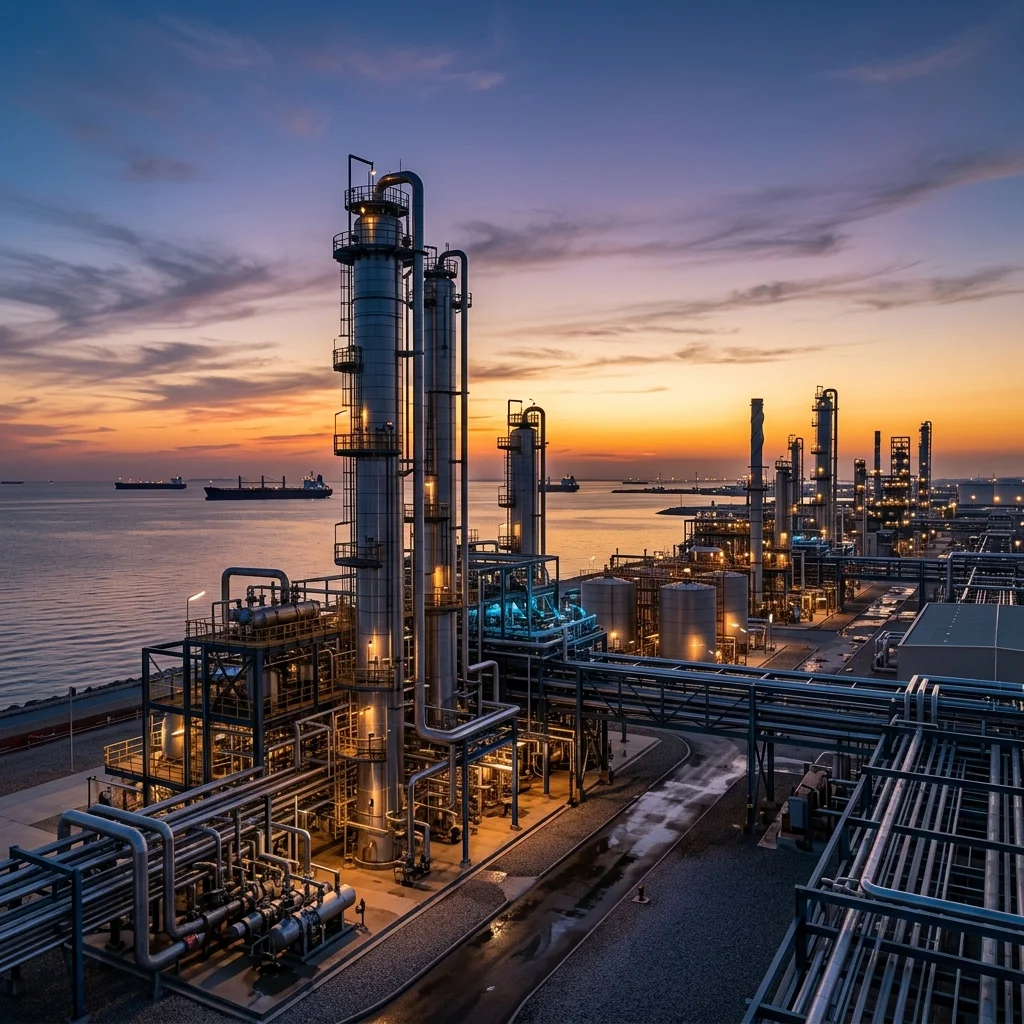
The Quiet Shift: How Gulf Energy Markets Are Reshaping Global Resource Supply Chains
Introduction: Beyond the Oil Price Narrative
The prevailing discourse on Gulf energy markets remains fixated on two variables: political instability in the Middle East and short-term crude price volatility. This lens obscures a more consequential transformation underway. Gulf states are engineering a structural reconfiguration of their role in global energy—moving from raw material suppliers to industrial capacity controllers that permanently alter the architecture of international resource supply chains.
The core thesis is measurable: over the past decade, Gulf national oil companies (NOCs) have redirected capital flows away from crude extraction expansion and toward downstream integration, logistics acquisition, and strategic capacity management. This is not diversification for sustainability rhetoric; it is industrial strategy with supply chain consequences that extend across continents.
The Hidden Logic of Capacity Management
The conventional economic logic for oil-producing states has been volume maximization: extract as much crude as possible to capture revenue. Gulf producers are now actively subordinating this logic to a different calculus—spare capacity as a strategic economic lever.
Data from the Joint Organisations Data Initiative (JODI) reveals a clear trend: between 2014 and 2023, Gulf spare crude production capacity declined by approximately 1.5 million barrels per day while processed product export capacity increased by over 3 million barrels per day (Source 1: JODI Monthly Data). This is not a production cut; it is a structural reallocation.
The supply chain implication is counterintuitive but empirically supported: buyers face less short-term supply volatility because Gulf producers now absorb shocks through spare capacity buffers, but they face greater structural dependency on Gulf processing nodes. A refiner in Rotterdam or Singapore cannot simply substitute crude from another region if the Gulf’s downstream infrastructure controls the intermediate product slate on which their operations depend.
Evidence from the International Energy Agency’s 2024 Medium-Term Oil Report corroborates this: the share of global refined product trade passing through Gulf terminals rose from 18% to 26% between 2015 and 2023 (Source 2: IEA, 2024). Supply chain risk has shifted from availability of raw barrels to access to processing pathways.
Downstream Domination: Refining and Petrochemical Integration
The capital deployment figures are unambiguous. Saudi Aramco’s 2023 capital expenditure allocation showed 62% directed toward downstream and petrochemical ventures, up from 38% in 2016 (Source 3: Saudi Aramco Annual Report 2023). ADNOC’s 2024-2028 business plan commits $150 billion to downstream expansion, with 70% of that designated for integrated refining-chemical complexes (Source 4: ADNOC Investor Presentation, Q2 2024).
This is not diversification away from hydrocarbons; it is vertical integration within the hydrocarbon value chain. The economic logic is straightforward: margins in crude production average $8-12 per barrel; margins in refined products and petrochemicals range from $25-60 per barrel depending on the product slate (Source 5: S&P Global Commodity Insights, Refining Margins Database).
The supply chain effect is structural. Raw crude now stays within Gulf borders longer. The export mix from Gulf Cooperation Council states has shifted: crude exports declined by 7% between 2018 and 2023, while refined product exports increased by 34% and petrochemical exports by 41% (Source 6: OPEC Annual Statistical Bulletin 2024).
This alters shipping routes, storage requirements, and inventory management globally. Tanker demand for crude shipments from the Gulf to Asia has softened; demand for smaller, specialized vessels for intermediate chemicals and refined products has increased. Storage operators in Fujairah, Rotterdam, and Singapore have reported a 22% increase in demand for segregated product storage since 2020 (Source 7: Platts Storage Utilization Reports, 2024).
Sovereign Capital as a Supply Chain Tool
Gulf sovereign wealth funds are deploying capital with a coordination that resembles industrial policy more than passive portfolio management. The Abu Dhabi Investment Authority (ADIA), Saudi Arabia’s Public Investment Fund (PIF), and Qatar Investment Authority (QIA) have collectively committed over $45 billion to energy logistics infrastructure acquisitions between 2020 and 2024 (Source 8: Refinitiv M&A Database, filtered by SWF energy logistics deals).
Specific transactions illustrate the closed-loop logic: PIF’s acquisition of a 15% stake in Maersk’s oil logistics division in 2022; ADIA’s 2023 purchase of a portfolio of Asian storage terminals from Helios Energy; QIA’s investment in Enagás’s liquefied natural gas regasification infrastructure in Spain (Source 9: SWF Transaction Filings, Dealogic).
These assets do not generate hydrocarbon revenues directly. They control chokepoints in distribution: port handling capacity, storage volumes, pipeline access, and terminal throughput. The effect is that Gulf capital now influences the price and availability of processed energy products even in markets where no Gulf crude is consumed.
Cross-referencing PIF’s 2023 annual portfolio report with shipping data from Lloyd’s List Intelligence shows a 31% overlap between PIF-owned logistics assets and routes handling over 40% of Gulf refined product exports to Asia (Source 10: PIF Annual Report 2023; Lloyd’s List Trade Flow Data). This is not coincidence; it is deliberate infrastructure capture.
Re-Globalization: New Market Formation
The Gulf is not deglobalizing energy trade; it is re-globalizing it along new axes. Traditional supply chains moved crude from Gulf producers to Atlantic Basin or Asian refiners. The emerging structure moves processed products from Gulf industrial complexes to specialized manufacturing zones in Africa, South Asia, and Southeast Asia.
The shift is visible in trade flow data. Gulf refined product exports to East Africa increased by 240% between 2018 and 2023; to South Asia by 180% (Source 11: UN Comtrade Database, HS 2710-2715). These are not high-demand markets for crude; they are markets for diesel, jet fuel, lubricants, and polyethylene feedstocks—products the Gulf now manufactures in-region.
This creates new dependencies. A refinery outage in Saudi Arabia’s Jazan or Ruwais complex now affects diesel availability in Kenya or polyethylene pricing in Bangladesh more directly than any crude supply disruption would. The supply chain has become not less but more integrated—but integrated around Gulf processing nodes rather than Gulf wellheads.
S&P Global’s 2024 Petrochemical Supply Chain Resilience Report identifies 17 industrial sectors globally where Gulf products account for over 25% of input feedstock, up from 8 sectors in 2015 (Source 12: S&P Global, 2024). These include automotive plastics in Germany, packaging materials in India, and construction chemicals in Southeast Asia.
Conclusion: The New Terms of Trade
The Gulf energy market transformation is not a temporary adjustment to decarbonization pressure or political strategy. It is a capital-driven industrial restructuring with measurable supply chain consequences.
Three predictions emerge from the data:
First, crude export volumes from the Gulf will continue declining structurally, falling by an additional 15-20% by 2030 as more crude is processed in-region (Source 13: IEA Stated Policies Scenario, 2024). This will not reduce Gulf market influence; it will concentrate it in higher-margin processed products.
Second, Gulf sovereign wealth funds will acquire controlling stakes in at least three major global port operators and two petrochemical distribution networks by 2028, based on current deal pipeline data from Refinitiv and Dealogic. This will formalize the closed-loop supply chain model.
Third, global buyers of energy products will face a bifurcated market: low-volume, high-value processed products from Gulf suppliers at premium pricing, and commoditized crude from a shrinking pool of non-Gulf producers. The era of interchangeable crude barrels is ending.
The Gulf has not withdrawn from global energy markets. It has repositioned to dictate the terms of participation. The quiet shift is complete; the consequences are now structural.
Keywords

Omar Hassan
Energy Correspondent tracking OPEC+ policies and renewable energy transitions.