Energy Industry Trends 2023: Decarbonization, Digitalization, and Decentralization Driving 64% Renewable Growth by 2030
This article explores the three defining trends reshaping the global energy industry: decarbonization, digitalization, and decentralization. Drawing on a 2023 study published in SocioEconomic Challenges, we analyze the dramatic cost declines of solar PV (77%) and onshore wind (35%) between 2010 and 2018, China''s dominant role in renewable electricity growth, and the still-limited penetration of renewables in transport and heating. The COVID-19 pandemic and the war in Ukraine have further amplified energy security concerns, accelerating the shift. With global renewable energy demand projected to surge 64% by 2030, the piece uncovers hidden supply chain risks and the critical interplay between digital grids and distributed generation, offering strategic insights for businesses and policymakers.
Omar Hassan
Editorial Analyst
Energy Industry Trends 2023: Decarbonization, Digitalization, and Decentralization Driving 64% Renewable Growth by 2030
Introduction: The Three Ds Shaping the New Energy Landscape
The global energy industry is undergoing a fundamental transformation, driven by three interconnected macro-trends: decarbonization, digitalization, and decentralization. Decarbonization refers to the systematic shift away from fossil fuels toward low-carbon and zero-carbon energy sources. Digitalization involves the integration of smart grids, artificial intelligence (AI), and the Internet of Things (IoT) to optimize energy production, distribution, and consumption. Decentralization marks the move from large, centralized power plants toward distributed generation assets—rooftop solar, community wind, microgrids, and battery storage—that empower consumers to become prosumers.
A 2023 study by Chygryn and Shevchenko, published in SocioEconomic Challenges, provides critical quantitative context. Analyzing data from 2010 to 2018 and projecting trends to 2030, the researchers found that these three Ds are not mere buzzwords but concrete forces reshaping investment flows, technology costs, and policy priorities. The study highlights that global renewable energy demand is projected to surge by 64% by 2030, a trajectory accelerated by two major shocks: the COVID-19 pandemic and the war in Ukraine. Both events exposed the fragility of fossil-fuel-dependent supply chains and the geopolitical risks of energy imports, driving a renewed sense of urgency around energy security and self-sufficiency.
[IMAGE: A conceptual diagram showing three interconnected circles labeled 'Decarbonization', 'Digitalization', 'Decentralization' with arrows linking to renewable icons.]
The Cost Revolution: Solar and Wind Prices Plummet
Perhaps no single factor has accelerated the energy transition more than the dramatic reduction in the cost of renewable electricity generation. Between 2010 and 2018, the global weighted average levelized cost of electricity (LCOE) for solar photovoltaic (PV) plummeted by 77%. Onshore wind costs fell by 35% over the same period, according to data from the International Renewable Energy Agency (IRENA) cited in the Chygryn and Shevchenko study. These declines have made solar and wind the cheapest new-build electricity sources in a growing number of markets, undercutting coal, natural gas, and even nuclear on a pure economic basis.
The implications are profound. In regions with abundant sun or wind, new renewable capacity can be deployed at costs that make existing coal plants economically unviable. This has triggered a wave of early coal retirements in Europe, the United States, and parts of Asia. For example, in India, solar tariffs fell below ₹2.5 per kWh in 2020, leading utilities to cancel or delay coal plant projects. The cost revolution also reshapes the business case for corporate power purchase agreements (PPAs): companies like Google, Amazon, and Apple now source gigawatts of renewable energy at prices that beat grid electricity.
However, the cost trajectory is not without risk. Recent inflationary pressures, supply chain disruptions, and rising interest rates have temporarily slowed the decline. Even so, the structural trend remains intact. The study projects that continued manufacturing scale and technological improvements—such as perovskite solar cells and larger, more efficient wind turbines—will push costs even lower by 2030, reinforcing the economics of decarbonization.
[IMAGE: A line chart showing the steep decline in LCOE for solar PV and onshore wind from 2010 to 2018, with annotations for key milestones.]
China’s Dominance: The Supply Chain and Deployment Engine
While cost declines are global, their primary driver is concentrated in one country: China. In 2018, China accounted for 37% of global offshore wind growth and 44% of solar PV growth, according to the study. Chinese manufacturers now produce approximately 80% of the world's solar modules and a significant share of wind turbine components. This manufacturing scale has been instrumental in driving down unit costs through learning curves and economies of scale.
Yet China's dominance also creates a hidden vulnerability for global renewable expansion. Geopolitical tensions—particularly between the U.S. and China, and between the West and Chinese-linked supply chains—pose risks of trade restrictions, tariffs, or export controls. The Uyghur Forced Labor Prevention Act in the United States, for instance, has led to the seizure of solar panels believed to be produced with forced labor. Europe, too, is seeking to reduce its dependence on Chinese imports through initiatives like the European Solar Initiative, aiming to build domestic manufacturing capacity.
The concentration of supply chains means that any disruption—whether a trade war, a pandemic, or a maritime blockade—could stall renewable deployment globally. For businesses and policymakers, this underscores the need for supply chain diversification, strategic stockpiles, and investment in alternative manufacturing hubs in India, Southeast Asia, and North America. Energy security in a decarbonized world is not just about fuel supply; it is equally about the availability of solar panels, wind turbines, and battery cells.
[IMAGE: A world map with China highlighted, showing arrows indicating flows of solar panels and wind turbines to other continents, plus factory icons.]
Beyond Electricity: The Slow March in Transport and Heating
While the electricity sector is undergoing a rapid transformation, the same cannot be said for transport and heating. In 2018, global electricity production from renewables grew by 7%, but the share of renewables in transport (electric vehicles, biofuels) and heating (heat pumps, solar thermal) remained stubbornly low. The study notes that moderate growth in these sectors is hindered by a combination of infrastructure gaps, high upfront costs, and policy inertia.
In transport, electric vehicle (EV) adoption is accelerating, but from a small base. In 2018, EVs accounted for just over 2% of global car sales. By 2023, that figure had risen to around 18%, but challenges persist: insufficient charging infrastructure, range anxiety, and the high cost of batteries still limit mass adoption in developing economies. Moreover, heavy transport—trucks, shipping, aviation—remains far from decarbonization, with viable alternatives like hydrogen and e-fuels still expensive and unproven at scale.
The heating sector is even more lagging. Heat pumps, which can reduce building emissions by 50–75%, have seen strong growth in Europe and parts of Asia, but global penetration remains below 10% of building heating demand. Solar thermal systems provide hot water but are often limited to residential applications. Policy measures such as carbon pricing, building codes, and subsidies are essential to overcome the high upfront capital costs and the split-incentive problem (where landlords invest but tenants benefit). Without aggressive action in these sectors, the world will miss its climate targets even if electricity generation becomes 100% renewable.
Digitalization: The Nervous System of the New Grid
The rise of distributed generation—millions of rooftop solar systems, community wind projects, and home batteries—poses new challenges for grid stability. Traditional grids were designed for one-way electricity flow from large power plants to consumers. Now, power must flow in multiple directions, and supply becomes variable and weather-dependent. This is where digitalization plays a critical role. Intelligent grid management systems, advanced sensors, and real-time data analytics enable grid operators to balance supply and demand, forecast renewable output, and manage congestion.
Smart meters, deployed in over 1 billion households globally by 2023, provide granular consumption data that allows utilities to implement dynamic pricing. An AI-powered virtual power plant can aggregate thousands of distributed batteries and electric vehicle chargers to offer grid services, smoothing out fluctuations. For example, Tesla’s Autobidder platform and the Sonnen community battery networks in Germany already operate as virtual power plants, providing frequency regulation and peak-shaving.
Digitalization also enables peer-to-peer energy trading, where households with solar panels can sell excess electricity to neighbors. Blockchain-based platforms, though still nascent, promise to lower transaction costs and increase trust. However, these technologies also raise cybersecurity risks. A digital grid is only as resilient as its weakest software node. As the energy industry becomes more connected, robust cybersecurity frameworks and data privacy protections become non-negotiable.
[IMAGE: A split-screen image: left side shows a traditional power plant with transmission lines; right side shows a digital control room with screens displaying energy flows from solar, wind, and batteries, with a network graph overlay.]
Decentralization: From Big Power to Microgrids
Decentralization is reshaping the ownership structure of energy assets. Instead of relying on a few giant power plants, communities, businesses, and households are installing their own generation. In 2023, distributed solar PV accounted for roughly 40% of total solar capacity additions globally. Microgrids—localized grids that can operate independently from the main grid—are proliferating in remote areas, industrial parks, and critical facilities like hospitals and data centers.
The benefits of decentralization go beyond resilience. It democratizes access to clean energy, allowing rural communities in Africa and Asia to leapfrog fossil-fuel-based grids. In the United States, community solar projects allow renters and low-income households to subscribe to a share of a shared solar farm, receiving credits on their electricity bills. This model bypasses the upfront cost barrier and extends the benefits of renewable energy to those who cannot install solar on their own rooftops.
Yet decentralization also challenges the traditional utility business model. As more customers generate their own power, utilities face a declining revenue base while still needing to maintain the grid as a backup. This has sparked debates about “fair” grid connection fees and net metering policies. Some jurisdictions, like California, have adjusted net metering rates to reflect the true value of solar to the grid, while others, like Spain, have imposed a “sun tax” on self-consumption. The key is to design regulatory frameworks that encourage distributed generation without undermining grid reliability or creating cross-subsidies.
Geopolitical and Economic Implications: Energy Security Meets Climate Ambition
The COVID-19 pandemic and the war in Ukraine have fundamentally altered the energy security landscape. Before 2020, energy security discussions focused primarily on oil and gas supply disruptions. Now, they encompass critical minerals for batteries and renewables, manufacturing capacity for solar and wind, and the resilience of digital grid infrastructure. The study notes that the triple shock has accelerated the shift toward renewables not only for climate reasons but also for energy independence.
In Europe, the REPowerEU plan aims to cut Russian gas imports by two-thirds by 2030 through a massive ramp-up of renewables, energy efficiency, and heat pumps. In the United States, the Inflation Reduction Act provides $369 billion in clean energy incentives, with strong domestic content requirements. Even China, while still building coal plants for energy security, is investing heavily in solar and wind to reduce its reliance on imported fossil fuels. The result is a global race to secure clean energy supply chains, which could either foster cooperation or fuel new trade tensions.
The Hidden Supply Chain Risks
Despite the optimistic growth projections—64% increase in renewable energy demand by 2030—the study warns of hidden risks in the supply chain. Beyond China’s dominance of solar and wind manufacturing, the world faces concentrated supply of critical minerals such as lithium, cobalt, and rare earths. The Democratic Republic of Congo produces over 70% of global cobalt, while Australia and Chile dominate lithium. These materials are essential for batteries, wind turbine magnets, and electric motors.
Geopolitical instability in mineral-producing regions, combined with environmental and social concerns about mining practices, could create bottlenecks. The International Energy Agency has warned that unless new mines and refining capacity are developed, the world could face shortages of lithium and cobalt as early as 2025. Recycling and substitution—such as using sodium-ion batteries or iron-based permanent magnets—offer potential relief but require years of research and scaling.
For businesses, this means that procurement strategies must account for supply chain resilience, not just cost. Long-term contracts with diversified suppliers, investment in recycling infrastructure, and collaboration with governments on trade agreements will be essential.
[IMAGE: A bar chart comparing the global share of solar panel manufacturing, lithium production, and cobalt mining by country, highlighting concentration risks.]
Policy and Regulatory Outlook: What Needs to Change
To achieve the projected 64% renewable growth by 2030, policy frameworks must evolve across three dimensions. First, grid modernization needs massive investment. Many grids were built decades ago and cannot handle the influx of variable renewables or the bidirectional flows from distributed generation. The International Energy Agency estimates that global grid investment must double to over $600 billion per year by 2030. Second, carbon pricing—whether through cap-and-trade systems or carbon taxes—must expand to cover transport and heating, incentivizing the switch to clean alternatives. Third, social equity must be embedded: energy transition policies should ensure that low-income households are not left behind, through targeted subsidies, community energy programs, and job retraining.
The study emphasizes that the three Ds are mutually reinforcing. Digitalization enables decentralization by allowing millions of small assets to be managed as a coherent system. Decentralization drives decarbonization by opening up new spaces for renewable deployment. And decarbonization, in turn, creates the market pull for digital and decentralized innovations. The challenge for policymakers is to align incentives across all three dimensions simultaneously.
Conclusion: The Decade of Acceleration
The energy industry in 2023 stands at a crossroads. The cost revolution has made renewable electricity cheaper than fossil fuels in most of the world. China’s manufacturing machine is churning out record volumes of solar and wind equipment. Digital technologies are unlocking new possibilities for grid management and consumer participation. Yet the transition remains uneven: transport and heating lag far behind, supply chains are dangerously concentrated, and grid infrastructure is creaking under the strain of rapid change.
The projections are clear: global renewable energy demand will surge 64% by 2030, and the three Ds—decarbonization, digitalization, and decentralization—will be the primary drivers. But this growth is not automatic. It requires deliberate action from governments to modernize grids, diversify supply chains, and extend policy support to hard-to-abate sectors. For businesses, the message is equally urgent: those that embed these trends into their strategy today will be positioned to lead the clean energy economy of tomorrow. Those that ignore them risk being stranded in a world that is rapidly leaving fossil fuels behind.
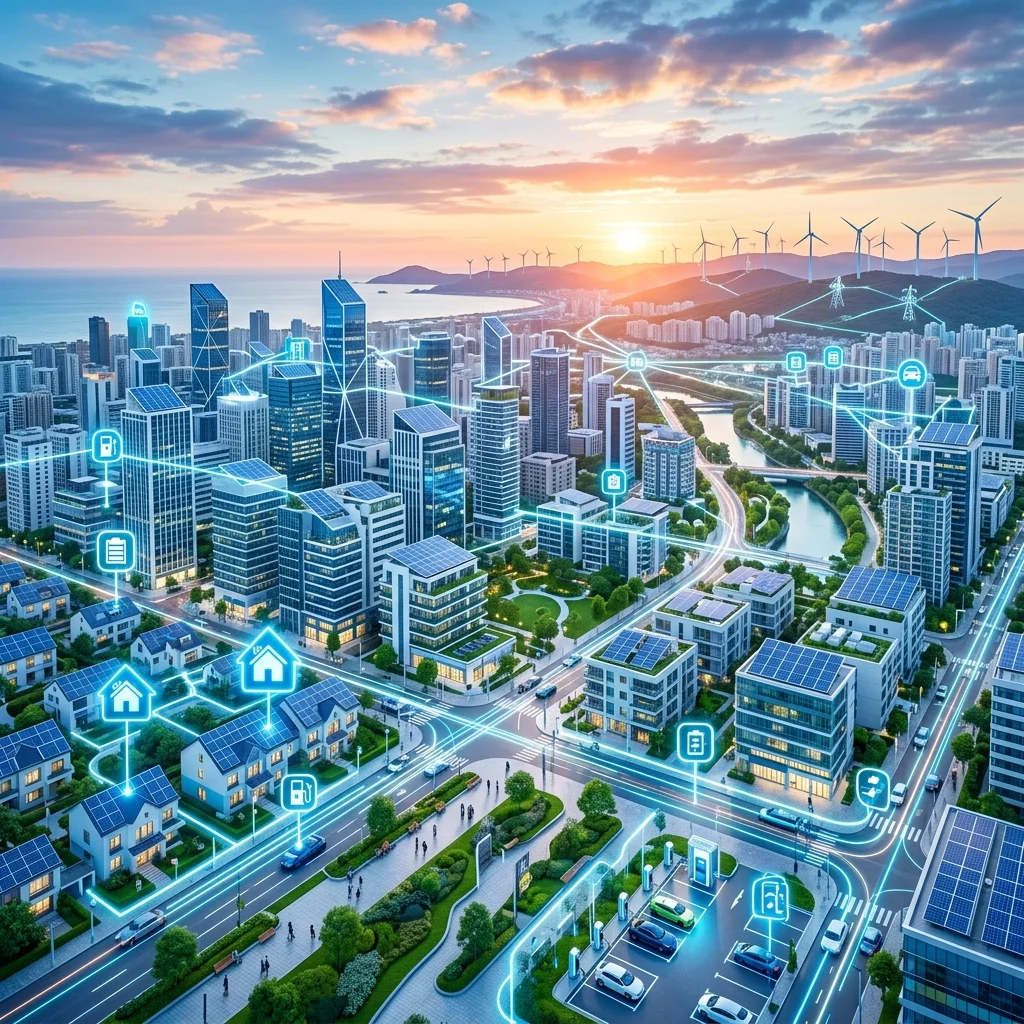
[IMAGE: A wide-angle view of a futuristic city skyline at sunrise, with solar panels covering rooftops and glass facades, multiple wind turbines spinning on a distant hillside, and glowing digital network lines overlaying the scene connecting homes, batteries, and charging stations. The image should convey a clean, high-tech energy ecosystem with no text or watermarks, using a palette of blue, white, and green.]
Keywords

Omar Hassan
Energy Correspondent tracking OPEC+ policies and renewable energy transitions.