Waymo''s 2026 Protocol Shift: How Robotaxi Emergency Keys Signal the Maturation of Autonomous Fleets
In March 2026, Waymo announced a pivotal update to its emergency response protocols, introducing a physical key fob system for first responders to manually move stopped autonomous vehicles. This seemingly minor procedural tweak reveals a deeper industry inflection point: the transition from proving technological feasibility to managing large-scale, real-world fleet operations. The move, coupled with training over 150,000 first responders, underscores the critical shift towards institutional integration and operational resilience. This article analyzes how this protocol change reflects the maturing economics of robotaxis, the evolving interface between AI systems and human authorities, and the hidden logistical challenges that will define the next phase of autonomous mobility.
Layla Ibrahim
Editorial Analyst
Waymo's 2026 Protocol Shift: How Robotaxi Emergency Keys Signal the Maturation of Autonomous Fleets
Opening Summary
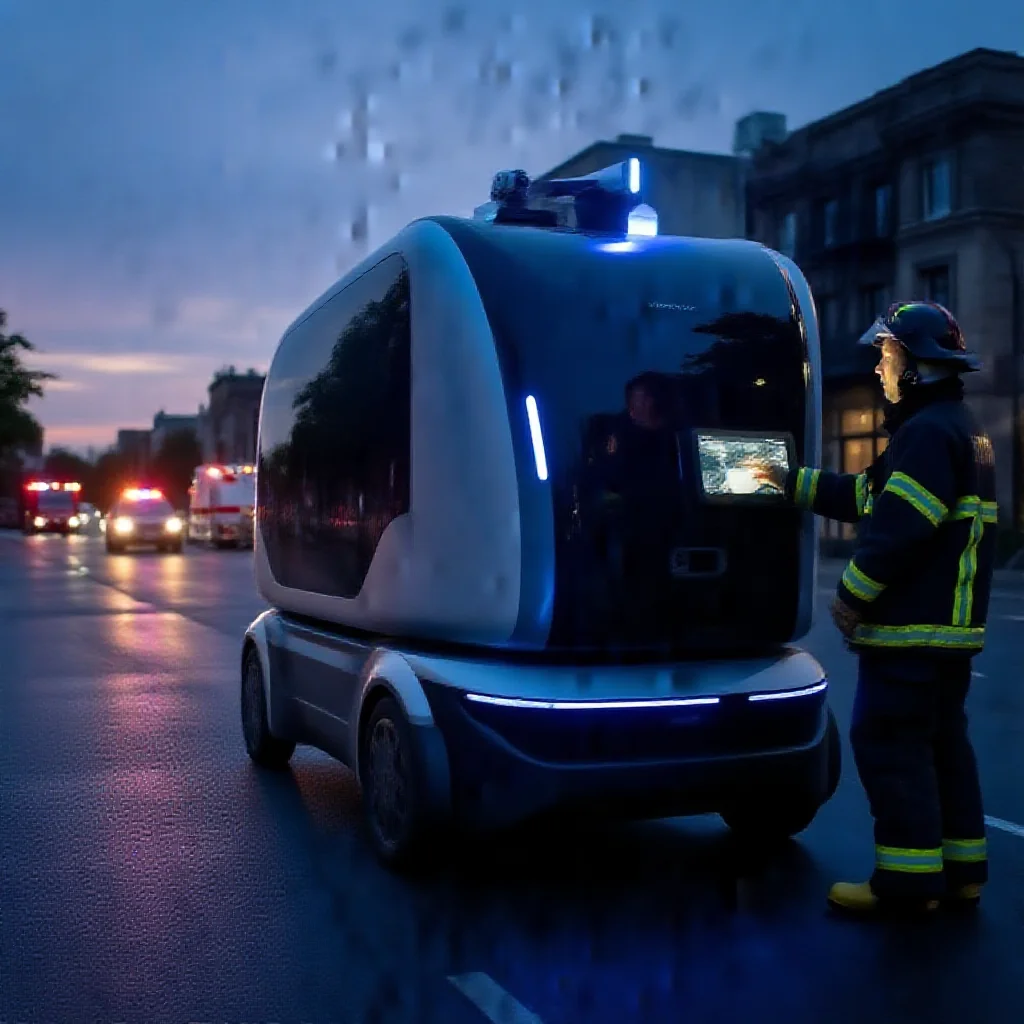
In March 2026, Waymo announced a substantive update to its emergency response protocols for autonomous vehicles. The update introduced a new procedure wherein first responders can use a physical key fob and follow on-screen instructions to manually move a stopped Waymo vehicle (Source 1: [Primary Data]). The stated purpose is to address scenarios where a vehicle is obstructing traffic or access. Concurrently, Waymo reported having trained over 150,000 first responders across its operational territories (Source 1: [Primary Data]). This procedural adjustment represents a critical inflection point for the autonomous vehicle industry, shifting focus from technological validation to the management of large-scale fleet operations.
Beyond the Key Fob: Decoding Waymo's Move as a Fleet Operations Milestone
The March 2026 protocol update functions as a signal of operational scale rather than a mere safety enhancement. Early-phase autonomous vehicle development prioritized sensor suites and software algorithms to avoid incidents. The mature-phase, evidenced by this update, necessitates robust systems to manage inevitable operational anomalies, such as mechanical failure, network disruption, or unforeseen road conditions. The capacity for authorized third parties to safely intervene transforms an isolated software problem into a manageable logistical event. This shift establishes manual override protocols as a new critical metric for commercial viability. Public and municipal trust is no longer contingent solely on an autonomous system's ability to drive but equally on its designed capacity to be managed by human authorities when required.The Hidden Economics: Why Institutional Training is the New MoAT
The strategic investment in training over 150,000 first responders constitutes a significant economic and operational barrier to entry (Source 1: [Primary Data]). This sunk cost creates a formidable moat; new market entrants must replicate not only the technology but also this vast, city-by-city institutional integration effort. The protocol itself functions as a de facto "license to operate" within complex urban environments, a credential potentially more substantive than regulatory permits alone. From a financial perspective, standardized human-AV interaction procedures directly impact liability frameworks and insurance models. By providing first responders with clear, tested, and reliable methods of interaction, Waymo systematically reduces ambiguity in crisis scenarios, thereby mitigating risk and potentially lowering associated insurance premiums for large-scale fleet deployment.The Interface is the Product: Designing for Crisis Human Factors
The human-machine interface (HMI) design for emergency scenarios reveals a sophisticated understanding of operational psychology. The choice of a physical key fob over a smartphone application is a deliberate engineering decision prioritizing reliability, universality, and tactile feedback under high-stress conditions where digital connectivity or software compatibility cannot be guaranteed. The supplementary on-screen instructions are designed for clarity under duress, moving beyond the "happy path" of normal operation to address critical edge cases. This design philosophy prioritizes systemic resilience. The physical and digital interface for first responders is not an afterthought but a core product component that acknowledges the complete lifecycle of a vehicle in public service, including its non-autonomous moments.The Ripple Effect: Implications for Infrastructure and Competing Models
Waymo's protocol establishes a precedent with industry-wide implications. A pressing question for municipal authorities is whether to standardize autonomous vehicle emergency protocols across all operating companies to avoid requiring first responders to learn multiple, potentially conflicting, systems for different vehicle brands. This could drive demand for standardized emergency access hardware—physical ports, communication protocols, or beacon systems—within future automotive supply chains, affecting vehicle design for both autonomous and human-driven models. Competing autonomous fleet operators must now formulate their strategic response. The alternative to a physical key system may involve more advanced remote tele-assistance or different forms of secure digital authentication. Waymo's approach sets a tangible benchmark for operational readiness that competitors will be measured against by city planners and public safety agencies.Neutral Market/Industry Predictions
The 2026 protocol update indicates the autonomous vehicle industry's next phase will be defined by logistical integration and operational scalability. The competitive landscape will increasingly favor entities that can demonstrate not only technological superiority but also deep institutional partnerships and proven protocols for real-world fleet management. Regulatory frameworks will likely evolve to codify such emergency interface standards. The focus of industry investment is predicted to shift further toward fleet management software, human-system interaction design, and large-scale training infrastructure, solidifying the transition from research-centric projects to durable transportation services.
Keywords

Layla Ibrahim
Technology Reporter covering fintech, AI, and startup ecosystems in the Gulf.