Beyond $2 Billion: Decoding China''s Strategic Aluminum Plant Investment in Egypt''s Suez Canal Zone
A Chinese firm's planned $2 billion aluminum plant in Egypt's Suez Canal Economic Zone is more than a simple industrial project. This analysis positions it as a strategic node in global supply chain realignment, driven by energy costs, geopolitical hedging, and China's "Belt and Road" industrial policy. We examine how this move capitalizes on Egypt's geographic and trade agreement advantages to secure a competitive, Europe-facing production base, potentially altering regional aluminum flows and signaling a new phase of Chinese overseas industrial investment focused on integrated complexes rather than isolated infrastructure.
Fatima Al-Zahra
Editorial Analyst
Beyond $2 Billion: Decoding China's Strategic Aluminum Plant Investment in Egypt's Suez Canal Zone
The Surface Fact: A $2 Billion Bet on Egyptian Industry
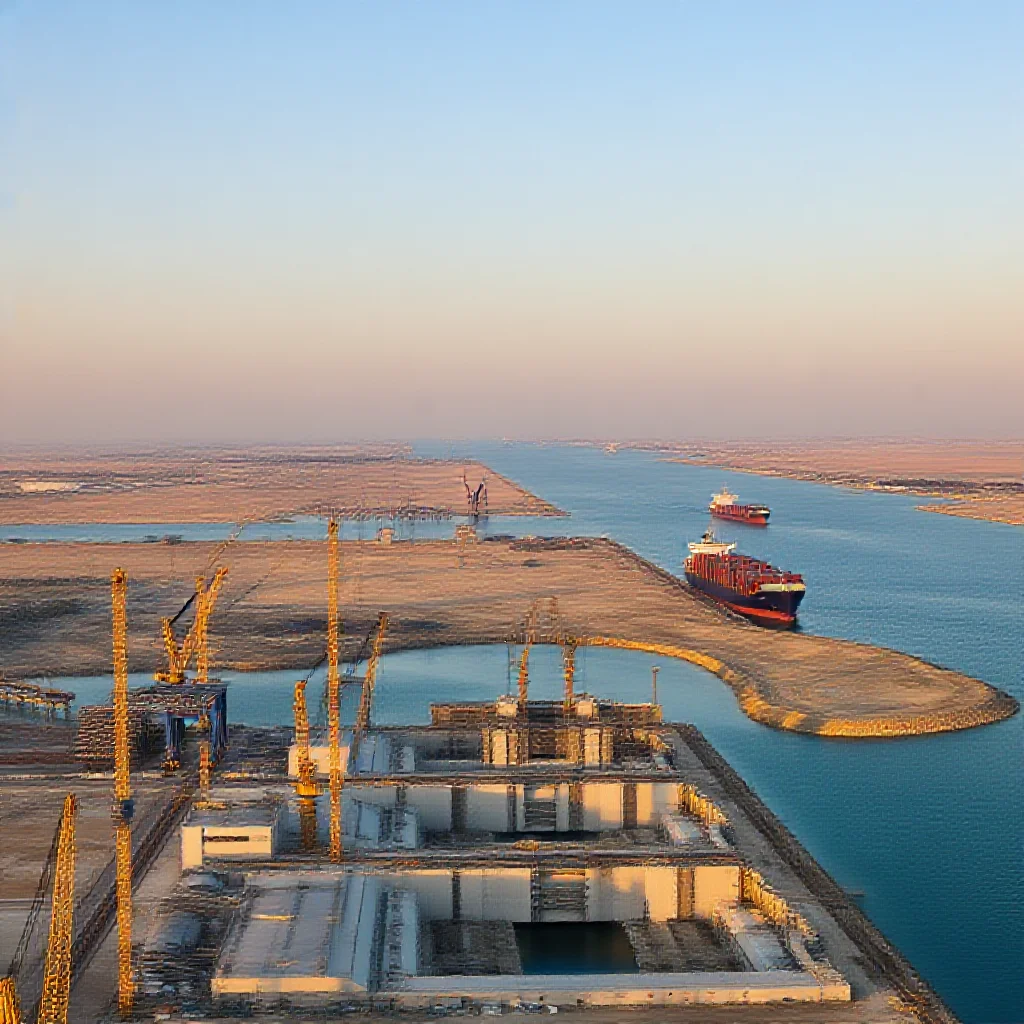
A Chinese industrial firm has announced plans to construct an aluminum plant in Egypt with an estimated investment value of $2 billion (Source 1: [Primary Data]). The designated location is the Suez Canal Economic Zone (SCZone), a flagship development corridor encompassing ports and industrial land along the critical maritime waterway. Official project registrations with Chinese overseas investment authorities and statements from the SCZone management body provide initial verification for the proposal. Notably, the project is described as part of a "larger industrial complex," indicating a scope beyond a single smelter. This suggests a vertically integrated facility, potentially encompassing processes from alumina processing to the production of semi-finished aluminum products, designed to capture more value within the zone itself.![An infographic map highlighting the Suez Canal Economic Zone's key zones and its connectivity to global shipping routes.]
The Core Axis: Energy, Geography, and Hedging Global Risks
The underlying economic logic for this investment is multi-dimensional and extends far beyond capital expenditure. First, aluminum smelting is profoundly energy-intensive. China's domestic production faces rising energy costs and stringent carbon reduction policies. Egypt, in contrast, possesses established natural gas infrastructure and significant potential for solar and wind power, offering a potential long-term cost advantage for energy-intensive industries (Source 2: [Industry Analysis]).Second, the geographic calculus is paramount. The SCZone provides unparalleled logistics: direct deep-water port access to the Suez Canal, the artery of Eurasia trade. Furthermore, Egypt's network of trade agreements—including Qualified Industrial Zone status with the United States, association with the European Union, and membership in the African Continental Free Trade Area—grants tariff-free or preferential access to markets encompassing hundreds of millions of consumers.
Third, the move represents a clear hedging strategy. It diversifies China's aluminum production footprint, mitigating concentrated risks. These risks include domestic environmental policy pressures, escalating trade tensions with Western economies that could target Chinese metal exports, and the inherent vulnerability of long maritime supply chains required to transport raw materials like bauxite and alumina to Chinese smelters.
![A comparative chart visualizing estimated energy costs for aluminum production in China vs. Egypt, and a map showing trade agreement blocs accessible from Egypt.]
Slow Analysis: This is a Supply Chain Pattern, Not a One-Off Deal
This investment is not an isolated event but a manifestation of a discernible pattern in Chinese overseas industrial strategy, often termed "capacity cooperation." This model involves relocating energy-heavy, mid-stream industrial processes to partner nations that offer complementary advantages in resource access, energy costs, and market proximity.The long-term impact on the global aluminum supply chain could be significant. A vertically integrated complex in the SCZone would establish a new, efficient production node strategically positioned to serve the European market. This could pressure traditional suppliers and gradually reshape regional trade flows for semi-finished and primary aluminum. The emphasis on an "industrial complex" underscores an intent to create a localized manufacturing ecosystem. This reduces logistical friction between production stages, increases the portion of value captured within Egypt, and aligns with the Egyptian government's stated goals for technology transfer and industrial deepening.
![A flow diagram illustrating the shift from a centralized China-centric aluminum supply chain to a more distributed model with production nodes like Egypt serving regional markets.]
The Unspoken Strategic Calculus and Future Implications
The strategic calculus integrates industrial policy with geopolitical and economic resilience. The project aligns with the Belt and Road Initiative's evolution from building connective infrastructure to establishing integrated industrial parks that anchor supply chains. For China, it secures a forward-operating base for a critical industrial material, insulating downstream manufacturing from potential trade barriers.For global markets, this signals a new phase of Chinese overseas investment focused on creating competitive, market-facing production assets rather than solely funding infrastructure. The success of such a complex could catalyze similar investments in other energy-abundant, geographically strategic nations, accelerating the fragmentation and regionalization of certain heavy industrial supply chains.
Market and industry predictions remain contingent on execution. Key variables include the finalization of energy supply contracts, the technological configuration of the plant, and the evolving regulatory environment in both Egypt and destination markets. However, the announcement itself is a strong indicator of where capital and strategy are converging: on securing resilient, cost-competitive, and geopolitically diversified production capacity for foundational industries in the world's most strategic corridors.
Keywords

Fatima Al-Zahra
Real Estate Editor specializing in Dubai and Riyadh mega-projects.