Beyond NVIDIA: How Samsung & AMD''s 2026 AI-RAN GPU Alliance Reshapes Telecom Economics
Samsung and AMD's collaboration to deploy AI-RAN GPU technology at commercial scale by 2026 is not merely a technical partnership; it's a strategic market intervention. This analysis reveals the move as a calculated effort to dismantle the GPU vendor lock-in that currently dominates AI-powered telecom infrastructure, primarily held by NVIDIA. By targeting the Radio Access Network (RAN), the alliance aims to create a new, open ecosystem for AI processing at the network edge, fundamentally altering cost structures and competitive dynamics for global telecom operators. The 2026 timeline signals a long-term play to establish a second source in a critical, high-margin segment before 6G standards solidify.
Layla Ibrahim
Editorial Analyst
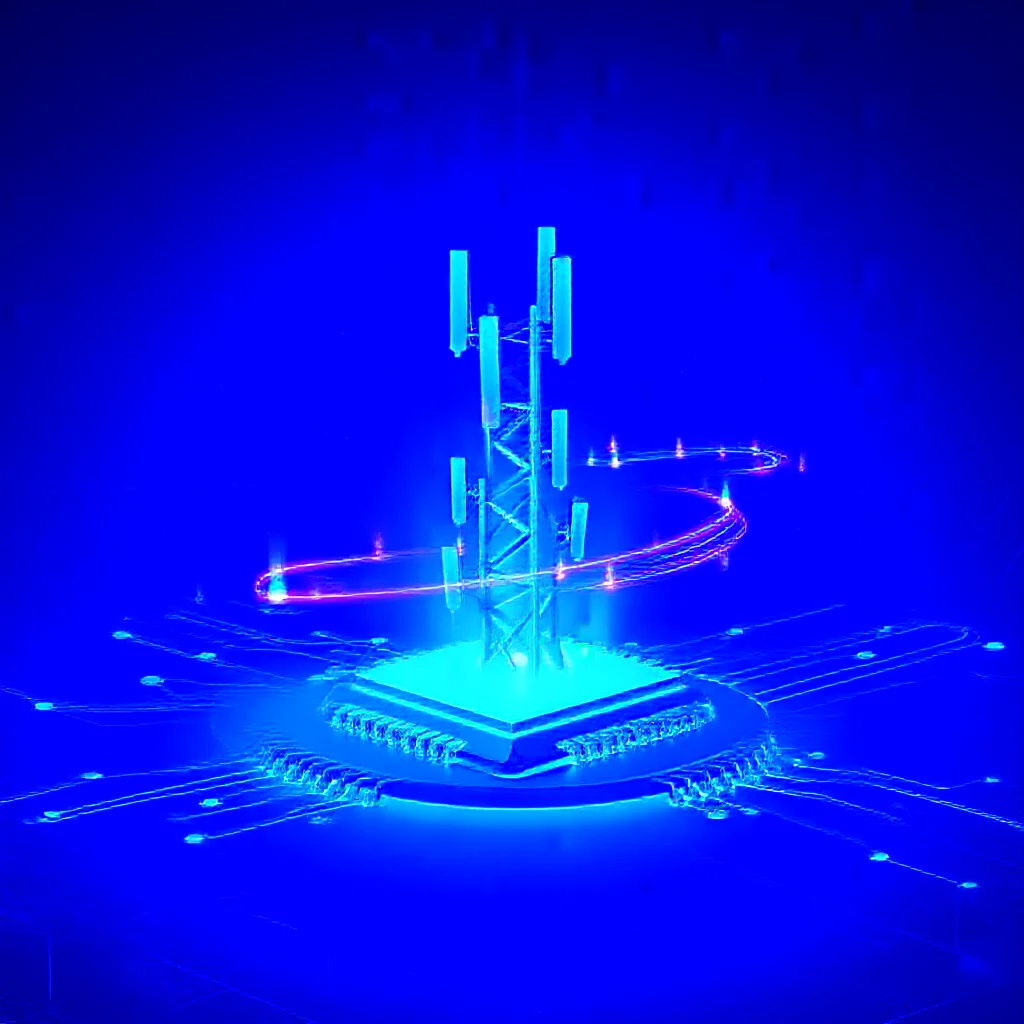
Beyond NVIDIA: How Samsung & AMD's 2026 AI-RAN GPU Alliance Reshapes Telecom Economics
Opening Summary
Samsung Electronics and Advanced Micro Devices (AMD) have initiated a collaboration to develop and deploy GPU-accelerated AI technology for Radio Access Networks (AI-RAN) at commercial scale, with a target timeline of 2026. The partnership explicitly aims to dismantle existing GPU vendor lock-in within telecom infrastructure. This move represents a strategic intervention in the high-margin AI compute segment, targeting the foundational layer of next-generation wireless networks.---
The Strategic Calculus: Breaking the AI Infrastructure Monopoly
The current architecture of AI-powered telecom networks is characterized by a significant supply-chain concentration. NVIDIA’s dominance in data center AI training and inference has created a de facto standard, leading to procurement bottlenecks and constrained pricing flexibility for network operators. The term "GPU vendor lock-in" refers to this market condition where a single supplier’s architectural ecosystem becomes entrenched, potentially stifling innovation and inflating total cost of ownership.The Samsung-AMD alliance is structured around complementary weaknesses relative to the incumbent. AMD provides high-performance compute architecture through its Instinct GPU portfolio but lacks deep integration pathways into carrier-grade telecom hardware. Samsung possesses global scale in network infrastructure, proven vRAN capabilities, and direct operator relationships, but lacks a competitive, high-performance AI accelerator solution. Their collaboration is a direct challenge to a vertically integrated competitor by creating an alternative, open ecosystem. The selection of 2026 for commercial deployment serves as a strategic market signal. It positions the alliance as a credible alternative before global telecom operators finalize capital expenditure plans for advanced 5G-Advanced and early 6G infrastructure, which will be heavily reliant on edge AI processing.
!Infographic showing AI GPU market concentration
AI-RAN Demystified: More Than Just Faster Chips
AI-RAN represents the migration of AI inference workloads from centralized cloud data centers to the distributed nodes of the radio access network itself. This shift is not merely about computational speed but about network topology and economic efficiency. In a traditional RAN, raw data is often backhauled to a central location for processing. AI-RAN embeds processing at the cell site or aggregation point, enabling real-time optimization of spectrum use, beamforming, and handovers.The economic imperative is clear. On-site AI processing drastically reduces latency, which is critical for applications like autonomous systems and extended reality. It also alleviates massive bandwidth demands on backhaul networks, lowering operational expenses. Furthermore, it unlocks new revenue-generating services for operators, such as dynamic, ultra-reliable network slicing for enterprise IoT or mission-critical applications. The suitability of GPUs for this task, as opposed to traditional fixed-function ASICs or DSPs, stems from the flexible and evolving nature of AI algorithms. GPU architectures are inherently more adaptable to the varied and future-proof workloads required for intelligent network management.
!Diagram comparing Traditional RAN vs. AI-RAN data flow
The Ripple Effect: Supply Chain and Operator Power Dynamics
The primary supply chain effect of this collaboration is the intentional creation of a viable second source for a critical component. (Source 1: [Industry Analysis]) Market analyses from firms such as Dell'Oro Group and MTN Consulting consistently highlight operator concerns over vendor concentration in advanced RAN capabilities. A competitive AI accelerator market would grant telecom operators increased bargaining power and procurement flexibility, potentially improving margins and accelerating innovation cycles.This move will create ripple effects across the broader ecosystem. It presents significant opportunities for open software vendors like Mavenir and Rakuten Symphony, whose stack-agnostic solutions could integrate more seamlessly with a multi-vendor hardware layer. Conversely, it poses a challenge to integrated rivals like Ericsson and Huawei, who may face pressure to open their own hardware architectures or accelerate in-house AI silicon development. The long-term strategic play extends to 6G. By establishing a hardware-software foundation now, the Samsung-AMD alliance aims to influence the standardization of open interfaces for AI processing at the edge, thereby positioning itself to capture the inevitable 6G upgrade cycle later this decade.
!Conceptual map of telecom supply chain with new GPU pathway
Verification and Challenges: The Road to 2026
The technical feasibility of this alliance is underpinned by prior, separate advancements from both companies. (Source 2: [Technical Feasibility]) AMD’s Instinct GPUs have secured deployments in high-performance computing (HPC) and hyperscale data centers, validating their compute architecture. Samsung has conducted extensive virtualized RAN (vRAN) trials and deployments, demonstrating proficiency in carrier-grade network software and hardware integration. The collaboration’s premise is the convergence of these two proven competencies.Significant hurdles remain. The integration of high-power-density GPUs into thermally and power-constrained cell site environments presents an engineering challenge. Developing a unified software stack that bridges AMD’s ROCm ecosystem with Samsung’s RAN software and meets stringent telecom reliability standards will be complex. Furthermore, the alliance must convince operators of its long-term commitment and support, overcoming the inertia of an established, single-vendor ecosystem. Market success will depend on demonstrating not just parity, but a clear total-cost-of-ownership or performance advantage over the incumbent solution.
Neutral Market and Industry Predictions
The commercial deployment of Samsung and AMD’s AI-RAN solution in 2026 will likely initiate a period of intensified competition in the edge AI infrastructure market for telecommunications. This competition is predicted to yield two primary outcomes: a gradual moderation of hardware pricing for AI-accelerated RAN components and an accelerated pace of innovation in network optimization algorithms as software developers target an open, multi-vendor hardware landscape. The alliance may also catalyze other chipset vendors to enter the telecom-specific AI accelerator space, further fragmenting the supply chain. The ultimate impact on market share will be determined by execution fidelity between now and 2026, but the partnership has already altered the strategic calculus for all stakeholders in the next-generation network supply chain.Keywords

Layla Ibrahim
Technology Reporter covering fintech, AI, and startup ecosystems in the Gulf.