Beyond Desalination: Why Stormwater, Not Seawater, Is Now the UAE''s Top Water Investment Priority
Recent data reveals a significant strategic pivot in the UAE's water security strategy. While desalination has long been synonymous with Gulf water policy, it accounted for only 12% of total water project awards last year. The dominant focus has shifted decisively to stormwater drainage infrastructure. This article analyzes the underlying drivers of this shift, exploring how climate change adaptation, urban resilience, and economic diversification are reshaping national investment priorities. We examine the long-term implications for supply chains, engineering firms, and the region's broader environmental management paradigm, moving beyond the simplistic narrative of perpetual desalination expansion.
Sarah Al-Qasimi
Editorial Analyst
Beyond Desalination: Why Stormwater, Not Seawater, Is Now the UAE's Top Water Investment Priority
Recent data reveals a significant strategic pivot in the UAE's water security strategy. While desalination has long been synonymous with Gulf water policy, it accounted for only 12% of total water project awards last year. The dominant focus has shifted decisively to stormwater drainage infrastructure. This article analyzes the underlying drivers of this shift, exploring how climate change adaptation, urban resilience, and economic diversification are reshaping national investment priorities. We examine the long-term implications for supply chains, engineering firms, and the region's broader environmental management paradigm, moving beyond the simplistic narrative of perpetual desalination expansion.
The Data Point: A Quiet Revolution in UAE Water Spending
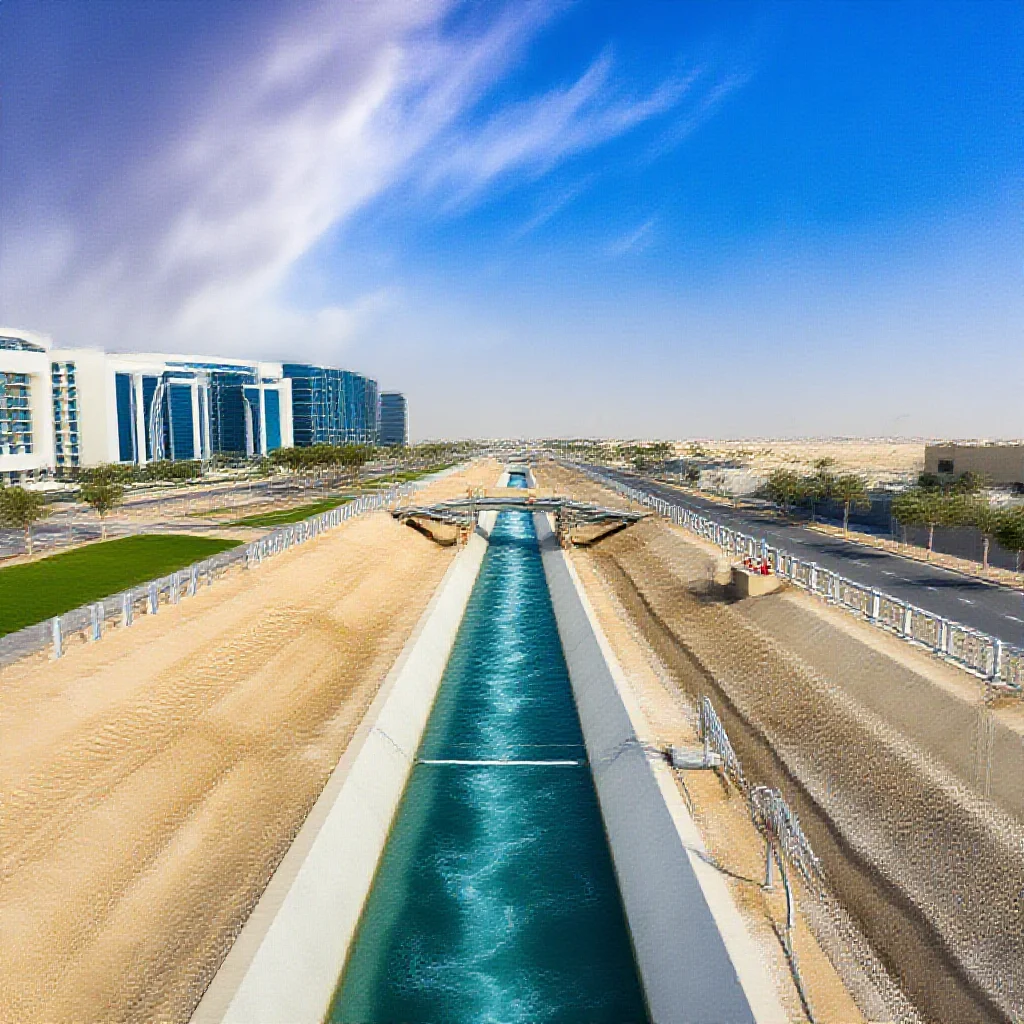
A recalibration of capital allocation in the UAE’s water sector has occurred. Analysis of project awards from the previous fiscal year indicates that desalination initiatives constituted a minority share of total investment. Specifically, desalination projects accounted for only 12% of total awards last year (Source 1: [Primary Data]). This figure contrasts sharply with the historical narrative of desalination as the unchallenged cornerstone of Gulf water policy. The dominant allocation of capital has been redirected toward stormwater drainage and related flood management infrastructure. This distribution of awards establishes the recent period as a potential inflection point, signaling a substantive reprioritization within national water security planning.
Decoding the Shift: From Supply-Side Fixes to Resilience Engineering
The investment pivot from desalination to stormwater management is driven by a fundamental economic and climatic logic. The strategy is evolving from a singular focus on creating new water supplies to a more complex imperative of protecting existing economic assets. The marginal cost of producing additional cubic meters of desalinated water is being weighed against the potentially catastrophic economic cost of urban flooding. This calculus is informed by climate projections indicating an increase in the frequency and intensity of extreme convective rainfall events in the Arabian Peninsula, a trend documented in studies by regional meteorological authorities.
Consequently, investment in stormwater drainage is no longer a peripheral civic concern but a core component of economic risk management. It is directly linked to protecting high-value urban real estate, critical transportation networks, and strategic infrastructure. This shift enhances urban livability, safeguards property valuations, and reduces systemic insurance and business continuity risks. The investment is a defensive expenditure necessitated by the tangible, observed, and projected impacts of a changing climate on regional weather patterns.
The Ripple Effect: Supply Chain and Market Realignments
This reallocation of public investment triggers a parallel realignment in relevant industrial supply chains and service markets. Demand is shifting from the specialized high-tech manufacturers of reverse osmosis membranes and thermal distillation components toward the providers of large-scale civil engineering solutions. The primary beneficiaries are now likely to be firms specializing in civil works, bulk concrete supply, and the manufacturing of large-diameter drainage pipes and culverts.
The competitive landscape for engineering, procurement, and construction (EPC) contracts is similarly affected. Contractors with proven portfolios in major urban drainage, tunneling, and flood mitigation schemes are positioned to capture a larger share of the water sector budget. Conversely, the near-term growth trajectory for the desalination industry within the UAE market may experience a relative plateau or consolidation, as national priority projects shift to a different domain of water infrastructure.
Strategic Implications: Redefining 'Water Security' for the 21st Century
The investment trend is not interpreted as a temporary budgetary anomaly but as evidence of a strategic redefinition of "water security." The concept is expanding beyond the assurance of potable water supply to encompass the comprehensive management of all water phases, including the mitigation of destructive hydrological excess. This holistic view aligns with broader national agendas, such as the UAE Net Zero by 2050 Strategic Initiative, by emphasizing the protection of built and natural assets from climate-induced disruption.
Furthermore, this infrastructure lays the groundwork for more integrated water management frameworks. Modern stormwater drainage systems can be designed not only for conveyance and discharge but also for temporary retention, treatment, and potential reuse or managed aquifer recharge. This creates a potential nexus where infrastructure for managing water surplus could eventually contribute to augmenting water reserves, embodying circular economy principles within the water sector.
Looking Ahead: The New Blueprint for Arid Nations
The UAE's strategic pivot presents a potential blueprint for other arid Gulf Cooperation Council (GCC) nations confronting identical climate vulnerabilities—intensifying rainfall extremes superimposed upon chronic aridity. The balance between maintaining essential desalination capacity for baseline demand and investing heavily in climate resilience infrastructure will define the next era of regional water policy.
The long-term outlook suggests a more diversified and resilient water sector model. Future investment cycles will likely see sustained capital flows into drainage and flood protection, complemented by strategic, efficiency-driven upgrades to the existing desalination fleet rather than unchecked expansion. The ultimate outcome is a national water management paradigm that is equally adept at addressing scarcity and surplus, reflecting a mature and adaptive approach to 21st-century environmental and economic challenges.
Keywords

Sarah Al-Qasimi
Chief Editor leading investigative reports on Gulf business and policy.