Century of Insight: How Gulf Energy Information Evolved to Power Global Energy Markets
From a single oil-field newsletter in 1916 to a multi-brand intelligence powerhouse acquired by CompareNetworks in 2025, Gulf Energy Information has mirrored the energy industry’s tectonic shifts. This article traces the company’s 100+ year journey through ownership changes, brand launches, and market pivots—revealing how its evolution from publisher to data-driven intelligence provider reflects the deeper transformation of global energy markets. We explore the strategic logic behind each acquisition, the emergence of new verticals like hydrogen and carbon, and what Gulf’s trajectory tells us about the future of energy information.
Omar Hassan
Editorial Analyst
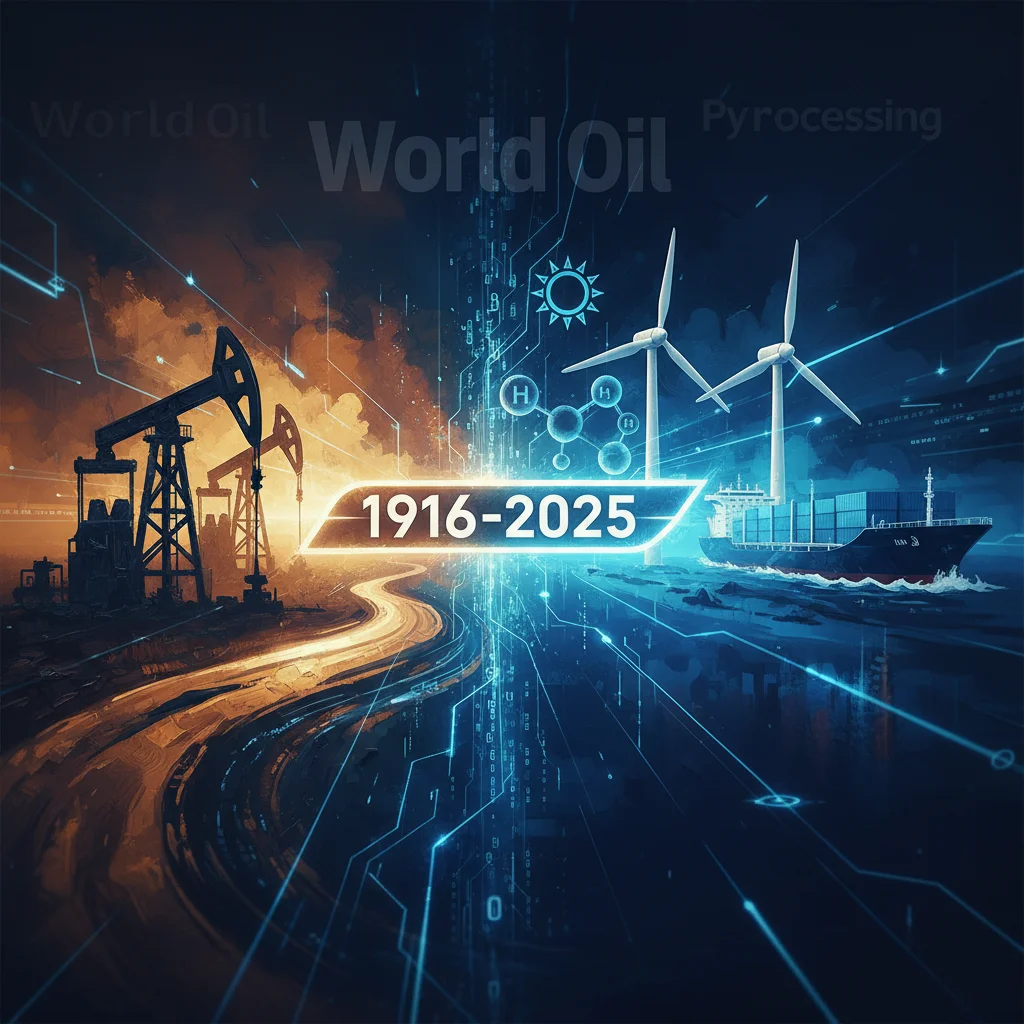
Century of Insight: How Gulf Energy Information Evolved to Power Global Energy Markets
Introduction: The Information Backbone of Energy Markets
Energy markets do not move on crude alone. They run on data, forecasts, and trusted analysis—the invisible infrastructure that connects drillers, refiners, traders, and policymakers. For more than a century, one company has quietly supplied that infrastructure: Gulf Energy Information, born as a single oil-field newsletter in 1916. Its longevity is remarkable, especially in an industry where publishers routinely consolidate or collapse. Why does a niche information provider survive—and thrive—through depressions, world wars, price collapses, and the accelerating energy transition? The answer lies in a series of calculated pivots, each mirroring a tectonic shift in the global energy landscape. From Gulf Coast Oil News to a multi-brand intelligence powerhouse acquired by CompareNetworks in early 2025, Gulf’s evolution from print publisher to data-driven market intelligence provider tells a deeper story about how the energy industry itself has learned to see, measure, and plan for the future.
[IMAGE: Vintage photo of the first Gulf Coast Oil News issue alongside a modern dashboard of Gulf’s Energy Web Atlas.]
---
1916–1950s: Birth of an Oil & Gas Media Dynasty
Gulf Publishing Company was founded in 1916 in Houston, Texas, at the dawn of the state’s oil boom. The first magazine, Gulf Coast Oil News, catered to a small but rapidly growing community of wildcatters, geologists, and equipment suppliers operating in the patch between Beaumont and the Gulf of Mexico. It was a gritty, practical publication—field reports, rig counts, and classifieds for drill bits.
As the industry expanded, so did Gulf’s portfolio. In 1918, the magazine was rebranded Oil Weekly to reflect a broader audience. Then, in 1947, it became World Oil—a name that signaled the company’s ambition to track exploration and production beyond the United States. World Oil quickly established itself as the go-to source for upstream data, annual drilling forecasts, and technical articles that engineers actually kept in their field offices.
Two other bold moves cemented Gulf’s early dominance. In 1927, the company launched the Composite Catalog—a massive, regularly updated directory of oilfield equipment, specifications, and manufacturers. For decades, the “Composite” sat on every drilling superintendent’s desk, functioning as both a Yellow Pages and a technical reference manual. It was a pioneering example of market intelligence before the term existed.
Simultaneously, Gulf expanded vertically into refining and pipelines. Refiner & Natural Gasoline Manufacturer (later Hydrocarbon Processing) covered downstream operations, while Pipe Line Industry addressed the midstream. By the 1950s, Gulf had built a media ecosystem that mirrored the industry’s own value chain—upstream, midstream, downstream—long before “integration” became a buzzword.
[IMAGE: Historical cover of the Composite Catalog with oilfield equipment diagrams, circa 1930s.]
---
1960s–1990s: From Print to Data – The Construction Boxscore Era
The post-war energy boom brought offshore drilling, international exploration, and megaprojects. Gulf responded with its 1966 acquisition of Ocean Industry, a magazine dedicated to the burgeoning offshore sector. But the most consequential move came in 1975: the launch of the Construction Boxscore.
The Boxscore was a database—originally printed in tabular form—that tracked every active oil, gas, and petrochemical construction project worldwide. It listed location, capacity, contractor, status, and completion date. For project managers, engineers, and investors, the Boxscore was transformative. It turned scattered project announcements into a structured, searchable dataset. This was Gulf’s first deliberate step from pure publishing toward market intelligence.
As natural gas gained prominence in the 1990s, Gulf rebranded Pipe Line Industry as Pipe Line & Gas Industry in 1995. The name change acknowledged that midstream was no longer just about crude pipelines. The magazine’s reporting expanded to include gas storage, LNG terminals, and regulatory shifts. Meanwhile, the Boxscore became an indispensable tool for estimating capital expenditure flows and competitive landscapes. Gulf’s coverage was no longer US-centric; its editors tracked projects from Sakhalin to Nigeria to the North Sea.
[IMAGE: Screenshot of a 1980s Construction Boxscore print edition next to a modern digital platform showing real-time project tracking.]
---
2000–2016: Ownership Shuffles and Strategic Independence
The new millennium brought volatility—not just in oil prices but in Gulf’s own corporate structure. In 2000, Gulf Publishing was purchased by private investors. A year later, it was sold to Euromoney Institutional Investor plc, a London-based financial information group. Under Euromoney, Gulf gained access to deeper financial analytics resources, but also faced pressure to operate within a larger portfolio of business-to-business media.
In 2004, Gulf launched the Women’s Global Leadership Conference in Energy. Initially a modest networking event, it grew into a flagship annual gathering that now draws hundreds of senior executives and is recognized as one of the industry’s most important forums for diversity and leadership.
The shale gas revolution of the late 2000s reshaped energy markets, and Gulf responded by launching Gas Processing magazine in 2013. The title covered the midstream processing, treating, and liquefaction of natural gas—a segment that exploded as US shale production surged.
Then came 2016. A management buyout, led by Gulf’s own executives, returned the company to independence. The new leadership described it as a “return to roots,” but the move was strategic: free from a parent company’s quarterly targets, Gulf could invest in digital transformation and acquisitions. The first major purchase was Petroleum Economist, a London-based magazine covering global energy finance and geopolitics. That acquisition filled a critical gap: Gulf now had a brand that spoke to traders, bankers, and energy ministers, complementing its existing technical audience.
[IMAGE: Photo from the 2016 management team press conference, or the Petroleum Economist logo integrated with Gulf’s brand.]
---
2017–2025: The Data-Driven Transformation and CompareNetworks Acquisition
The second century of Gulf Energy Information began with a digital overhaul. Legacy print products were reimagined as integrated data services. The Construction Boxscore evolved into an online database with API access, custom alerts, and historical trend analysis. World Oil and Hydrocarbon Processing built out webinars, paid research reports, and subscription-based intelligence platforms. The company also introduced the Energy Web Atlas, a geospatial tool that overlays project data, pipeline routes, and refinery locations onto interactive maps.
A pivotal development was the creation of a dedicated market intelligence division. Gulf began producing long-term outlooks for hydrogen, carbon capture, and LNG—vertical markets that barely existed a decade earlier. The company recognized that as the energy transition accelerated, its clients needed information on low-carbon technologies as urgently as on oil and gas. Editorial teams started covering hydrogen hubs, CCUS projects, and renewable fuels. The brand portfolio expanded organically, but the core insight remained: the industry’s information needs were becoming more granular, more cross-sector, and more predictive.
In 2021, Gulf acquired certain assets from Industrial Info Resources to strengthen its project intelligence capabilities. The pace of digital subscriptions accelerated, and for the first time, data revenue surpassed print advertising.
The climax of this transformation came in early 2025, when CompareNetworks, a technology-driven data and analytics company, acquired Gulf Energy Information. The acquisition was not a merger of equal publishers but a union of expertise: CompareNetworks brought machine learning, AI-based data extraction, and a scalable cloud platform, while Gulf contributed century-old domain knowledge, curated datasets, and trusted brand relationships with every major oil company, contractor, and engineering firm in the world.
Critics initially wondered whether a family-run information business could integrate into a tech company without losing its editorial soul. But early signs suggest that CompareNetworks values Gulf’s editorial independence—the same independence that allowed Gulf to pivot from print to data, from oil to hydrogen, and from Houston to global markets.
[IMAGE: Infographic showing Gulf’s project database growth from 1975 to 2025, with a note on the CompareNetworks acquisition date.]
---
Conclusion: What Gulf’s Trajectory Tells Us About the Future of Energy Information
Gulf Energy Information’s 109-year journey is a case study in resilience through reinvention. The company survived the Great Depression, two world wars, the 1980s oil glut, the 2014 price crash, and the COVID-19 demand shock. It outlasted dozens of competitors. The secret was never a single product or market; it was the willingness to follow where energy markets led—to new geographies, new technologies, and new formats.
Today, the company’s portfolio includes World Oil, Hydrocarbon Processing, Gas Processing, Petroleum Economist, the Energy Web Atlas, and the Construction Boxscore database. It covers the entire energy value chain from upstream exploration to downstream petrochemicals to the emerging hydrogen and carbon management sectors. Its audience ranges from drilling engineers in the Permian Basin to strategic planners at European utilities to government analysts in the Middle East.
The CompareNetworks acquisition in 2025 marks the beginning of a new chapter. If the past century is any guide, Gulf will continue to adapt—embedding AI into project tracking, expanding carbon market data, and perhaps one day covering fusion or advanced geothermal with the same rigor it once applied to oil wells. The company’s evolution from a single newsletter to an intelligence platform is not just a corporate history; it is a mirror reflecting the energy industry’s own transformation from analog to digital, from fossil-centric to multi-vector, and from reactive to forward-looking.
For those who track energy markets, Gulf Energy Information remains what it has always been: the quiet backbone of insight.
[IMAGE: Abstract timeline merging a vintage oil derrick silhouette with a hydrogen molecule icon and a modern laptop screen showing data dashboards. No text overlay.]
Keywords

Omar Hassan
Energy Correspondent tracking OPEC+ policies and renewable energy transitions.