From Oil to Security: How Geopolitical Risk is Reshaping Saudi Arabia''s Investment Strategy
Saudi Arabia's ambitious investment plans, central to Vision 2030, are undergoing a critical strategic pivot. The primary driver is no longer just economic diversification but an accelerating need to mitigate profound geopolitical risk, exemplified by regional tensions with Iran. This analysis argues that the calculus for Saudi spending is shifting from long-term economic transformation to near-term strategic resilience. We examine how this risk-accelerated shift impacts capital allocation, prioritizes domestic security and supply chain independence over pure ROI, and redefines the kingdom's path to a post-oil future. The convergence of economic ambition and security imperative is creating a new, more complex investment paradigm for the world's largest sovereign wealth fund.
Omar Hassan
Editorial Analyst
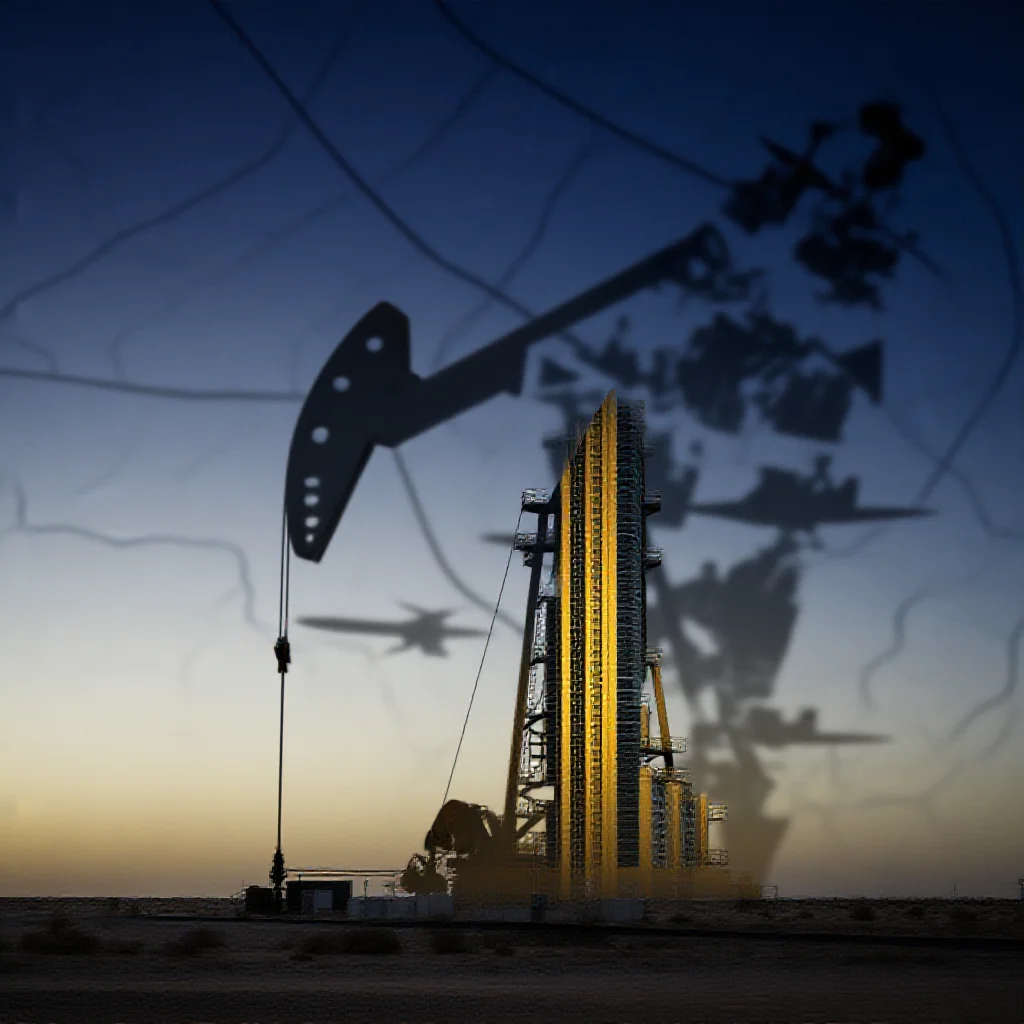
From Oil to Security: How Geopolitical Risk is Reshaping Saudi Arabia's Investment Strategy
Introduction: The Unseen Catalyst in Saudi Arabia's Economic Transformation
Saudi Arabia's Vision 2030, formally announced in 2016, presented a clear economic thesis. The plan outlined a strategic decoupling from hydrocarbon dependency through diversification into global technology, tourism, and industrial sectors. The primary metric for success was long-term financial return and sustainable economic growth. Recent regional developments, however, have introduced a powerful, non-financial variable into this calculus. The logic of the kingdom's strategic investment pivot is now being accelerated and fundamentally reshaped by the imperative to mitigate profound geopolitical risk. Heightened regional tensions validate a recalibration where national security and strategic resilience are becoming paramount drivers of capital allocation.
Decoding the Pivot: From Long-Term ROI to Near-Term Strategic Resilience
The original Vision 2030 investment model prioritized long-term return on investment (ROI) through high-profile, transformative projects. The current shift indicates that risk assessment models, which quantify exposure to regional instability, are increasingly overriding pure growth projections. This is manifesting in a subtle but significant re-prioritization of capital. While flagship projects like NEOM continue, the strategic emphasis is tilting toward sectors that enhance domestic resilience. These include critical national infrastructure, energy security—particularly renewable and nuclear power—and defense-linked industries such as local military manufacturing and cybersecurity.
Analysis of the Public Investment Fund's (PIF) deployment patterns suggests a measurable tilt. A comparative review of the fund's announced project pipeline against actual capital commitments reveals a growing proportion directed toward "strategic security" sectors. This is not a cessation of global investment but a re-weighting of the portfolio to prioritize assets that reduce systemic vulnerability. The investment thesis is evolving from funding a post-oil economy to fortifying an economy that can withstand geopolitical shocks on its path to a post-oil future.
The Supply Chain Imperative: Building a Fortress Economy
A core component of this strategic pivot is the aggressive reduction of critical dependencies on externally controlled logistics and supply chains. The vulnerability of maritime chokepoints, most notably the Strait of Hormuz, has moved from a theoretical risk to a pressing operational concern. In response, Saudi investment strategy is increasingly characterized by "onshoring" and "friendshoring."
This translates into significant capital flows toward localizing production of essential goods. Investments in advanced desert agriculture and aquaculture technologies target food security. Similarly, initiatives to develop domestic mineral processing and advanced manufacturing aim to create redundant, in-country capacity for strategic industries. The long-term impact of this shift is complex. While it builds a more insulated and resilient industrial base, it may also result in a less globally cost-competitive one, potentially altering the kingdom's integration into and benefit from global value chains. The economic cost of redundancy is being weighed against the strategic cost of dependency.
The Sovereign Wealth Dilemma: Balancing Profit and Protection
This evolution creates a fundamental tension within the PIF's mandate. As one of the world's largest sovereign wealth funds, it is tasked with achieving world-class financial returns to fund the national transformation. Simultaneously, it is now being leveraged as a primary tool for achieving national security objectives. This dual mandate forces a continuous recalibration of investment decisions.
Future investments in high-growth sectors like artificial intelligence, renewable energy, and mining will likely be filtered through an additional "strategic autonomy" lens. For instance, a mining investment abroad may be evaluated not only for its financial return but also for its role in securing a critical mineral supply chain for domestic industries. Reports from institutions like the International Institute for Strategic Studies (IISS) note the growing trend of geoeconomic strategy influencing sovereign fund behavior globally. For PIF, this means the benchmark for success is expanding from internal rate of return (IRR) to include metrics of risk reduction and supply chain sovereignty.
Conclusion: A New Investment Paradigm for a Volatile Region
The convergence of economic ambition and security imperative is forging a new, more complex investment paradigm for Saudi Arabia. The path to Vision 2030 is no longer a linear economic transition but a multi-dimensional strategic maneuver. Geopolitical risk has ceased to be merely a variable in a financial model; it has become a central design principle for the kingdom's economic future.
Market and industry predictions must now account for this dual-track strategy. While global asset managers will continue to see Saudi capital as a significant source of investment, the terms of engagement are shifting. Partnerships that offer technology transfer, local job creation, and infrastructure that enhances national resilience will likely be prioritized over purely financial ventures. The ultimate outcome may be a Saudi economy that is less outwardly integrated but more internally robust, a trade-off dictated not by market economics alone, but by the stark realities of its geopolitical landscape. The era of investment decisions based solely on economic diversification has given way to an era of investment for strategic survival.
Keywords

Omar Hassan
Energy Correspondent tracking OPEC+ policies and renewable energy transitions.