Dubai''s Real Estate Paradox: Slowing Sales Amid Record Prices and Major Deals
Dubai's real estate market presents a complex picture in mid-2024. While sales volume and value have declined significantly year-on-year, average prices and rents continue to soar at over 20% annual growth. Simultaneously, major developers like Aldar and Emaar are executing billion-dollar land acquisitions and launching new premium projects. This analysis explores the underlying forces—including interest rate hikes, currency pegs, and divergent investor vs. end-user demand—that are creating this paradoxical market phase. We examine whether this signals a healthy normalization or the precursor to a sharper correction, featuring insights from leading market analysts.
Omar Hassan
Editorial Analyst
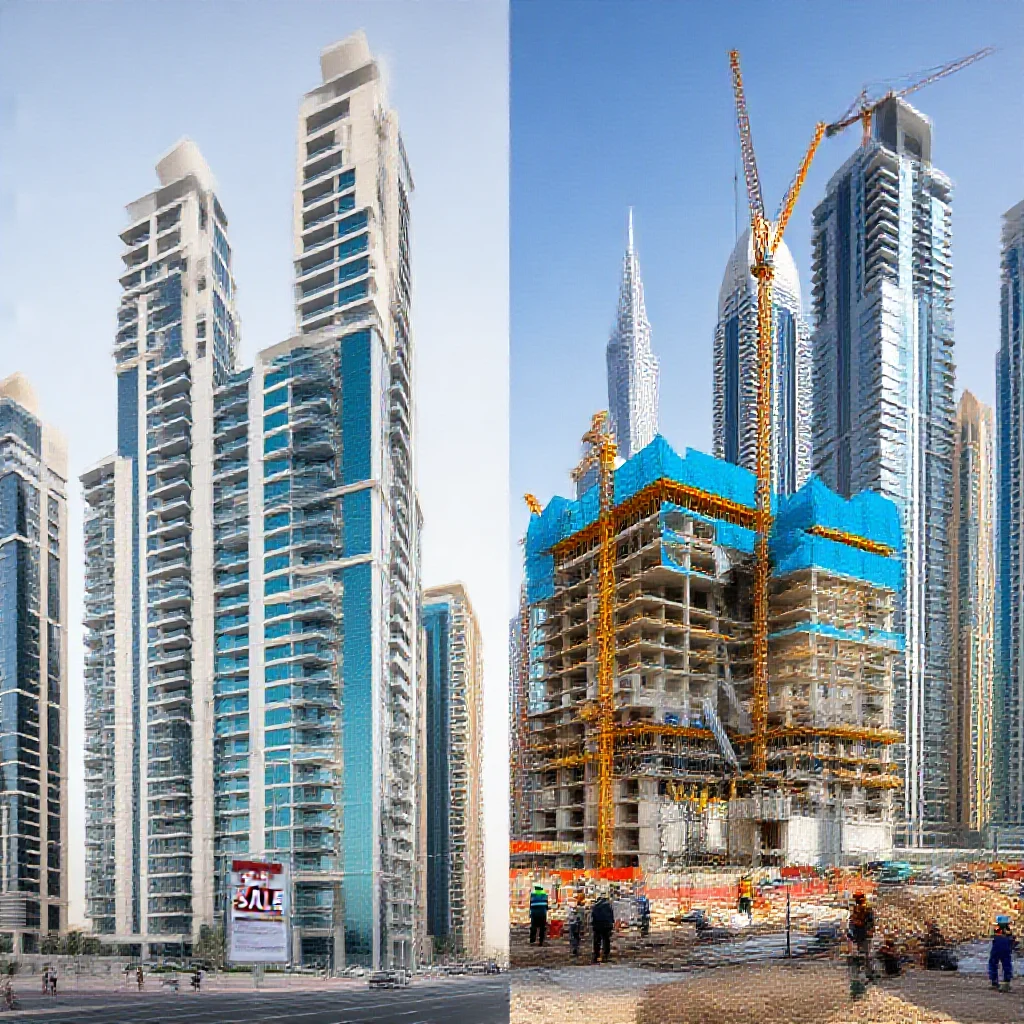
Dubai's Real Estate Paradox: Slowing Sales Amid Record Prices and Major Deals
Dubai's real estate market presents a complex and seemingly contradictory picture in mid-2024. Core transactional data reveals a significant cooling in sales activity, while price and rental inflation continues at a blistering pace. Concurrently, major institutional developers are executing landmark deals and launching premium projects, signaling sustained long-term confidence. This analysis examines the macroeconomic forces and market segmentation driving this paradox, drawing on recent data and divergent analyst forecasts to assess the market's trajectory.
The Contradictory Data: Deciphering Dubai's Market Signals
The foundational evidence points to a market operating at two distinct speeds. In April 2024, the volume of residential property sales transactions in Dubai fell by 23.5% compared to the same month in 2023. The total value of those sales also declined, dropping by 12.2% year-on-year (Source 1: [Primary Data]). This indicates a clear contraction in market velocity and liquidity.
In stark contrast, asset valuations and rental costs continue to climb. Average residential property prices in Dubai increased by 20.7% in the year to March 2024. The pressure on tenants is even more acute, with average residential rents rising by 22.8% over the same period (Source 1: [Primary Data]). This divergence establishes the central paradox: a market with cooling transaction volume but persistent and significant asset price inflation. The data suggests a decoupling between the behavior of transactional buyers and the underlying valuation metrics supported by rental yields and long-term investor appetite.
The Macroeconomic Lever: Interest Rates and the Dollar Peg
A primary driver of the sales slowdown is the cost of capital. In May 2024, the UAE Central Bank raised its base rate by a quarter of a percentage point, following the US Federal Reserve's policy move (Source 1: [Primary Data]). This action directly increases mortgage financing costs, dampening demand from end-user buyers and investors reliant on leverage.
The impact is amplified by the UAE dirham's peg to the US dollar. This monetary policy linkage forces the UAE to mirror Fed rate decisions, importing financial conditions that may not align perfectly with the domestic economic cycle. The resulting higher borrowing costs create a supply-demand mismatch: a segment of potential owner-occupiers and leveraged investors is being priced out or adopting a wait-and-see approach. However, this dynamic disproportionately affects mortgage-dependent demand, while the market continues to be supported by a significant volume of cash transactions and institutional capital less sensitive to immediate interest rate fluctuations.
The Institutional Bet: Why Mega-Deals Defy the Slowdown
The actions of major listed developers provide a counter-narrative to the broad sales data. In April 2024, Aldar Properties acquired a 6.2-hectare plot on Dubai's Palm Jumeirah from Nakheel for 2.2 billion UAE dirhams ($599 million) (Source 1: [Primary Data]). Simultaneously, Emaar Properties launched 'The Heights Country Club & Wellness', a new residential project in Dubai Hills Estate scheduled for completion in 2027 (Source 1: [Primary Data]).
These moves are not primarily bets on short-term sales cycles. They represent strategic, long-term capital allocation. For Aldar, the acquisition secures a trophy asset in a supply-constrained prime location, building a pipeline for future high-margin development. For Emaar, the launch targets a specific, resilient micro-market and asset class—wellness-integrated luxury—that continues to attract global high-net-worth individuals. These institutional maneuvers indicate a calculated view that the fundamental value of premier Dubai real estate assets will appreciate over a multi-year horizon, irrespective of near-term transactional volatility.
Analyst Crossroads: Divergent Forecasts on Market Trajectory
Market analysts interpret these conflicting signals differently, leading to divergent near-term forecasts. The prevailing view anticipates a moderation of the extreme price growth witnessed in recent years. Taimur Khan of CBRE stated, "We expect that the rate of price growth will continue to moderate through the remainder of the year, with the potential for limited price corrections in specific areas and asset types" (Source 1: [Primary Data]). This perspective frames the current phase as a healthy normalization, where rising interest rates and high prices naturally temper demand, leading to a more sustainable equilibrium.
A more bullish outlook persists, focusing on underlying demand drivers. Haider Tuaima of ValuStrat projected, "We expect a strong performance in the real estate market in 2024, with continued demand from local and international investors" (Source 1: [Primary Data]). This view emphasizes the structural factors supporting Dubai's market, including demographic growth, its status as a safe-haven asset location, and the limited supply of premium properties, which may insulate it from a broad-based correction.
The convergence of high-level institutional investment with cooling retail sales creates a bifurcated market. The trajectory likely depends on the duration of elevated global interest rates and the depth of cash-rich investor pools. The current paradox may not signify an impending crash but rather a maturation into a more complex market structure, where prime assets decouple from the broader trend and transaction velocity becomes a less definitive indicator of overall market health.
Keywords

Omar Hassan
Energy Correspondent tracking OPEC+ policies and renewable energy transitions.