Arm''s Pivot: From Chip IP to AGI Hardware and the End of an Era
Arm Holdings is undergoing a fundamental transformation, moving beyond its traditional role as a neutral IP licensor to become a direct chip designer and seller. This strategic pivot is being fueled by a sixfold surge in revenue from Artificial General Intelligence (AGI)-related products. This article analyzes the hidden logic behind this shift, exploring how the insatiable compute demands of AGI are reshaping semiconductor business models, forcing even foundational architecture providers to vertically integrate. We examine the long-term implications for the global chip supply chain, competitive dynamics with partners like NVIDIA and Apple, and whether this marks the end of the pure-play IP licensing paradigm in the age of AI.
Layla Ibrahim
Editorial Analyst
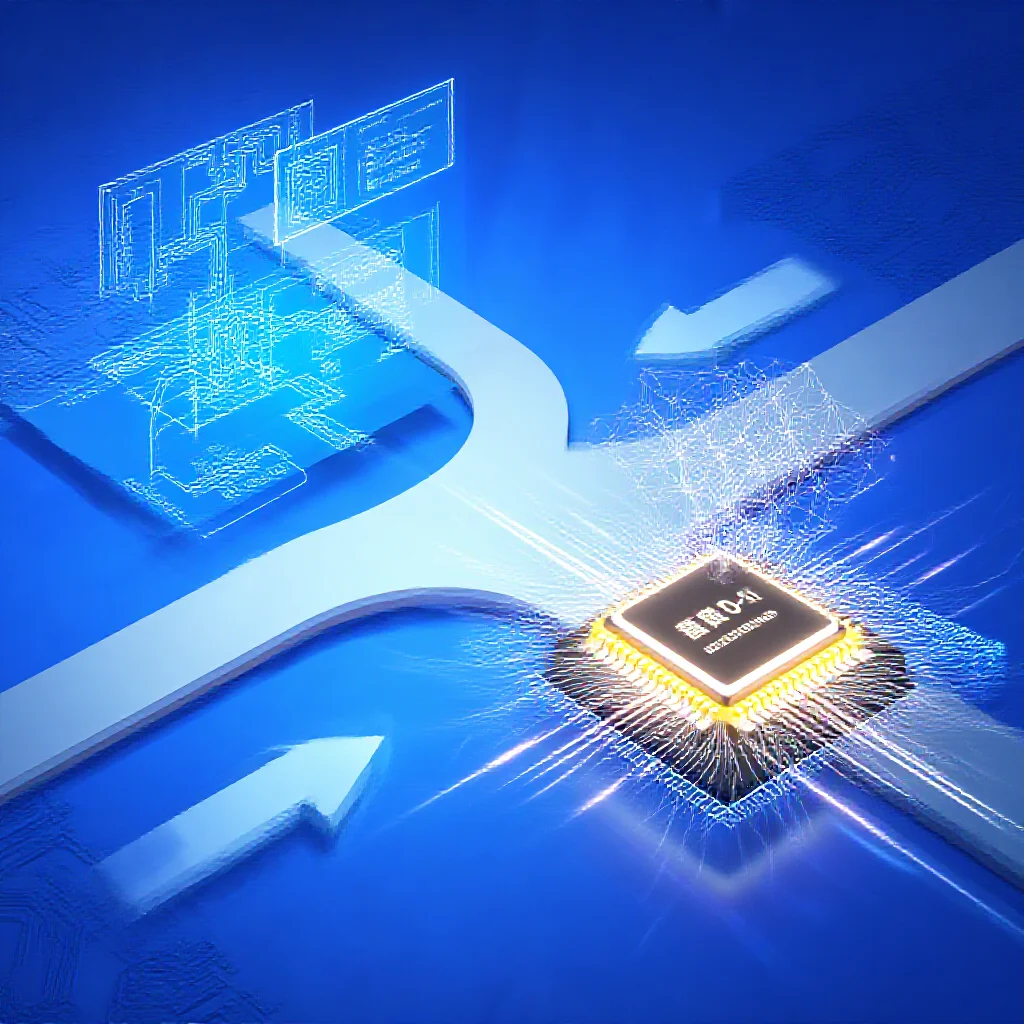
Arm's Pivot: From Chip IP to AGI Hardware and the End of an Era
Introduction
Arm Holdings plc is executing a fundamental strategic transformation. The company, long defined as a neutral supplier of intellectual property (IP) for semiconductor designs, is pivoting toward direct chip design and sales. This shift is being propelled by a reported sixfold surge in revenue from products related to Artificial General Intelligence (AGI). The move signals a recalibration of one of the semiconductor industry's foundational business models in response to the unprecedented computational demands of advanced artificial intelligence.The Strategic Crossroads: Why Arm is Abandoning Neutrality
The core of Arm's historical strategy was an asset-light, licensing-based model. The company designed central processing unit (CPU) architectures and instruction sets, licensing these blueprints to partners like Qualcomm, Apple, and Samsung for a royalty fee, typically 1-2% of the chip's final selling price. This model enabled massive scale during the mobile computing era but capped revenue per unit.The pivot from "architect" to "builder" is driven by direct economic calculus. The licensing model, while high-margin, captures only a fraction of the total value in a high-performance semiconductor. By designing and selling complete chips, Arm can capture the full Average Selling Price (ASP) of the silicon, which for data center and AI processors can reach thousands of dollars. The AGI catalyst has created a market where the premium for optimized, high-performance compute is so substantial that the traditional royalty model leaves significant value unclaimed. (Source 1: [Industry ASP Analysis])
Image Suggestion: An infographic comparing Arm's old royalty-based revenue flow to its new direct-sales model.
Sixfold Growth: Unpacking the AGI Revenue Surge
The reported sixfold increase in AGI-related revenue requires precise definition. For Arm, "AGI-related" products are primarily its Neoverse family of CPU designs. These cores are engineered for high-performance computing, cloud servers, and infrastructure critical for training and running large language models and generative AI systems.This growth is not primarily driven by traditional smartphone chipmakers. The demand originates from hyperscale cloud providers—Amazon Web Services (AWS), Google, and Microsoft—who are designing custom silicon (like AWS's Graviton and Google's Axion processors) to gain performance and efficiency advantages. These companies license Arm's Neoverse designs to build their own system-on-chips (SoCs). The revenue surge reflects the volume and complexity of these licenses, which are more valuable than standard mobile IP agreements. Financial disclosures segment this growth distinctly from the more mature and flatter revenue lines of the traditional licensing business. (Source 2: [Arm Earnings Call Transcript])
Image Suggestion: A chart showing a steep upward curve representing AGI-related revenue, juxtaposed with a flatter line for traditional licensing.
The Ripple Effect: Reshaping the Semiconductor Supply Chain
Arm's strategic shift introduces new tensions across the semiconductor ecosystem. Longtime licensees now face a supplier that is evolving into a potential competitor. Companies like Qualcomm, which have built businesses on integrating Arm IP into their own SoCs, may perceive direct competition if Arm's finished chips target similar data center or automotive markets.This move is part of a broader vertical integration domino effect. The pursuit of AI compute advantage is compelling companies at every layer—from software giants (hyperscalers) to end-device makers (Apple)—to internalize chip design. This trend challenges the established fabless-foundry model, where design and manufacturing were distinct specialties. The industry is consolidating control over the entire silicon stack, from architecture to final product, to eliminate bottlenecks and optimize for specific workloads like AI.
The long-term impact on innovation is ambiguous. Concentration of design could reduce the diversity of the ecosystem Arm's open licensing once fostered. Conversely, the intense focus on AI hardware specialization may accelerate architectural breakthroughs that a more generalized, consensus-driven model would not.
Image Suggestion: A network diagram showing Arm shifting from the center of a collaborative web to a node competing with other nodes (NVIDIA, Intel, AMD, hyperscalers).
Deep Audit: Is the IP Licensing Model Obsolete in the AI Era?
A historical analysis reveals why the IP licensing paradigm is under stress. The mobile revolution was characterized by a need for standardized, energy-efficient compute across billions of devices. Arm's model provided the common architecture that enabled scale and interoperability, perfect for a market seeking consensus.The AGI race operates under a different paradigm: a relentless pursuit of maximum, specialized computational throughput. In this environment, performance gains measured in percentage points translate into significant competitive advantage and cost savings at scale. When compute itself becomes the primary strategic resource, companies are incentivized to own and control the entire stack, bypassing neutral IP layers to achieve tighter integration. The pure-play IP model, while not obsolete, appears increasingly inadequate as a sole revenue engine for a company at the epicenter of the AI compute arms race. Its future may be as a component within a broader, more vertically integrated portfolio.
Conclusion: Market and Industry Predictions
The trajectory suggests several neutral market developments. First, Arm will likely deepen its investment in direct chip design, particularly for data center and high-performance computing segments. Second, the relationship between Arm and its major licensees will become more complex, governed by a mix of collaboration and competition. Third, the semiconductor industry's structure will continue to bend toward vertical integration, with the lines between IP provider, chip designer, and system integrator blurring further. The age of AI hardware is demanding not just new architectures, but fundamentally new business models. Arm's pivot is a definitive signal that the era of pure-play semiconductor IP licensing, as a dominant standalone strategy, has reached its inflection point.Keywords

Layla Ibrahim
Technology Reporter covering fintech, AI, and startup ecosystems in the Gulf.