Gulf Luxury Lifestyle Trends in 2026: How the UAE and Saudi Arabia Are Redefining Fashion, Wellness, and Premium Living
In 2026, luxury in the UAE and Saudi Arabia is shifting from product-led consumption to experience-led status. Dubai remains the region’s retail and fashion anchor, while Riyadh is emerging as a fast-rising luxury market powered by hospitality, fashion, and lifestyle investment. The new Gulf luxury economy now spans modest fashion, beauty, wellness, premium retail, hospitality, and interior design, reflecting a broader demand for identity-driven and culturally rooted prestige. This article maps the market logic behind the shift, the role of social media in shaping demand, and the long-term implications for brands, supply chains, and luxury real estate across the Gulf.
Ahmed Al-Farsi
Editorial Analyst
Gulf Luxury Lifestyle Trends in 2026: How the UAE and Saudi Arabia Are Redefining Fashion, Wellness, and Premium Living
In 2026, the luxury market in the Gulf is being shaped less by product acquisition and more by how people live, present themselves, and spend time. Across the UAE and Saudi Arabia, premium consumption is increasingly tied to fashion, wellness, hospitality, interiors, and digital visibility. The shift reflects a broader change in how status is expressed: not only through what consumers buy, but through the environments, services, and experiences they choose.
The UAE remains the region’s most established luxury center, with Dubai continuing to function as a retail and fashion anchor. Saudi Arabia, meanwhile, is becoming a more influential luxury market in its own right, driven by rising investment in hospitality, lifestyle infrastructure, and a growing fashion ecosystem. Together, the two markets are redefining what luxury means in the Gulf.
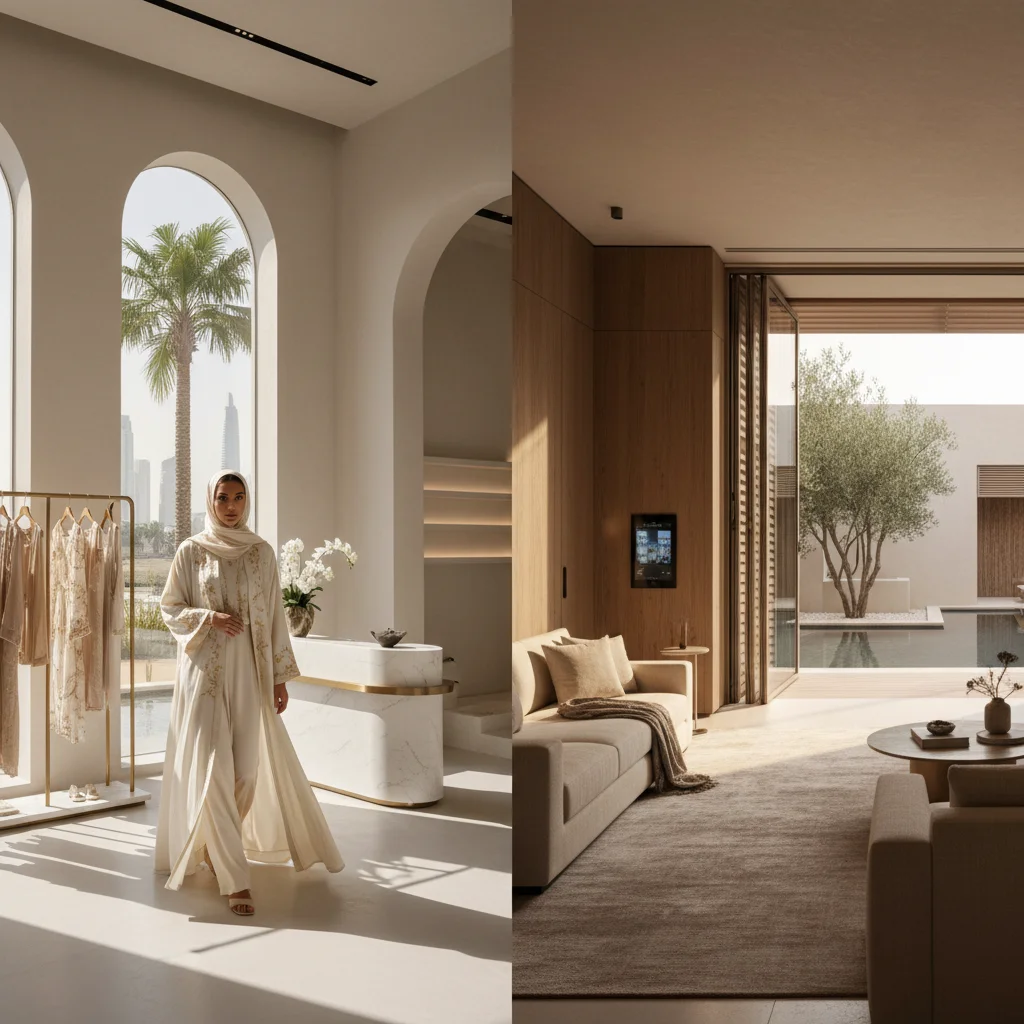
[IMAGE: A high-end editorial scene showing a contemporary luxury boutique in Dubai and a minimalist luxury villa interior in Riyadh, connected visually as part of one premium lifestyle ecosystem.]
The Core Shift: From Luxury Products to Luxury Ecosystems
The most important change in Gulf luxury lifestyle trends is structural. In earlier stages of the market, luxury was often measured by individual purchases: handbags, watches, jewelry, cars, and apparel. In 2026, those categories still matter, but they are increasingly part of a wider ecosystem that includes fine dining, spa and wellness services, private hospitality, interior design, and premium home technology.
This shift has a clear economic logic. Consumers in the Gulf are not only buying goods; they are curating environments that reflect identity and social position. A luxury item now often acts as one part of a larger experience, rather than as a standalone signal. For many buyers, prestige is tied to how seamlessly a brand fits into daily life, from the boutique layout and service style to the restaurant, resort, or residence associated with the brand.
That is why premium brands are competing on more than product quality. In the current market, they are also competing on atmosphere, cultural relevance, personalization, and service consistency. The result is a move from transactional luxury to experiential luxury. This is especially visible in the UAE luxury market, where retail, hospitality, and lifestyle concepts are closely linked.
[IMAGE: A montage-style image of luxury shopping, fine dining, spa, and interior design elements connected visually as one ecosystem.]
Why the UAE and Saudi Arabia Are Fast-Growing Luxury Markets
The Gulf’s luxury growth is increasingly concentrated in two markets: the UAE and Saudi Arabia. Each plays a different role in the regional economy.
The UAE, and particularly Dubai, remains the most mature and visible luxury market in the Gulf. Dubai’s retail infrastructure, international connectivity, and established consumer base make it a key destination for global fashion houses, beauty labels, hospitality groups, and premium real estate developers. As a result, Dubai fashion hub dynamics continue to shape regional demand. The city is not just a place where luxury is sold; it is a place where trends are introduced, tested, and amplified.
Saudi Arabia is developing differently. Its luxury market is newer, but it is expanding quickly due to large-scale investment, rising consumer confidence, and the creation of new urban and hospitality zones. Riyadh luxury growth is particularly significant. The capital is emerging as a major center for premium retail, hospitality, and fashion activity, supported by broader economic diversification and a young, digitally connected consumer base.
Unlike Dubai, which has long served as a regional gateway, Riyadh is in the process of building a luxury identity that is more locally rooted and institutionally supported. This makes the Saudi Arabia luxury market important not only for sales growth, but also for long-term category development. Brands entering the market are increasingly required to understand cultural norms, regional preferences, and shifting definitions of prestige.
[IMAGE: Split-scene city comparison showing Dubai’s luxury retail district on one side and Riyadh’s emerging premium district on the other.]
The New Status Code: Modest Luxury and Locally Inspired Brands
One of the clearest changes in Gulf luxury lifestyle trends is the rise of modest luxury fashion. Once treated as a niche category, it is now being recognized as a distinct segment within premium fashion. This growth reflects both cultural preference and commercial opportunity.
In the UAE and Saudi Arabia, many consumers are looking for clothing that combines elegance, quality materials, and modest silhouettes. This does not mean simple or conservative design; rather, it points to an aesthetic that balances sophistication with local expectations around dress. As a result, modest luxury fashion is becoming more visible in both retail and digital spaces, especially among younger buyers who want premium fashion that aligns with their identity.
At the same time, locally inspired brands are gaining influence. Consumers are showing stronger interest in labels that draw from regional heritage, Arabic design language, and place-based storytelling. This does not imply a rejection of global brands. Instead, it signals that prestige in the Gulf increasingly depends on authenticity and cultural relevance. A brand that understands the region’s visual codes, social values, and lifestyle rhythms is often more likely to build loyalty.
For many buyers, luxury is no longer defined only by foreign origin or global recognition. It is also defined by how well a brand reflects the region itself. That is why the market is seeing growth in Gulf-based fashion, beauty, and homegrown premium concepts that speak directly to local tastes.
[IMAGE: An editorial fashion scene featuring modest luxury silhouettes, rich fabrics, and Arabic-inspired design details.]
Social Media as a Luxury Demand Engine
In 2026, social media is not just a promotional channel for luxury brands in the Gulf. It is part of the market structure itself. Digital platforms have become central to how consumers discover products, interpret trends, and evaluate status.
The role of social media is especially strong in visually driven categories such as fashion, beauty, hospitality, and interior design. Luxury consumption is increasingly presented as a shareable lifestyle format: a brunch setting, a boutique visit, a wellness retreat, a private villa, or a curated travel experience. In this environment, the image of luxury can be as important as the item or service itself.
Influencers and content creators also play a major role in shaping demand. They help translate brand offerings into local contexts and make new products visible to audiences that may not be reached through traditional advertising. In the Gulf, this visibility matters because luxury purchasing is often linked to social signaling and group reference. Consumers want to see how a product looks in real life, how it is styled, and what kind of environment it belongs to.
This is why digital visibility is now part of the luxury value proposition. Brands that ignore social-first behavior risk appearing distant or outdated, even if their products are technically strong. In contrast, brands that understand the visual logic of the region can build relevance faster across the UAE luxury market and the Saudi Arabia luxury market.
[IMAGE: A premium lifestyle setting with a phone capturing a luxury brunch or spa environment, emphasizing social-first aesthetics.]
Wellness and Hospitality as Prestige Categories
Another defining feature of the Gulf luxury market in 2026 is the growing importance of wellness and hospitality. These categories are no longer separate from luxury; they are core expressions of it.
Wellness has expanded beyond fitness and beauty into a broader lifestyle framework. High-end spa treatments, recovery-focused services, private memberships, biohacking, and resort-style health experiences are becoming more visible among affluent consumers. This reflects a wider shift toward long-term well-being as a status marker. In the Gulf, where appearance, privacy, and comfort are highly valued, wellness is increasingly treated as a premium investment.
Hospitality is evolving in a similar way. Luxury hotels, branded residences, and destination dining are no longer simply travel products. They are part of how consumers in the UAE and Saudi Arabia socialize, celebrate, and signal taste. For developers and operators, this means that the standards for premium living are becoming more integrated. A residence may need to feel like a resort. A hotel may need to function like a private club. A restaurant may need to offer both design appeal and social credibility.
This convergence is especially important in Saudi Arabia, where new hospitality projects are helping shape the country’s luxury identity. As the market expands, the lines between leisure, living, and status are becoming harder to separate.
Premium Living and the Rise of Interior Design as a Luxury Signal
Luxury in the Gulf is also moving into the home. Interior design, smart home systems, and curated residential environments are now central to premium living across both the UAE and Saudi Arabia.
Affluent consumers are paying more attention to how homes function and how they feel. Neutral palettes, custom finishes, high-end appliances, art objects, and resort-inspired layouts are all part of the new aesthetic. In Riyadh, this is visible in the growing demand for minimalist yet highly refined villa interiors. In Dubai, it appears in apartments and branded residences that blend international design with local comfort preferences.
This trend reflects a deeper change in how status is displayed. A home is no longer just a private asset; it is also a public expression of taste and lifestyle. As people share their interiors online, the design of a living space becomes part of the same visibility economy that drives fashion and beauty. That is why premium real estate and luxury interiors are increasingly linked in the Gulf’s consumer landscape.
For developers, this creates new expectations. Buyers want not only location and size, but also identity, privacy, functionality, and aesthetic coherence. In that sense, luxury real estate across the Gulf is becoming more lifestyle-led and less purely transactional.
[IMAGE: A minimalist luxury villa interior in Riyadh with warm neutral tones, smart home features, and resort-inspired design.]
What This Means for Brands and Investors
The changes in Gulf luxury lifestyle trends have practical implications for both brands and investors.
For brands, the key lesson is that market entry is no longer just about product distribution. Success depends on understanding the ecosystem around the product: where consumers spend time, how they discover brands, which cultural references matter, and what kind of experience supports long-term loyalty. This is especially true for brands operating across the UAE and Saudi Arabia, where consumer expectations overlap but are not identical.
For investors, the opportunity is broader than traditional retail. Growth is spreading across fashion, beauty, wellness, premium food and beverage, hospitality, and luxury real estate. The strongest returns may come from concepts that connect multiple categories, such as branded residences, wellness hospitality, or fashion-led lifestyle destinations. These are the spaces where the next phase of premium demand is likely to concentrate.
Supply chains and retail formats will also need to adapt. Brands entering the region will need more flexible inventory planning, stronger local partnerships, and format strategies that suit both flagship cities and emerging luxury districts. The market rewards relevance, speed, and cultural fluency.
Conclusion
The Gulf luxury economy in 2026 is being reshaped by a broader definition of prestige. In the UAE, Dubai continues to anchor luxury retail and fashion activity. In Saudi Arabia, Riyadh is becoming a fast-rising center for hospitality, lifestyle, and premium consumption. Across both markets, consumers are moving away from status based only on products and toward status expressed through complete experiences.
That shift is helping drive growth in modest luxury fashion, locally inspired brands, wellness, hospitality, and luxury interiors. It is also making social media, cultural identity, and lifestyle design central to how value is created and perceived. For brands and investors, the message is clear: in the Gulf, luxury is no longer just what people buy. It is how they live.
Keywords

Ahmed Al-Farsi
Luxury & Lifestyle Editor with expertise in high-end hospitality and retail.