Gulf Luxury Lifestyle 2025: How AI, Real Estate Shifts, and Beauty Boom Are Redefining Opulence
The Gulf region remains a global epicenter for luxury, but 2025 brings transformative forces. From a $441 billion beauty market driven by fragrance and haircare to luxury real estate hotspots like Dubai, and travel redefined by high-net-worth millennials and generative AI, the industry is at a crossroads. This article delves into how AI personalization balances with the human touch Gulf clients expect, how family offices are increasing real estate exposure, and why emerging markets like India and Brazil are gaining importance alongside the Gulf. Based on reports from McKinsey, Christie’s, Deloitte, Vogue Business/IBM, and Knight Frank.
Ahmed Al-Farsi
Editorial Analyst
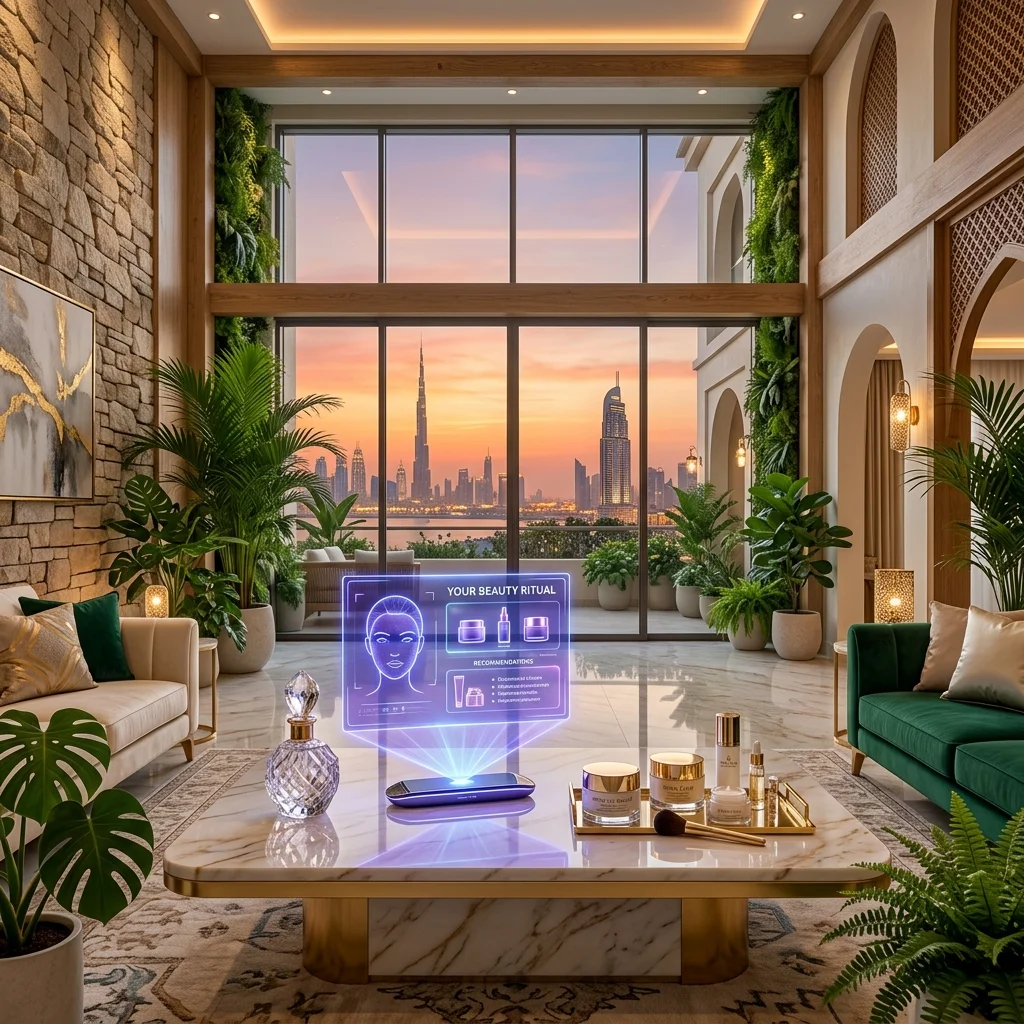
Gulf Luxury Lifestyle 2025: How AI, Real Estate Shifts, and Beauty Boom Are Redefining Opulence
Introduction: The Gulf’s New Luxury Landscape
The Gulf region—led by Dubai, Abu Dhabi, and Doha—has long been synonymous with extravagant living, but the data from 2025 paints a picture of transformation that is more nuanced than ever. While the skyline still gleams with marble and glass, the forces reshaping luxury are no longer just about higher ceilings and faster cars. A convergence of technological disruption, demographic evolution, and shifting consumer priorities is rewriting the rules of opulence.
According to key reports from McKinsey & Company, Christie’s International Real Estate, Deloitte, Vogue Business in partnership with IBM, and Knight Frank, the luxury ecosystem in the Gulf is being fundamentally redefined. The global beauty market has surged to $441 billion, propelled by fragrance and haircare—categories that resonate deeply with Gulf cultural traditions. Luxury real estate is expanding beyond Dubai into emerging hotspots like Perth and Sofia, while family offices increasingly allocate capital to property. Meanwhile, travel is being reshaped by high-net-worth millennials, mobile work lifestyles, and generative AI tools that personalize every journey—yet the human touch remains non-negotiable.
This article dives into how AI-driven personalization is balancing the high-touch service Gulf clients expect, how the fragrance and haircare boom is capturing regional affinities, and why real estate portfolios are diversifying from Dubai to global markets. The Gulf’s luxury lifestyle is not fading; it’s evolving, and the data offers a clear lens on where the next wave of indulgence is headed.
[IMAGE: Aerial view of Dubai Marina with luxury yachts and modern skyscrapers]
The $441 Billion Beauty Boom: Fragrance and Haircare Lead the Way
The global beauty industry has reached an unprecedented valuation of $441 billion in 2025, according to a joint report by The Business of Fashion and McKinsey. Growing at a steady 5% annually, the sector’s fastest-moving segments are fragrance and haircare—two categories where the Gulf’s cultural DNA is particularly strong. Oud, rose, and amber have been staples of Arabian perfumery for centuries, and elaborate haircare rituals, from nourishing oil treatments to traditional henna applications, are ingrained in daily life. This innate affinity positions the Gulf not merely as a consumer market but as a trend incubator.
Luxury brands are responding with localized scents and premium haircare lines specifically designed for Gulf consumers. Maison Francis Kurkdjian, Amouage, and Jo Malone have long courted the region, but the new wave goes deeper. Brands are now formulating lighter, heat-resistant fragrances that perform in desert climates, and launching sulfate-free haircare products that cater to the humidity-sensitive hair types common in the region. AI is playing a crucial role in this personalization: algorithms analyze climate data, skin type, and even personal olfactory preferences to recommend bespoke products, often through in-store smart mirrors or mobile apps.
Yet the digital layer does not replace the sensory experience. Gulf luxury consumers still demand physical engagement—the opportunity to sample a fragrance in a silk-lined boutique or consult with a trained beauty advisor. The balance between AI efficiency and human warmth is delicate. In fact, McKinsey notes that brands that successfully integrate AI for recommendation while preserving human-led service see higher loyalty. As the beauty boom continues, the Gulf will remain a proving ground for how technology can enhance, not erode, exclusivity.
[IMAGE: Luxury perfume bottles on a gold tray with traditional Arabic incense burner]
Luxury Real Estate: From Dubai to Emerging Hotspots
The 2025 Global Luxury Real Estate Forecast from Christie’s International Real Estate names five key markets that are capturing the attention of high-net-worth buyers: New York, Miami, Dubai, Perth, and Sofia. While Dubai remains a perennial favorite, the inclusion of Perth (Australia) and Sofia (Bulgaria) signals a notable shift. Gulf investors, long focused on regional assets, are now looking further afield for diversification—a trend confirmed by Knight Frank’s 2025 Wealth Report, which shows that family offices globally are increasing their real estate exposure.
Within the Gulf itself, buyer preferences are becoming more sophisticated. Christie’s data reveals that today’s luxury property hunters prioritize historic character, biophilic design, wellness amenities, and advanced security over sheer square footage. In Dubai, this manifests in villa communities that blend indoor-outdoor living—think vertical gardens, infinity pools that merge with skyline views, and homes that incorporate natural materials like stone and reclaimed wood. The biophilic design trend is not a passing fad; it reflects a deeper desire for connection to nature amid the urban density.
For Gulf-based investors, the appeal of Perth lies in its relative affordability, stable governance, and lifestyle appeal, while Sofia offers a gateway to European markets with lower entry costs and a growing reputation for architectural heritage. Knight Frank’s report highlights that family offices now allocate roughly 25% of their portfolios to direct real estate, up from 18% five years ago, and that the Gulf’s ultra-wealthy are leading this shift. They are not just buying homes: they are acquiring entire residential developments through private funds.
Dubai, meanwhile, continues to dominate headlines. New projects in Palm Jebel Ali and Dubai Creek Harbour promise expansive villas with private beaches and marina access. But the demand is now stretching beyond the emirate’s borders, with Abu Dhabi’s Saadiyat Island and Qatar’s Lusail City gaining traction. The message is clear: luxury real estate in the Gulf is no longer just about a single address—it is about a globally diversified portfolio of living spaces.
[IMAGE: Modern luxury villa with vertical gardens and infinity pool overlooking the Dubai skyline]
Travel: High-Net-Worth Millennials, Mobile Work, and AI Personalization
Deloitte’s 2025 Travel Industry Outlook identifies three powerful forces driving travel growth: high-net-worth millennials, the rise of mobile work, and the integration of generative AI into booking and itinerary design. For the Gulf, which has invested billions in luxury hospitality—from Dubai’s Atlantis The Royal to Saudi Arabia’s Red Sea projects—these trends represent both opportunity and challenge.
High-net-worth millennials (typically aged 28–43) are the fastest-growing segment of luxury travelers. Unlike previous generations, they prioritize experiences over objects, value sustainability, and expect seamless digital integration. Deloitte reports that this group is willing to pay a premium for personalized, unique itineraries—and that is where generative AI enters the picture. AI tools can now analyze a traveler’s past behavior, social media interests, and real-time preferences to suggest everything from private desert dinners to curator-led art tours in Abu Dhabi. For Gulf destinations, this means hyper-local recommendations that highlight authentic cultural encounters, such as pearl diving excursions or traditional majlis visits.
Mobile work trends are also reshaping travel patterns. The ability to work remotely for extended periods has led to a boom in “bleisure” stays—a mix of business and leisure—in Gulf luxury resorts. Properties in Dubai and the Red Sea are now designing “workation” packages with dedicated high-speed offices, wellness programming, and community events. Some resorts report that guests now stay an average of 14 to 21 days, compared to 5 days five years ago.
Yet the human touch remains indispensable. Gulf luxury travelers, particularly those from the region itself, value personal relationships and exclusivity. An AI-generated itinerary is only as good as the concierge who executes it with warmth and discretion. Deloitte stresses that high-end hospitality providers must blend AI efficiency with human hospitality—not choose between them. In the Gulf, where service culture is deeply ingrained, this balance is being refined. The result is a travel experience that feels both technologically advanced and deeply personal, redefining luxury hospitality for 2025 and beyond.
[IMAGE: Luxury resort in Dubai with private pool and desert view]
Conclusion: A New Definition of Opulence
The Gulf’s luxury lifestyle in 2025 is not what it was a decade ago. It is more personalized, more diverse, and more technology-infused—yet it retains the human warmth that has always defined its appeal. The $441 billion beauty boom, driven by fragrance and haircare, reflects deep cultural roots while embracing AI for tailored recommendations. Real estate buyers are expanding their horizons from Dubai to Perth and Sofia, seeking biophilic designs and wellness features that match their evolving priorities. And travel, powered by generative AI and mobile work, is enabling longer, richer stays enhanced by local authenticity.
What ties these threads together is a fundamental shift: luxury is no longer about the most expensive object or the largest home. It is about the ability to customize, to connect, and to experience something genuinely personal. The Gulf remains at the epicenter of this redefinition, leading not just in consumption but in the creation of new standards for global opulence. For investors, brands, and travelers alike, the region offers a window into the future—one where AI and tradition coexist, and where every detail is designed for those who demand nothing less than exceptional.
Keywords

Ahmed Al-Farsi
Luxury & Lifestyle Editor with expertise in high-end hospitality and retail.