Beyond the Headline: How Ladun''s Sports Boulevard Signals a Strategic Shift in Riyadh''s Urban Economics
While the signing of an agreement between Ladun Investment and the Sports Boulevard project appears as a standard real estate development, it reveals a deeper strategic pivot in Riyadh''s urban planning. This analysis moves beyond the press release to examine how such projects are transitioning from state-funded megaprojects to public-private partnership models, signaling a maturation of Saudi Arabia''s Vision 2030 investment landscape. We explore the unspoken economic logic: using sports and leisure infrastructure as a catalyst for long-term real estate value capture, talent attraction, and the creation of new, privatized urban revenue streams. This marks a critical evolution from building cities to strategically managing urban assets for sustainable economic yield.
Fatima Al-Zahra
Editorial Analyst
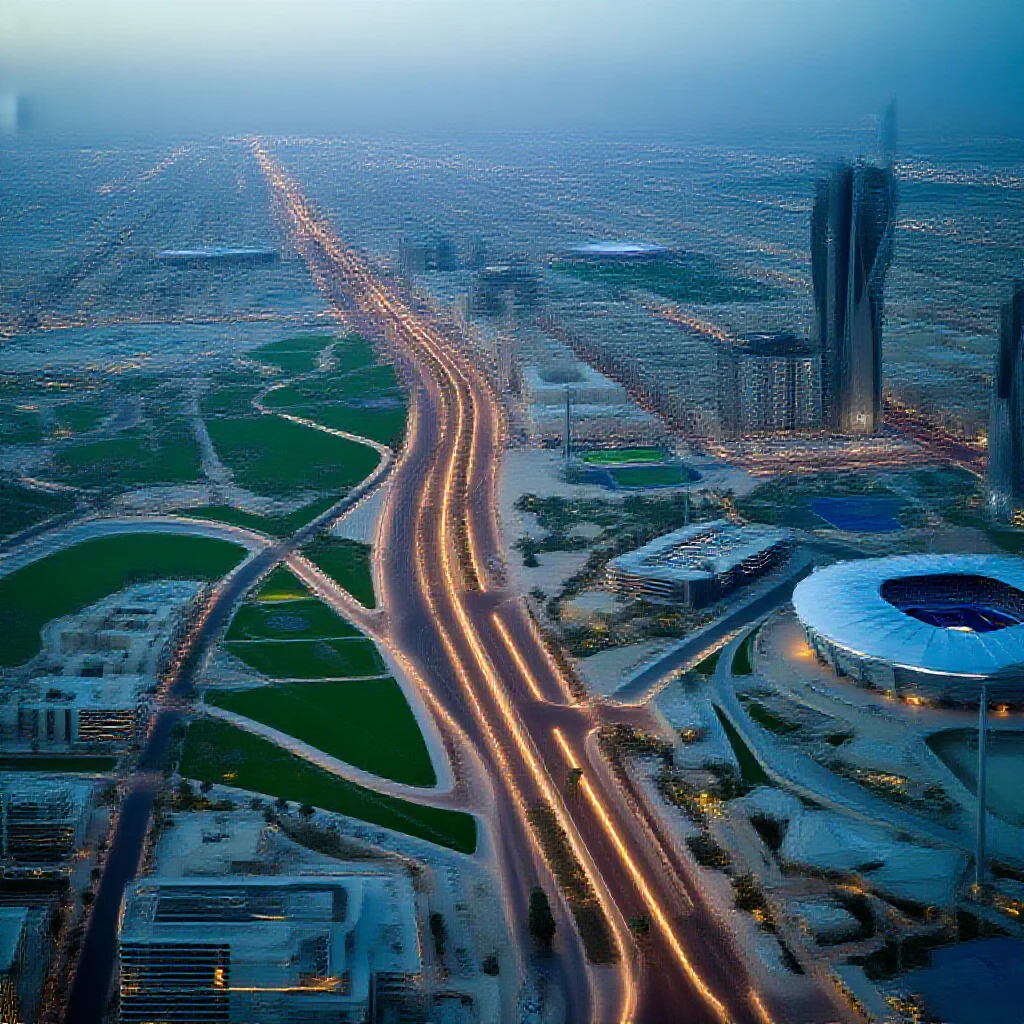
Beyond the Headline: How Ladun's Sports Boulevard Signals a Strategic Shift in Riyadh's Urban Economics
Opening Summary
On the surface, the announcement constitutes a standard real estate development milestone: Ladun Investment has signed an agreement to participate in the Sports Boulevard project in Riyadh (Source 1: [Primary Data]). The project is confirmed as a component of Riyadh’s broader urban development initiatives (Source 1: [Primary Data]). However, a technical audit of this transaction reveals its function as a signal within a larger strategic pivot. This analysis examines the shift from state-funded urban construction to a public-private partnership (PPP) model focused on long-term asset management and urban revenue generation, marking a maturation phase for Saudi Arabia’s Vision 2030 economic framework.
The Unspoken Deal: Decoding the Agreement's Strategic Context
The signing of a "development agreement" in Saudi Arabia’s current investment climate extends beyond a construction contract. It typically implies a structured partnership for financing, building, and often operating an asset. An analysis of Ladun Investment’s strategic fit, while specific portfolio data is limited, suggests selection criteria likely moved beyond mere capital provision. Partners in such models are frequently evaluated for complementary expertise in asset management, operational efficiency, or specific sectoral knowledge, indicating a project lifecycle view from inception to revenue generation.The Sports Boulevard is not an isolated venture. It is a systemic component of the Kingdom’s "Quality of Life" Program under Vision 2030. This positioning is critical; it transforms the project from a piece of infrastructure into a tool for achieving macroeconomic objectives: enhancing citizen well-being, diversifying economic activity, and improving global city competitiveness. The agreement, therefore, represents a delegated execution of a national strategic pillar.
From Public Works to Private Yield: The New Economics of Urban Development
This agreement signals a hidden pivot in Riyadh’s urban economics. The model is transitioning from pure state-funded public works to privately-managed value capture. The "Boulevard" concept itself is economically instructive. Unlike a standalone stadium, a boulevard implies linear integration—a spine connecting amenities, retail, residential, and green spaces. The financial logic shifts from one-time asset sale or cost-centric development to cultivating long-term, privatized revenue streams. These include retail and hospitality leases, event ticketing and operations, parking, and advertising.Sports and leisure infrastructure functions here as a non-oil economic catalyst. Its primary value is not in the events themselves but in its ancillary effects: attracting and retaining high-value talent, increasing local resident disposable spend within the district, and exerting significant upward pressure on adjacent real estate values. This creates a virtuous cycle where improved livability drives economic density and asset appreciation, which in turn justifies further private investment.
The Ripple Effect: Supply Chain, Talent, and Competitive Urbanism
A deep audit of this project must consider its long-term ripple effects on supply chains and human capital. The development’s scale and emphasis on modernity will necessitate advanced construction materials, smart city technologies, and sustainable building solutions. This creates a tangible entry point for both local and international specialized firms, potentially upgrading domestic industrial and service capabilities.The talent calculus for multinational corporations and skilled expatriates is directly altered by such lifestyle infrastructure. The project transitions Riyadh from a debate about talent attraction to one focused on retention. By offering comparable lifestyle amenities to other global hubs, it reduces a key friction point for long-term residency. Competitively, this positions Riyadh’s boulevard strategy in direct parallel with developments in other GCC cities like Dubai’s District 2020 or Qatar’s Lusail City. The race is no longer solely about iconic buildings but about integrated livability and the efficient monetization of urban experience.
Verification and Forward Look: Scrutinizing the Model's Sustainability
Verification of this strategic model’s alignment can be cross-referenced with public frameworks. Saudi Arabia’s National Investment Strategy (NIS) explicitly encourages private sector participation in infrastructure to unlock new asset classes and improve efficiency. Furthermore, Riyadh’s municipal authorities have been developing a PPP framework to facilitate such collaborations. The Ladun agreement operates within this verified policy envelope.A neutral risk assessment must consider execution challenges. These include the long gestation period for return on investment, sensitivity to global economic cycles affecting real estate and discretionary spend, and the operational complexity of managing a multi-use urban corridor. The model’s sustainability hinges on achieving projected occupancy rates, event frequency, and maintaining the asset’s premium positioning over decades.
Neutral Market/Industry Prediction
The Ladun Investment agreement for the Sports Boulevard is a prototypical transaction expected to recur across Saudi Arabia’s giga-projects. The forward trend indicates a structured shift toward specialized real estate investment trusts (REITs), infrastructure funds, and operationally focused consortiums taking equity positions in urban developments. The metric for success will evolve from square meters completed to internal rates of return (IRR), occupancy percentages, and footfall analytics. This transition signifies the movement from building a city to managing a portfolio of urban economic assets, with the private sector increasingly acting as the long-term yield-seeking operator. The subsequent phase of Vision 2030 will likely be characterized by the performance data of these privatized urban revenue streams.
Keywords

Fatima Al-Zahra
Real Estate Editor specializing in Dubai and Riyadh mega-projects.