Beyond the Headline: Why the Pentagon''s First AI Security Risk Designation Signals a New Era of Tech Sovereignty
On March 24, 2026, the Pentagon designated Anthropic, a leading U.S. AI firm, as a security risk—the first such designation for a domestic AI company. This analysis moves beyond the immediate shock to explore the deeper implications. It argues this is not merely a bureaucratic action but a pivotal moment marking the formal weaponization of the U.S. regulatory apparatus to assert technological sovereignty. We examine the shift from viewing AI as a purely commercial asset to a national security asset, the potential chilling effect on open research and public-private collaboration, and the long-term strategic calculus behind targeting a firm known for its safety-focused, Constitutional AI' approach. This event foreshadows a new, fragmented global AI landscape defined by sovereign tech stacks and national security imperatives.
Layla Ibrahim
Editorial Analyst
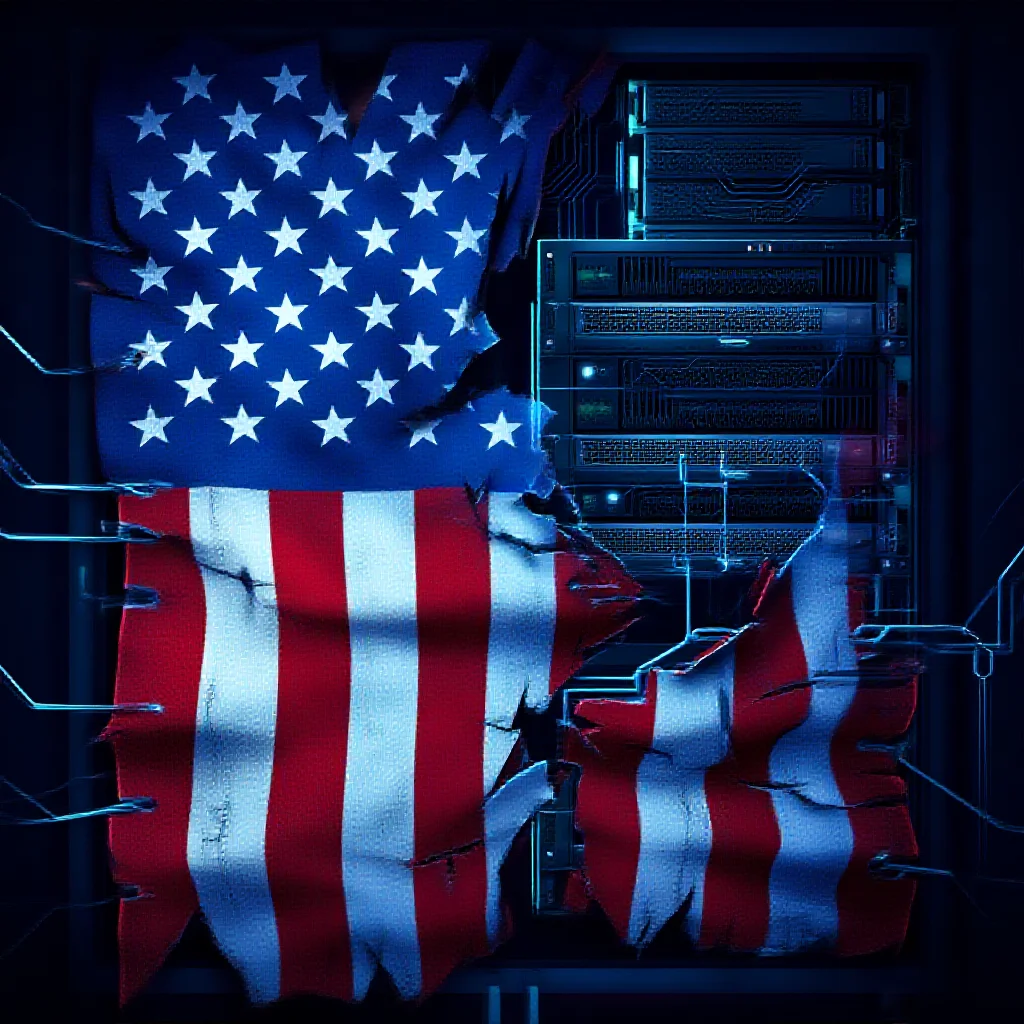
Beyond the Headline: Why the Pentagon's First AI Security Risk Designation Signals a New Era of Tech Sovereignty
March 27, 2026
On March 24, 2026, the U.S. Department of Defense designated Anthropic, a leading American artificial intelligence research and safety company, as a security risk (Source 1: [Primary Data]). This marks the first instance of a domestic AI firm receiving such a designation from the Pentagon (Source 2: [Primary Data]). The immediate bureaucratic implications are clear: the designation restricts Anthropic’s ability to engage in certain contracts, collaborations, and information exchanges with the defense establishment. However, a technical audit of this event reveals it is not an isolated compliance action but a strategic inflection point. It signifies the formal operationalization of national security policy to assert technological sovereignty, fundamentally reordering the priorities of the AI ecosystem from commercial dominance to strategic control.
The Designation Decoded: More Than a Bureaucratic Slap
The timing of the designation, March 24, 2026, coincides with a period of advanced AI maturity, where foundational models have moved beyond research prototypes into scalable, economically critical infrastructure. The "security risk" label is a regulatory instrument that unlocks specific legal and operational protocols for the Pentagon, including enhanced scrutiny of personnel, intellectual property flows, supply chain dependencies, and foreign investment linkages. It functions as a preemptive containment tool.
The central paradox lies in the target. Anthropic is not a foreign adversary but a U.S. pioneer, renowned for its "Constitutional AI" approach that embeds safety and alignment constraints directly into model training. This targeting logic suggests the assessment is not primarily about malign intent or foreign ownership, but about inherent structural risk. A firm whose technology is both profoundly capable and designed with transparent, auditable safety mechanisms may still be deemed a risk if its operational model—including its research openness, talent mobility, or hardware procurement—conflicts with the defense establishment’s criteria for sovereign control.
The Core Axis: From Commercial Race to Sovereign Imperative
The designation signals a decisive shift in the foundational logic driving AI development. The primary axis is pivoting from a global commercial race, measured in market capitalization and product deployment speed, to a sovereign imperative, measured in strategic autonomy and security assurance. National security is transitioning from being a downstream constraint on commercial AI to the upstream driver for a parallel, protected track of development.
This exposes the inherent tension in the "dual-use" nature of advanced AI. The same foundational model architecture that powers a novel drug discovery platform can be adapted for cyber offense or intelligence analysis. The market is predicted to bifurcate in response. One track will be "Sovereign AI": systems developed within tightly controlled, security-vetted environments, with prioritized resilience, explainability, and supply chain integrity, likely at the expense of raw performance and innovation speed. The other will be "Commercial AI": consumer and enterprise-facing models that continue to prioritize capability and scale but may face increasing regulatory barriers to reaching the highest tiers of strategic utility.
Deep Audit: The Long-Term Ripple Effects on the AI Ecosystem
The long-term effects on the innovation ecosystem will be structural. Venture capital investment patterns will recalibrate, favoring startups with clear sovereign alignment or those operating in non-strategic application layers. The flow of top AI research talent may segment between corporate/commercial labs and government-affiliated or cleared facilities. Open-source collaboration, a historical accelerant for AI progress, will face increased pressure, particularly in foundational model development, as the risks of proliferating potent capabilities are weighed against collective advancement.
The ripple effects will extend to the physical and digital substrate. The designation intensifies scrutiny on the entire AI supply chain. Pressure will increase on hardware providers, such as NVIDIA, to create verifiably secure production and distribution channels for advanced chips. Cloud infrastructure providers will face demands for sovereign, air-gapped environments. Data sourcing and curation will become exercises in geopolitical mapping, with provenance and jurisdiction becoming key attributes.
Globally, this action provides a template. Allies in the European Union, already focused on regulatory sovereignty via the AI Act, will see vindication for a precautionary, control-oriented approach. Adversaries, namely China, will interpret the move as confirmation of their own techno-nationalist strategy. The result is the accelerated fragmentation of the global AI landscape—a "splinternet" for artificial intelligence—where interoperable, global standards are supplanted by competing, sovereign tech stacks.
A Viewpoint Unexplored: The Targeting of 'Constitutional AI'
An unexplored analytical viewpoint concerns the specific targeting of a firm built on "Constitutional AI." The Pentagon’s concern may be less about Anthropic’s current capabilities and more about the philosophical and architectural precedent it sets. A highly capable AI system designed with embedded, immutable safety constraints could be perceived as less malleable for certain national security applications where flexibility and operational secrecy are paramount. Furthermore, a transparent safety methodology creates a benchmark for auditability that may be incompatible with classified development paradigms. The designation, therefore, can be interpreted as a move to marginalize an architectural and governance paradigm that, while aligning with public safety goals, does not fully align with the specific requirements of defense-grade, sovereign AI.
Conclusion: Neutral Market and Strategic Predictions
Based on this analysis, several predictions can be made. In the immediate term, other leading U.S. AI firms will undergo internal security audits and likely proactively restructure governance and operational practices to preempt similar designations. A new consultancy and legal sector will emerge specializing in "AI sovereign compliance."
In the medium term, the U.S. defense budget will see increased allocation for internal, government-led AI research units and for contracts with a new class of "cleared" AI vendors. The commercial AI market will continue to grow but will encounter friction when applications approach domains deemed critical infrastructure.
In the long term, the global AI race will be run on two parallel tracks: one measured in economic productivity gains and another measured in strategic stability and deterrence. The March 24, 2026, designation of Anthropic is the formal starting gun for the latter. The era where AI development was governed primarily by market forces and technical possibility is concluding. It is being replaced by an era defined by the imperatives of technological sovereignty.
Keywords

Layla Ibrahim
Technology Reporter covering fintech, AI, and startup ecosystems in the Gulf.