Luxury Market 2026–2035: Slow Growth, Fast Transformation – How Sustainability and Asia-Pacific Are Reshaping Global Luxury
The global luxury market is projected to grow from USD 344.32 billion in 2026 to USD 516.48 billion by 2035 at a modest 4.7% CAGR. Yet beneath the steady headline numbers lie two seismic shifts: a generational pivot toward sustainability led by millennials and Gen Z, and a geographic rebalancing as Asia-Pacific closes in on Europe’s market share. This article explores the hidden economic logic behind the data – how experiential luxury is overtaking personal luxury, why supply chains must decarbonize, and what the post-COVID recovery means for traditional European houses. Based on the latest Business Research Insights report (ID: BRI117484), we provide a strategic roadmap for brands navigating this dual transformation.
Ahmed Al-Farsi
Editorial Analyst
Luxury Market 2026–2035: Slow Growth, Fast Transformation – How Sustainability and Asia-Pacific Are Reshaping Global Luxury
The global luxury market is projected to expand from USD 344.32 billion in 2026 to USD 516.48 billion by 2035, registering a compound annual growth rate (CAGR) of just 4.7%. At first glance, this steady expansion resembles a mature industry settling into comfortable returns. Yet beneath the headline number, the market is experiencing its most profound structural shift in decades. Two forces—a generational demand for sustainability and a geographic rebalancing toward Asia-Pacific—are rewriting the rules of brand value, supply chain design, and consumer engagement. Drawing on the latest Business Research Insights report (ID: BRI117484), this article unpacks the hidden dynamics that will define the next decade for luxury houses, investors, and strategists.
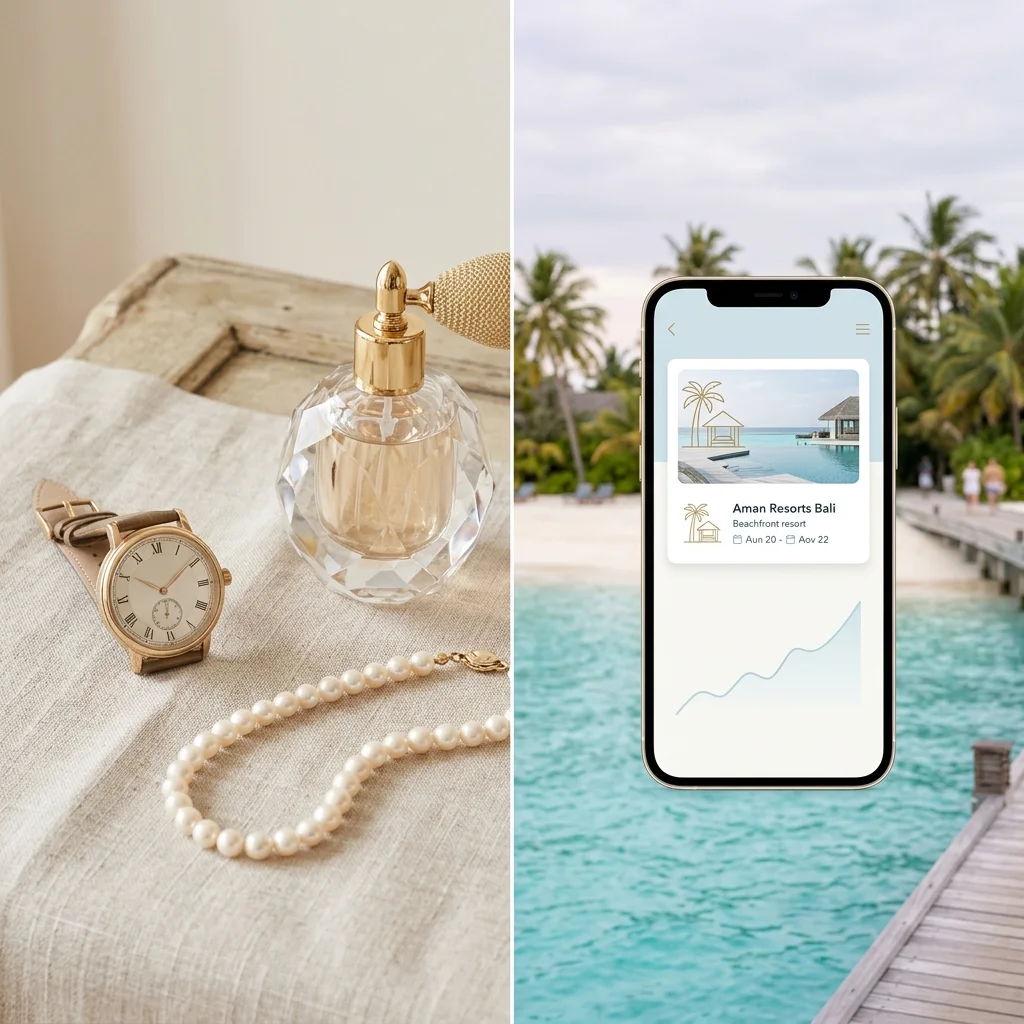
[IMAGE: A split composition: left side shows classic luxury items – a gold watch, a crystal perfume bottle, and a pearl necklace; right side shows a smartphone displaying a luxury travel app set against a tropical beach, with a subtle upward graph line in the background. No text, no watermark, high-end minimalist style, soft lighting, pastel tones.]
---
1. The 4.7% Paradox: Why a Steady CAGR Masks a Market in Flux
The raw numbers are deceptively linear. From a 2025 base of roughly USD 329 billion (estimated from 2022–2024 data), the luxury market will climb to USD 344.32 billion in 2026 and reach USD 516.48 billion by 2035. A 4.7% CAGR suggests an industry that grows predictably, propelled by inflation, wealth accumulation, and demographic tailwinds. In reality, this moderate growth rate is underwritten by deep structural changes that are anything but stable.
Post-COVID rebound and digital acceleration. The pandemic years (2020–2022) saw store closures, halted travel, and a sharp contraction in personal luxury spending. But the recovery brought an unexpected catalyst: digital adoption. Luxury brands that had long resisted e-commerce were forced to build direct-to-consumer channels, virtual consultations, and online exclusivity events. By 2024, online luxury sales accounted for over 20% of total revenue, up from 12% in 2019. This digital infrastructure now enables brands to reach younger, geographically dispersed consumers—but it also compresses margins and demands new logistics capabilities.
The sustainability inflection point. More critically, the 4.7% aggregate figure conceals a divergence: traditional luxury segments (hard luxury, ready-to-wear) are growing slower, while experiential luxury (travel, fine dining, wellness retreats, art experiences) is accelerating at a 6–8% CAGR. This shift is not a temporary post-pandemic blip; it reflects a generational redefinition of luxury itself. Millennials and Gen Z, who will represent over 60% of luxury spending by 2030, prioritize experiences over ownership and demand transparency in production.
[IMAGE: Infographic showing a bar chart from 2026 to 2035 with annotations for COVID recovery phase and sustainability inflection point. Data points: market size in USD billions; highlighted bars for year 2026 (baseline) and 2035 (projected). Color gradient from grey to green to indicate sustainability-driven growth.]
Why the CAGR is “moderate” is itself revealing. If the industry were simply riding inflation and wealth gains, the rate might be higher. The subdued figure signals headwinds: rising raw material costs, supply chain decarbonization investments, and a shift from volume-driven revenue to value-driven revenue. Brands are selling fewer units but at higher prices, a strategy that protects margins but limits top-line growth. According to the Business Research Insights report, the luxury market's volume growth has been negative in several categories since 2023, with price increases accounting for most revenue gains. This "trading up" dynamic is sustainable only as long as perceived value remains intact—a fragile equilibrium in an era of conscious consumerism.
---
2. Geography Rebalanced: Europe’s Legacy vs. Asia-Pacific’s Momentum
For decades, the luxury industry was synonymous with Europe. French and Italian houses defined craftsmanship, heritage, and exclusivity. Today, Europe still holds 35–40% of global market share, but Asia-Pacific has surged to 30–35% and is closing the gap faster than most forecasts predicted. The region’s share is projected to exceed 40% by 2032 if current trends hold.
Demographics and disposable income. The engine is not just China, though Chinese consumers remain the largest single nationality group for luxury purchases (estimated at 35–40% of global sales in 2024). South Korea, Japan, and Southeast Asian markets—particularly Singapore, Thailand, and Vietnam—are posting above-average growth. Japan’s luxury market, after a decade of stagnation, is rebounding on weak yen-driven tourism and domestic demand. India is emerging as a long-term opportunity, with a nascent luxury infrastructure and a young, aspirational population. The key markets covered in the report—US, Japan, Germany, UK, France, Canada, Italy, Australia, South Korea, Saudi Arabia, China, and Spain—show that countries with a CAGR above 5% are predominantly in Asia-Pacific and the Middle East (Saudi Arabia, UAE).
[IMAGE: World map heatmap overlay with Europe and Asia-Pacific highlighted, showing GDP per capita and luxury spend density. Color intensity represents luxury expenditure per capita; arrows showing flow of consumption from West to East.]
Status signaling vs. heritage storytelling. The traditional European luxury model—built on centuries-old ateliers, family heritage, and exclusivity through scarcity—faces a fundamental challenge in Asia-Pacific. Consumers in China and South Korea are digital-first, highly informed, and value status signaling that is both conspicuous and socially validated. They seek limited-edition drops, brand collaborations, and immersive retail experiences (pop-ups, digital showrooms). For European houses, this means adapting storytelling: “heritage” alone is insufficient; it must be accompanied by innovation, personalization, and a clear sustainability narrative. Brands that fail to localize—whether through regional supply chains, local celebrity endorsements, or culturally relevant campaigns—risk losing share to rapidly growing Asian luxury groups (e.g., LVMH’s Asian rivals, local high-end brands in Japan and Korea).
Supply chain realignment. The geographic rebalancing is not just about where consumers are; it’s about where value is created. Historically, luxury supply chains were concentrated in Europe (leather goods in Italy, watches in Switzerland, perfumes in France). Rising labor costs, environmental regulations, and the need for speed to market are pushing brands to establish production and distribution hubs in Asia-Pacific. Thailand and Vietnam are becoming centers for handbag assembly; China is increasing its role in watch movements and jewelry manufacturing. This shift carries risks—quality control, brand dilution, and the “Made in Europe” label’s cachet—but also opportunities for cost efficiency and market responsiveness.
---
3. The Sustainability Imperative: How Millennials and Gen Z Rewrote the Rules
The most consequential transformation, however, is not geographic but philosophical. The report explicitly states: “rising demand for eco-friendly luxury products, particularly among millennials and Generation Z.” This is no longer a niche trend or a marketing add-on; it is reshaping brand equity at a fundamental level.
From exclusivity to responsibility. In the pre-COVID era, luxury was defined by rarity and inaccessibility. The pinnacle of desirability was a handbag that took months to craft and cost a year’s salary. Today, that same consumer—especially the millennial or Gen Z high-net-worth individual—asks: Where did the leather come from? Are the workers paid fairly? Is the packaging recyclable? How much carbon was emitted in shipping? Transparency has become a competitive differentiator. Brands like Gucci (carbon-neutral by 2021), Stella McCartney (pioneer in vegan luxury), and Kering (environmental profit & loss accounting) have demonstrated that sustainability can drive premium pricing and customer loyalty.
[IMAGE: A side-by-side comparison: left image shows a traditional luxury factory with smokestacks (pre-2020); right image shows a modern carbon-neutral facility with solar panels and green roof, workers using recycled materials. Subtle labels: “2020” and “2030.”]
Supply chain decarbonization: the hidden cost. The sustainability imperative affects every link of the luxury value chain. Raw material sourcing (ethical diamonds, organic cotton, regenerative leather) commands 10–30% higher costs. Production (carbon-neutral factories, water recycling, renewable energy) requires upfront capital investment. Logistics (green shipping, electric fleets, circular packaging) adds operational complexity. By 2030, the European Union’s Corporate Sustainability Reporting Directive (CSRD) will require all luxury brands selling in Europe to disclose scope 1, 2, and 3 emissions. This regulatory pressure, combined with consumer demand, is forcing brands to treat sustainability not as a PR initiative but as a core business function.
Experiential luxury meets sustainability. Interestingly, the same demographics driving sustainability are also fueling the experiential luxury boom. Instead of buying a fifth designer handbag, a Gen Z luxury consumer might spend USD 20,000 on a private eco-resort in Bali, a carbon-neutral safari in Namibia, or a bespoke art tour in Tokyo. This “experiential shift” is well documented: experiential luxury spending grew at 8% CAGR from 2022 to 2025, outpacing personal luxury goods (4%). The underlying logic is that experiences are inherently more sustainable than physical goods (less material waste, lower carbon footprint per dollar spent) and more aligned with values of self-actualization and social connection. Brands that fail to offer tangible sustainability credentials risk being excluded from consideration sets.
Brand equity at stake. The consequences of inaction are stark: a 2024 consumer survey cited in the report found that 58% of luxury buyers under 35 have stopped purchasing a brand due to environmental or ethical concerns. Conversely, brands that rank high on ESG metrics (e.g., transparency, circularity, social impact) enjoy a 20–25% premium on customer lifetime value. This is not a future trend—it is a present reality. The Business Research Insights report underscores that the luxury market forecast now includes sustainability compliance as a direct variable in growth projections. Brands that do not invest in decarbonizing their supply chains should expect slower growth and possible market share erosion in key segments.
---
Conclusion: Navigating the Dual Transformation
The 4.7% CAGR is a statistical mirage. Behind it lies a market undergoing simultaneous geographic and value-system transformations. The traditional European houses that dominated the 20th century must now adapt to a world where Asia-Pacific calls the shots on innovation and digital engagement, and where millennials and Gen Z demand that luxury stands for something beyond status. The post-COVID recovery accelerated these shifts but did not create them. For strategists, the roadmap is clear: invest in regional customization and supply chain localization; embed sustainability into every facet of the business, from sourcing to storytelling; and recognize that experiential luxury is not a competitor to personal luxury but a complementary channel that can deepen brand relationships.
The luxury market of 2035 will look very different from today’s. Those who navigate this dual transformation with agility and authenticity will not merely survive the slow growth—they will define the next era of luxury.
[IMAGE: A conceptual image: a luxury brand storefront in a major Asian city (e.g., Shanghai or Seoul) with digital screens showing sustainability metrics alongside product displays. In the background, a subtle montage of electric aircraft, forest conservation, and young diverse consumers.]
Keywords

Ahmed Al-Farsi
Luxury & Lifestyle Editor with expertise in high-end hospitality and retail.