Beyond Bling: The New Economic Logic of the Gulf Luxury Market in 2025
The Gulf luxury market is no longer just about oil wealth and conspicuous consumption. With GCC personal luxury sales growing 6% in 2024 and retail sales projected to hit $15 billion by 2027, the region is witnessing a structural shift. This article reveals the hidden economic logic: a rapid redistribution of wealth via millionaire migration (UAE: +9,800; Saudi: +2,400 in 2025) combined with a generational fragmentation of tastes—from Gen Z beauty spenders ($52 skincare, $63 makeup) to Emirati HNWIs splurging $58,000 annually in Dubai. We conduct a deep industry audit of how brands like Zegna and The Frankie Shop are reshaping supply chains and retail formats to capture these nuanced segments.
Ahmed Al-Farsi
Editorial Analyst
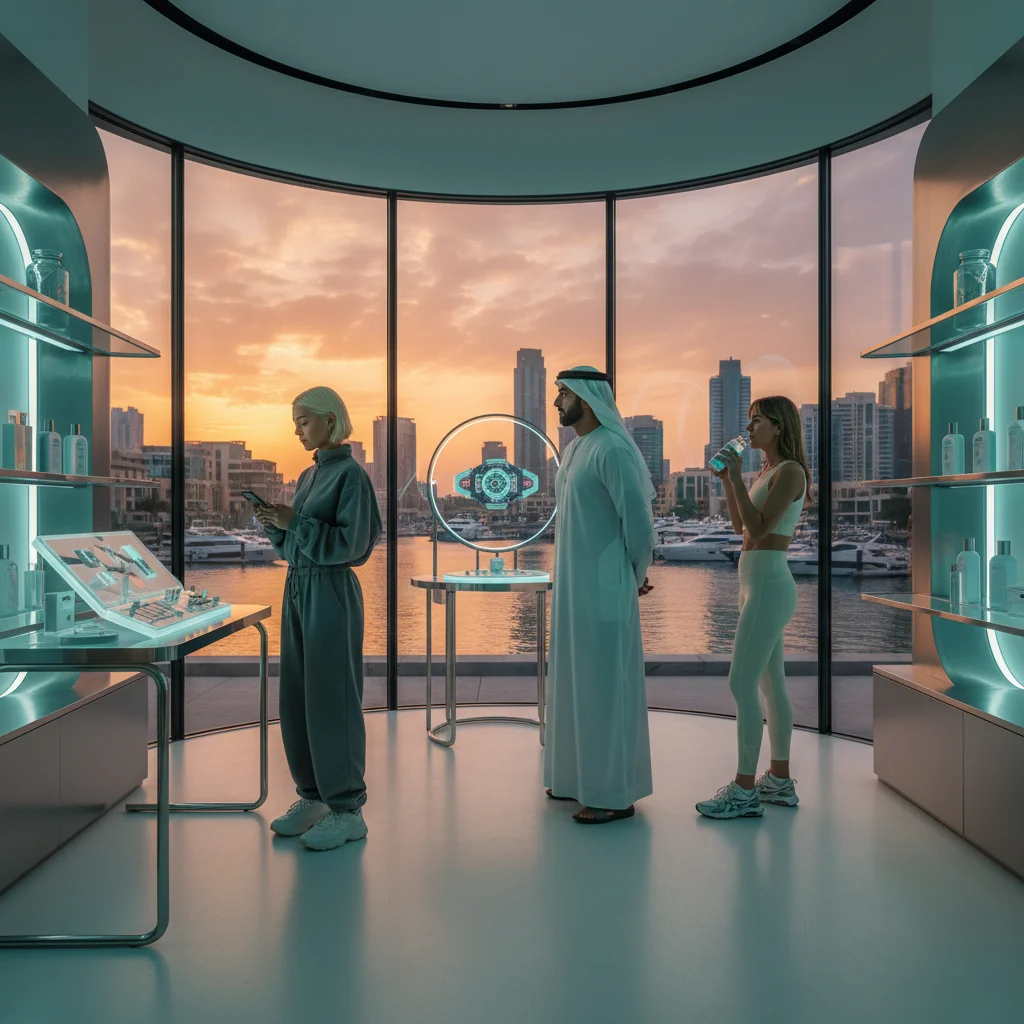
Beyond Bling: The New Economic Logic of the Gulf Luxury Market in 2025
GCC personal luxury sales grew 6% in 2024, reaching $12.8 billion, with a projected trajectory to $15 billion by 2027. This growth occurred against a global luxury market experiencing deceleration, positioning the Gulf as an outlier not merely in spending volume but in structural market transformation. The underlying economic logic has shifted: wealth migration—not organic regional accumulation—now drives demand, while generational taste fragmentation compels brands to reconfigure supply chains, retail formats, and product strategies simultaneously.
---
Introduction: The 6% Growth That Changes Everything
The GCC personal luxury market recorded 6% year-over-year growth in 2024, according to the World Luxury Chamber of Commerce (WLCC) (Source 1: [Primary Data: WLCC report excerpted via Jing Daily]). Retail sales currently stand at $12.8 billion and are forecast to reach $15 billion by 2027, representing a compound annual growth rate of approximately 5.4%.
This expansion contrasts sharply with global luxury dynamics. While Western European and North American markets grapple with inflationary pressure and shifting consumer sentiment, the Gulf benefits from two structural advantages: sustained high-net-worth individual (HNWI) immigration and a demographic profile where 70% of the population in Saudi Arabia is under 35. The result is not merely higher spending but a fundamental re-layering of luxury demand.
Four distinct consumer tribes have emerged: Gen Z beauty enthusiasts spending $52 monthly on skincare and $63 on makeup; Saudi streetwear consumers driving urban luxury adoption; Emirati HNWI fashion devotees averaging $58,000 annual luxury expenditure in Dubai; and Gen X wellness devotees seeking experiential, health-integrated luxury. Brands already adapting include Zegna, which held its first runway show outside Italy in Dubai, and The Frankie Shop, which entered Abu Dhabi with a curated streetwear offering.
---
The Wealth Migration Engine: Millionaire Inflows Reshape Demand
The Gulf luxury market's growth is not primarily organic. It is fueled by a structural inflow of mobile wealth. The UAE is projected to gain 9,800 new millionaires in 2025; Saudi Arabia is expected to add 2,400 (Source 1: [Primary Data: WLCC millionaire migration projections]). These are not locally generated fortunes but relocating HNWIs attracted by golden visa schemes, zero personal income tax, political stability, and lifestyle infrastructure.
The economic mechanism is distinct from traditional luxury consumption. In mature markets, luxury spending follows wealth accumulation cycles—bonuses, asset appreciation, inheritance. In the Gulf, new millionaire arrivals trigger a "first-purchase wave": complete lifestyle outfitting including real estate, automobiles, wardrobes, jewelry, and home furnishings. This inflates average transaction sizes and creates demand spikes that are not cyclical but episodic, tied to immigration flows rather than local economic cycles.
Evidence of brands chasing this mobile wealth is observable. Zegna's decision to host its first show outside Italy in Dubai (Source 2: [Secondary Evidence: Brand strategy data]) signals recognition that the region's wealth is not static but involves high-velocity capital that requires physical brand presence to capture. The Frankie Shop's Abu Dhabi entry (Source 2: [Secondary Evidence: Retail expansion data]) targets the same cohort from the streetwear segment.
The implication for luxury supply chains: Brands must maintain flexible inventory allocation systems capable of absorbing sudden demand from newly arrived HNWIs. Traditional seasonal ordering cycles are inadequate; just-in-time replenishment and regional warehousing become critical infrastructure.
---
Four Consumer Tribes: The Fragmentation of the GCC Shopper
The Gulf luxury consumer is no longer a monolithic entity. The WLCC report segments the market into four distinct profiles, each with divergent spending patterns, channel preferences, and brand loyalty drivers.
Segment 1: Gen Z Beauty Enthusiasts
Female consumers aged 13–28 allocate $52 monthly to skincare and $63 to makeup (Source 1: [Primary Data: WLCC consumer spending survey]). This cohort is digitally native, with 97% of GCC buyers overall planning to maintain or increase luxury spending in early 2025 (Source 1: [Primary Data: WLCC spending intent survey]).
Key structural insight: This segment does not favor legacy luxury houses. They seek affordable luxury and niche, ingredient-focused brands. The supply chain implication is direct-to-consumer (DTC) first strategies with hyper-localized product formulations. Brands must bypass traditional department store distribution to maintain margin control and data ownership.
Segment 2: Saudi Streetwear Community
Saudi Arabia's population is 70% under 35 (Source 3: [Demographic data: Saudi General Authority for Statistics]). Streetwear in this context functions as a status signaling mechanism that blends global street culture with local identity markers. The Frankie Shop's entry into Abu Dhabi (Source 2: [Secondary Evidence: Retail expansion data]) targets this segment specifically, offering contemporary streetwear that does not carry the heritage baggage of European luxury houses.
Supply chain implication: Streetwear requires rapid SKU rotation and limited-drop release models. Brands must invest in regional logistics hubs that can support flash sales and weekly drops, rather than traditional seasonal collections.
Segment 3: Emirati HNWI Fashion Enthusiasts
This cohort spends an average of $58,000 annually on luxury goods in Dubai and $24,000 in Riyadh (Source 1: [Primary Data: WLCC spending segmentation]). They are the traditional luxury consumer base—interested in watches, jewelry, leather goods, and high-end automobiles.
Critical distinction: The Dubai vs. Riyadh spending differential ($58,000 vs. $24,000) reflects not wealth disparity but market maturity. Dubai's luxury retail infrastructure is more developed, offering a wider range of ultra-luxury products. As Riyadh's retail ecosystem expands under Vision 2030, this gap will compress.
Segment 4: Gen X Wellness Devotees
This cohort represents the intersection of luxury and preventive health. They purchase high-end wellness experiences, biohacking services, luxury fitness apparel, and premium nutraceuticals. Brands targeting this segment must integrate wellness into their product narrative—not as a marketing overlay but as a core operational requirement.
---
Brand Strategy Audits: Zegna and The Frankie Shop
Two brand moves illustrate how companies are repositioning for this fragmented market.
Zegna: The Runway as Supply Chain Signal
Zegna's first show outside Italy in Dubai (Source 2: [Secondary Evidence: Brand strategy data]) is not a marketing event. It represents a logistical commitment: the brand is building regional supply chain capacity to serve Emirati HNWIs and newly arrived millionaires who require made-to-measure services and rapid fulfillment. The runway show functions as a demand validation mechanism for inventory allocation.
The Frankie Shop: Minimalist Streetwear, Maximalist Logistics
The Frankie Shop's entry into Abu Dhabi (Source 2: [Secondary Evidence: Retail expansion data]) targets Gen Z beauty enthusiasts and Saudi streetwear consumers simultaneously. The brand's minimalist aesthetic appeals to both segments, but the operational challenge differs: streetwear requires drop-based inventory management, while beauty-touched apparel requires hygiene-compliant supply chains.
Both brands share a common strategic thread: They are not building monolithic Gulf operations but modular supply chains capable of serving multiple consumer tribes from shared logistics infrastructure.
---
Market Predictions: 2025–2027
Based on current data and structural trends, three predictions emerge:
Prediction 1: Retail infrastructure will bifurcate. Ultra-luxury (watches, jewelry, high-end leather goods) will concentrate in Dubai and Riyadh's expanding luxury districts. Affordable luxury and streetwear will shift to DTC e-commerce with regional fulfillment centers in Jebel Ali (Dubai) and King Abdullah Economic City (Saudi Arabia).
Prediction 2: Millionaire migration will sustain demand, not amplify it. The 9,800 UAE and 2,400 Saudi millionaire additions in 2025 (Source 1: [Primary Data]) represent a ceiling, not a floor. Once first-purchase waves complete, luxury brands will need retention strategies—membership programs, personal shopping services, and supply chain reliability—to maintain repeat revenue.
Prediction 3: The $15 billion 2027 target depends on Saudi market maturation. The UAE accounts for the majority of current luxury sales. Achieving the projected $2.2 billion incremental growth requires Riyadh and Jeddah to develop retail ecosystems that capture a larger share of the $24,000 Emirati HNWI spend currently concentrated in Dubai.
---
The Gulf luxury market in 2025 is not a story of infinite growth. It is a story of structural reconfiguration: wealth migration creating demand spikes, demographic fragmentation forcing supply chain diversification, and brand positioning requiring simultaneous precision in product and logistics. The brands that succeed will not be those with the largest marketing budgets but those with the most adaptable operational infrastructure.
Keywords

Ahmed Al-Farsi
Luxury & Lifestyle Editor with expertise in high-end hospitality and retail.