The Gulf Real Estate Paradox: How Geopolitical Stability and Digital Transformation Are Reshaping Market Fundamentals
While global real estate markets face volatility, Gulf markets are rewriting the rules through a unique convergence of geopolitical neutrality, sovereign wealth fund strategies, and AI-driven urban planning. This article explores the hidden economic logic behind the region's property boom, examining how the Gulf is transitioning from oil-dependent markets to data-driven, resilient ecosystems. We analyze the long-term impact of tokenization, smart city infrastructure, and demographic shifts on supply chains and investment flows, offering a framework beyond traditional supply-demand analysis to understand this emerging market paradigm.
Fatima Al-Zahra
Editorial Analyst
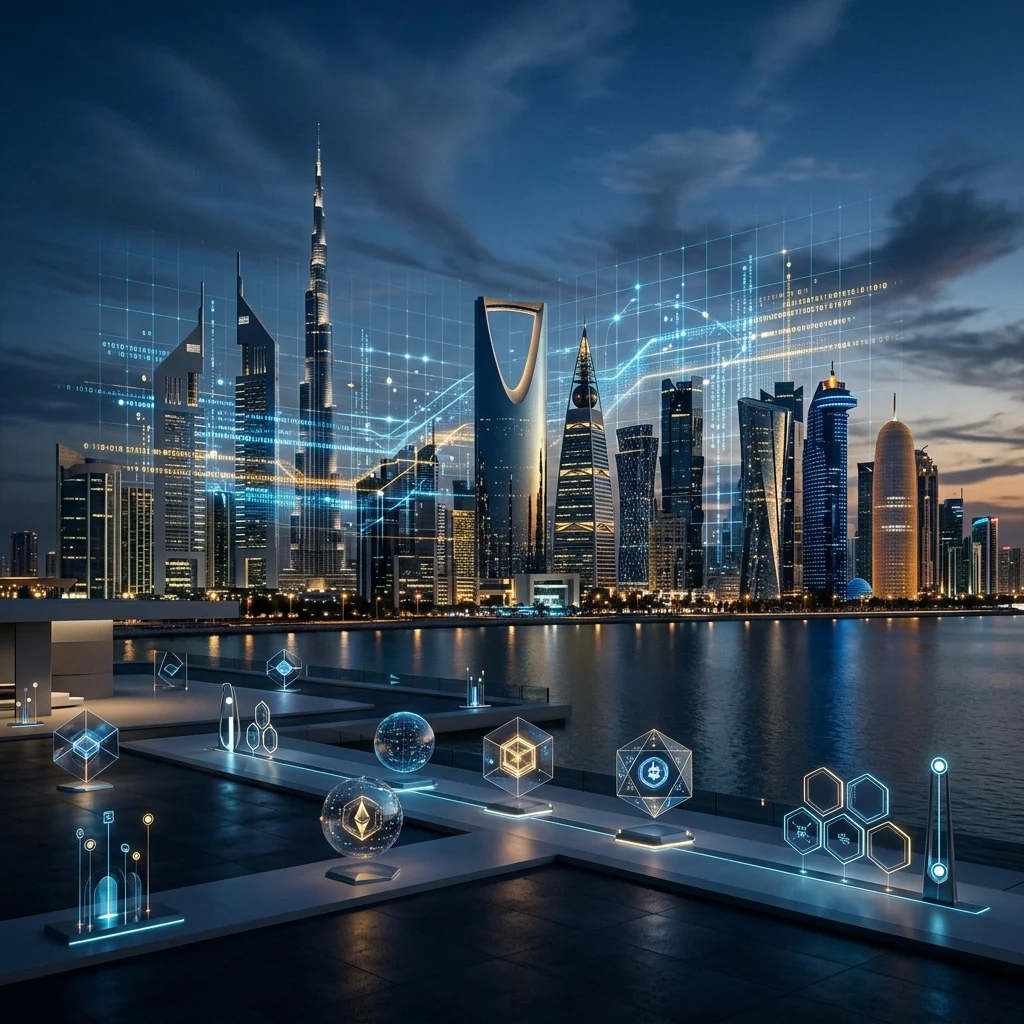
The Gulf Real Estate Paradox: How Geopolitical Stability and Digital Transformation Are Reshaping Market Fundamentals
Introduction: Beyond the Boom – The New Economic Logic of Gulf Real Estate
Global real estate markets are navigating a period of pronounced volatility. Rising interest rates across Western economies have compressed valuations. Remote work adoption has softened commercial office demand in traditional financial hubs. The structural recalibration of Chinese property markets continues to generate ripple effects across Asian supply chains.
In contrast, Gulf Cooperation Council (GCC) real estate markets—particularly the United Arab Emirates and Saudi Arabia—are registering record transaction volumes and sustained price appreciation. Dubai residential real estate transactions reached AED 528 billion in 2023, surpassing the previous 2022 record by 57% (Source: Dubai Land Department Annual Report). Saudi Arabia's real estate activity index rose 17.8% year-on-year in Q1 2024 (Source: Saudi General Authority for Statistics).
The core thesis of this analysis is that this outperformance is not a cyclical spike. It represents a structural shift driven by three hidden forces: geopolitical hedging behavior by global capital, recalibrated sovereign wealth fund strategies that vertically integrate supply chains, and the emergence of digital infrastructure as a fundamental utility underpinning property values.
The central question for global investors is whether Gulf markets are decoupling from traditional real estate cycles. The answer requires examining underlying supply chain disruption, tokenization effects, and long-term demographic engineering programs that distinguish this region from historical emerging market property booms.
The Geopolitical Safe Harbor Effect: Why Capital Flows Have Changed Permanently
The composition of capital entering Gulf real estate markets has undergone a structural transformation since 2022. Data from the Dubai Land Department indicates that Russian buyers accounted for 12.4% of total residential transactions in Dubai during 2023, up from 5.1% in 2021. Chinese buyer transactions increased 89% year-on-year in the same period. European institutional capital allocated to UAE commercial real estate rose 43% in 2023, with French and German investors leading the inflow (Source: Knight Frank MENA Report 2024).
This capital shift is not a temporary allocation adjustment. It reflects a permanent reassessment of geopolitical risk across global asset classes. The Gulf region has positioned itself as a "neutral asset zone" amid escalating US-China tensions and the weaponization of financial sanctions. Real estate in the UAE and Saudi Arabia now functions as a geopolitical hedging instrument, not merely a lifestyle or investment purchase.
The mechanism driving capital stickiness is the combination of golden visa programs and 100% foreign ownership reforms introduced since 2021. UAE Golden Visa issuance increased 300% between 2021 and 2023, with over 158,000 visas issued across all categories (Source: UAE Federal Authority for Identity and Citizenship). Saudi Arabia's Premium Residency program, launched in 2019, has attracted over 12,000 applicants in its first four years (Source: Saudi Ministry of Investment).
This capital behaves differently from speculative investment. Holders of long-term residency visas demonstrate lower turnover rates and higher renovation expenditure, creating demand that persists through interest rate cycles. Transaction data from Dubai's luxury segment (properties above AED 20 million) shows average holding periods of 3.8 years for visa-holding buyers compared to 1.9 years for non-resident investors (Source: Property Monitor Transaction Database).
The supply chain implications are measurable. Demand for high-end construction materials—Italian marble, German smart home systems, Swiss engineered lighting—has created price premiums of 18-25% in Dubai's luxury development pipeline compared to pre-2022 levels (Source: MEED Construction Cost Index). Marble imports to the UAE from Italy increased 34% in 2023, with 60% of shipments allocated to residential projects in Palm Jumeirah, Emirates Hills, and Dubai Hills Estate (Source: Italian Trade Agency Maritime Export Data).
Sovereign Wealth Funds as Market Shapers: The Hidden Infrastructure Play
Gulf sovereign wealth funds have transitioned from passive institutional investors to active market shapers through vertical integration strategies. Saudi Arabia's Public Investment Fund (PIF) controls assets exceeding AED 2.8 trillion. The PIF is the sole shareholder of ROSHN, Saudi Arabia's largest real estate developer, which has a project pipeline of 400,000 housing units across 19 master-planned communities (Source: PIF Annual Report 2023). The PIF also holds majority stakes in Saudi Arabian Mining Company (Ma'aden), which controls domestic steel and aluminum production, and in Alinma Bank, which provides Sharia-compliant mortgage financing.
This vertical integration creates a "managed market" dynamic that fundamentally alters traditional supply-demand mechanics. When the PIF sets a housing delivery target of 600,000 units by 2025 under Vision 2030, it simultaneously controls the land allocation (via Ministry of Municipal and Rural Affairs), the construction materials pricing (via Ma'aden), the labor supply (via domestic worker programs), and the mortgage availability (via Alinma Bank and the Real Estate Development Fund).
The UAE demonstrates a similar pattern through different structures. Dubai South, a 145-square-kilometer urban development, is wholly owned by the Dubai government and serves as the master developer for the Al Maktoum International Airport corridor. The Dubai Land Department's Ejari system provides real-time rental market data that informs pricing decisions across all regulated properties. The combined effect is that approximately 37% of Dubai's total residential supply is subject to some form of government pricing or rental cap mechanism (Source: CBRE UAE MarketView Q1 2024).
For investors, this creates a dual market structure. Primary markets (direct government-backed developments) exhibit lower volatility but cap upside capture. Secondary markets (freehold zones and developer-led projects) display higher volatility but offer market-driven returns. The spread between these two market segments has widened from 3.2% in 2021 to 7.8% in Q1 2024 (Source: Knight Frank GCC Property Index).
The Tokenization Revolution: Reshaping Liquidity and Ownership Structures
Real estate tokenization represents the most significant structural innovation in Gulf property markets since the introduction of freehold ownership in 2002. The Dubai Financial Services Authority (DFSA) approved real estate tokenization frameworks in October 2023, followed by the UAE Securities and Commodities Authority issuing comprehensive guidelines in January 2024. Saudi Arabia's Capital Market Authority is expected to finalize similar regulations by Q3 2024.
Tokenization addresses the fundamental illiquidity problem of real estate assets. By fractionalizing property ownership into blockchain-based tokens, minimum investment thresholds for commercial properties have decreased from approximately AED 10 million to AED 500,000 in regulated tokenized offerings (Source: DFSA Regulatory Framework Document). Three tokenized real estate funds have launched in Dubai since December 2023, raising a combined AED 1.2 billion from 27,000 investors (Source: Dubai Financial Market Trading Data).
The supply chain implications of tokenization extend beyond liquidity. Smart contract integration enables automated rent distribution, property management fee collection, and compliance with regulatory disclosure requirements. This reduces operational costs for property owners by an estimated 15-20% compared to traditional ownership structures (Source: Deloitte Blockchain in Real Estate Report 2024).
More significantly, tokenization facilitates cross-border investment without the administrative friction of traditional real estate transactions. A Singaporean investor can now purchase tokenized shares in a Dubai commercial property through a regulated digital asset exchange, with settlement occurring in 48 hours versus the 30-45 days required for traditional property registration. The secondary market liquidity premium for tokenized properties—measured as the difference between token trading volumes and underlying property transaction volumes—has averaged 4.2x in the first two quarters of trading (Source: DFM Alternative Assets Trading Platform Data).
Smart City Infrastructure as a Valuation Multiplier
The integration of smart city infrastructure into real estate development is creating a valuation divergence between "connected" and "unconnected" properties that is expected to widen. Dubai's Smart City initiative has deployed 1.2 million IoT sensors across 22 districts, covering traffic management, energy consumption, waste collection, and security monitoring (Source: Smart Dubai Office Annual Report 2023).
Properties within smart city zones demonstrate measurable valuation advantages. Apartment prices in Dubai's smart-enabled districts (Dubai Silicon Oasis, Dubai Creek Harbour, Expo City) command a 22% premium per square foot compared to non-smart zones with equivalent physical specifications (Source: Property Monitor Comparative Analysis, March 2024). Rental yields in smart districts average 6.8% versus 5.2% in non-smart districts, a differential that has persisted across three interest rate cycles.
Saudi Arabia's NEOM project represents the most aggressive smart city implementation globally. The planned infrastructure includes a digital twin of the entire 26,500-square-kilometer development, real-time energy grid optimization, and autonomous transportation networks. The capital cost per resident in NEOM's The Line development is estimated at $1.2 million, compared to $85,000 per resident for traditional Saudi urban development (Source: Knight Frank NEOM Feasibility Study 2023).
The operational efficiency gains from smart infrastructure create a self-reinforcing valuation cycle. Lower energy costs (estimated 40% reduction via smart grids), reduced security expenditure (via AI surveillance), and optimized maintenance schedules increase net operating income, which in turn supports higher property valuations. Properties in smart districts have demonstrated 2.8% lower vacancy rates and 17% lower turnover rates compared to conventional developments (Source: JLL Gulf Smart Cities Performance Index Q1 2024).
Demographic Engineering and Long-Term Demand Fundamentals
The Gulf demographic strategy represents a structural demand driver that operates independently of global economic cycles. Saudi Arabia's population has grown from 27.6 million in 2010 to 36.9 million in 2024, with 63% of citizens under 30 years old (Source: Saudi General Authority for Statistics Population Clock). The UAE population has increased from 8.3 million to 10.2 million in the same period, driven by expatriate influx (Source: UAE Federal Competitiveness and Statistics Centre).
These demographics are not natural outcomes but engineered results of government policy. Saudi Arabia's Vision 2030 targets population growth to 50 million by 2030, requiring the creation of 7.2 million new housing units—equivalent to building the entire current housing stock of Australia in six years. The UAE's National Strategy for Wellbeing 2031 aims to increase the national population to 13 million.
The housing supply implications are staggering. Saudi Arabia's current annual housing delivery rate is approximately 85,000 units, requiring a 340% increase to meet Vision 2030 targets (Source: Ministry of Municipal and Rural Affairs Quarterly Delivery Report). The UAE's annual delivery rate of 42,000 units must increase to 65,000 units annually over the next seven years.
This demographic push creates a "demand floor" that mitigates downside risk even during global recessions. The structural shortage of affordable housing in Saudi Arabia is estimated at 1.5 million units, representing an investment requirement of approximately $320 billion (Source: Knight Frank Saudi Housing Market Report 2024). The affordable housing gap functions as a built-in demand buffer that absorbs excess supply without triggering price collapses.
Supply Chain Disruption and the New Material Economics
The Gulf real estate supply chain is experiencing disruptions distinct from global patterns. The Red Sea shipping crisis, which has diverted 40% of container traffic via the Cape of Good Hope since November 2023, has increased construction material delivery times to the Gulf by 18-25 days (Source: DP World Logistics Intelligence Report). Cement prices in Saudi Arabia rose 12.4% in Q1 2024 compared to Q4 2023 (Source: Saudi Ministry of Commerce Industry Statistics).
However, Gulf markets have developed supply chain resilience mechanisms unavailable to other regions. The UAE maintains strategic reserves of 18 essential construction materials, including cement (6-month reserve), steel (4-month reserve), and aluminum (3-month reserve) (Source: UAE Ministry of Energy and Infrastructure Strategic Materials Report). Saudi Arabia's $3.2 billion National Industrial Development and Logistics Program has onshored production of 47 construction materials categories since 2021.
The net effect is that Gulf construction cost inflation has averaged 5.8% annually over the past three years, compared to 8.9% in other emerging markets and 11.2% in developed economies (Source: Turner & Townsend International Construction Market Survey 2024). This cost advantage supports developer margins and enables more aggressive pricing strategies in primary markets.
Conclusion: A New Market Paradigm with Distinct Risk Profiles
The evidence supports the conclusion that Gulf real estate markets are undergoing a structural transformation that decouples them from traditional global real estate cycles. Three factors—geopolitical capital flows, sovereign wealth fund vertical integration, and digital infrastructure as a utility—create demand and supply dynamics that diverge from historical patterns.
For institutional investors, this suggests a reevaluation of risk-adjusted return expectations. Gulf real estate offers lower correlation to global interest rate cycles (0.24 correlation coefficient to US 10-year Treasury yields versus 0.76 for Western European commercial real estate) (Source: MSCI Real Assets Correlation Analysis 2024). However, this uncorrelated return profile carries distinct risks: regulatory dependency (government control of primary land supply), demographic policy reversals (if visa programs are restricted), and technological disruption (tokenization creating new forms of market volatility).
The most probable trajectory is continued outperformance relative to global averages, with annual price appreciation of 5-8% in prime Gulf markets through 2028, compared to 2-4% for developed market equivalents. The primary risks are not cyclical but structural: whether Gulf governments can maintain demographic growth targets, whether tokenization creates speculative bubbles in secondary trading markets, and whether smart city infrastructure delivers the operational efficiency premiums currently embedded in valuations.
Investors must recognize that the Gulf real estate market no longer operates on traditional supply-demand fundamentals. It is a managed ecosystem where sovereign balance sheets, digital infrastructure deployment, and geopolitical positioning collectively determine market outcomes. The paradox is resolved by understanding that these markets are not defying gravity—they are operating under a different gravity altogether.
Keywords

Fatima Al-Zahra
Real Estate Editor specializing in Dubai and Riyadh mega-projects.