Qatar''s $8 Billion LNG Bet: Decoding the Strategy Behind the Global Gas Race
QatarEnergy's recent $8 billion investment to expand its LNG production capacity by 16 million tonnes per annum is more than a simple capacity boost; it's a calculated move in a high-stakes global energy chess game. This analysis delves beyond the headline numbers to explore the underlying economic logic of pre-empting future demand, the strategic timing amidst geopolitical shifts, and the long-term implications for global gas markets and supply chains. We examine how Qatar is leveraging its cost-advantaged position to solidify market dominance, potentially reshaping trade flows and pricing dynamics for decades, while competitors scramble to secure their own positions in the evolving energy landscape.
Omar Hassan
Editorial Analyst
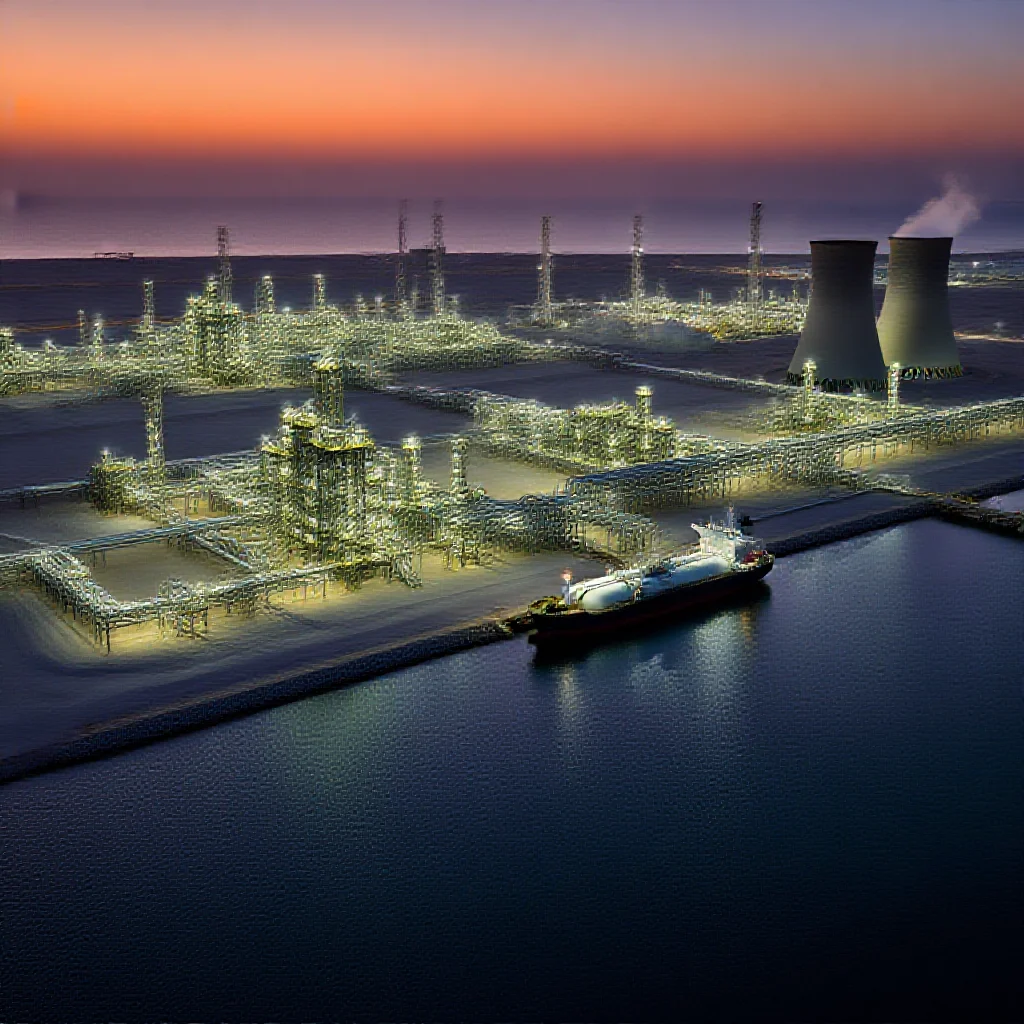
Qatar's $8 Billion LNG Bet: Decoding the Strategy Behind the Global Gas Race
Opening Summary
On May 28, 2024, QatarEnergy announced an $8 billion investment to expand its North Field liquefied natural gas (LNG) production capacity by 16 million tonnes per annum (mtpa) (Source: MEED.com). This move, explicitly framed within a "global LNG race" by the source, extends Qatar's broader $30 billion North Field expansion program. The transaction is not merely an incremental capital expenditure but a strategic maneuver designed to recalibrate long-term supply dynamics, leveraging Qatar's unique economic advantages to pre-empt future demand and solidify structural dominance in the global gas market.
Beyond the Headline: The $8 Billion Move in the Global LNG Chess Game
The announcement represents a calculated play in a high-stakes strategic contest. While the addition of 16 mtpa increases Qatar's total production capacity to approximately 142 mtpa by 2030, the core objective transcends volume. In an energy landscape characterized by transition uncertainty, the investment serves a dual purpose: defensively, it locks in long-term market share before demand potentially peaks; offensively, it utilizes Qatar's low-cost base to apply pressure on higher-cost competitors. This expansion is a direct response to the fragmented global scramble for LNG investment, positioning Qatar to set the terms of engagement for the next decade.The Core Economic Logic: Cost Leadership as a Weapon
The economic rationale underpinning the $8 billion figure is central to its strategic potency. The capital expenditure translates to an approximate cost of $500 per tonne of annual capacity, a benchmark significantly below global norms. For context, recent greenfield LNG projects in other jurisdictions have reported costs ranging from $1,000 to over $1,500 per tonne. This disparity stems from Qatar's immense economies of scale at the North Field, the world's largest non-associated gas field, and the utilization of existing infrastructure and synergies from concurrent expansion phases.This cost advantage functions as a strategic weapon. It grants QatarEnergy superior pricing flexibility, enabling it to undercut marginal projects while maintaining profitability. The strategy implicitly targets the final investment decisions (FIDs) of proposed higher-cost projects in regions like the United States, Canada, and East Africa. By signaling an intention to bring large volumes of low-cost supply to market in the late 2020s, Qatar can deter competing capital, effectively crowding out potential rivals and consolidating market share among a smaller set of low-cost producers.
Timing is Everything: A Pre-emptive Strike Before Demand Peaks
The timing of the investment announcement is a critical component of its logic. It constitutes a pre-emptive strike against future market tightness. Analysis indicates the additional volumes will come online around 2028-2030, a period when many forecasts project a potential supply gap as Asian demand continues to grow and European reliance on non-Russian gas solidifies.This move is a direct bet against narratives of imminent peak gas demand. By securing engineering, procurement, and construction capacity now and advancing the project timeline, QatarEnergy is "booking" future market share. It aims to secure long-term sales and purchase agreements (SPAs) with buyers seeking supply security for the 2030s, thereby de-risking its project commercially before competitors can mobilize. The strategy accepts short-term market volatility in exchange for long-term contract stability and volume placement.
The Ripple Effect: Reshaping Global Supply Chains and Alliances
The expansion will generate significant ripple effects across global LNG supply chains and commercial relationships. For competing suppliers, the pressure is multifaceted. US LNG developers must now accelerate their own FIDs to secure a foothold before Qatar's volumes arrive, or face the prospect of competing in a potentially oversupplied market. Projects in Mozambique and Canada face heightened scrutiny on their cost competitiveness.For buyers, particularly in Asia and Europe, the prospect of significant new, low-cost supply enhances negotiating leverage. It accelerates the trend toward more flexible, destination-free contracts and shorter terms, weakening traditional oil-indexation. Furthermore, Qatar's expansion could redirect trade flows, with increased volumes likely targeting key growth markets in South and Southeast Asia, potentially at the expense of Atlantic Basin suppliers. This may foster new, long-term bilateral energy alliances centered on Doha.
The Geopolitical Dimension: Energy Security and Strategic Influence
LNG remains a critical tool of statecraft and energy security strategy. Qatar's expansion reinforces its role as a primary guarantor of energy security for its long-term partners, which include major economies in Asia and Europe. By increasing its export capacity, Qatar not only bolsters its own economic resilience but also amplifies its geopolitical influence as a reliable supplier during a period of systemic fragmentation.The investment further cements the strategic partnership between Qatar and key Asian importers, intertwining energy trade with broader diplomatic and investment ties. Concurrently, it offers European nations a tangible pathway to further diversify away from pipeline gas dependencies, providing a stable, long-term supply alternative. This positions Qatar at the nexus of multiple strategic alliances, with its LNG exports serving as the foundational link.
Neutral Market Predictions
The market implications of Qatar's expansion are predictable in direction, if not precise magnitude. First, the long-term LNG price ceiling will be increasingly set by Qatar's marginal cost of production, compressing the profitability window for higher-cost projects. Second, the wave of supply expected post-2028 will likely temper price spikes in the next cyclical tight phase, contributing to greater price stability, albeit at levels favorable to low-cost producers.Third, the project will intensify competition for FID among second-wave LNG projects globally, leading to potential consolidation or cancellation of marginal ventures. Finally, the commercial landscape will continue to shift toward buyer-friendly terms, with hybrid pricing formulas and increased contract flexibility becoming the market standard. Qatar's $8 billion bet is therefore a defining move, one that will shape the contours of the global gas industry for the coming decades.
Keywords

Omar Hassan
Energy Correspondent tracking OPEC+ policies and renewable energy transitions.