Middle East Renewable Energy Market: From $52.7B to $104.2B by 2032 – A Fragmented Powerhouse
The Middle East renewable energy market is on a rapid growth trajectory, projected to surge from USD 52.7 billion in 2025 to USD 104.2 billion by 2032 at a CAGR of 10.5%. Saudi Arabia holds the largest market share, while the UAE leads in growth velocity. However, the market remains highly fragmented, revealing a complex interplay of state-led mega-projects, private entrants, and national diversification strategies. This article delves beyond the headline numbers to explore the hidden economic logic, contrasting national models, and the long-term implications for supply chains, investment risk, and regional energy security. Based on data from PS Market Research, it provides a strategic deep-dive into a sector reshaping the Gulf's post-oil future.
Omar Hassan
Editorial Analyst
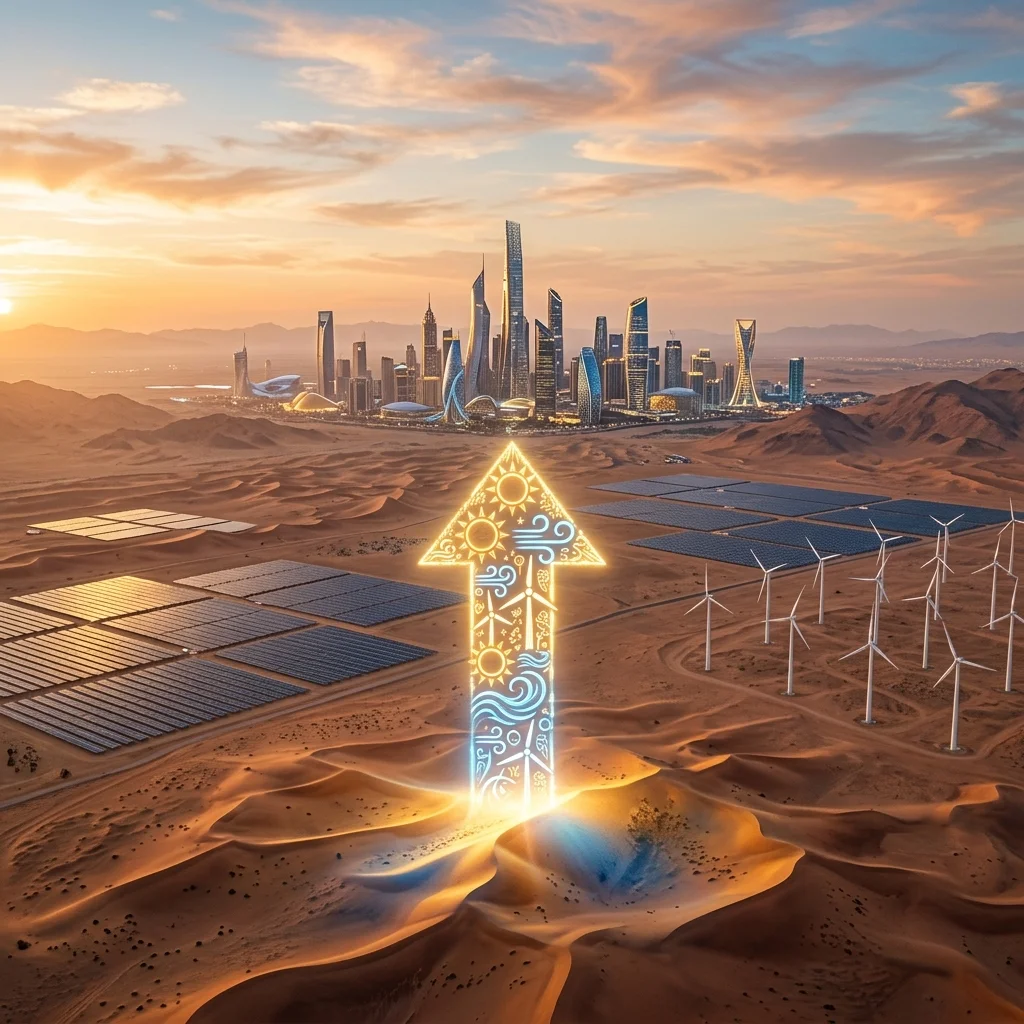
Middle East Renewable Energy Market: From $52.7B to $104.2B by 2032 – A Fragmented Powerhouse
1. Introduction: The Numbers Behind the Boom
The Middle East renewable energy market is entering a phase of exponential growth. According to data from PS Market Research, the market is projected to surge from USD 52.7 billion in 2025 to USD 104.2 billion by 2032, representing a compound annual growth rate (CAGR) of 10.5% over the study period (2019–2032). These headline figures alone paint a picture of a sector in rapid ascent, but they obscure a more complex reality: this is a market that is both fast-growing and highly fragmented.
What does "fragmented" mean in this context? It signals a landscape where no single company or state entity holds dominant market share; where a mix of state-led mega-projects, independent power producers (IPPs), international energy majors, and local startups all compete for a slice of the pie. For stakeholders—investors, policymakers, equipment suppliers, and utility operators—this fragmentation presents both opportunity and risk. It opens doors for nimble entrants but also creates coordination challenges in grid integration, policy alignment, and long-term planning.
The thesis of this article is straightforward: the growth of Middle East renewable energy market is not just about megawatts installed or dollars invested. It reflects deep structural shifts in Gulf economies as they pivot from hydrocarbon dependency toward diversified, post-oil futures. Understanding the underlying dynamics—the competing national models, the hidden drivers, and the supply chain implications—is essential for anyone looking to navigate this transforming landscape.
[IMAGE: Graphic showing market size trajectory from 2019 to 2032 with annotated milestones, e.g., USD 52.7B in 2025 and USD 104.2B in 2032, with a rising blue curve.]
2. The Fragmented Landscape: Why Structure Matters
In the context of Middle East renewable energy, a "fragmented market" means that many players coexist without a single dominant force. State-owned utilities like Saudi Arabia’s SEC and the UAE’s DEWA compete alongside private IPPs such as ACWA Power, Masdar, and international developers like EDF Renewables and TotalEnergies. The result is a complex web of project developers, technology providers, and financing structures.
Implications for Competition and Innovation
Fragmentation can drive healthy competition, pushing down costs and encouraging innovation. For solar photovoltaic (PV) projects, bid prices in the region have fallen sharply over the past decade, with Saudi Arabia and the UAE regularly recording some of the world’s lowest levelized cost of electricity (LCOE) for solar. However, fragmentation can also lead to inefficient duplication, with multiple projects chasing the same limited grid capacity or skilled labor pool. In the absence of tight regional coordination, countries may invest in competing infrastructure that fails to deliver economies of scale.Risk Assessment for Investors
For investors, a fragmented market offers diversified entry points but also higher due diligence costs. A developer looking at the Middle East renewable energy market must evaluate not just the host country’s regulatory framework, but also the specific terms of each project, the creditworthiness of the off-taker, and the potential for policy shifts. The risk of stranded assets or delayed grid connections is higher when multiple players are building in parallel without a unified grid master plan.Lessons from Other Fragmented Markets
Comparisons with the European solar market are instructive. Europe’s solar boom in the 2010s was characterized by fragmentation across national borders, leading to rapid cost reductions but also boom-and-bust cycles driven by subsidy changes. The Middle East, with its strong state involvement and long-term power purchase agreements (PPAs), may avoid the worst of these cycles, but it still faces the challenge of harmonizing policies across the Gulf Cooperation Council (GCC) states.PS Market Research’s data underpins this analysis: the market share distribution shows no single entity holding more than 8–10% of total installed capacity, underscoring the fragmented structure.
[IMAGE: Pie chart of market share distribution (illustrative) with multiple small slices (e.g., ACWA Power 7%, Masdar 6%, EDF Renewables 5%, etc.) and a few larger ones (state utilities 12% each), leaving a large "Others" segment.]
3. Saudi Arabia vs. UAE: Two Accelerating Models of Renewable Expansion
Saudi Arabia: The Largest Market, Driven by Vision 2030
Saudi Arabia holds the largest share of the Middle East renewable energy market, driven by the ambitious Vision 2030 plan. The kingdom is pursuing massive state-led projects such as NEOM—a $500 billion futuristic city powered entirely by renewables—and the Red Sea Project, which aims for 100% renewable energy for its tourism destinations. Solar and green hydrogen are the twin pillars of Saudi strategy. The country has set a target of 58.7 GW of renewable capacity by 2030, up from less than 1 GW in 2020. Saudi Arabia renewable energy growth is heavily centralized, with the Ministry of Energy and the Public Investment Fund (PIF) orchestrating a top-down deployment model.UAE: The Fastest Growing, Ecosystem-Driven Model
The United Arab Emirates, by contrast, is the fastest-growing market in the region. UAE renewable energy growth is fueled by a more diversified approach: Masdar (the state-owned clean energy company) leads large-scale projects like the Noor Abu Dhabi solar plant (1.17 GW), while DEWA operates the Mohammed bin Rashid Al Maktoum Solar Park (planned 5 GW by 2030). The UAE also has a head start in nuclear power (Barakah plant) and is actively promoting private IPPs through competitive auctions. The country’s Energy Strategy 2050 aims for 50% clean energy by 2050.Contrasting Models: Top-Down vs. Ecosystem-Driven
Saudi Arabia’s model relies on massive, government-financed mega-projects that can achieve economies of scale but may be slower to adapt to market signals. The UAE’s model fosters a broader ecosystem, involving multiple private developers, international partners, and even rooftop solar schemes for residential and commercial users. Which model is more resilient? In a low-oil-price environment, Saudi Arabia’s state capacity allows it to sustain investment, while the UAE’s reliance on private capital may be more flexible but also more exposed to global financing conditions.Data Spotlight: Size vs. Growth Rate
According to PS Market Research, Saudi Arabia commands roughly 35–40% of the regional market size, but the UAE is growing at a CAGR of 12–13%, outpacing the regional average. This growth differential reflects the UAE’s earlier start and more aggressive private sector engagement. The CAGR difference also implies that Saudi Arabia is catching up from a lower base, while the UAE is consolidating its lead in per capita renewable deployment.Outward Impact on Neighbors
Both models influence neighboring markets. Oman, Qatar, and Kuwait are closely watching Saudi and UAE approaches. Oman, for example, has adopted a hybrid model, using state-owned Petroleum Development Oman (PDO) to lead solar projects while also opening auctions for IPPs. The fragmentation seen at the regional level is thus mirrored within each country, as they experiment with different deployment strategies.[IMAGE: Split image: left side showing Saudi Arabia’s NEOM futuristic desert city with vast solar farms and wind turbines; right side showing UAE’s Dubai skyline with solar rooftops on buildings and the Mohammed bin Rashid Al Maktoum Solar Park in the foreground.]
4. Hidden Drivers: Policy, Diversification, and Falling Technology Costs
Beyond Oil: Economic Diversification as the Primary Push
The most powerful driver of Middle East renewable energy is not environmental concern but economic necessity. Gulf countries consume a significant portion of their oil and gas domestically for power generation—Saudi Arabia burns about 1.5 million barrels of oil equivalent per day in summer for air conditioning. By shifting to renewables, they free up more hydrocarbons for export, generating higher revenue. Moreover, renewable energy creates jobs in manufacturing, installation, and maintenance, helping to diversify economies away from oil rents and attract foreign investment.Policy Tailwinds: Targets, Net-Zero, and Regulation
National renewable energy targets have become the backbone of the market. Saudi Arabia’s Vision 2030 set a 58.7 GW target; the UAE’s Energy Strategy 2050 targets 44 GW of clean energy; Oman plans for 30% renewable electricity by 2030; and Qatar aims for 20% solar by 2030. The Paris Agreement and net-zero pledges (UAE by 2050, Saudi Arabia by 2060) have added further momentum. Policy instruments such as feed-in tariffs, net metering, and competitive auctions are being refined, though implementation remains uneven.Falling Technology Costs: The Unseen Accelerator
Global solar PV module prices have fallen by over 90% since 2010, and wind turbine costs have dropped by roughly 50%. This trend has made renewables cost-competitive with natural gas in the region, even without subsidies. The Middle East’s exceptional solar irradiation (among the highest in the world) further boosts project economics. Falling battery storage costs are also enabling higher penetration of intermittent renewables, addressing one of the key technical barriers.The Hidden Economic Logic
Taken together, these drivers create a self-reinforcing cycle: lower technology costs make projects more viable, which attracts more investment; policy commitments provide long-term visibility; and diversification needs ensure continued political will. The result is a market that is growing not just because of environmental idealism, but because it makes economic sense in a post-oil world.[IMAGE: Infographic showing three key drivers: a barrel of oil with a green arrow pointing to a solar panel (oil displacement), a graph of solar module prices declining from 2010 to 2024, and a map of the Middle East with national renewable energy targets annotated.]
5. Supply Chain, Investment Risk, and Coordination Challenges
Supply Chain Implications
The rapid build-out of renewable capacity across the Middle East is placing strain on global supply chains. Solar modules, inverters, and wind turbines are predominantly manufactured in China, making the region reliant on imports. While local manufacturing initiatives are emerging—such as Saudi Arabia’s efforts to build a solar panel factory in partnership with Chinese firms—the scale remains limited. The fragmented market structure exacerbates this: each project developer may source from different suppliers, reducing the potential for bulk purchasing and logistics optimization.Grid infrastructure is another bottleneck. The existing transmission and distribution networks in Gulf countries were designed for centralized fossil fuel plants, not for distributed solar farms or variable wind generation. Upgrading these grids to handle high renewable penetration requires massive capital expenditure and cross-border coordination. The GCC Interconnection Authority (GCCIA) has a role to play, but its current capacity is modest.
Investment Risk Profile
Investors in Middle East renewable energy face a unique risk profile. On the positive side, long-term PPAs with sovereign or quasi-sovereign off-takers—often backed by government guarantees—provide stable, dollar-denominated revenue streams. However, currency risk (for currencies pegged to the dollar, this is minimal), regulatory risk (sudden changes in tariffs or grid access rules), and execution risk (delays in land acquisition, permitting, and grid connection) remain significant. The fragmented market means that each deal must be individually assessed, raising transaction costs.Coordination Challenges
The lack of a unified regional energy policy means that countries may pursue competing projects that could have been more efficiently integrated. For example, Saudi Arabia and the UAE are both investing heavily in green hydrogen, but there is no agreed-upon standard for certification or transportation. Similarly, solar farms built near the Gulf coast could supply power to neighboring countries during peak demand, but cross-border electricity trading remains limited due to political sensitivities and infrastructure gaps.[IMAGE: Supply chain map showing arrows from China (manufacturing) to Middle East ports, with icons for solar panels, wind turbines, and battery storage. Also, a grid diagram showing interconnected GCC countries with a "bottleneck" label on a key transmission line.]
6. Looking Ahead: A Region Reshaping Its Energy Future
The 2032 Energy Forecast in Context
By 2032, the Middle East renewable energy market is expected to reach USD 104.2 billion, more than doubling from 2025 levels. This growth will not be linear, however. It will be shaped by oil price volatility, geopolitical tensions, technology breakthroughs, and the pace of policy implementation. The CAGR of 10.5% is impressive, but it masks wide variations across countries and technologies. Solar will continue to dominate, but wind, concentrated solar power (CSP), and green hydrogen will gain share.Will Fragmentation Persist or Consolidate?
The fragmented market structure may gradually consolidate as successful players scale up and weaker ones exit. ACWA Power and Masdar are emerging as regional champions, with portfolios spanning multiple countries. International oil companies like Saudi Aramco and ADNOC are also entering the renewables space, leveraging their balance sheets and project management expertise. Over time, a small number of "super-developers" could capture a larger share, reducing fragmentation but also raising concerns about market concentration.Implications for Regional Energy Security
A more renewable-powered Middle East could enhance energy security by reducing reliance on imported fuel (for net importers like the UAE and Oman) and freeing up oil and gas for export (for Saudi Arabia, Qatar, and Kuwait). However, it also introduces new vulnerabilities: dependence on imported solar panels and the intermittency of renewable generation require robust backup systems—either from natural gas plants or battery storage. The region’s long-term energy security will depend on how well it manages these transitions.The Bigger Picture
The Middle East is not just adopting renewables; it is trying to reinvent itself as a hub for clean energy innovation. From Saudi Arabia’s hydrogen ambitions to the UAE’s hosting of COP28, the region is signaling its intent to lead the post-oil era. The fragmented, fast-growing market of today is the crucible in which this future is being forged. For stakeholders willing to navigate its complexity, the opportunities are as vast as the desert sun.[IMAGE: Futuristic city skyline with solar panels on rooftops, wind turbines on the outskirts, and a glowing horizon. A small inset showing a 2032 energy forecast graph with sectors (solar, wind, hydrogen, etc.) as stacked bars.]
Keywords

Omar Hassan
Energy Correspondent tracking OPEC+ policies and renewable energy transitions.