Beyond the Wrist: How Qualcomm''s Wear Elite Platform Signals a Strategic Shift in Wearable AI
Qualcomm's launch of the Snapdragon Wear Elite platform is more than a new chipset; it's a strategic pivot to capture the next frontier of wearable AI. By explicitly targeting non-wrist devices and providing a developer kit, Qualcomm is not just selling hardware but cultivating an ecosystem for ambient, context-aware computing. This move reveals a calculated effort to diversify beyond the saturated smartwatch market and establish a foundational architecture for AI-powered wearables in healthcare, enterprise, and industrial applications. The platform's success hinges on its ability to attract developers to build novel form factors, potentially reshaping the entire wearable supply chain and competitive landscape.
Layla Ibrahim
Editorial Analyst
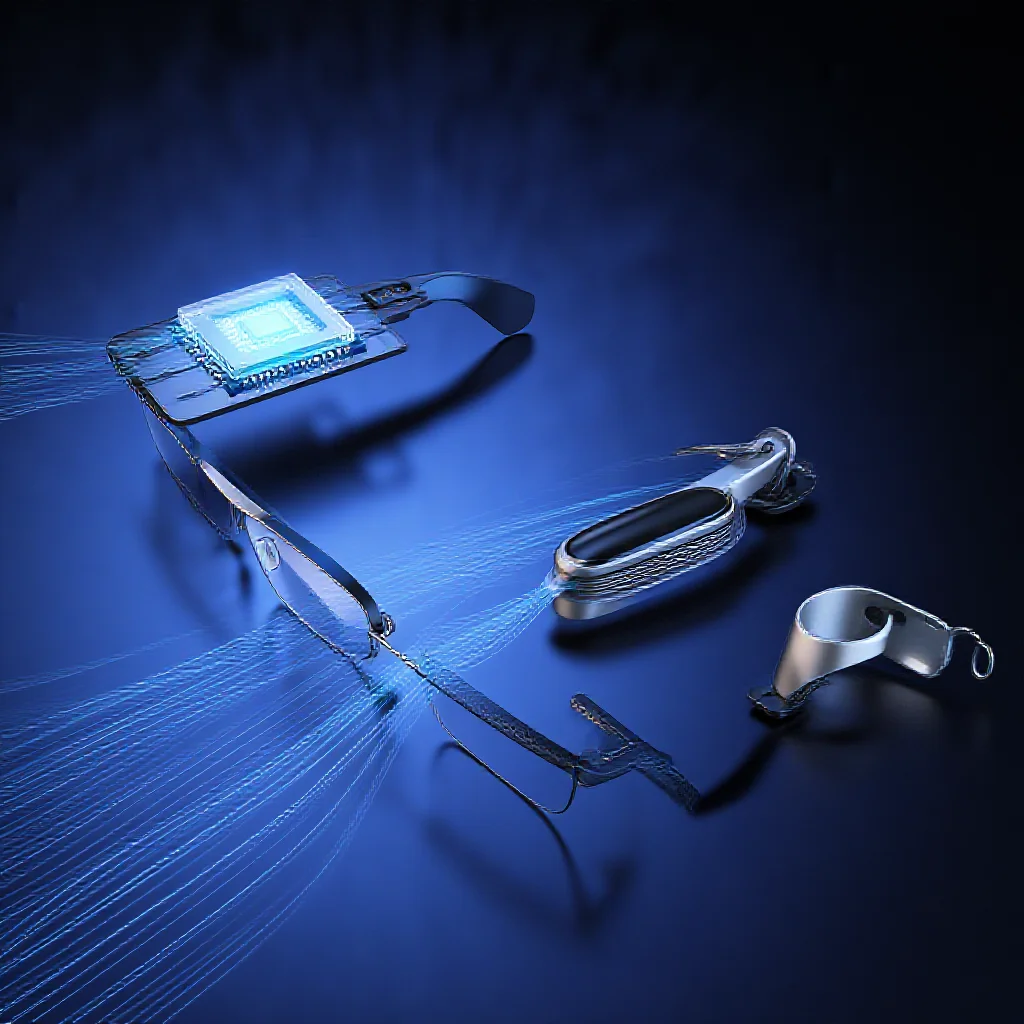
Beyond the Wrist: How Qualcomm's Wear Elite Platform Signals a Strategic Shift in Wearable AI
Introduction: The Wrist is Just the Beginning
The wearable technology market, particularly the smartwatch segment, has reached a state of incremental maturity. Growth, while steady, is increasingly driven by replacement cycles rather than new user acquisition. Within this context, Qualcomm Incorporated’s announcement of the Snapdragon Wear Elite platform represents a calculated divergence. The platform’s explicit targeting of "devices beyond the wrist" is its primary differentiator. (Source 1: [Primary Data - Qualcomm Announcement]). This move shifts focus from a saturated battleground to the nascent frontier of ambient, context-aware computing. The central strategic question is not about a new system-on-chip (SoC), but why Qualcomm is investing in an ecosystem play aimed at builders and developers for non-wrist form factors at this juncture.
Decoding the Strategy: From Chip Vendor to Ecosystem Architect
Qualcomm’s launch transcends a hardware update; it is a deliberate pivot from a component supplier to a platform architect. The economic logic is clear: supplying discrete chips for smartwatches captures a single transaction. Providing a comprehensive platform—complete with silicon, reference designs, and a development kit—creates deeper vendor lock-in and expands the total addressable market by enabling new product categories.
The explicit targeting of "builders and developers" is a demand-side stimulus strategy. (Source 1: [Primary Data - Qualcomm Announcement]). Instead of waiting for original equipment manufacturers (OEMs) to define the next wearable category, Qualcomm is providing the foundational tools to invent them. This positions the company upstream of innovation, aiming to catalyze the market from the hardware and software development level.
This approach creates a distinct competitive posture. It contrasts with Apple’s vertically integrated model, where hardware, software, and form factor are tightly controlled. It also differs from Google’s Wear OS, which is primarily a software and services layer. Qualcomm’s move is an open, hardware-centric ecosystem play, offering the core architectural blueprint upon which diverse OEMs can build.
The Deep Entry Point: Reshaping the Wearable Supply Chain
The long-term implication of this strategy is a potential restructuring of the wearable device supply chain. Reference designs and an accessible development kit significantly lower the barriers to entry for new OEMs. (Source 1: [Primary Data - Qualcomm Announcement]). This could fragment the wearable market beyond the dominance of integrated giants like Apple and Samsung, empowering smaller, specialized firms focused on medical diagnostics, enterprise logistics, advanced athletic performance, or industrial safety.
Such fragmentation would ripple through the component supply chain. Success for novel form factors—smart rings, body patches, clip-on sensors, or integrated clothing—would drive increased demand for specialized, low-power sensors, innovative battery solutions, and flexible or miniaturized manufacturing processes. Qualcomm’s platform, therefore, acts as a catalyst not just for device innovation, but for creating new niches across the entire hardware supply ecosystem.
Evidence and Verification: Reading Between the Lines of the Launch
A technical analysis of the available launch materials confirms the strategic direction. Qualcomm’s official communications consistently emphasize enabling "wearable AI applications" for devices not confined to the wrist. (Source 1: [Primary Data - Qualcomm Announcement]). The inclusion of a development kit is a tangible commitment to fostering a developer community, a step not typically emphasized in pure component launches.
This strategy aligns with identifiable market opportunities. Industry analyst forecasts consistently project higher growth rates for wearable segments like ear-worn devices, smart glasses, and other form factors compared to the maturing wrist-worn category. Qualcomm’s pivot can be seen as a direct response to these growth differentials.
Furthermore, this is not an isolated corporate maneuver but part of a broader pattern. It mirrors Qualcomm’s strategic expansion in the automotive sector with the Snapdragon Digital Chassis, a similarly positioned platform play that moves the company beyond being a modem supplier to becoming the architect of a connected vehicle’s core computing functions.
The Future Scenarios: What Success or Failure Looks Like
The trajectory of the Snapdragon Wear Elite platform will be defined by its adoption curve within the developer and specialized OEM community.
A successful outcome would see the platform become the de facto standard architecture for next-generation wearables outside the smartwatch domain. A vibrant ecosystem of developers would create compelling AI applications for health monitoring, contextual assistance, and enterprise productivity, driving demand for hardware built on Qualcomm’s reference designs. This would solidify Qualcomm’s role as the central node in a diversified wearable universe, reducing its dependence on any single device category or OEM.
Conversely, failure would manifest as developer apathy and limited OEM uptake. If the platform fails to demonstrate a clear performance-per-watt advantage or sufficient tooling support compared to bespoke or rival solutions, it would remain a niche offering. The market would continue to evolve, but through fragmented, proprietary developments, leaving Qualcomm’s ecosystem ambitions unrealized and its growth in wearables tethered to the fate of the smartwatch market.
The launch of the Snapdragon Wear Elite platform is a definitive signal of Qualcomm’s strategic intent. It is a bet that the future of wearables is ambient, diverse, and built on a common hardware foundation. Its success will be measured not in chip shipments alone, but in its power to reshape what we consider a wearable to be.
Keywords

Layla Ibrahim
Technology Reporter covering fintech, AI, and startup ecosystems in the Gulf.