Beyond Nvidia: Meta''s 1GW Bet on Custom AI Silicon and the Hyperscaler Power Shift
Meta''s commitment to deploying over 1 gigawatt of capacity for its custom AI chips marks a pivotal moment in the infrastructure arms race. This analysis moves beyond the headline to explore the underlying economic and strategic calculus: it''s not just about cost savings, but about seizing architectural control over the AI stack. We examine how this move accelerates the shift from a vendor-centric GPU market to an era of vertically integrated, workload-optimized silicon, reshaping supply chains, energy economics, and the competitive landscape for AI supremacy. The 1GW figure is less a capacity metric and more a statement of strategic intent in the post-GPU monopoly world.
Layla Ibrahim
Editorial Analyst
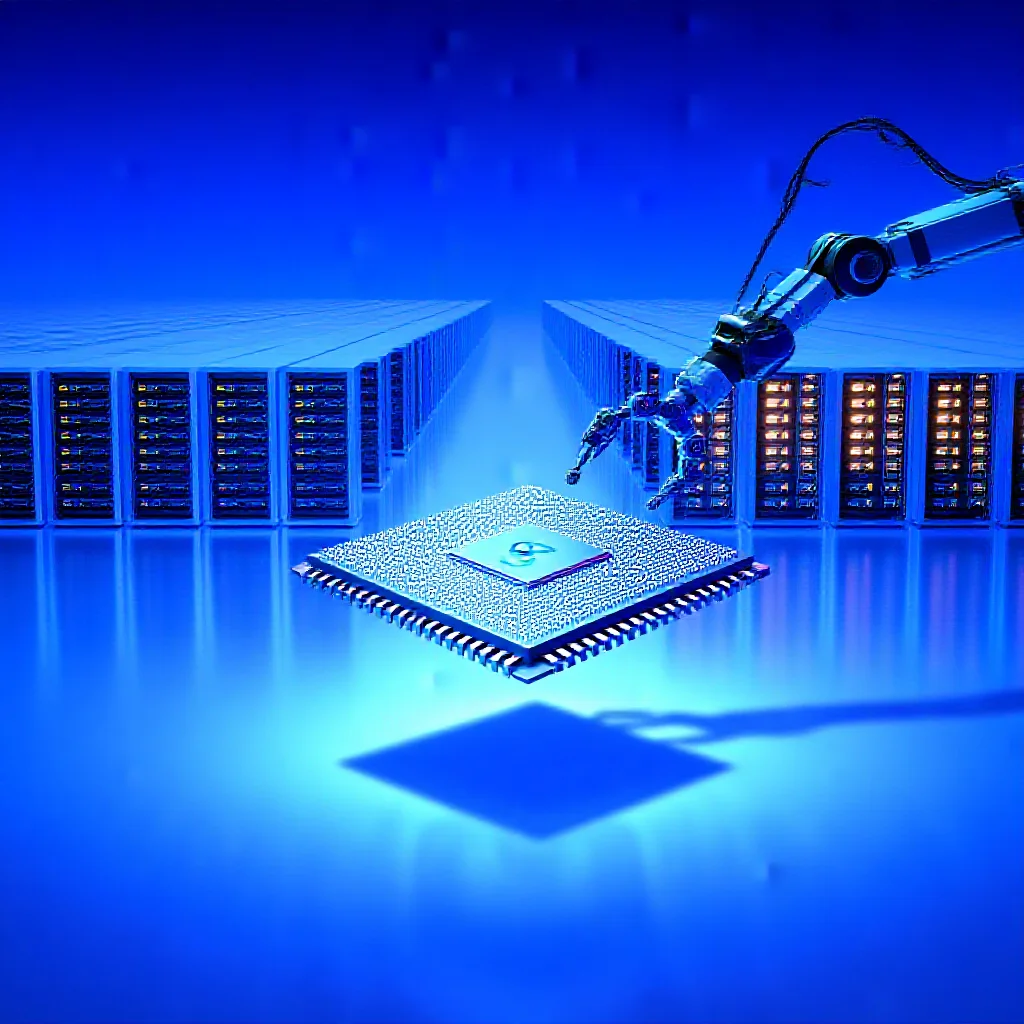
Beyond Nvidia: Meta's 1GW Bet on Custom AI Silicon and the Hyperscaler Power Shift
On April 14, 2026, Meta Platforms Inc. announced a commitment to deploy over one gigawatt (GW) of data center capacity for its internally developed custom silicon chips, designed for artificial intelligence training and inference workloads (Source 1: [Primary Data]). This declaration, quantified in power rather than units or flops, signals a definitive escalation in the infrastructure arms race among hyperscale cloud providers. The move is part of a documented trend where these companies are actively seeking to reduce exclusive dependency on external GPU suppliers.
The 1GW Announcement: A Capacity Metric or a Strategic Declaration?
The metric of one gigawatt transcends a simple procurement target. In advanced AI infrastructure, power consumption has become the primary constraint and key currency, surpassing traditional measures like core counts or floating-point operations per second. A commitment of this magnitude, equivalent to the power demand of a large city or a significant portion of a major tech firm's total data center load, represents a capital and operational pledge measured in billions of dollars over years.
The timing of the April 2026 announcement is strategically significant. It positions Meta's roadmap within the next phase of AI hardware development, deliberately framing the narrative beyond the current period of GPU-dominated scaling. This commitment must be contextualized against global data center power consumption forecasts for the late 2020s, where such singular investments by leading operators will constitute a substantial portion of new capacity dedicated explicitly to AI.
The Hidden Economic Logic: From Cost-Per-Flop to Total Cost of AI Ownership
The strategic shift toward custom silicon is driven by a fundamental recalculation of the total cost of AI ownership. The initial economic driver is the mitigation of vendor lock-in and the long-term return on investment against projected escalations in GPU procurement costs. However, the calculus extends deeper into architectural sovereignty.
Control over the silicon layer enables optimization across the entire computational stack—from compiler and software frameworks to model architecture and cooling systems. This vertical integration unlocks systemic efficiencies that are inaccessible when relying on generalized, vendor-supplied GPUs. Consequently, the primary economic advantage evolves from direct chip cost savings to holistic gains in performance-per-watt and workload-specific throughput. Custom chips emerge as a critical tool to manage the otherwise unsustainable energy trajectory associated with scaling large AI models.
The Supply Chain Reconfiguration: Winners and Losers Beyond Nvidia
Meta's 1GW bet accelerates a reconfiguration of the semiconductor supply chain, with implications extending well beyond the competitive landscape for GPU vendors. While companies like Nvidia and AMD face the strategic risk of hyperscalers internalizing an increasing share of their own demand, other segments of the ecosystem gain elevated importance.
The quiet beneficiaries include providers of electronic design automation (EDA) tools, intellectual property licensors such as Arm, and advanced packaging foundries like TSMC. Capital expenditure reports from leading foundries and equipment manufacturers already indicate heightened demand from cloud giants for access to cutting-edge process nodes and co-packaged optics, evidence of a shift toward a more distributed, hyperscaler-centric supply network. This model sees cloud providers acting as the principal architects, engaging directly with fabs and IP houses, thereby reducing the role of traditional merchant chipmakers as intermediaries.
The Long-Game Impact: Vertical Integration and the Fragmentation of AI Hardware
The long-term consequence of this trend points toward the end of a universal, general-purpose AI hardware paradigm. As hyperscalers develop deeply customized silicon optimized for their specific software ecosystems and model architectures, the industry may fragment into proprietary, non-portable computational environments. This could lead to the formation of "walled gardens" of AI capability, where algorithmic advances become intrinsically linked to a particular provider's hardware infrastructure.
This fragmentation raises questions regarding access for startups and academic researchers. The path to cutting-edge AI compute may increasingly require alignment with a hyperscaler's proprietary architectural stack, potentially centralizing innovation. Furthermore, the strategic onshoring of chip design expertise by U.S. technology firms, as evidenced by these investments, adds a geopolitical dimension to the competition for AI supremacy, framing it as a contest over integrated hardware-software sovereignty rather than just software or algorithmic leadership.
In conclusion, Meta's 1GW commitment is less a simple capacity expansion and more a definitive statement of strategic intent in the post-GPU-monopoly era. It validates the economic and technical imperative for vertical integration at the largest scale of AI deployment. The resulting industry shift will reshape supply chains, redefine competitive moats, and likely fragment the underlying hardware foundation of artificial intelligence, making architectural control the next decisive frontier in the race for computational supremacy.
Keywords

Layla Ibrahim
Technology Reporter covering fintech, AI, and startup ecosystems in the Gulf.