Beyond the Headlines: How the UAE''s Economic Architecture Withstands Regional Shocks
While regional conflicts like tensions with Iran generate headlines, the deeper story is the resilience of the UAE's non-oil economic model. This analysis moves beyond tallying immediate costs to examine how the federation's strategic diversification—built on pillars like trade, logistics, tourism, and finance—is engineered to absorb multi-sector shocks. We explore the underlying economic logic that allows the UAE to buffer regional volatility, assessing the long-term stress on its diversification pillars and what it reveals about the future of Gulf economic statecraft in an unstable neighborhood.
Sarah Al-Qasimi
Editorial Analyst
Beyond the Headlines: How the UAE's Economic Architecture Withstands Regional Shocks
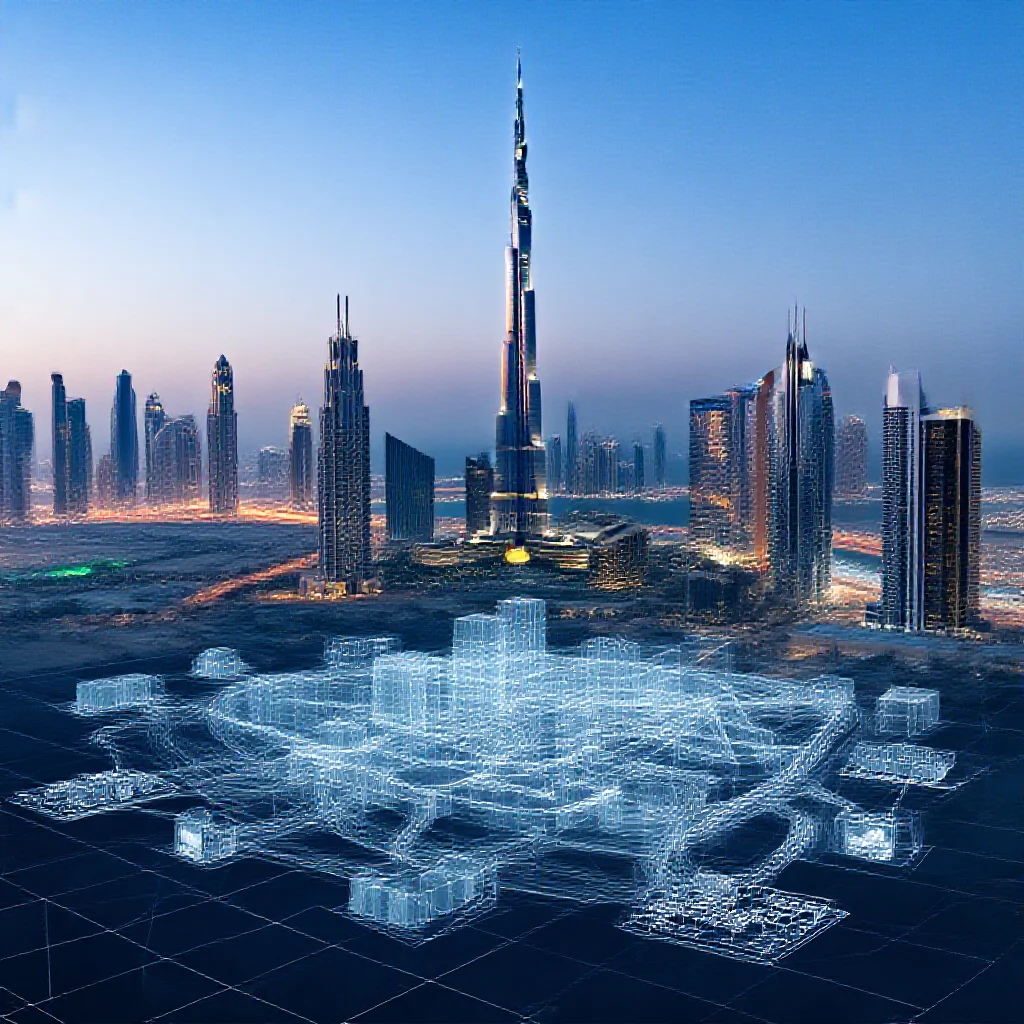
Image: A wide-angle, photorealistic shot of the Dubai skyline at dusk, with iconic buildings like the Burj Khalifa and Burj Al Arab illuminated. In the foreground, a transparent, intricate architectural blueprint or a 3D holographic model of interconnected economic sectors is overlaid on the cityscape.
Introduction: The Shock-Absorber Economy
Headlines detailing regional geopolitical tensions, including conflicts involving Iran, project an image of volatility onto the Middle East. The immediate analytical focus often falls on potential disruptions: spikes in oil prices, security threats, and diplomatic friction. A surface-level assessment suggests inherent vulnerability for Gulf economies. However, this narrative obscures a more consequential development. The United Arab Emirates has systematically engineered its non-oil economic diversification not merely as a growth strategy but as a sophisticated shock-absorption system. This architecture is designed to buffer the federation from the cyclical nature of hydrocarbon revenues and the sporadic instability of its neighborhood. The true test of this model is not the absence of shocks, but its capacity to distribute and mitigate their impact across multiple, interconnected pillars. This analysis moves beyond tallying immediate costs to examine the underlying economic logic that allows the UAE to maintain operational continuity and investor confidence amidst regional turbulence.
---
Deconstructing the Pillars: The UAE's Non-Oil Diversification Blueprint
The UAE's economic resilience is a function of structural design. Its diversification model is built on several interdependent, cross-stabilizing pillars, each reducing singular dependency on oil.
* Global Trade & Logistics: Centered on hubs like Jebel Ali Port (JAFZA) and Abu Dhabi's KIZAD, this pillar transforms the UAE into a global transit point. It is the foundational layer, facilitating physical flows of goods.
* Tourism & Hospitality: Driven by assets in Dubai and Abu Dhabi, this sector generates significant service revenue and employment. It is directly linked to retail, real estate, and entertainment.
* Financial Services: Markets like the Dubai International Financial Centre (DIFC) and Abu Dhabi Global Market (ADGM) provide the capital and banking infrastructure to support trade, investment, and business operations.
* Real Estate & Construction: A significant contributor to GDP and employment, this sector's health is a barometer of long-term investor confidence, both domestic and international.
* Advanced Technology & Manufacturing: Initiatives like "Operation 300bn" aim to build higher-value, knowledge-based industries, offering a longer-term hedge.
The strategic intent is clear: while one sector may experience headwinds, the interconnected nature of the system allows others to maintain momentum. Tourism spending supports retail and real estate; trade flows underpin demand for financial services; all sectors benefit from sustained government investment in infrastructure and digitalization. This creates a network effect of stability.
---
The Stress Test: How Regional Conflict Tallies Costs Across Sectors
Regional geopolitical events act as a live stress test on this architectural model. The impact is not uniform but distributed across the pillars, with costs manifesting in specific, measurable ways.
* Trade & Logistics: As a hub economy, the UAE faces increased risk premiums, marine insurance costs, and potential logistical rerouting during periods of heightened tension in the Arabian Gulf. Analysis of trade flow data indicates that while absolute volumes may show resilience due to the UAE's critical chokepoint status, the cost of doing business can temporarily escalate (Source 1: S&P Global Market Intelligence reports on supply chain risk). This tests the efficiency premium that Jebel Ali and other ports offer.
* Tourism & Hospitality: This sector is sensitive to perception. Regional conflicts can lead to softened travel sentiment from key feeder markets and influence international travel advisories. Data from hospitality analytics firms shows that while global leisure travel to Dubai has proven resilient, volatility can be observed in arrivals from specific regional source markets during periods of acute tension (Source 2: STR/CoStar hotel performance analytics, Dubai Department of Economy and Tourism visitor statistics).
* Finance & Investment: The core challenge is capital confidence. Geopolitical risk can induce hesitation in foreign direct investment (FDI) decisions and prompt short-term portfolio adjustments. Monitoring reports from financial institutions indicates that the UAE's deep liquidity pools and status as a regional safe haven have historically mitigated severe capital flight, though certain asset classes may see transient volatility (Source 3: Institute of International Finance capital flow reports, UAE Central Bank stability reviews).
* Real Estate: Investor confidence, particularly from regional high-net-worth individuals, is a key driver. Market analysis reports suggest that while the UAE property market is primarily driven by long-term residency reforms and fundamentals, acute regional crises can cause a temporary slowdown in transaction volumes from affected neighboring markets, testing the depth of demand (Source 4: ValuStrat Price Index, Cavendish Maxwell market reports).
The critical observation is that these costs, while real, are contained within sectors rather than collapsing the entire economic structure.
---
The Hidden Logic: Shock Absorption Mechanisms in Action
The sectoral pillars do not operate in a vacuum. They are reinforced by institutional and strategic mechanisms engineered specifically for shock absorption.
* The Sovereign Buffer: The UAE's substantial sovereign wealth capital, managed by entities like the Abu Dhabi Investment Authority (ADIA), Mubadala Investment Company, and Investment Corporation of Dubai (ICD), serves as a primary shock absorber. These pools of capital provide a fiscal backstop, enable counter-cyclical domestic investment during downturns, and assure markets of the state's capacity to stabilize the economy.
* Geographic and Strategic Hedging: The federation model itself provides a hedge. Abu Dhabi's hydrocarbon wealth and sovereign capital offer stability, while Dubai's hyper-globalized, service-oriented economy drives growth and innovation. This duality allows risk distribution. Furthermore, the UAE's active pursuit of comprehensive economic partnership agreements (CEPAs) with nations across Asia and Europe diversifies its trade and investment dependencies, reducing over-reliance on any single geographic corridor.
* Policy Agility and Regulatory Insulation: The UAE has demonstrated the capacity for rapid policy adjustment to retain competitiveness and confidence. Examples include residency reforms (Golden Visa), business ownership law changes, and digital infrastructure acceleration. Crucially, financial free zones like DIFC and ADGM operate under independent, common-law regulatory frameworks, insulating a significant portion of the financial sector from regional legal and operational uncertainties.
These mechanisms ensure that a shock to one pillar—or an external geopolitical event—does not translate into a systemic economic failure. The buffers are designed to convert acute shocks into manageable, distributed stresses.
---
Conclusion: The Future of Gulf Economic Statecraft
The UAE's economic response to regional volatility offers a case study in advanced Gulf economic statecraft. The model demonstrates that resilience is not synonymous with isolation or militarization alone, but with the strategic construction of complex, outward-facing economic ecosystems. The long-term trend indicates a continued decoupling of GDP growth from both oil price cycles and regional political volatility, though the two will remain correlated.
Future stress will likely accelerate existing strategies: deeper diversification into technology and renewable energy, further expansion of the sovereign investment portfolio into non-correlated global assets, and enhanced positioning as a neutral global nexus for business, finance, and talent. The ultimate revelation of the UAE's architectural experiment is that in an unstable neighborhood, resilience is proactively built, not passively inherited. The capacity to absorb multi-sector shocks is now a calculated feature of the system, defining the next phase of the region's economic development.
Keywords

Sarah Al-Qasimi
Chief Editor leading investigative reports on Gulf business and policy.