From Tool to Teammate: Microsoft''s Copilot Shift and the Dawn of Autonomous AI Agents
In April 2026, Microsoft announced a fundamental shift for its Copilot AI, transitioning it to an always-on mode and testing autonomous agents. This move signals more than a feature update; it represents a strategic pivot from AI as a reactive tool to a proactive, persistent digital entity. This article analyzes the hidden logic behind this transition, exploring its implications for user behavior, data privacy paradigms, and the emerging economics of autonomous AI labor. We examine how this evolution could reshape software interaction models and position Microsoft in the race toward general artificial intelligence.
Layla Ibrahim
Editorial Analyst
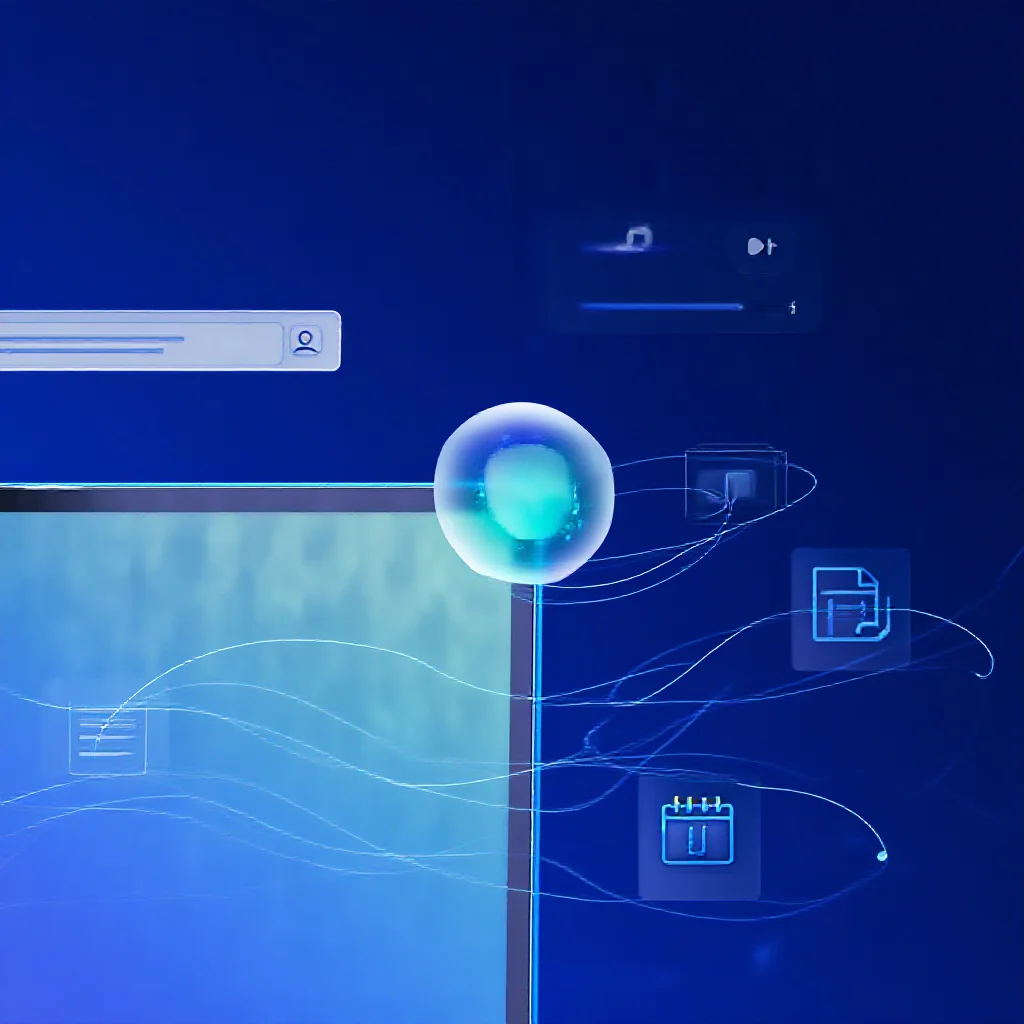
From Tool to Teammate: Microsoft's Copilot Shift and the Dawn of Autonomous AI Agents
Summary: In April 2026, Microsoft announced a fundamental shift for its Copilot AI, transitioning it to an always-on mode and testing autonomous agents. This move signals more than a feature update; it represents a strategic pivot from AI as a reactive tool to a proactive, persistent digital entity. This article analyzes the hidden logic behind this transition, exploring its implications for user behavior, data privacy paradigms, and the emerging economics of autonomous AI labor. We examine how this evolution could reshape software interaction models and position Microsoft in the race toward general artificial intelligence.
---
The Announcement: More Than a Feature Toggle
On April 13, 2026, Microsoft announced a structural evolution of its Copilot AI, shifting it to an always-on operational mode and initiating tests of autonomous AI agents (Source 1: [Primary Data]). This development, with technical testing commencing in early April 2026 (Source 2: [Timeline Data]), constitutes a strategic inflection point for the company’s AI portfolio. The update transcends a simple feature addition, representing a philosophical transition from command-based interaction to a model of ambient computing.
The "always-on" designation indicates a departure from the paradigm where AI is a tool invoked by a user. It establishes Copilot as a persistent background entity, shifting the human-computer interaction model from one of explicit instruction to implicit, context-aware assistance. The announcement frames this not as an isolated change but as a core component of a broader update to Microsoft’s AI offerings (Source 3: [Key Points Data]).
The Hidden Logic: From Efficiency Engine to Autonomous Actor
The strategic rationale for this pivot operates on two core axes: economic optimization and functional expansion. The always-on model is fundamentally an economic mechanism for monetizing user context. By maintaining a continuous state of awareness, the AI can move beyond responding to queries to predicting needs, thereby creating and fulfilling demand for services—both Microsoft’s and those of integrated partners—with higher precision.
Concurrently, the testing of autonomous agents capable of executing multi-step tasks without constant user prompting (Source 4: [Factual Data]) signals a move from assistance to delegation. This evolution positions AI not merely as an efficiency engine for discrete tasks but as an autonomous actor capable of managing entire workflows or job functions. This transition aligns with an observable industry pattern: the shift from treating "AI as a feature" within existing software to establishing "AI as the platform" upon which software and services are built and orchestrated.
Dual-Track Analysis: Fast Verification vs. Slow Implications
A complete audit of this development requires analysis on two distinct timelines.
Fast Analysis (Technical Verification): The immediate, verifiable claims center on the performance and scope of the autonomous agents. Audit criteria include the complexity and success rate of multi-step tasks, the stability and resource footprint of the always-on mode, and the clarity of user controls for activating or deactivating this persistent state. Initial technical reviews post-April 13, 2026, will provide data on these operational parameters.
Slow Analysis (Sociotechnical Impact): The more profound implications unfold over a longer horizon. This analysis examines the long-term impact on software design principles, which may increasingly prioritize agent-friendly APIs over direct user interfaces. It also audits the potential for altered user dependency patterns and the subsequent redefinition of "productivity" from a measure of human output to a measure of human-agent collaborative outcomes. The erosion of the "explicit intent" step in computing represents a fundamental change in human-AI interaction.
The Unseen Entry Point: The Privacy-Personalization Paradox
The most critical audit point lies in the recalibration of the privacy-personalization bargain forced by always-on AI. Continuous operation necessitates continuous data access, creating a paradigm of the AI as a "silent observer." This model collects context from ambient digital activity—application usage, communication patterns, document contents—without explicit user consent per interaction.
The management of this data stream becomes paramount. Analysis must reference Microsoft’s existing privacy frameworks and data governance pledges to assess any material shift in policy or practice. Scrutiny from digital rights groups will likely focus on data retention policies, the granularity of user controls over observational parameters, and the transparency of the logic used to trigger autonomous agent actions. The value proposition of hyper-personalized, proactive assistance is intrinsically linked to the scale and intimacy of data collection.
!Privacy-Personalization Paradox
Architecting the Future: The New Ecosystem of Autonomous Agents
The endpoint of this transition is the emergence of a new software ecosystem architected around autonomous agents. Copilot, in this vision, evolves from an application into a persistent layer of the operating system, functioning as a central orchestrator for a user’s digital tools and services. An agent could, for instance, independently coordinate a supply chain management workflow by pulling data from ERP software, drafting communications in an email client, and updating records in a CRM platform without sequential user commands.
This has downstream supply chain implications. Demand may shift from standalone productivity software to platforms that offer robust agent integration capabilities. The economic model for software could transition further toward subscription-based "agent seats" or transaction fees based on agent-executed outcomes. For Microsoft, success in this domain would solidify its platform moat, making its ecosystem the most fertile ground for complex, AI-driven work.
Neutral Market Prediction
Based on the strategic logic of this pivot, several market developments are probable. Competing platform-level AI assistants from other major technology firms will accelerate their own roadmaps toward persistent, agentic capabilities, leading to a phase of competitive feature parity in autonomous task execution. A secondary market for specialized, third-party autonomous agents designed to operate within platforms like Microsoft’s will likely emerge. Furthermore, enterprise adoption will initially focus on bounded, high-ROI workflows (e.g., IT helpdesk resolution, sales report generation) before expanding to more open-ended administrative functions. The ultimate trajectory points toward AI transitioning from a tool used by individuals to an autonomous digital labor layer integrated into the fabric of business and personal digital environments.
Keywords

Layla Ibrahim
Technology Reporter covering fintech, AI, and startup ecosystems in the Gulf.