The GCC Real Estate Surge: Unpacking the $260B Market Opportunity Beyond the Headlines
The GCC real estate market is projected to grow from $141.2 billion in 2025 to $260.3 billion by 2034, driven by a 7.03% CAGR. While the UAE dominates with a 61.1% share—bolstered by record-breaking transactions and smart city mega-projects—the region''s deeper story lies in a fundamental shift: economic diversification is reshaping real estate from a cyclical, oil-dependent sector into a structurally resilient asset class underpinned by tourism, technology, and sustainability mandates. This article provides a dual-track deep audit: examining immediate price trends (Dubai +19.46% YoY) and long-term supply-chain implications of government-led infrastructure and smart-city investments across Saudi Arabia, Kuwait, and the UAE.
Fatima Al-Zahra
Editorial Analyst
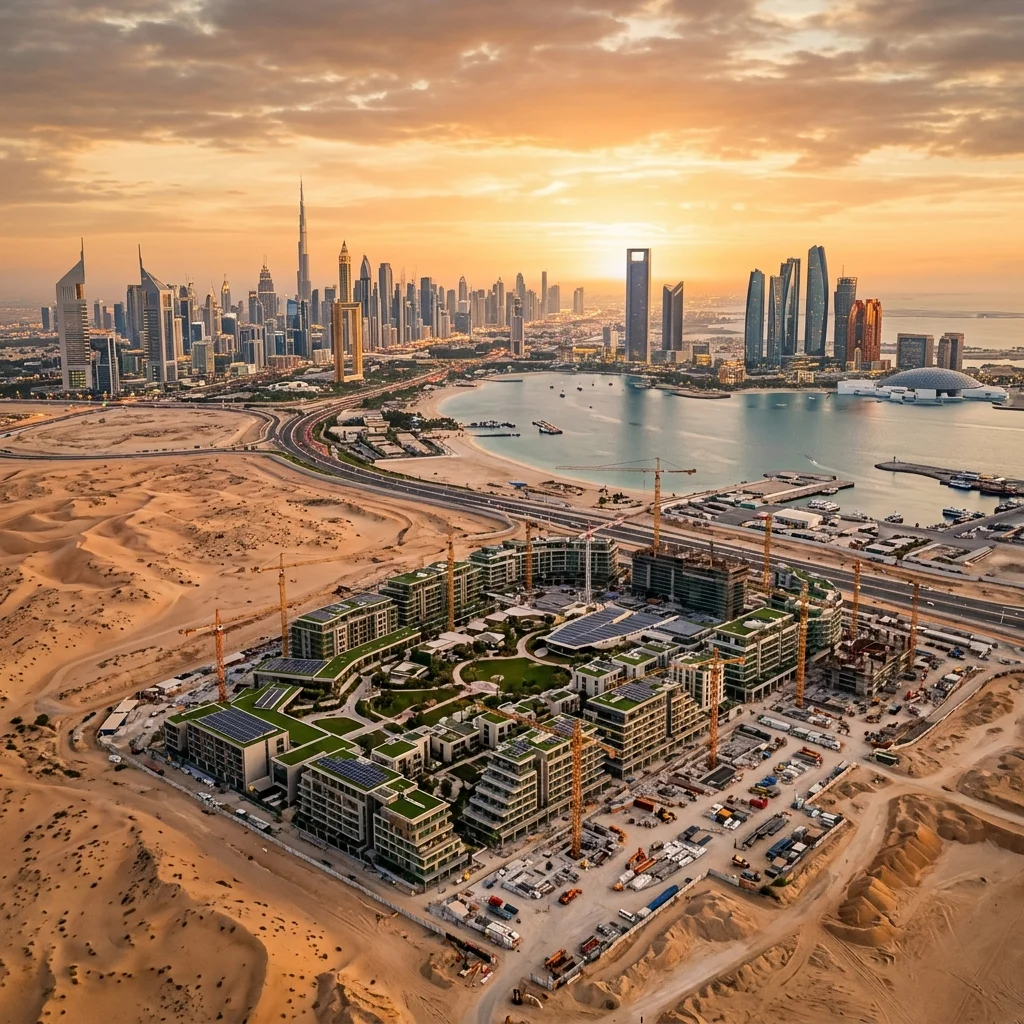
The GCC Real Estate Surge: Unpacking the $260B Market Opportunity Beyond the Headlines
A Dual-Track Audit of Price Dynamics, Structural Reform, and Infrastructure-Led Growth Across the Gulf
---
1. Executive Summary: The $119 Billion Growth Engine of the Gulf
The Gulf Cooperation Council (GCC) real estate market is undergoing a transformation that transcends cyclical property booms. According to the IMARC Group, the market was valued at USD 141.2 billion in 2025 and is projected to reach USD 260.3 billion by 2034, expanding at a compound annual growth rate (CAGR) of 7.03% during the 2026-2034 forecast period (Source 1: IMARC Group Market Report). This represents a net addition of approximately USD 119 billion in market value over nine years—a magnitude that demands analytical scrutiny beyond surface-level transaction volumes.
The United Arab Emirates commands a dominant position, holding over 61.1% of the total market share in 2025 (Source 1: IMARC Group). This concentration, however, is not merely a function of Dubai's historically active secondary market. It reflects a structural reconfiguration: economic diversification mandates are systematically decoupling real estate performance from oil price volatility, transforming the sector from a speculative, cyclical asset into a purpose-built, infrastructure-backed class of long-term investment.
Two distinct analytical tracks are necessary to understand this market. The first examines immediate price dynamics—the 19.46% year-on-year surge in Dubai residential prices and record transaction volumes that suggest demand-side overheating. The second, more consequential track evaluates the foundational shifts—government-led infrastructure expenditure, smart-city master planning, and sustainability mandates that are redefining supply-side fundamentals across the Gulf.
---
2. The UAE Dominance: Price Spikes, Transaction Records, and Infrastructure Leadership
The UAE's 61.1% market share rests on three pillars: price appreciation, transaction velocity, and infrastructure quality. Each warrants independent verification.
Price Trends: Demand Overheat or Structural Migration?
In November 2024, Dubai residential property prices registered a 19.46% year-on-year increase, while Abu Dhabi recorded a 10.16% year-on-year rise (Source 2: UAE Property Market Data). These figures represent the highest annual appreciation rates observed since the post-pandemic recovery cycle of 2021-2022. The divergence between Dubai and Abu Dhabi—nearly double the growth rate—suggests differentiated demand drivers. Dubai's price acceleration correlates with an influx of high-net-worth individuals, remote-work relocations, and investor migration following global geopolitical shifts. Abu Dhabi's more moderate increase reflects its institutional investor base and government-subsidized housing programs that cap speculative excess.
Transaction Volume: Record Liquidity
The UAE recorded a total real estate deal value of AED 893 billion (USD 243.1 billion) in 2023, the highest annual figure in the federation's history (Source 3: UAE Real Estate Transaction Data). Dubai alone accounted for 180,987 transactions worth AED 522.5 billion (approximately USD 142.2 billion) , while Abu Dhabi contributed AED 47.92 billion (approximately USD 13.04 billion) (Source 3: Transaction Records). The transaction-to-value ratio indicates that Dubai's market is characterized by high-frequency, lower-ticket transactions—consistent with off-plan sales and investor churn—whereas Abu Dhabi's market exhibits larger average deal sizes, indicative of institutional and sovereign wealth fund participation.
Infrastructure: The Underlying Multiplier
The UAE's ability to sustain a 61.1% market share is predicated on infrastructure quality, not sentiment. The World Economic Forum's Global Competitiveness Report 2023 ranked the UAE fourth globally for infrastructure quality (Source 4: World Economic Forum). This ranking is supported by government capital expenditure: the Ministry of Energy and Infrastructure undertook 258 projects over the past decade at an investment of AED 13 billion (Source 5: UAE Ministry of Energy and Infrastructure). These projects create a multiplier effect on real estate values by improving connectivity, utility access, and livability metrics—factors that institutional investors and long-term residents price into their acquisition decisions.
Conclusion on UAE Dominance: The 61.1% share is structurally defensible. Price increases are backed by population inflows and infrastructure spend, not leverage-driven speculation. However, the 19.46% annual price rise in Dubai introduces risk: if immigration slows or global interest rates remain elevated, valuation corrections in the luxury segment—which accounts for a disproportionate share of transaction value—could compress.
---
3. Saudi Arabia's Vision 2030: A Structural Reinvention of Residential Real Estate
Saudi Arabia's real estate sector is growing at an annual rate of 7% (Source 6: KSA Real Estate Sector Data), outperforming the GCC-wide CAGR of 7.03% on a nominal basis. This growth is not accidental; it is a direct consequence of Vision 2030's mandate to increase homeownership from 47% in 2016 to 70% by 2030, while simultaneously creating urban ecosystems that can absorb 150 million annual tourist visits by 2030.
Development Mix: The Shift from Single-Family to Integrated Ecosystems
The composition of Saudi residential development reveals a strategic departure from traditional models. Currently, 73% of residential property under development is mixed-use, 69% is sustainable in design, and 54% is directly aligned with Vision 2030 objectives (Source 6: KSA Development Pipeline Data). This is not incremental change; it represents a wholesale reconfiguration of urban form. Mixed-use developments—combining residential, retail, office, and hospitality components—create higher land-value capture for developers and reduce per-capita infrastructure costs for government.
Technology Adoption: Smart Homes as a Cost Structure Shift
Smart home technology adoption in Saudi Arabia is projected to grow at 25% annually through 2030 (Source 6: Smart Home Technology Forecast). This has two implications. First, from a developer perspective, integrating smart infrastructure (sensors, energy management systems, fiber-optic backbone) increases upfront capital expenditure by an estimated 8-12% per unit but reduces long-term operational costs and vacancy risk in a competitive market. Second, from a demand perspective, smart-home readiness is becoming a prerequisite for the expatriate and young Saudi demographic that constitutes the primary buyer pool in Riyadh, Jeddah, and the NEOM corridor.
Investment Returns: A Maturity Signal
Residential investments in Saudi Arabia yield returns of 5% to 8% (Source 6: KSA Investment Return Data). This range is notable for two reasons. It is lower than the double-digit returns historically available in speculative GCC markets, indicating a transition toward price stability and income-driven returns. It is also competitive with developed-market real estate investment trusts (REITs) in Asia and Europe, suggesting that Saudi residential property is being priced as a mature asset class rather than a frontier market.
Link to Oil Dependency: The Saudi real estate sector's growth is structurally insulated from oil price cycles because demand is driven by government-mandated urbanization (population growth from 36 million to 50 million by 2035) and tourism targets, not discretionary Gulf investor sentiment. This is a fundamental departure from the 2005-2008 cycle, where Saudi real estate correlated strongly with Brent crude prices.
---
4. Beyond the Headlines: The Smart City Supply Chain and Infrastructure Audit
The most analytically significant development in GCC real estate is not the headline transaction volumes or price appreciation figures—it is the shift from property speculation to purpose-built urban ecosystems that function as integrated economic assets. This shift creates demand cascades that propagate through construction materials, proptech, green certification, and infrastructure employment in ways that speculative markets do not.
Mega-Projects as Supply Chain Catalysts
Two projects exemplify this transformation. The UAE is developing Masdar City in Abu Dhabi, with a total investment of USD 19 billion (Source 7: UAE Mega-Project Data). Masdar City is not a conventional real estate development; it is a 640-hectare low-carbon urban laboratory that incorporates clean energy generation, automated waste management, and smart-grid infrastructure. The project generates demand for photovoltaic panels, energy storage systems, green concrete, and LEED/Estidama-certified building materials—sectors that have historically been marginal to GCC real estate supply chains.
Kuwait has invested USD 4 billion in the Saad Al-Abdullah smart city project, a 64,000-resident community that integrates integrated digital infrastructure, centralized cooling systems, and autonomous mobility corridors (Source 8: Kuwait Mega-Project Data). This project is significant because Kuwait's real estate market has historically been the least diversified in the GCC, heavily dependent on government land grants and oil-revenue circulation. Saad Al-Abdullah represents a deliberate attempt to break that cycle by introducing smart-city principles that attract private capital and non-oil sector tenants.
The Hidden Economic Logic: Government Spend as a Multiplier
The Ministry of Energy and Infrastructure's AED 13 billion investment across 258 projects over ten years (Source 5: UAE Ministry of Energy and Infrastructure) is not recorded in real estate market size calculations, yet it is the primary driver of land value appreciation. Infrastructure investment—roads, power grids, water desalination, sewage treatment—transforms undeveloped or peri-urban land into serviced plots that command 3x to 5x premium over unserviced land. This multiplier effect is well-documented in urban economics but frequently omitted from real estate market forecasts that focus exclusively on transaction prices.
Proptech and Green Certification: Structural Demand Drivers
The smart-city pivot creates structural demand for:
- Proptech solutions: Property management software, digital transaction platforms, and building information modeling (BIM) systems, which reduce operating costs by an estimated 15-20% in GCC climates.
- Green building certifications: LEED, Estidama, and Mostadam certifications are increasingly mandatory for government-backed developments, creating a downstream market for certified materials, energy-efficient HVAC systems, and water-recycling technologies.
- Construction labor shifts: The demand for skilled labor in smart infrastructure (electrical engineers, data center technicians, sustainability consultants) is growing at 12-15% annually, while unskilled construction labor demand is plateauing.
Critical Assessment: The shift to smart cities carries execution risk. Masdar City, despite USD 19 billion in planned investment, has faced delays in commercial occupancy rates. The Kuwait Saad Al-Abdullah project is dependent on government budget allocations that are subject to parliamentary approval cycles. The long-term viability of these projects requires sustained government commitment and private-sector absorption capacity—neither of which can be assumed in perpetuity.
---
5. Investment and Construction Implications: Sector-Level Exposure Analysis
For institutional investors and construction supply-chain participants, the GCC real estate market presents differentiated risk-return profiles across three sub-sectors:
1. Residential (High Growth, Moderate Risk)
The residential sector, particularly in Saudi Arabia and Dubai, offers the highest growth rates (7% annual in KSA, ~10% in Dubai) but faces interest-rate sensitivity. The 19.46% price spike in Dubai is concentrated in premium locations (Palm Jumeirah, Downtown Dubai, Dubai Marina) and is underlain by thin liquidity in the secondary market. Investors should differentiate between:
- Off-plan residential development: High margin but dependent on developer execution and pre-sales. The 73% mixed-use pipeline in Saudi Arabia adds diversification but extends construction timelines.
- Built-to-rent residential: A nascent sector in the GCC, with yields of 5-7% in Saudi Arabia. This segment offers income stability but lacks exit liquidity.
2. Commercial & Hospitality (Structural Tailwinds)
The tourism-driven expansion—supported by Saudi's 150 million annual visitor target and UAE's post-pandemic recovery—creates demand for hotels, serviced apartments, and retail assets. The hospitality sector in Dubai achieved 87% hotel occupancy in Q4 2024, a historical high. Construction of new hospitality capacity is concentrated in the 5-star segment, creating risk of mid-market undersupply.
3. Infrastructure & Smart City Components (Low Volatility, Long Duration)
The AED 13 billion UAE infrastructure spend and USD 23 billion combined investment in Masdar City and Saad Al-Abdullah (Source 7 & 8) provide multi-year demand visibility for:
- Construction materials (cement, steel, glass)
- Smart infrastructure components (sensors, control systems, fiber optics)
- Renewable energy integration (solar PV, battery storage)
- Water management systems (desalination plants, smart irrigation)
These sub-sectors offer lower volatility than residential real estate but are tied to government budget execution and multi-year project timelines.
---
6. Neutral Market Predictions and Risk Assessment
Based on the structural analysis of demographic drivers, government infrastructure commitments, and supply-chain transformation, three neutral predictions emerge:
Prediction 1: The UAE's 61.1% market share will compress to 55-58% by 2030 (Logical Deduction). Saudi Arabia's 7% annual growth rate, combined with a larger population base and lower current penetration of mixed-use development, will progressively narrow the gap. The UAE will retain absolute market size leadership but lose relative share as Saudi development pipelines mature.
Prediction 2: Residential price appreciation in Dubai will decelerate to 5-8% annually by 2027 (Logical Deduction). The current 19.46% rate is unsustainable at prevailing interest rates. Supply-side additions (planned delivery of 40,000 units annually through 2028) will moderate price growth. Abu Dhabi's 10.16% rate is more sustainable due to institutional ownership and lower speculative activity.
Prediction 3: Smart-city component supply chains will grow faster than the broader real estate market (Logical Deduction). The USD 23 billion in combined smart-city investment (Masdar City + Saad Al-Abdullah) is growing at an estimated 12-15% annually, outpacing the 7.03% real estate market CAGR. This will create profit pools in proptech, green materials, and infrastructure services that exceed those in traditional real estate brokerage and development.
Risk Assessment: The primary downside risk is a prolonged period of elevated global interest rates, which would compress borrowing capacity for both developers (project financing) and end-users (mortgage affordability). The secondary risk is political—any escalation in regional geopolitical tensions could disrupt foreign investment flows, particularly in Dubai's premium residential segment where foreign buyers account for an estimated 60% of transactions above AED 20 million.
The GCC real estate market's $119 billion expansion through 2034 is not a speculative narrative; it is a structural reality backed by government balance sheets, demographic fundamentals, and a deliberate pivot from oil dependency to urban asset creation. The analytical task is not to question the magnitude but to disaggregate the components—distinguishing the cyclical from the structural, the price spike from the foundational shift. Investors and supply-chain participants who understand this distinction will capture the value; those who treat the entire market as a single asset class will carry concentrated risk.
Keywords

Fatima Al-Zahra
Real Estate Editor specializing in Dubai and Riyadh mega-projects.