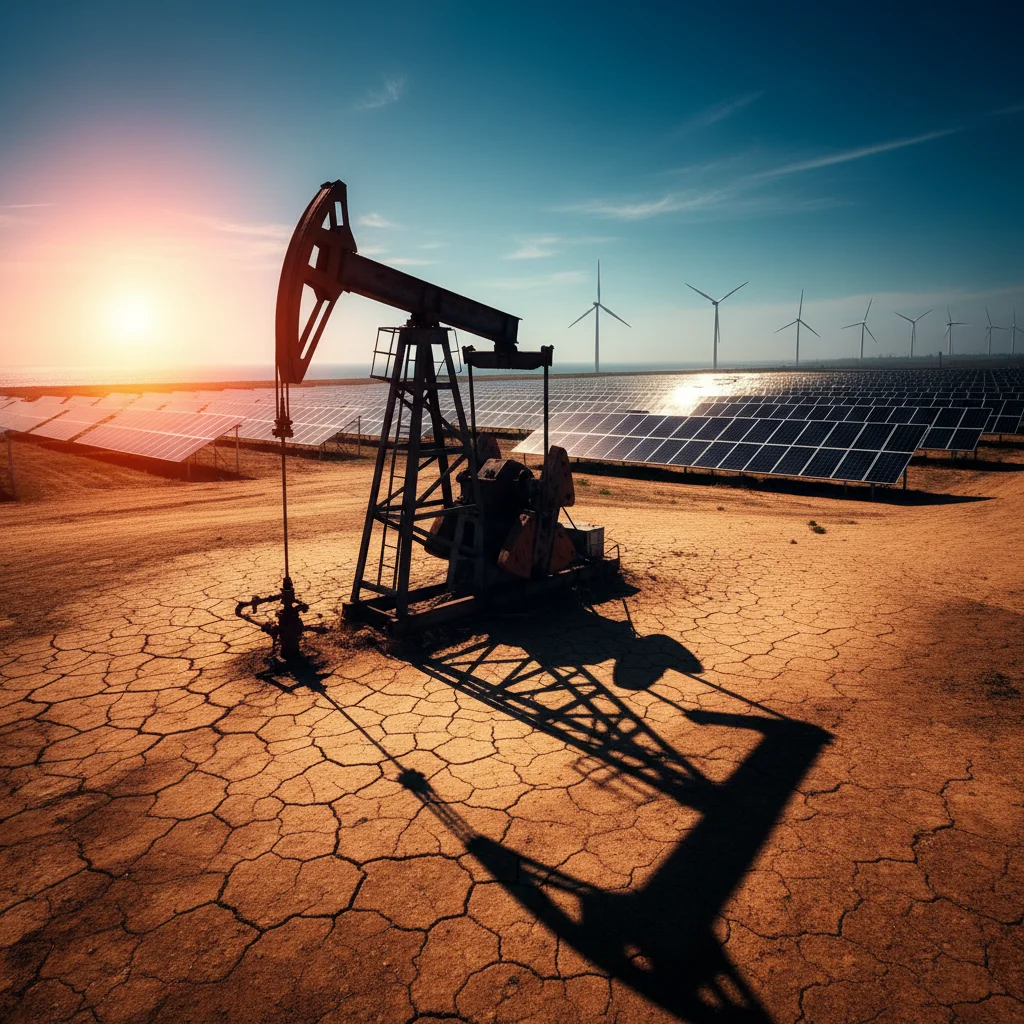
The Gulf’s Great Pivot: From Fossil Fortress to Green Powerhouse Before 2040
Gulf Cooperation Council (GCC) nations – Saudi Arabia, UAE, Qatar, and Kuwait – face an unprecedented economic cliff. With oil demand set to peak between 2025-2027 and fossil revenues potentially near zero by 2040, their current economic model is unsustainable. Yet these countries are uniquely equipped to lead the global energy transition. Solar and wind are now 60% cheaper than the cheapest fossil generation, and Gulf sovereign wealth funds provide massive capital for diversification. This deep analysis reveals the hidden logic: the same infrastructure, geography, and financial reserves that made them fossil giants now position them as future exporters of renewable electricity and green hydrogen. The window for a managed pivot is narrowing, and each GCC state’s pace of diversification will determine its long-term prosperity.
Omar Hassan
Editorial Analyst
The Gulf’s Great Pivot: From Fossil Fortress to Green Powerhouse Before 2040
Gulf Cooperation Council (GCC) nations—Saudi Arabia, the United Arab Emirates, Qatar, and Kuwait—face an unprecedented economic transformation. Current data indicates that these states generate 15-40% of GDP from oil and gas exploitation, with fossil fuels accounting for close to 100% of government revenues (Source 1: IEA Fiscal Revenue Database). Global oil demand is projected to peak between 2025-2027, with fossil revenues set to drastically decline after 2030 and potentially approach zero by 2040 (Source 2: BP Energy Outlook 2024; IRENA World Energy Transitions Outlook). This timeline is shorter than most infrastructure investment cycles, creating an existential fiscal imperative for structural economic diversification.
Yet these same countries possess unique advantages that position them to lead the global energy transition. Solar and wind electricity now cost 40% of the cheapest fossil generation (Source 3: IRENA Renewable Power Generation Costs 2023), and Gulf sovereign wealth funds provide massive capital reserves for strategic redeployment. The infrastructure, geography, and financial architecture that made these states fossil giants now create the foundation for a new export model based on renewable electricity and green hydrogen.
---
The 2030 Fiscal Cliff: Why Gulf States Must Act Now
The fiscal dependency of GCC states on hydrocarbon revenues represents a structural vulnerability unmatched by any other region. Saudi Arabia derives approximately 40% of GDP and 65-70% of government revenues from oil (Source 4: IMF Article IV Consultation 2023). The UAE, despite being the most diversified GCC economy, still generates roughly 30% of GDP from fossil fuels. Qatar’s economy remains heavily dependent on natural gas exports, while Kuwait sources over 90% of government revenues from oil (Source 1).
The projected peak in global oil demand between 2025-2027 represents a structural inflection point. Multiple independent analyses—including the IEA’s World Energy Outlook, BP’s Energy Outlook, and IRENA’s World Energy Transitions Outlook—converge on the conclusion that demand growth will plateau and begin declining within this window. The implications for Gulf fiscal stability are direct:
- Declining revenue stream: As demand falls, prices will face sustained downward pressure, reducing per-barrel revenues even before accounting for volume reductions.
- Stranded asset risk: Oil fields, refineries, and export infrastructure with 30-40 year investment horizons become uneconomic decades before their useful life ends.
- Competitive pressure: Lower-cost producers (Saudi Arabia, UAE) will face margin compression as they compete for a shrinking market, while higher-cost operators (Kuwait) face existential viability questions.
Kuwait’s slow diversification progress illustrates the risks of inaction. The country has made minimal progress in reducing fossil dependency compared to its neighbors, with non-oil GDP growth averaging below 2% annually over the past decade (Source 5: World Bank Development Indicators). The UAE, by contrast, has reduced its oil sector’s share of GDP from 40% in 2005 to approximately 30% today, demonstrating that structural transformation is achievable when matched with consistent policy execution (Source 4).
---
The Cost Revolution: Renewables Are No Longer an Alternative—They Are the Baseline
The economic calculus underpinning the global energy system has been fundamentally inverted. Solar photovoltaic and onshore wind now produce electricity at 40% of the cost of the cheapest fossil generation in most world regions, including the Gulf (Source 3). This price advantage eliminates the traditional trade-off between economic growth and environmental objectives—renewables are now the economically rational choice, not merely an environmental preference.
The cost advantage is not static but accelerating. Three interconnected dynamics drive this trend:
1. Manufacturing scale economies: Global solar PV manufacturing capacity has expanded from 50 GW in 2010 to over 1,000 GW in 2024, with Chinese firms commanding 80% of global production (Source 6: IEA Solar PV Supply Chains Report). Each doubling of cumulative installed capacity reduces costs by approximately 20-25%.
2. Technology learning curves: Silicon solar cell efficiencies have improved from 15% to over 25% in commercial modules, while wind turbine capacity factors have doubled in offshore applications (Source 3). These efficiency gains compound cost reductions.
3. End-use electrification: Electric vehicles and heat pumps are now cheaper on a total-cost-of-ownership basis than their fossil counterparts in most markets (Source 7: BloombergNEF Electric Vehicle Outlook 2024). This creates demand-side pressure that accelerates grid decarbonization, which in turn drives further renewable deployment.
The Gulf region’s solar irradiation levels are among the highest globally, with average annual direct normal irradiation exceeding 2,000 kWh/m² (Source 8: World Bank Global Solar Atlas). This resource advantage, combined with low-cost capital from sovereign wealth funds and existing grid infrastructure, gives GCC states the lowest solar LCOE potential in the world—as low as $15-20/MWh under optimal conditions.
---
Hidden Assets: How Gulf Infrastructure and Solar Resources Become a New Export Advantage
The transition from fossil exporter to renewable energy exporter is not a leap into the unknown but a redeployment of existing comparative advantages. Four structural assets position Gulf states for this transformation:
1. Geographic solar endowment: The Arabian Peninsula receives the highest solar irradiation on Earth, with levels 50-100% higher than Southern Europe or North Africa (Source 8). This resource advantage translates directly to lower production costs for both electricity and green hydrogen.
2. Existing export infrastructure: Gas pipelines, port facilities, tanker fleets, and international trade relationships developed for hydrocarbon exports can be repurposed for renewable energy carriers. Natural gas pipelines can transport hydrogen blends, while port infrastructure can handle ammonia (a hydrogen carrier) and other green fuels.
3. Financial reserves: GCC sovereign wealth funds manage approximately $4 trillion in assets (Source 9: Sovereign Wealth Fund Institute 2024). These funds provide patient capital capable of financing multi-decade infrastructure transformation without the short-term return pressures faced by private investors.
4. Industrial capabilities: Existing petrochemical, desalination, and energy-intensive industries in the Gulf can serve as anchor customers for green hydrogen and renewable electricity, creating demand certainty that reduces investment risk.
The strategic implications are clear. Green hydrogen produced in the Gulf could be delivered to European and Asian markets at costs competitive with locally produced green hydrogen, given the region’s superior solar resources and existing export logistics (Source 3). The same logic applies to renewable electricity transmitted via interconnection cables to neighboring regions.
---
The Race Within the Race: UAE Leads, Saudi Arabia Races, Kuwait Lags
The pace of diversification varies dramatically across GCC states, creating divergent risk profiles that will determine each nation’s long-term prosperity trajectory.
United Arab Emirates: The UAE has made the most progress in reducing fossil dependency, driven by deliberate policy choices over two decades. The country has invested $50 billion in renewable energy projects, including the Noor Abu Dhabi solar plant (1.2 GW) and the Mohammed bin Rashid Al Maktoum Solar Park (5 GW planned). The UAE became the first GCC state to pledge net-zero emissions by 2050 and has established a domestic green hydrogen industry with production targets of 1.4 million tonnes annually by 2031 (Source 10: UAE Energy Strategy 2050). Non-oil GDP has reached 70% of total output, and the country’s logistics, tourism, and financial services sectors demonstrate viable alternative revenue sources.
Saudi Arabia: Saudi Arabia’s Vision 2030 represents the most ambitious diversification plan in the GCC, targeting non-oil revenue increases from SR163 billion in 2015 to SR1 trillion by 2030 (Source 11: Saudi Vision 2030 Progress Report). The Kingdom has launched the NEOM green hydrogen project, targeting 4 GW of electrolysis capacity by 2026, and aims for 50% of electricity generation from renewables by 2030. However, implementation has lagged initial targets—renewables accounted for only 0.5% of electricity generation in 2022—and oil revenues remain essential for fiscal stability.
Qatar: Qatar has leveraged its natural gas wealth to build world-class infrastructure for the 2022 FIFA World Cup and is investing in LNG expansion to capture market share in the transition period. The country has announced a National Renewable Energy Strategy targeting 5 GW of solar capacity by 2030 and has committed to carbon capture at its LNG facilities. Qatar’s smaller population and massive per-capita hydrocarbon reserves give it more fiscal breathing room than other GCC states.
Kuwait: Kuwait has made the least progress in reducing fossil dependency among GCC states. The country lacks a comprehensive renewable energy strategy, has delayed major solar projects, and continues to build new oil refining capacity despite the projected demand peak. Non-oil GDP has stagnated, and the government has faced persistent political gridlock over economic reform legislation (Source 5). Kuwait’s fiscal breakeven oil price—the price needed to balance the budget—is estimated at $85-95 per barrel, among the highest in the Gulf, leaving it exceptionally vulnerable to declining oil revenues.
---
Strategic Imperatives: Priority Investment Areas for the Transition
The SolAbility Sustainable Competitiveness Index identifies eight priority investment areas for Gulf states’ economic transformation (Source 12: SolAbility Sustainable Competitiveness Index):
- Renewable energy leadership: Achieving cost-competitive domestic renewable generation and establishing export capacity for electricity and green hydrogen
- Advanced manufacturing: Building competitive non-oil manufacturing sectors in materials, chemicals, and precision industries
- Technology and innovation: Developing R&D ecosystems and technology clusters that can compete globally
- Education excellence: Upgrading human capital to support knowledge-intensive industries
- Financial services: Deepening capital markets and expanding the role of financial services as an export sector
- Tourism and culture: Building sustainable tourism economies based on Gulf cultural heritage and geographic advantages
- Healthcare and wellness: Developing world-class medical infrastructure and life sciences capabilities
- Logistics and trade: Leveraging geographic position between Europe, Asia, and Africa to become global logistics hubs
The sequencing and prioritization of these investments will determine each state’s transition success. For Saudi Arabia and the UAE, the focus is on scaling renewable energy while building advanced manufacturing and technology sectors. For Kuwait, the immediate priority must be arresting the decline in non-oil GDP and establishing basic diversification momentum.
---
Market Predictions: The Narrowing Window
Three structural predictions emerge from this analysis:
Prediction 1: The window for managed transition closes by 2030. Gulf states that have not demonstrated tangible progress in diversification—measurable non-oil GDP growth, renewable energy deployment, and fiscal revenue diversification—by 2030 will face disorderly adjustment as oil revenues enter structural decline.
Prediction 2: Green hydrogen becomes the Gulf’s primary export commodity by the 2040s. The cost advantage from solar irradiation combined with existing export infrastructure will enable Gulf states to capture 20-30% of the global green hydrogen market, replacing oil revenues in absolute terms for early-moving states.
Prediction 3: Divergence among GCC states will accelerate. The UAE and Saudi Arabia will maintain their positions as regional economic leaders, Qatar will face mild adjustment given its gas reserves, and Kuwait will experience a severe fiscal crisis absent fundamental policy change before 2030.
The Gulf states’ transition from fossil fortress to green powerhouse is not a question of possibility but of pace. The assets exist—solar resources, financial reserves, infrastructure, and geographic position. The economics have aligned—renewables are now cheaper than fossil generation. The only variable remaining is political will and execution capacity. The data suggests that the UAE and Saudi Arabia have begun the pivot. The clock is ticking for Kuwait.
Keywords

Omar Hassan
Energy Correspondent tracking OPEC+ policies and renewable energy transitions.