The Phoenix Police Incident: Why Human Override Is the Next Billion-Dollar Challenge for Autonomous Vehicles
In March 2026, Phoenix Police manually drove a stopped, unoccupied Waymo vehicle to clear a traffic lane—a ''first-of-its-kind'' intervention. This incident is not a simple anecdote but a critical stress test for the autonomous vehicle (AV) industry. It exposes a fundamental flaw in the current technological and regulatory paradigm: the lack of a standardized, secure, and legally defined protocol for authorized third-party human override. This article analyzes how this single event reveals a hidden economic logic, where the cost of developing failsafe human interaction systems may rival the core self-driving software itself. We explore the emerging market for ''override interfaces,'' the liability shifts it triggers, and why this incident signals a pivotal move from pure autonomy to managed human-AV coexistence.
Layla Ibrahim
Editorial Analyst
The Phoenix Police Incident: Why Human Override Is the Next Billion-Dollar Challenge for Autonomous Vehicles
Opening Summary
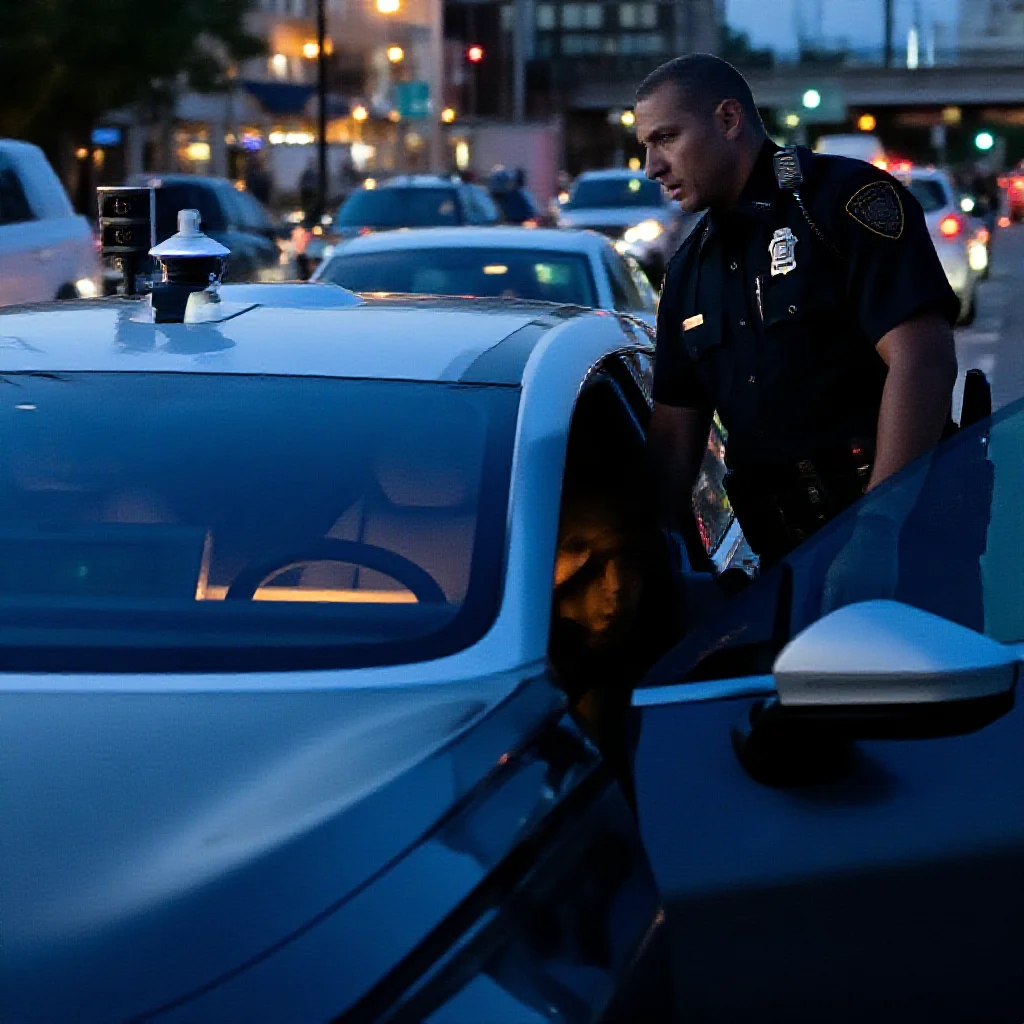
On March 24, 2026, Phoenix Police officers encountered a stationary, unoccupied Waymo autonomous vehicle in a traffic lane. Officers manually drove the vehicle approximately 100 feet to clear the roadway, an action described by police as a "first-of-its-kind" intervention (Source 1: [Primary Data]). This event is not an isolated operational anomaly but a functional stress test of the autonomous vehicle (AV) industry's preparedness for non-passenger human interaction. It exposes a critical gap in the technological and regulatory framework governing Level 4 and 5 autonomous systems: the absence of standardized, secure protocols for authorized third-party override. The incident shifts the liability and development paradigm from a focus solely on machine intelligence to the complexities of managed human-machine coexistence.
Beyond the Headline: Decoding the Economic Logic of a Police Override
The Phoenix incident operates as a market signal, revealing a missing layer in the AV value chain. While billions in research and development have been allocated to perception, prediction, and planning software, a parallel investment frontier is now exposed: systems designed explicitly for secure external human interaction. The economic logic dictates that the cost of developing failsafe "override protocols" constitutes a new, multi-billion dollar R&D and manufacturing category, separate from core autonomy. This includes the engineering of secure authentication hardware, redundant manual control interfaces, and the software stacks that manage authority handoffs.This event triggers a fundamental liability shift. The industry discourse has historically centered on determining fault in a collision between an AV and another entity. The Phoenix scenario transfers the discussion to a new domain: defining who is authorized to intervene in a non-collision scenario, under what conditions, and through what mechanisms. This creates nascent markets for specialized insurance products, third-party compliance verification, and regulatory consultancy focused on intervention protocols rather than collision avoidance.
Slow Analysis: The Deep Audit of an Industry's Blind Spot
This incident demands slow, systemic analysis rather than treatment as a time-sensitive news event. It reveals a long-term infrastructure and policy gap. A critical analytical distinction is the "unoccupied" status of the vehicle (Source 1: [Primary Data]). A passenger-initiated stop presents one set of challenges, but a system-initiated immobilization—whether due to a diagnostic fault, sensor confusion, or a deliberate safety stop—becomes a public infrastructure concern. The vehicle transitions from a private conveyance to an unresponsive object obstructing public right-of-way.The deep audit contrasts existing regulatory frameworks with this new reality. The National Highway Traffic Safety Administration (NHTSA) has guidelines for vehicle immobilization (e.g., parking enforcement "boots"). However, no equivalent, universally adopted protocol exists for the authorized, safe movement of a Level 4/5 AV by first responders. The verification point is clear: the industry lacks a standardized "first responder interface" as robust as its sensor-cleaning systems.
The Untold Entry Point: From Software Updates to Hardware Lockouts
The incident forces a foundational design question: physical hardware interfaces versus digital-only access. The resolution will define a new component ecosystem. Will police and other authorized entities require a universal physical access port and control interface, analogous to a firefighter's key for building elevators? Or will access be managed via a secure, over-the-air digital token system? Each path carries distinct implications for cost, security, and reliability under adverse conditions (e.g., network outage, vehicle power loss).The supply chain impact is direct and significant. This creates a demand for standardized override ports, secure authentication chips, and physically hardened vehicle access points. Tier 1 automotive suppliers now face a new product category: certified, tamper-resistant human-machine interface (HMI) modules for external authority override. This moves the challenge beyond software updates into the domain of regulated hardware, where manufacturing tolerances, cybersecurity hardening, and physical durability become paramount.
Neutral Market and Industry Predictions
The Phoenix Police intervention is a catalyst for three predictable developments. First, within 18-24 months, a consortium of AV developers, municipal authorities, and first responder associations will draft a proposed standard for external vehicle override, likely submitted to bodies like SAE International or ISO for formalization.Second, a specialized market for "override interface" systems will emerge. This market will include both the physical/digital interface hardware and the associated credential management and audit software. Early entrants will likely be cybersecurity firms and defense contractors adapting existing secure access technologies, rather than traditional automotive suppliers.
Third, insurance and liability models will bifurcate. Policies will begin to delineate between losses occurring during fully autonomous operation and those occurring during or due to an authorized override event. This will necessitate new data recorders that explicitly log override authentication attempts and control inputs from external sources, creating a forensic tool for post-incident liability assignment.
The trajectory is set. The industry's next major capital allocation will address not how to keep humans out of the loop, but how to design secure, sanctioned, and standardized ways for them to get back in.
Keywords

Layla Ibrahim
Technology Reporter covering fintech, AI, and startup ecosystems in the Gulf.