Samsung''s AI Price War: How Sub-$500 Phones Are Redefining the Smartphone Market
Samsung's strategic move to push its Galaxy AI features into sub-$500 smartphones marks a pivotal shift in the industry. This analysis explores the hidden economic logic behind this democratization of AI, moving beyond simple feature trickle-down. We examine how Samsung is not just expanding its market but actively lowering the industry's price floor for 'smart' capabilities, forcing a fundamental recalibration of value. This tactic pressures competitors, accelerates consumer adoption of AI as a baseline expectation, and could reshape the entire mid-range and budget smartphone supply chain, prioritizing AI-optimized silicon over raw processing power.
Layla Ibrahim
Editorial Analyst
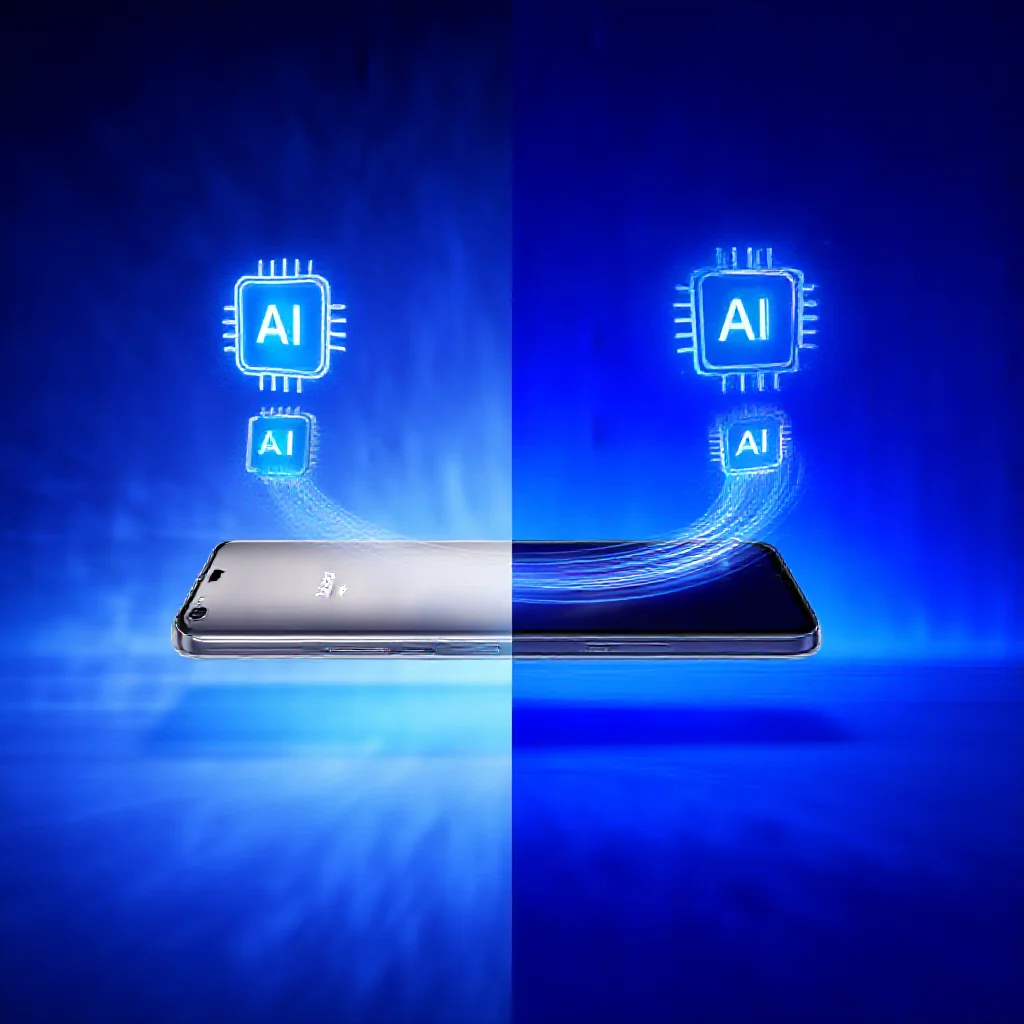
Samsung's AI Price War: How Sub-$500 Phones Are Redefining the Smartphone Market
Summary: Samsung's strategic deployment of its Galaxy AI features into smartphones priced below $500 represents a structural shift in the mobile industry. This analysis examines the economic logic behind this democratization, its immediate pressure on competitors, the consequent supply chain recalibration, and the long-term implications for market value and innovation.
Beyond the Headline: The Strategic Calculus of Cheap AI
Samsung's introduction of Galaxy Intelligence (Galaxy AI) features to lower-priced models is not a simple case of feature trickle-down. It is a deliberate strategy to reset the market floor for what constitutes a "smart" phone. The move decouples advanced, software-driven capabilities from the traditional premium hardware tier.
The crossing of the sub-$500 threshold is psychologically and economically significant. This price point serves as a major adoption barrier for a vast segment of the global market. By placing AI features below this line, Samsung is executing a dual-purpose maneuver: it aggressively expands its total addressable user base while simultaneously defining the new minimum standard for a modern smartphone. The goal is to make AI ubiquity synonymous with the Galaxy ecosystem, regardless of price.
The Domino Effect: Pressure on Competitors and Consumer Expectations
This strategy initiates a domino effect across the industry. Competitors within the Android ecosystem, particularly Chinese OEMs like Xiaomi and Oppo, as well as Google's Pixel A-series, face immediate pressure to respond with comparable AI offerings at similar price points. Failure to do so risks ceding the volume-driven mid-range market, where feature perception is critical.
The rapid democratization of AI accelerates a shift in consumer expectations. Features like real-time call translation or advanced photo editing are transitioning from premium perks to baseline table stakes. Market analysis indicates that feature adoption curves steepen dramatically once a technology passes key price barriers (Source 1: Industry analysis on mid-range feature adoption). Within 12-18 months, the absence of a competent, on-device AI suite in a mid-tier phone may be viewed as a critical deficiency.
The Hidden Supply Chain Revolution
Samsung's market move necessitates a fundamental re-prioritization in smartphone supply chains, particularly for silicon. The focus for mid-range chipsets is shifting from raw CPU/GPU performance for gaming to neural processing unit (NPU) efficiency for sustained AI workloads. Chipset vendors like MediaTek and Qualcomm are now compelled to deliver capable, cost-effective AI silicon at scale.
This shift extends beyond the processor. Cost engineering for budget phones must now account for component sourcing, memory allocation, and thermal management optimized for AI functionality. The supply chain must adapt to support these new priorities, potentially leading to consolidation among vendors who can successfully integrate performant NPUs into budget-tier platforms. The architecture of the mid-range phone is being rewritten around the AI engine.
The Slow Burn: Long-Term Implications and Risks
The long-term implications of this strategy are complex. The first risk is the rapid commoditization of core AI features. Today's cutting-edge tools, such as generative photo editing, become mundane expectations tomorrow, perpetually increasing the R&D burden to find new, differentiable AI innovations.
Secondly, this democratization may serve as a foundation for future software monetization. Once a basic AI suite is ubiquitous, the industry may explore subscription models for advanced or cloud-enhanced AI capabilities, creating a new recurring revenue stream.
For Samsung specifically, a critical challenge emerges: sustainable differentiation. If its flagship Galaxy AI experience is available on a $400 phone, the value proposition of its $1,000+ flagship devices requires redefinition. This creates an impending need for clear "AI Tiering"—whereby more powerful, exclusive, or real-time AI models are reserved for premium hardware. Samsung's own statements on the future roadmap for Galaxy AI suggest an evolution towards more advanced, device-dependent capabilities (Source 2: Samsung official communications).
The strategic push of AI below $500 is therefore not merely a pricing tactic. It is a market-redefining action that pressures competitors, reshapes supply chains, elevates baseline consumer expectations, and sets the stage for the next phase of competition: not on who has AI, but on whose AI is smarter, faster, and more deeply integrated. The price war is, in reality, a war to define the future standard of intelligence in mobile computing.
Keywords

Layla Ibrahim
Technology Reporter covering fintech, AI, and startup ecosystems in the Gulf.