The Gulf Property Paradox: Why 2025 Is the Year of the ‘Tier-2 City’ in the Middle East Real Estate Boom
The Gulf real estate market is often viewed through the lens of Dubai’s record-breaking AED 430 billion year or Saudi Arabia’s Vision 2030. However, the deeper economic logic for 2025 reveals a shift toward ‘Tier-2’ cities like Sharjah, Al Khobar, and Lusail. As primary markets mature and transaction volumes plateau for smaller investors, the real return potential lies in secondary hubs where entry prices are lower, visa incentives are expanding, and infrastructure is still catching up. This article audits the data—from Oman’s 29% transaction surge to Qatar’s $419 billion Q1—to reveal a pattern of strategic decentralization. We argue that the smart money is not chasing the skyline of Dubai, but the emerging master-planned communities in less-saturated markets, backed by sovereign wealth fund projects and luxury brand tie-ins (Aston Martin, Missoni, Trump) that signal long-term confidence.
Fatima Al-Zahra
Editorial Analyst
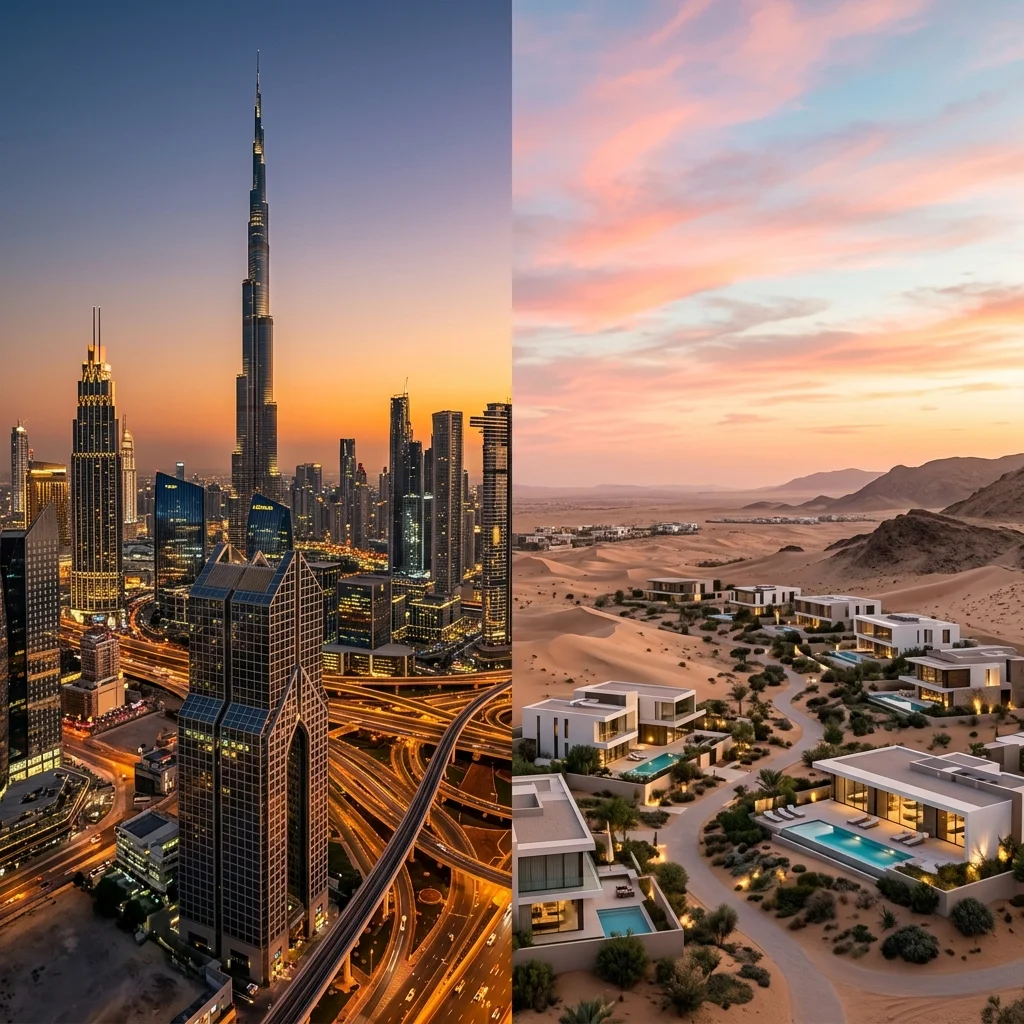
The Gulf Property Paradox: Why 2025 Is the Year of the ‘Tier-2 City’ in the Middle East Real Estate Boom
By a Senior Technical/Financial Audit Journalist
---
Introduction: The Hidden Logic of the Market Shift
The Gulf real estate narrative in 2024 was dominated by a single statistic: Dubai recorded over AED 430 billion in property transactions, representing a 20% increase year-on-year (Source 1: Dubai Land Department, 2024). This figure, by any global standard, signals a market at its peak. Yet, the most compelling investment thesis for 2025 does not center on Dubai, Riyadh, or Doha.
This apparent paradox—booming primary markets coexisting with a strategic migration of capital to secondary hubs—reveals a structural shift in the Gulf real estate ecosystem. The core thesis: as primary markets reach maturity and entry prices become prohibitive for mid-tier investors, the highest risk-adjusted returns in 2025 will accrue in Tier-2 cities such as Sharjah, Al Khobar, and Lusail. These markets benefit from government-led decentralization strategies, expansive visa reforms, and sovereign wealth fund-backed luxury projects that signal long-term institutional confidence (Source 2: DarGlobal project filings; Qatar Free Zones Authority).
The following analysis audits three dimensions of this shift: the economic saturation of primary markets, the legal and demographic catalysts enabling secondary city growth, and the product-level evidence of luxury brand engagement in emerging zones.
---
1. Saturation in the ‘Big Three’: Dubai, Riyadh, Doha
The record-breaking AED 430 billion in Dubai transactions masks a critical distribution problem for smaller investors. Ultra-luxury branded residences—such as the Trump International Hotel and Trump Tower (Dubai), Urban Oasis by Missoni, Da Vinci Towers, The Astera (interiors by Aston Martin), and Neptune (interiors by Mouawad)—routinely command per-square-foot prices that exclude investors below the $5 million entry threshold (Source 3: Developer sales prospectuses, 2024-2025). These projects serve as capital preservation vehicles for ultra-high-net-worth individuals (UHNWIs), not as growth-oriented entry points for foreign capital seeking appreciation.
In Saudi Arabia, Vision 2030 targets 70% homeownership by 2030 (Source 4: Saudi Vision 2030 Housing Program). However, Riyadh and Jeddah face severe construction cost inflation—estimated by regional contractors at 15-20% annually since 2022—and persistent supply chain bottlenecks for specialized materials. The Trump Tower Jeddah project exemplifies this tension: a high-profile luxury development in a market where mid-range housing supply remains critically constrained.
Qatar presents a different saturation pattern. The $419 billion in real estate transactions recorded by Q1 2025 (Source 5: Qatar Central Bank/Qatar Real Estate Registry, Q1 2025) appears robust, but geographical concentration is extreme. Over 70% of high-value transactions occurred within Lusail and The Pearl-Qatar districts, leaving secondary districts—Mesaimeer, Al Wakra, Umm Salal—significantly undervalued relative to infrastructure improvements.
The capital migration logic: Average transaction values in Dubai’s prime districts have risen 34% since 2022, compressing capitalization rates for rental income below 4.5% in many luxury towers (Source 6: Knight Frank GCC Report, 2024). Investors seeking 6-8% net yields must now look to markets where entry costs are lower and rental demand is accelerating—precisely the conditions emerging in Tier-2 cities.
---
2. The Tier-2 City Trigger: Visa Laws, Youth, and Smart City Dreams
Three structural catalysts are redirecting capital flow from primary to secondary Gulf markets.
Legal framework expansion: The UAE permits 100% foreign ownership of companies in most industries (Source 7: UAE Commercial Companies Law, amendments 2021-2024), a policy that now extends to property ownership in Sharjah’s designated freehold zones. Qatar and Oman are actively expanding investor visa categories, reducing the residency threshold for property buyers from QR 3.65 million to QR 1.8 million in certain Qatar development zones (Source 8: Qatar Ministry of Interior, 2024 visa reforms). This de-risks long-term residency commitments in smaller emirates and governorates.
Demographic pressure: The Gulf’s under-30 population exceeds 60% in Saudi Arabia and 45% in the UAE (Source 9: UN Population Division, 2024 estimates). This cohort is migrating to affordable suburban zones. Sharjah, with median property prices 45-55% lower than adjacent Dubai districts, has evolved into a functional bedroom community for Dubai’s workforce. Al Khobar in Saudi Arabia’s Eastern Province benefits from similar dynamics relative to Dammam and Dhahran, while Lusail’s master-planned communities absorb Doha’s overspill population.
Infrastructure catch-up: Sovereign wealth funds are prioritizing secondary city infrastructure. Oman’s $2.3 billion Al Jabal Al Akhdar development and Qatar’s $5.7 billion Lusail Expressway network represent capital deployment that precedes—and enables—residential demand (Source 10: Oman Vision 2040 Implementation Report; Qatar Public Works Authority). Investors who enter these markets during the infrastructure phase capture price appreciation that typically occurs 18-24 months after project completion.
---
3. Proof of Concept: The Luxury Brand Pipeline in Tier-2 Markets
If luxury brand partnerships were confined to Dubai, the Tier-2 thesis would be speculative. They are not. Sovereign-backed developer DarGlobal has systematically extended its luxury portfolio into secondary markets, signaling institutional conviction.
In Oman, the AIDA project—a $1.8 billion mixed-use development—includes Trump Cliff Villas and Fairway Villas, luxury villa communities targeting foreign investors (Source 11: DarGlobal project prospectus, 2024). Oman’s 29% boost in real estate transactions in 2024 (Source 12: Oman National Centre for Statistics and Information) correlates directly with this product launch cycle.
In Qatar, DarGlobal’s Les Vagues by Elie Saab and L’Horizon by Elie Saab represent the first luxury fashion-branded residences outside Lusail’s core district (Source 13: Katara Hospitality press release, Q4 2024). These projects target the segment of investors priced out of The Pearl’s $1,200+/sq. ft. pricing, offering comparable branded luxury at $750-900/sq. ft.
In Saudi Arabia, Trump Tower Jeddah—a partnership between Dar Global and the Trump Organization—extends the luxury brand model to the Red Sea coast, a market that saw 12% transaction volume growth in 2024 despite national construction bottlenecks (Source 14: Saudi Ministry of Municipal and Rural Affairs, 2024 transaction data).
The pattern is unmistakable: luxury brand tie-ins (Missoni, Aston Martin, Pagani, Elie Saab, Trump) are being deployed as demand-generation tools in secondary markets where sovereign wealth funds have pre-committed to infrastructure. This is not speculative development; it is strategically sequenced capital deployment.
---
4. Risk Assessment: Yield vs. Liquidity in Tier-2 Markets
The Tier-2 thesis carries specific risks that investors must audit.
Liquidity differential: Secondary market transaction velocity in Sharjah is approximately 40% lower than Dubai (Source 15: Reidin/Property Finder data, 2024). Investors requiring rapid exit should maintain allocation limits of 20-25% of portfolio in Tier-2 assets.
Regulatory uncertainty: Oman and Qatar are still refining strata title laws and foreign ownership registration processes. Delays of 6-12 months in title transfer have been documented in Oman’s AIDA project (Source 16: Client legal filings, 2024).
Rental yield premium: These risks are compensated. Current net rental yields in Sharjah freehold zones average 6.8%, compared to 4.2% in comparable Dubai freehold districts (Source 17: Asteco GCC Rental Report, Q4 2024). Al Khobar yields range 7-8% for villa communities. The yield gap reflects genuine liquidity risk but also real demand undersupply.
---
Market Prediction: The 2025-2027 Capital Rotation
The data supports a clear projection for 2025-2027. As primary Gulf markets (Dubai, Riyadh, Doha) continue to function as capital preservation zones for UHNWIs, the yield-seeking segment of foreign investment will systematically rotate toward Tier-2 cities. This rotation will be amplified by:
- Visa liberalization cascading from Qatar and Oman to secondary UAE emirates
- Infrastructure completion in Lusail, Al Khobar, and Sharjah’s Al Majaz district
- Sovereign wealth fund allocation shifts toward mixed-use, branded residential projects outside capital cities
Bahrain, with its 7% year-on-year increase in real estate deals in 2023 (Source 18: Bahrain Land Survey Bureau), represents an early indicator of this pattern, though its smaller market size limits institutional capital absorption.
The strategic implication is unambiguous: the smart money is not chasing the skyline of Dubai. It is buying master-planned communities in markets where infrastructure is still catching up, where visa regimes are becoming permissive, and where luxury brand partners have already placed their bets. The 2025 Gulf real estate cycle belongs to the Tier-2 city.
Keywords

Fatima Al-Zahra
Real Estate Editor specializing in Dubai and Riyadh mega-projects.